

By Halco Trailers Team, Trailer Manufacturing / Safety Specialist
The best trailer work lights provide useful illumination for tool storage, equipment loading and low-light working conditions without creating excessive glare. For mobile mechanics and contractors across Warragul, Gippsland and Victoria, practical trailer work lighting may include LED compartment lights, enclosed trailer interior lighting and compliant exterior work lights.
Choosing the right setup involves more than buying the brightest lights available. Beam patterns, power consumption, mounting positions, weather protection and Australian lighting requirements all influence how well a lighting system performs.
Mobile mechanics may need lighting inside toolboxes to access diagnostic equipment. Fleet maintenance technicians may require portable task lighting, while contractors transporting equipment may need better visibility around loading areas.
A trailer’s mandatory road lights do not necessarily provide useful illumination for these tasks.
Whether you are setting up a new work trailer or upgrading an existing one, here are eight trailer lighting ideas to consider.
1. Install LED Lights Inside Tool Storage Compartments
Tool storage compartments are among the most practical places to add lighting.
Mobile mechanics, automotive technicians and tradespeople regularly carry socket sets, power tools, diagnostic equipment and small accessories inside enclosed toolboxes.
These compartments can become difficult to see into during early-morning or evening service calls.
Compact LED lighting can provide more even illumination and make equipment easier to identify.
Useful lighting options include:
- Low-profile LED strips inside suitable compartments.
- Compact lights positioned above tool drawers.
- Lighting beneath storage shelves.
- Individual switches for different storage areas.
- Protected wiring routed away from moving components.
For example, a mobile mechanic retrieving diagnostic equipment before sunrise may benefit from a light positioned above the main storage drawers.
The light should illuminate the tools without shining directly into the user’s eyes.
Where Should Toolbox Lights Be Positioned?
The best position depends on the compartment’s dimensions and how its doors operate.
A light installed near the rear of a deep toolbox may create shadows when drawers are opened.
Positioning a suitable light near the compartment opening may provide better visibility.
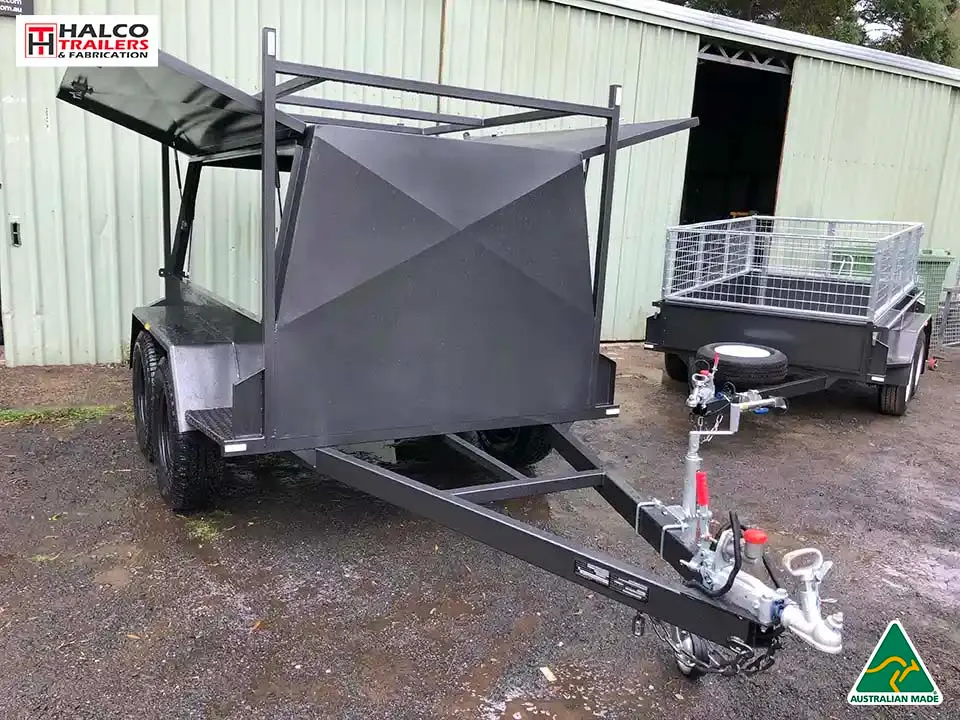
When planning tool storage lighting for tradesman trailers, consider the location of lift-up doors, drawers and frequently used tools.
Halco offers tradesman trailer customisation options that can include storage arrangements and lighting requirements.
Practical tip: Test the proposed lighting position with the compartment doors and drawers open before finalising the installation.
2. Improve Visibility Around Trailer Loading Areas
Loading equipment in poor lighting conditions can make it difficult to identify ramp edges, obstacles and changes in ground level.
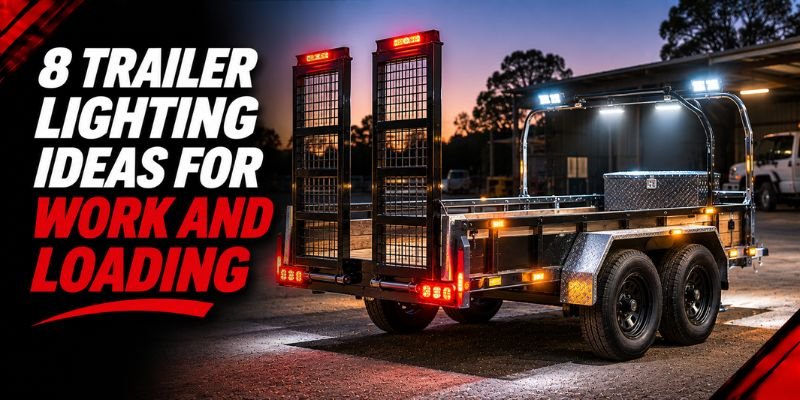
Suitable trailer loading lights may help improve visibility around the loading area when the trailer is stationary and the lighting arrangement is compliant.
This can be particularly relevant for contractors loading equipment at rural properties, construction sites or commercial yards.
Possible lighting arrangements include:
- Appropriately directed work lights.
- Suitable lighting near rear access openings.
- Portable task lights for temporary loading areas.
- Lighting designed to minimise shadows.
- Secure mounting positions away from ramps and moving equipment.
For example, a contractor preparing to load equipment at a poorly lit property may need illumination across the ramp and surrounding ground.
A narrow, bright beam may illuminate only a small section of the area.
A broader, controlled beam may provide more useful coverage.
What Makes a Good Trailer Loading Light?
Consider three important factors:
Beam spread: The light should illuminate the area where equipment is being handled.
Glare control: Lighting should not dazzle the operator or other road users.
Mounting position: The light must not interfere with loading ramps, equipment movement or required road lighting.
External work lights must also comply with applicable Victorian installation and operating requirements.
Do not assume that every additional light can legally be installed or operated on a trailer used on public roads.
3. Add Interior Lighting to Enclosed Trailers
Enclosed trailers can provide protected storage for tools and equipment, but their interiors may have limited natural light.
For mobile mechanics, technicians and contractors, suitable interior lighting can make storage areas more practical to use.
Depending on the trailer layout, options may include:
- LED ceiling lights.
- Low-profile interior light strips.
- Lighting near side access doors.
- Focused lighting above suitable work areas.
- Separate lighting controls for different zones.
For example, a mobile automotive technician may carry chargers, diagnostic scanners, replacement parts and equipment inside an enclosed trailer.
A well-positioned ceiling light can provide general illumination, while additional task lighting may be useful near a dedicated equipment preparation area.
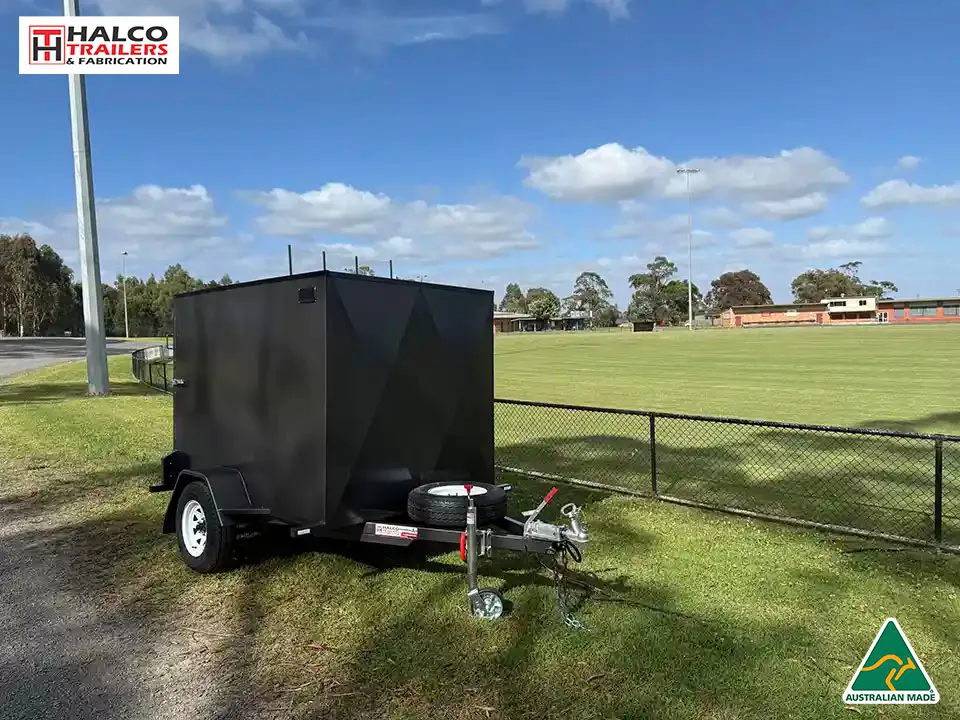
When exploring enclosed trailers, consider whether the intended layout requires general interior lighting, dedicated compartment lighting or both.
Should Enclosed Trailers Have Separate Lighting Zones?
Separate lighting zones can be useful when different areas serve different purposes.
For example:
- General interior lighting for accessing equipment.
- Compartment lighting for tools and smaller components.
- Task lighting for a suitable workbench or preparation area.
This arrangement may reduce unnecessary power use because only the required lights need to operate.
The electrical system must be appropriate for the connected load and installation.
Practical tip: Plan lighting before fitting permanent shelves and cabinets so wiring remains protected and accessible for maintenance.
4. Use Adjustable Task Lighting for Mobile Work
Fixed lighting cannot always illuminate every task effectively.
Mobile mechanics and contractors may work with equipment positioned at different heights or distances from the trailer.
Adjustable task lighting can provide additional flexibility.
Options worth considering include:
- Portable battery-powered LED lights.
- Suitable adjustable task lamps.
- Magnetic work lights used on appropriate surfaces.
- Rechargeable inspection lights.
- Compliant fixed work lights with suitable beam direction.
For example, a mobile mechanic may need focused lighting while checking tools or preparing diagnostic equipment beside a parked trailer.
A portable task light can be positioned near the work rather than requiring permanent lighting across the entire surrounding area.
Flood Beam vs Spot Beam
Different beam patterns suit different applications.
Beam type | Typical application | Main consideration |
Flood beam | General work-area illumination | Broad coverage and glare control |
Spot beam | Focused illumination at a distance | Narrower field of view |
Combination beam | Applications needing both broad and focused coverage | Positioning and suitability |
Diffused task light | Toolboxes and close-up equipment work | Even illumination with reduced glare |
A brighter light is not necessarily better.
For close-up mechanical work, a controlled beam may be more useful than a high-output lamp that produces harsh reflections.
Any fixed exterior vehicle-mounted work lighting must comply with the relevant rules.
Portable lights should also be positioned so they do not create hazards for operators or other people nearby.
5. Plan a Suitable Power Supply for Trailer LED Lights
A practical lighting system needs an electrical supply suited to the total lighting load.
Many LED lights are relatively energy-efficient, but their power requirements still need to be calculated.
Depending on the installation, a trailer may use a suitable 12V system, auxiliary battery or another professionally designed power arrangement.
Understanding Lumens, Watts and Beam Patterns
Before choosing trailer LED lights, it helps to understand three important terms.
Lumens (lm): Describe the total amount of visible light emitted by a lamp.
Watts (W): Describe electrical power consumption.
Beam pattern: Describes how the light is distributed across an area.
Two lights with similar wattage may produce different light outputs because their efficiency and design differ.
Likewise, two lamps with similar lumen ratings may illuminate an area differently because of their beam patterns.
How Bright Should Trailer Work Lights Be?
There is no single brightness level suitable for every trailer.
A small toolbox generally needs less total illumination than a large loading area.
When choosing brightness, consider:
- Size of the area.
- Mounting height.
- Distance from the work surface.
- Existing ambient lighting.
- Beam spread.
- Glare and reflections.
- Type of task being performed.
For example, a compact LED strip may provide suitable illumination inside a drawer, while a larger work area may require a different lighting arrangement.
The aim is to provide useful light where it is needed rather than simply choosing the highest lumen rating.
Example: Calculating Trailer Lighting Power
Consider two hypothetical LED lights rated at 18 watts each.
Item | Example |
Number of LED lights | 2 |
Rated power per light | 18 W |
Combined power | 36 W |
Nominal supply voltage | 12 V |
Approximate current | 3 A |
The simplified calculation is:
Current = Power ÷ Voltage
36 W ÷ 12 V = 3 A
This is a nominal calculation. Actual current depends on operating voltage, light-driver characteristics and electrical losses.
How Much Battery Energy Will the Lights Use?
If the same two lights operate for three hours:
Energy = Power × Time
36 W × 3 hours = 108 Wh
The lights would consume approximately 108 watt-hours of energy, based on their stated power ratings.
This does not mean a battery with a nominal capacity of 108 Wh will necessarily operate them for three hours.
Usable battery capacity, battery chemistry, discharge limits, other connected equipment and system losses all affect actual runtime.
Why Electrical Planning Matters
Before installation, consider:
- Total connected lighting load.
- Supply voltage.
- Battery capacity and charging arrangement.
- Suitable cable sizing.
- Appropriate circuit protection.
- Switching requirements.
- Compliance with applicable electrical standards.
Do not assume existing trailer road-light wiring can safely supply additional work lights.
Halco’s tradesman trailer range includes configurable lighting and electrical arrangements, subject to the proposed trailer specification.
Planning a Work Trailer Lighting Upgrade?
If you are planning lighting for a mobile workshop or work trailer, Halco Trailers in Warragul can discuss your intended layout, lighting locations and electrical requirements.
Discuss Your Trailer Requirements with Halco
6. Choose Weather-Resistant Lights and Protected Wiring
Work trailers are exposed to road vibration, rain, dust and changing weather conditions.
For contractors travelling between Warragul, Drouin, Moe, Traralgon and other Gippsland locations, lighting components should suit the expected operating environment.
Important features to consider include:
- Appropriate ingress protection.
- Secure mounting.
- Corrosion-resistant materials.
- Protected cable routing.
- Suitable connectors.
- Resistance to expected vibration.
- Access for inspection and maintenance.
What Does an IP Rating Mean?
An Ingress Protection (IP) rating describes an enclosure’s tested resistance to the entry of solids and water.
For example:
Rating | General protection |
IP65 | Dust-tight and protected against water jets under specified conditions |
IP67 | Dust-tight and protected against temporary immersion under specified conditions |
However, an IP rating does not automatically establish suitability for every trailer application.
The complete installation matters, including cable entry points, connectors and mounting arrangements.
Why Wiring Protection Matters
Wiring should be protected from sharp edges, moving parts, heat, abrasion and road debris.
For example, wiring routed near a fold-down ramp may require a different protective arrangement from wiring inside a fixed toolbox.
Connections should also be suitable for the expected exposure to moisture and vibration.
Practical tip: Assess the complete lighting system rather than selecting a lamp solely because it has a high IP rating.
7. Position Lights Around Toolboxes, Drawers and Access Doors
Lighting placement can have a greater effect on usefulness than lamp output alone.
Trailer compartments often contain lift-up doors, sliding drawers, shelves and equipment that can create shadows.
A poorly positioned light may become blocked when a compartment is opened.
Practical Lighting Layout for Mobile Mechanics
Consider a trailer with three storage zones.
Storage area | Lighting approach | Main benefit |
Diagnostic equipment compartment | Protected LED compartment lighting | Easier identification of electronic equipment |
Hand-tool drawers | Low-profile lighting near drawer openings | Improved visibility of smaller tools |
Larger equipment storage | Suitable general compartment illumination | Easier access to equipment |
Dedicated work area | Appropriate task lighting | More focused illumination |
For example, a mechanic may keep diagnostic scanners in one compartment and mechanical hand tools in another.
Separate lighting controls could allow the technician to illuminate only the area being used.
Check Door and Drawer Clearance
Before fitting lighting, confirm:
- Doors can open fully.
- Drawers do not strike fittings or cables.
- Wiring does not cross moving components unsafely.
- Lights remain visible when compartments are open.
- Switches are accessible.
- Mounting points are suitable.
A light installed on the wrong side of a lift-up door may illuminate the surrounding area rather than the tools underneath.
Testing the arrangement before permanent installation can help identify these problems.
8. Include Lighting Inspection in Routine Trailer Maintenance
Trailer lighting can become unreliable when components are exposed to vibration, moisture, physical damage or deteriorating electrical connections.
Regular inspection is useful for both mandatory road lighting and additional work lights.
What Should You Inspect?
Check:
- Light housings for cracks or damage.
- Mounting brackets and fasteners.
- Wiring for abrasion or exposed sections.
- Connectors for corrosion.
- Cable entry points for moisture.
- Switch operation.
- Protective seals.
- Required brake lights, indicators and reflectors.
For example, a light fitted near a frequently used toolbox may be exposed to repeated vibration or accidental contact.
A loose bracket or damaged cable should be addressed before the fault becomes more serious.
How Often Should Trailer Lights Be Checked?
Required road lights should be tested before towing.
Additional work lights and their wiring should be inspected according to the equipment manufacturer’s recommendations, trailer usage and operating conditions.
More detailed inspections may be necessary after damage, water ingress or recurring faults.
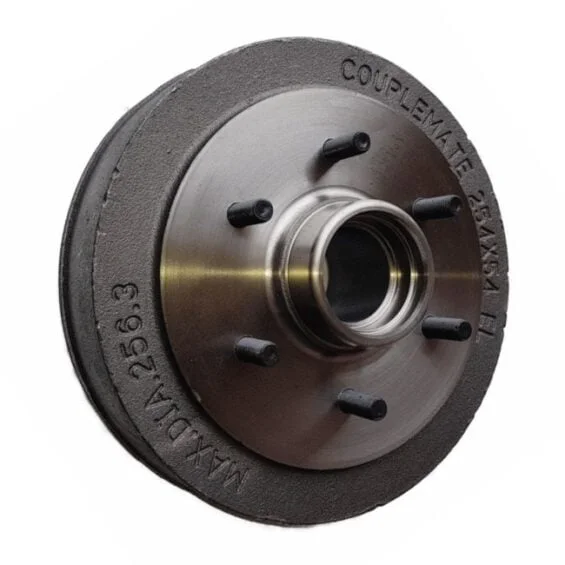
Halco Trailers offers trailer parts and relevant lighting and electrical repairs through its Warragul workshop.
The availability and suitability of particular lighting components should be confirmed before booking.
Which Trailer Work Lights Suit Different Applications?
Choosing lights by application is generally more useful than comparing brightness alone.
Application | Lighting to consider | Priority |
Toolbox compartments | Compact LED strips or low-profile lights | Even light distribution and door clearance |
Enclosed trailer interior | Ceiling lights or suitable LED strips | Broad, comfortable interior illumination |
Workbench | Focused task light | Detail visibility and controlled glare |
Loading area | Compliant, appropriately directed work lighting | Ramp and ground visibility |
Mobile servicing | Portable rechargeable light | Flexibility and usable runtime |
Equipment storage | Suitable compartment light | Secure wiring and practical access |
The right solution depends on the trailer, available power, work requirements and applicable lighting restrictions.
LED Trailer Work Lights vs Traditional Halogen Lights
LED lighting is commonly considered for trailer work because of its efficiency, compact options and available beam patterns.
However, products should be compared using actual specifications rather than lighting technology alone.
Feature | LED lights | Halogen lights |
Energy consumption | Often lower for similar useful illumination | Generally higher |
Light output | Depends on product efficiency and design | Depends on lamp rating and reflector |
Heat | Heat management still required | Typically high operating temperature |
Size | Many compact options available | Often larger assemblies |
Beam patterns | Wide selection | Depends on reflector design |
Maintenance | Varies by construction and replaceability | Bulbs may be replaceable |
Suitable use | Depends on installation and compliance | Depends on installation and compliance |
For mobile mechanics and tradespeople using battery-powered systems, energy consumption may be an important selection factor.
However, the lamp’s beam pattern, mounting position and suitability for the intended task remain essential.
Trailer Work Lighting Selection Checklist
Before selecting or installing work lights, review the following checklist.
Requirement | What to check |
Intended application | Toolbox, interior, task or loading-area lighting |
Brightness | Appropriate useful light output |
Beam pattern | Suitable coverage without excessive glare |
Voltage | Compatible with the intended electrical supply |
Power consumption | Total watts and estimated operating time |
Battery | Sufficient usable capacity where applicable |
Mounting location | Suitable clearance and secure attachment |
Weather protection | Appropriate enclosure and connector protection |
Wiring | Safe routing and circuit protection |
Switching | Correct control arrangement for the light type |
Road compliance | Mandatory lights remain operational and unobstructed |
Maintenance | Lights and wiring remain accessible for inspection |
This checklist can help trailer owners discuss their requirements with a manufacturer or workshop.
5 Common Trailer Work Lighting Mistakes to Avoid
1. Choosing Lights Based Only on Lumens
Higher lumen output does not automatically mean better visibility.
Beam distribution, glare and the working distance also matter.
2. Installing Lights Where Doors or Equipment Block Them
Lift-up doors, drawers and machinery can create shadows.
Check the lighting position with the trailer in its normal working configuration.
3. Ignoring Electrical Power Requirements
Adding work lights increases electrical demand.
The supply, wiring, switches and protective devices must suit the complete installation.
4. Using Unsuitable Lights or Connectors Outdoors
Lighting exposed to rain, vibration and dust needs components suitable for the operating conditions.
Choose appropriate fittings and protect the wiring.
5. Overlooking Australian Lighting Requirements
Additional exterior work lights are not interchangeable with mandatory road lights.
Check installation and operating restrictions before modifying a trailer’s lighting system.
Trailer Work Lighting Requirements in Victoria
Trailer lighting used on Australian roads must comply with the applicable vehicle standards.
It is important to distinguish between mandatory road lighting and additional work lighting.
1. Mandatory Trailer Road Lights
Required trailer road lighting includes appropriate rear position lamps, brake lamps, indicators, number plate illumination and reflectors, with additional requirements depending on trailer dimensions.
These lights must remain correctly installed and functional.
The Australian Government’s Vehicle Standards Bulletin 1 provides technical guidance for trailers with an ATM of 4.5 tonnes or less.
2. Exterior Work and Search Lights
Transport Victoria’s Vehicle Standards Information 12 provides requirements for work or search lights fitted to vehicles within the scope of that guidance.
It states that:
- Work or search lights may be used for temporary work-related purposes.
- They must be operated only while the vehicle is stationary.
- They must not supplement normal forward lighting.
- A maximum of two white lights may be fitted under the stated work/search-light provisions.
- They must have separate manual switching.
- Care must be taken to avoid dazzling other road users.
Before fitting exterior work lights to a trailer, confirm how the rules apply to the specific installation.
Do not assume several fixed exterior floodlights are compliant simply because they are marketed as work lights.
3. Interior and Portable Lighting
Interior compartment lighting and portable task lighting serve different purposes from exterior vehicle-mounted work or search lights.
Their applicable requirements depend on how they are installed, powered and used.
The exterior work-light provisions should not automatically be applied to every individual interior LED strip or portable lamp.
However, any installation must still be electrically safe and must not compromise the trailer’s compliance.
4. Trailer Modifications
Lighting modifications must not affect the trailer’s compliance with applicable registration and vehicle standards.
Where the effect of a modification is uncertain, seek advice from an appropriately qualified specialist.
For reference, review:
- Transport Victoria – Flashing Lights, Other Lights and Reflectors
- Transport Victoria – Modify a Light Trailer
Common Trailer Wiring and Lighting Problems
Even a suitable lighting system may develop faults due to damaged wiring, poor connections, water ingress or component deterioration.
Common warning signs include:
- Work lights failing to operate.
- Intermittent or flickering lamps.
- Corroded connectors.
- Damaged switches.
- Loose mounting brackets.
- Wiring exposed to abrasion or moisture.
If several lights fail together, the problem may involve a shared connection or power supply rather than individual lamps.
Check visible connectors and equipment for obvious damage, but avoid altering unfamiliar electrical circuits.
If mandatory trailer lights fail, arrange suitable repairs before normal road towing.
For detailed troubleshooting covering common wiring faults, trailer plug connection problems, indicator issues and electrical inspection, read Halco’s existing article:
8 Common Trailer Electrical Problems and What Causes Them
Why Consider Halco Trailers for Work Trailer Lighting?
Halco Trailers and Fabrication manufactures, repairs and services trailers from its workshop in Warragul, Victoria.
The company supplies trailer configurations for mobile tradespeople, contractors, equipment operators and businesses across Gippsland, Melbourne and regional Victoria.
Halco’s tradesman trailer range includes customisation options for storage and electrical requirements, including internal and external lighting arrangements.
For mobile mechanics and contractors, planning lighting alongside storage and access requirements can help create a more practical work trailer.
What Information Should You Provide?
When discussing trailer lighting or electrical requirements, prepare:
- Trailer type and model.
- Intended lighting locations.
- Existing electrical system details.
- Available power supply.
- Typical operating conditions.
- Tool storage or work-area layout.
- Photographs of the trailer.
- Any existing electrical or lighting faults.
These details can help the team discuss relevant trailer configurations, components or workshop services.
The exact lighting options and installation scope should be confirmed before proceeding.
Discuss Your Trailer Lighting Requirements with Halco Trailers
The right trailer work lights can improve visibility around storage compartments, equipment access points and suitable working areas.
However, the best lighting arrangement depends on how your trailer is used, the available electrical supply and the applicable installation requirements.
Whether you operate a mobile mechanical business, manage fleet maintenance or transport trade equipment, planning lighting alongside your trailer layout can help create a more practical setup.
Halco Trailers manufactures and services trailers in Warragul, Victoria, supporting customers across Gippsland, Melbourne and surrounding areas.
If you are planning a new trailer or reviewing an existing lighting system, contact Halco to discuss your requirements.
Discuss Your Trailer Lighting and Electrical Requirements
Share your trailer type, intended lighting locations, power supply details and photographs of the current layout so the Halco team can discuss suitable configurations and available services.