



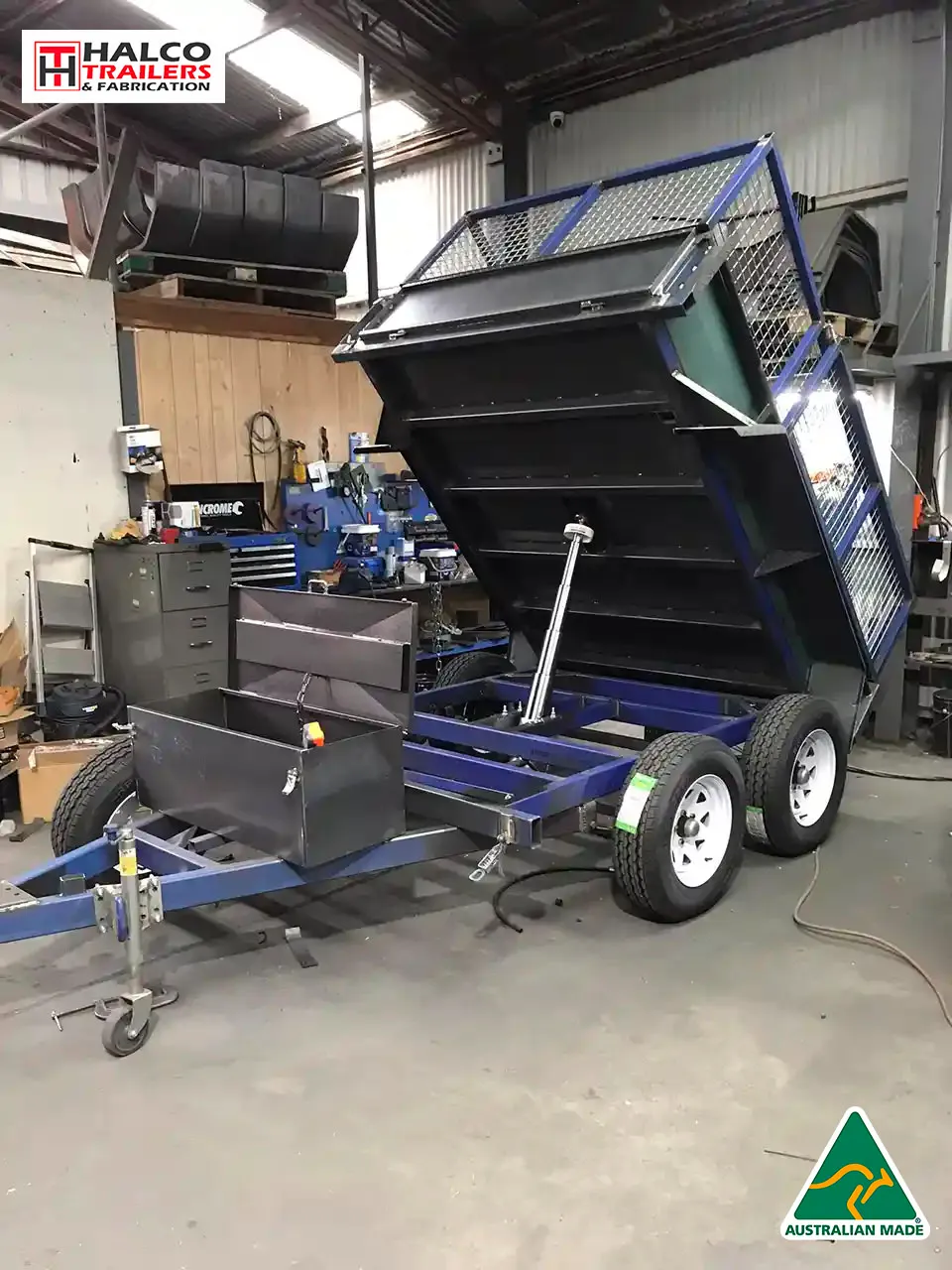
Hydraulic Tipper Trailers for Sale in Melbourne
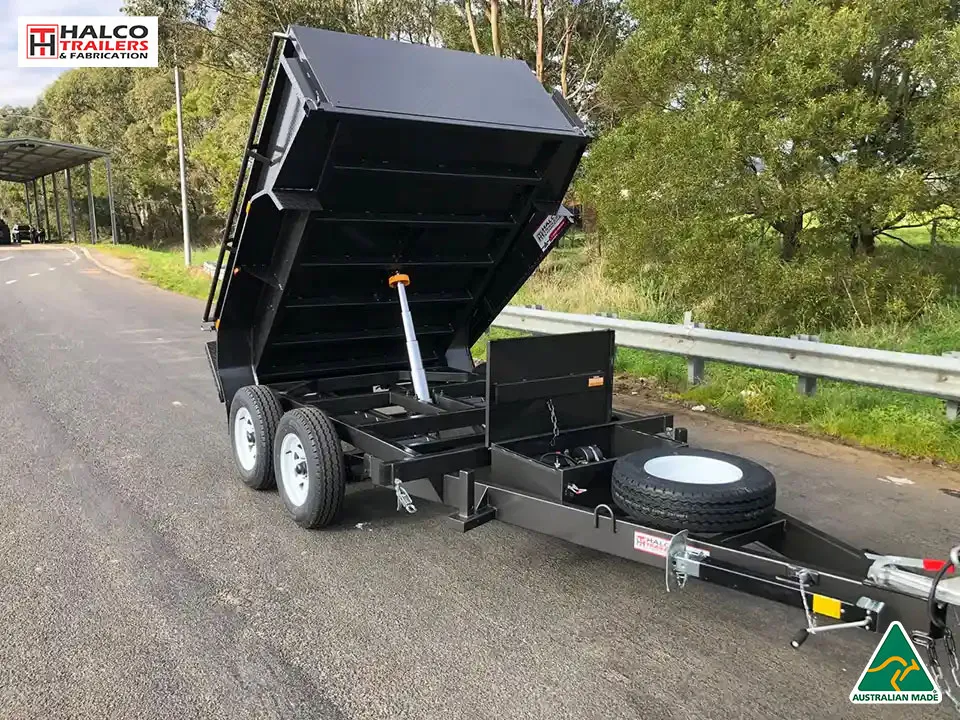
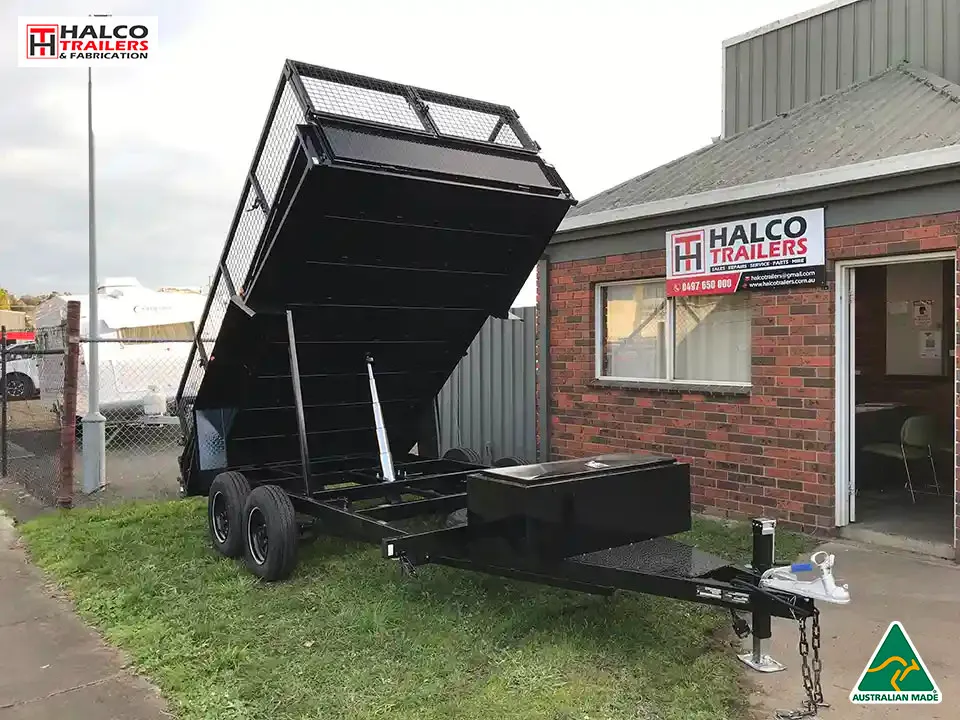
Halco builds hydraulic tipper trailers for Melbourne, Gippsland and regional Victorian customers who need a practical way to transport and unload suitable loose materials.
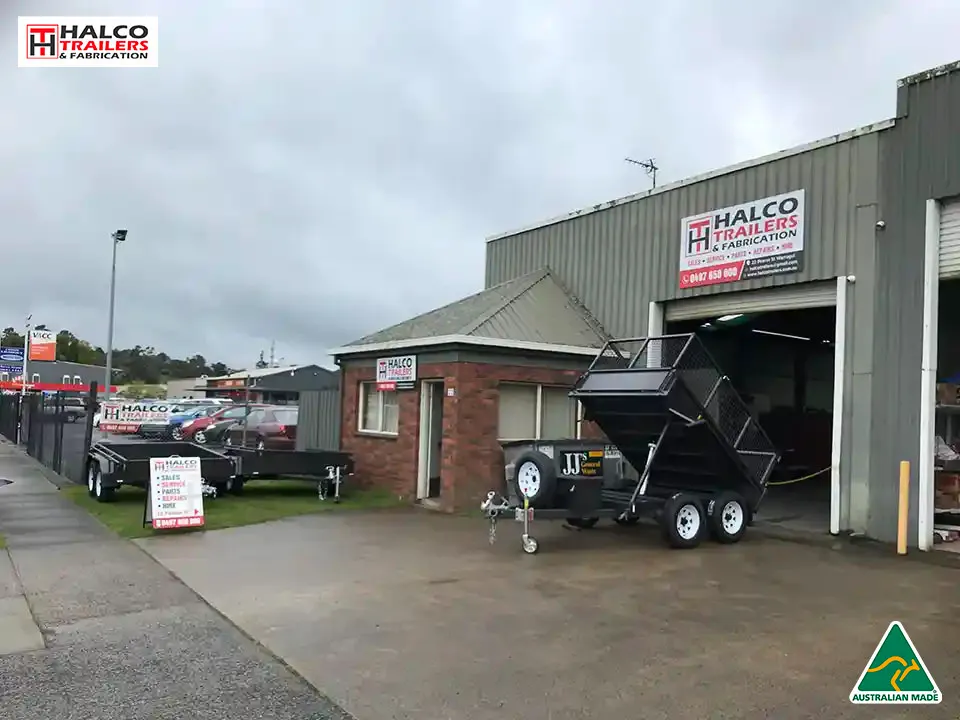
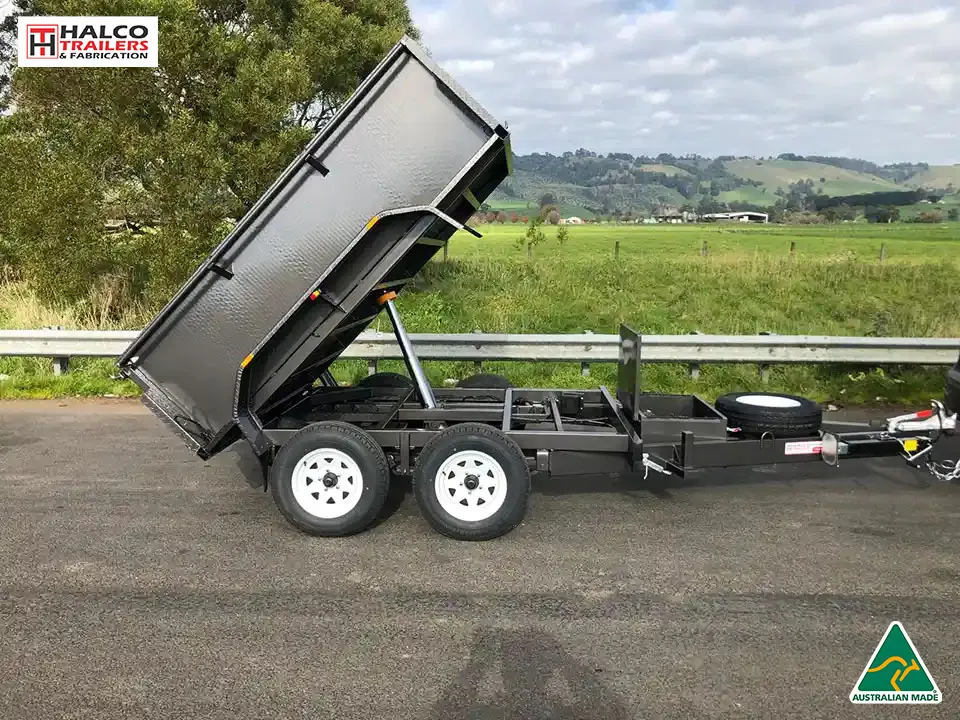
Manufactured at Halco’s Warragul workshop, each hydraulic tipper trailer can be discussed around the intended load, towing vehicle, unloading method, access requirements and working environment. Common applications include landscaping, construction, property maintenance, farming, trade work and general material transport.
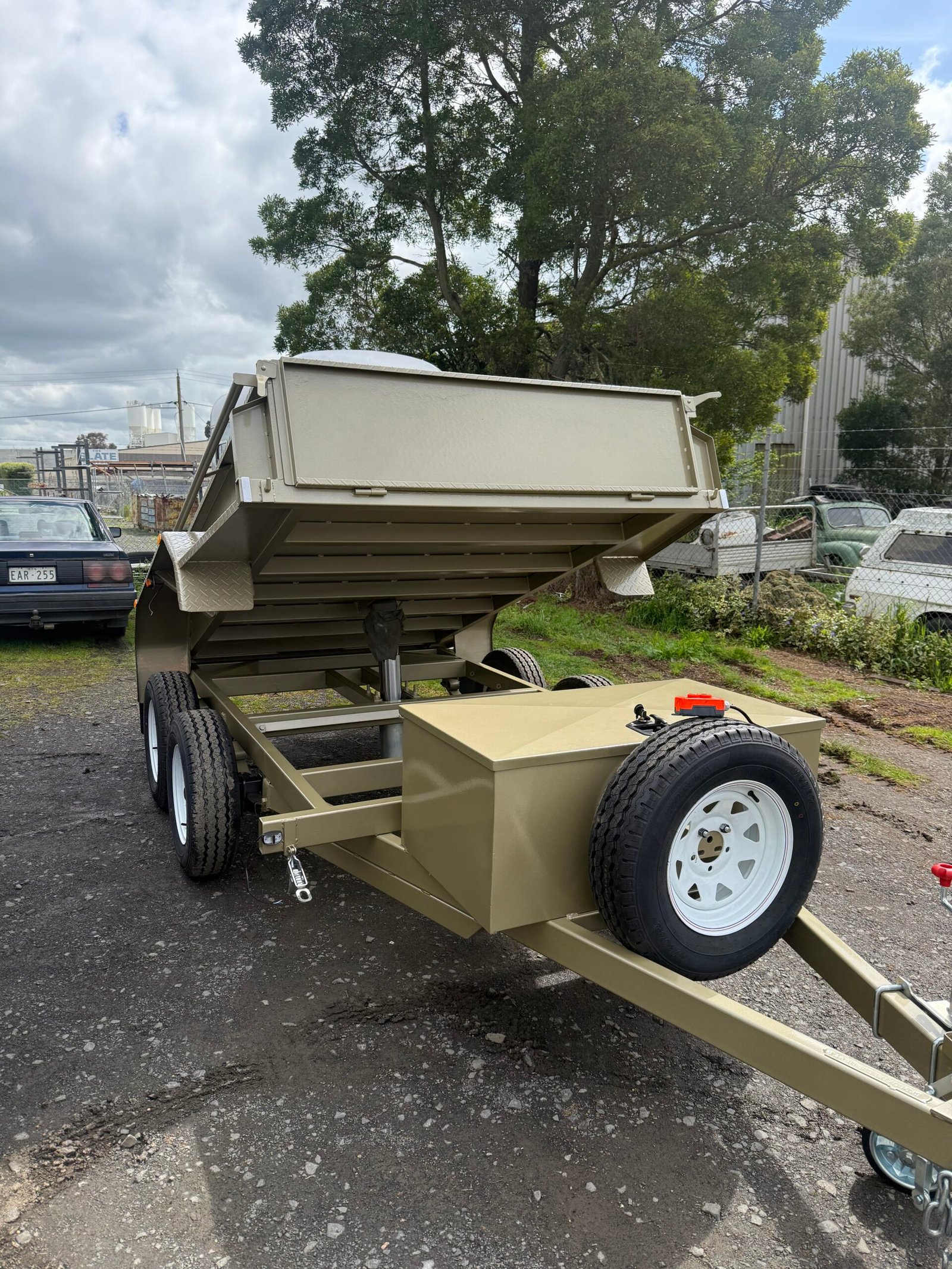
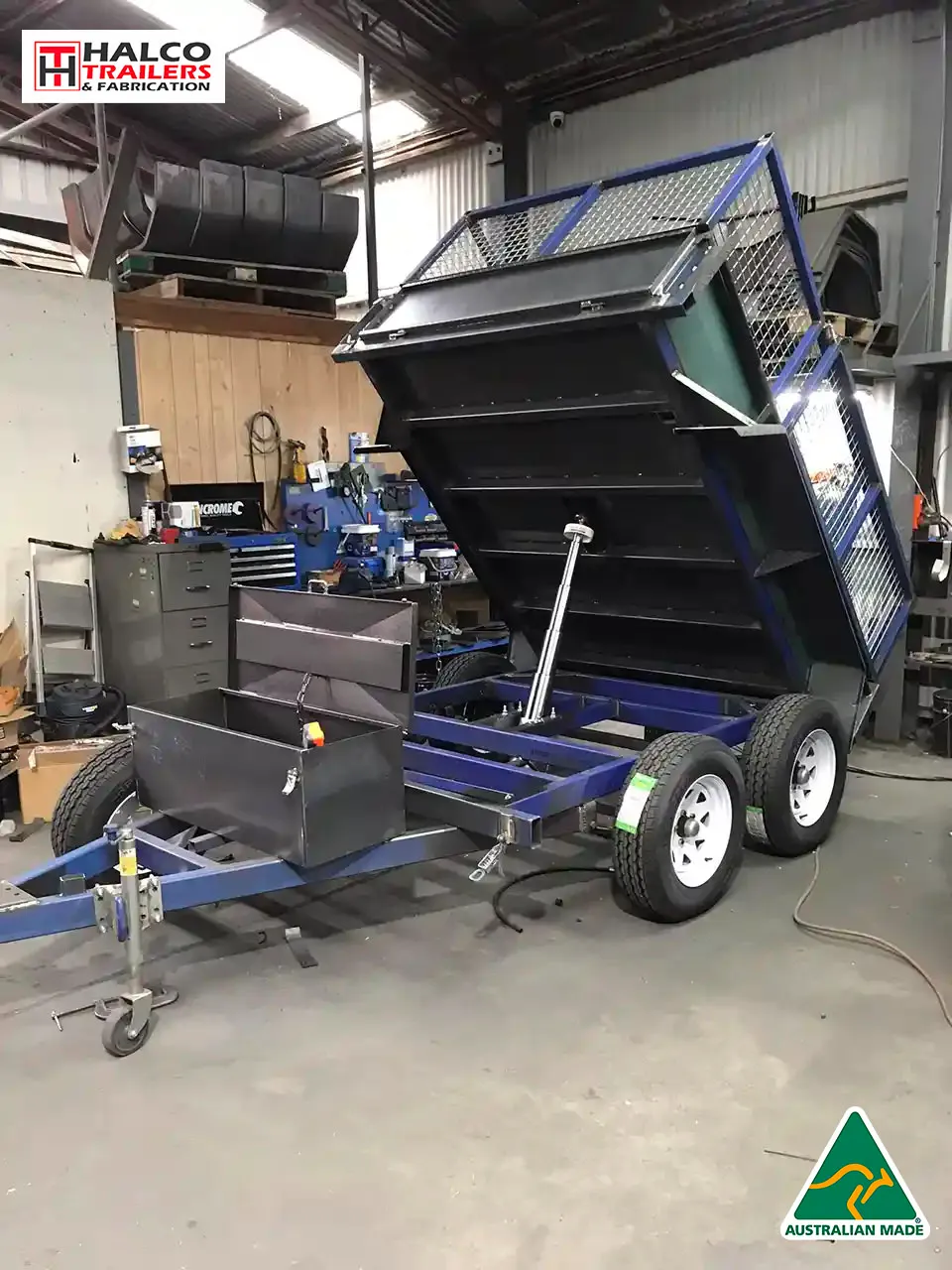
A hydraulic tipping trailer can reduce manual unloading by raising the trailer body so suitable materials can be discharged more efficiently. The correct configuration depends on the trailer’s approved ATM, completed tare mass, payload, body design, hydraulic system, braking arrangement and towing setup.
Request a Hydraulic Tipper Trailer Quote
Explore the Halco trailer range
A hydraulic tipper trailer is a trailer fitted with a tipping body and hydraulic lifting system to assist with unloading suitable materials. The trailer must still be selected according to the load, approved capacity, towing vehicle, restraint requirements and operating conditions.
Explore the Craftsmanship
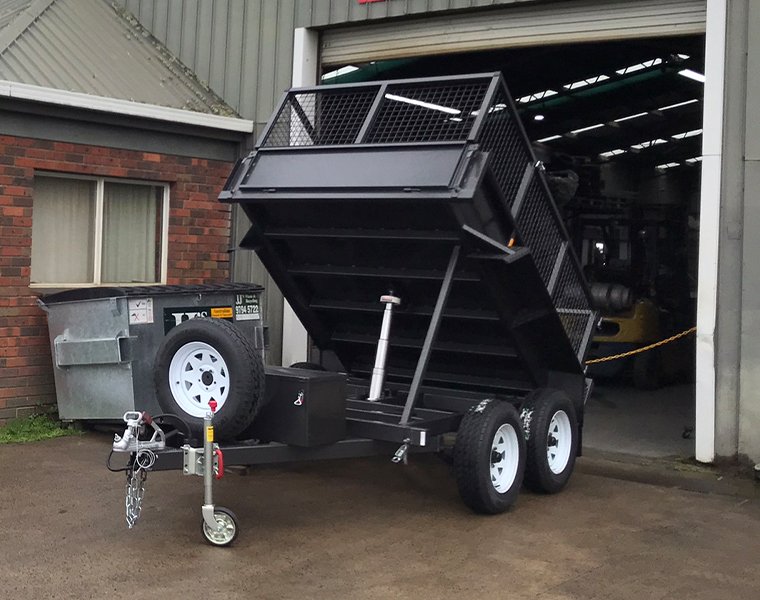
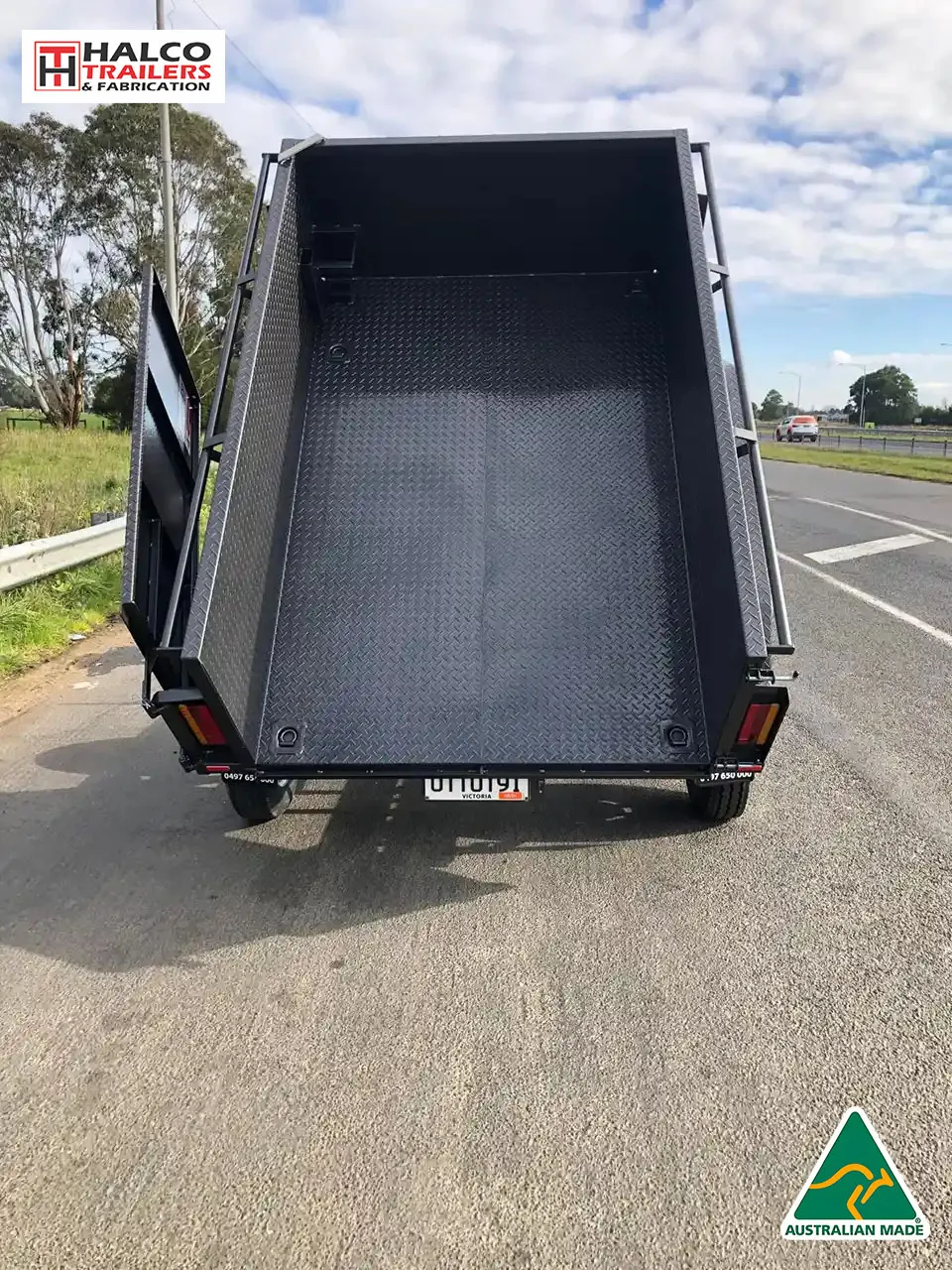
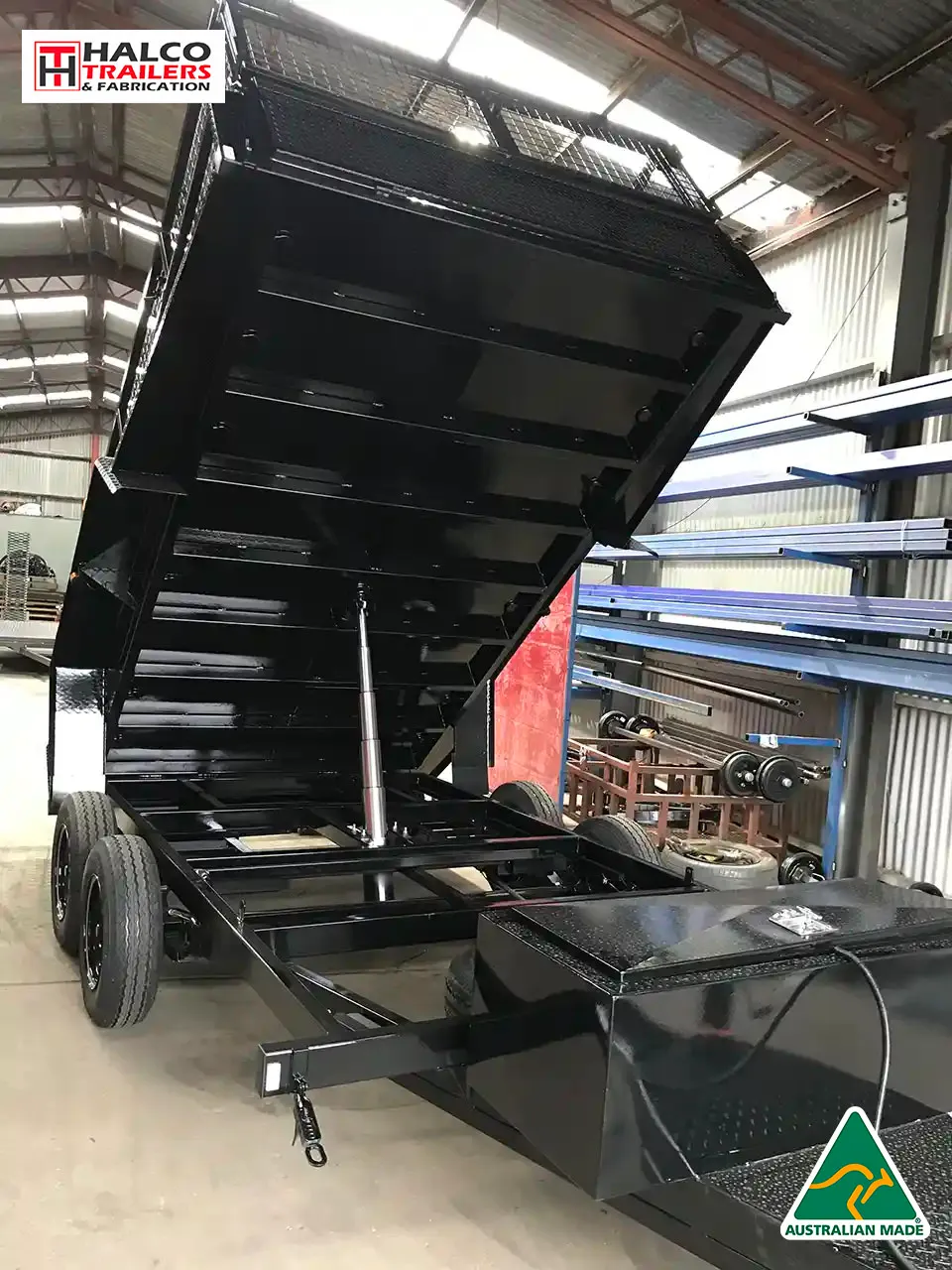
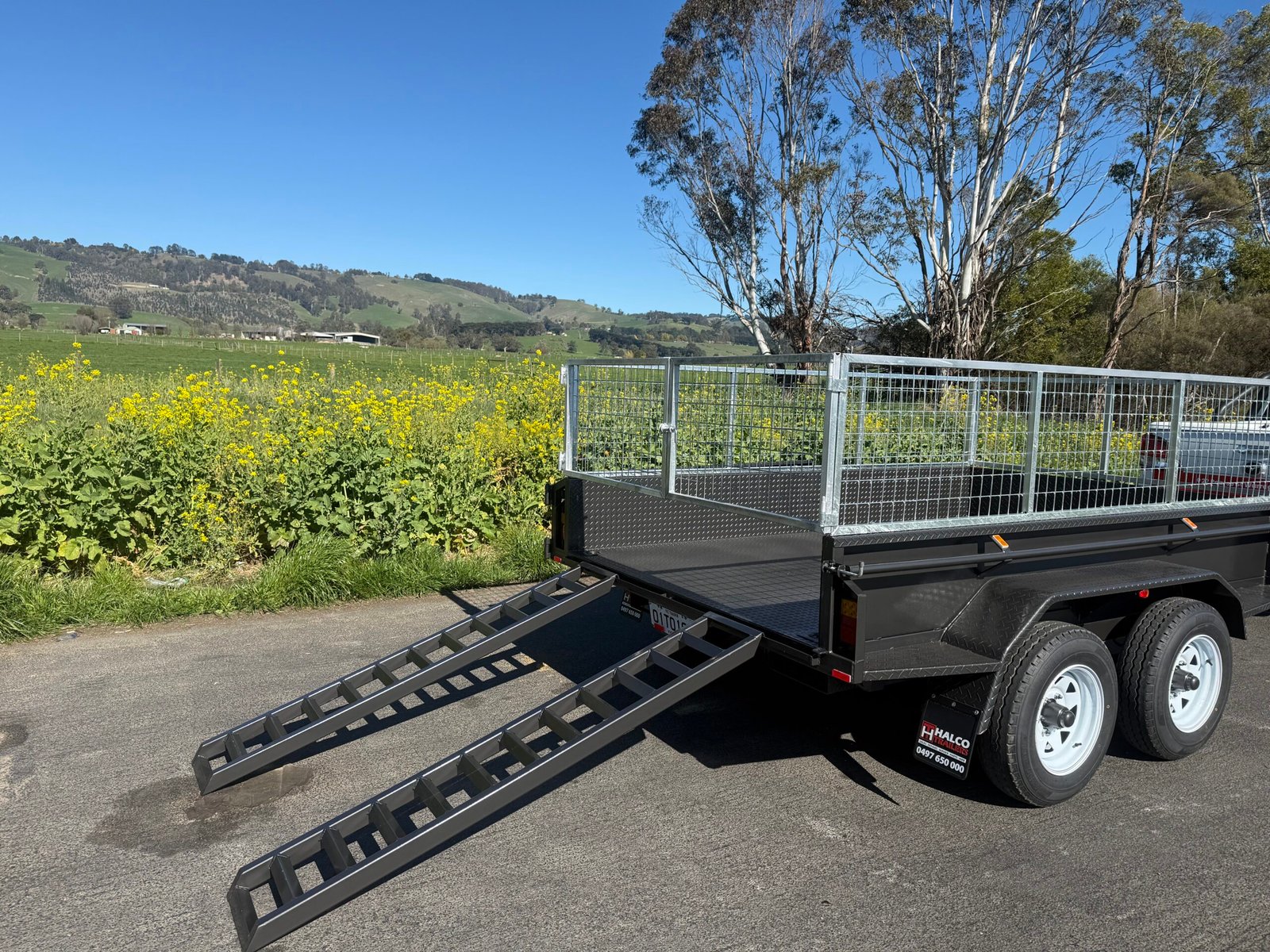
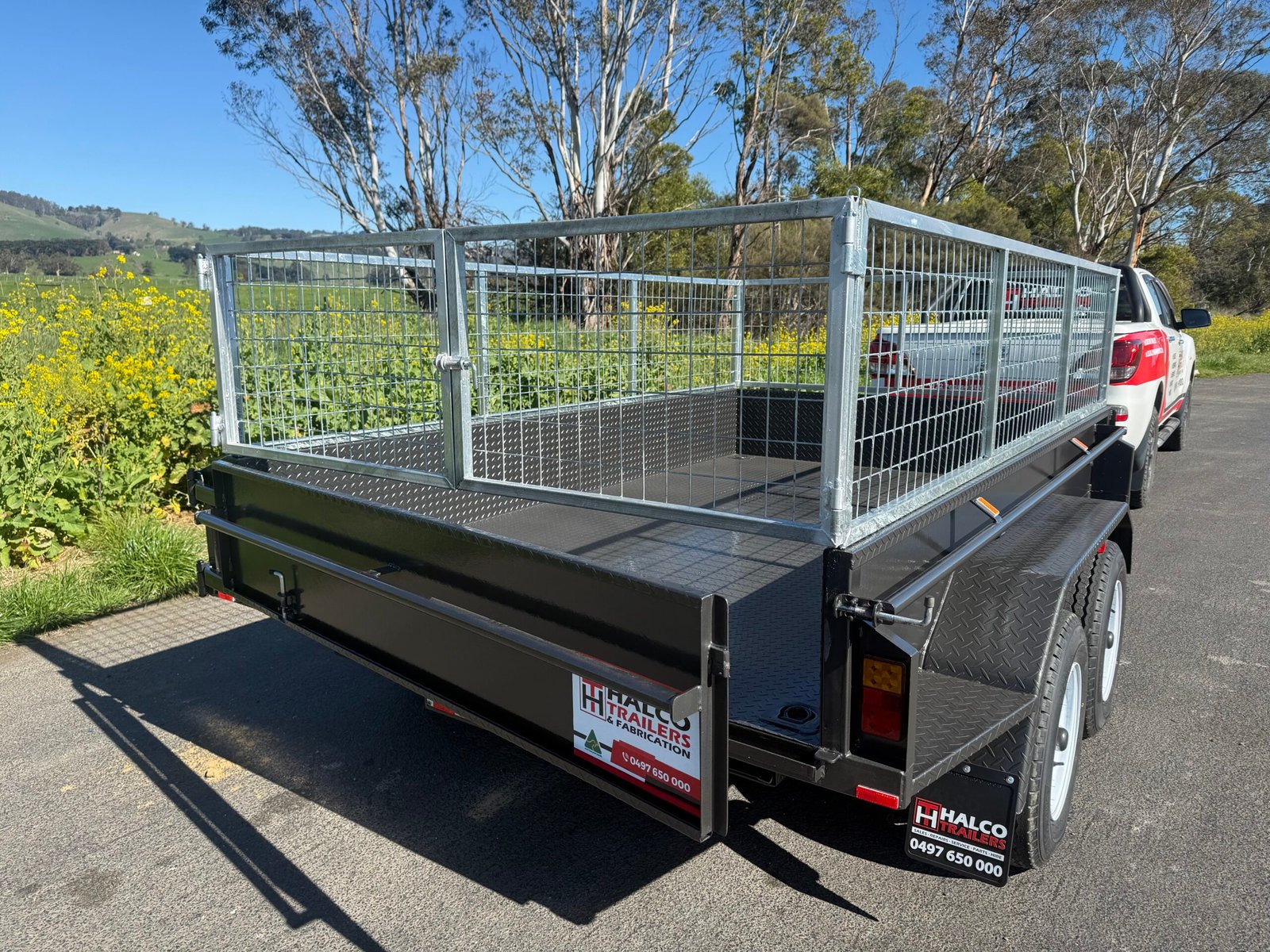
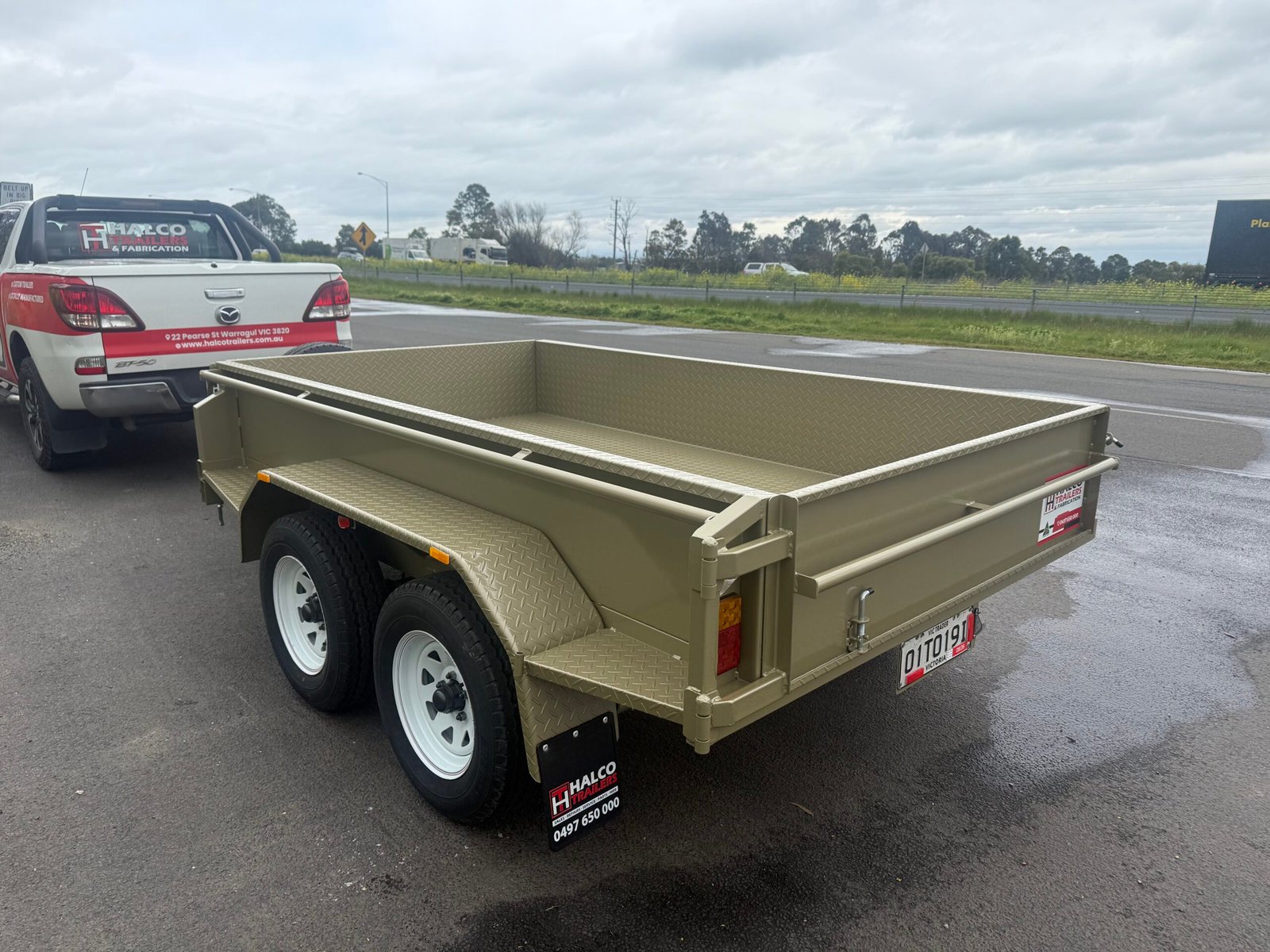
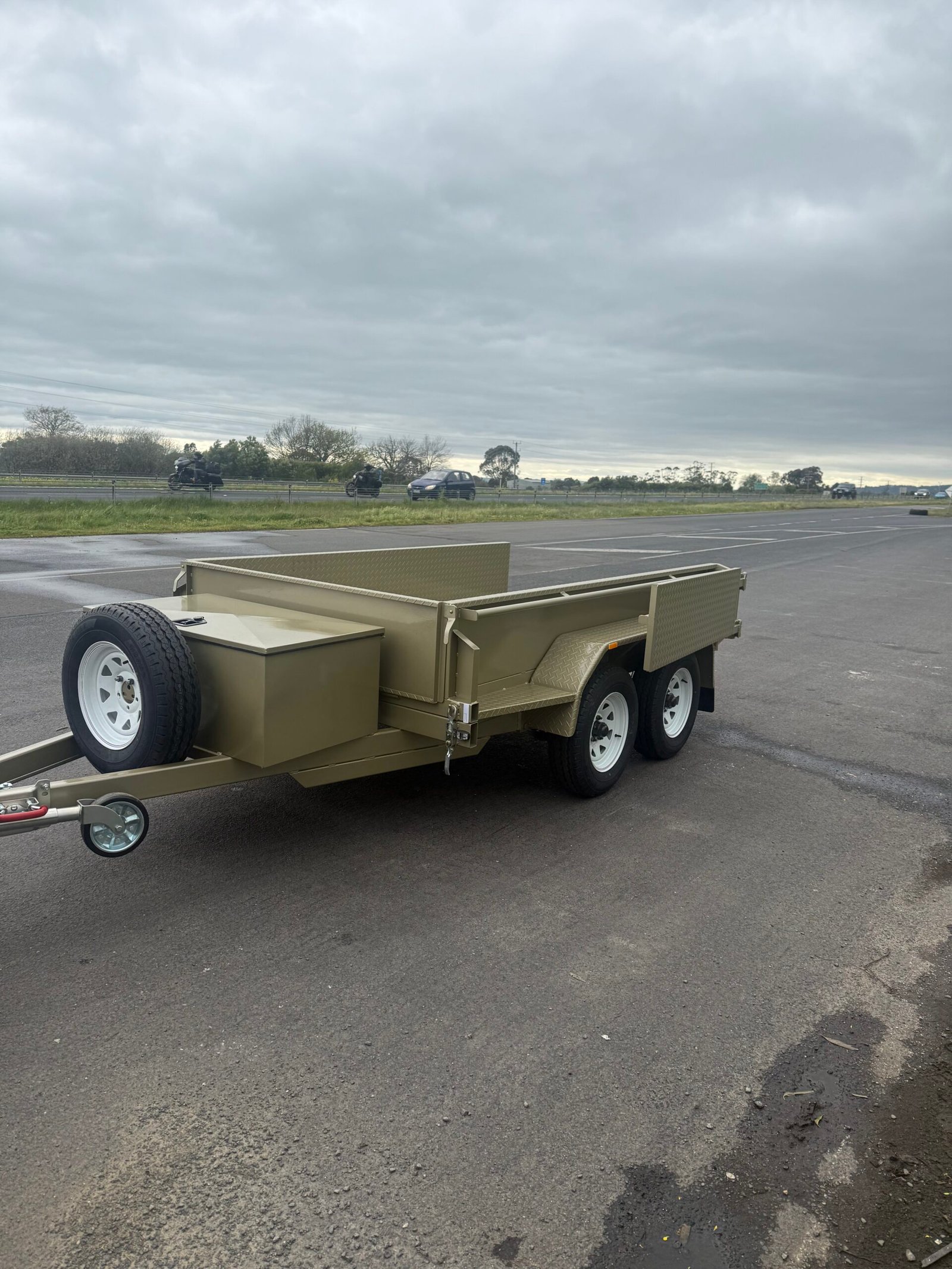
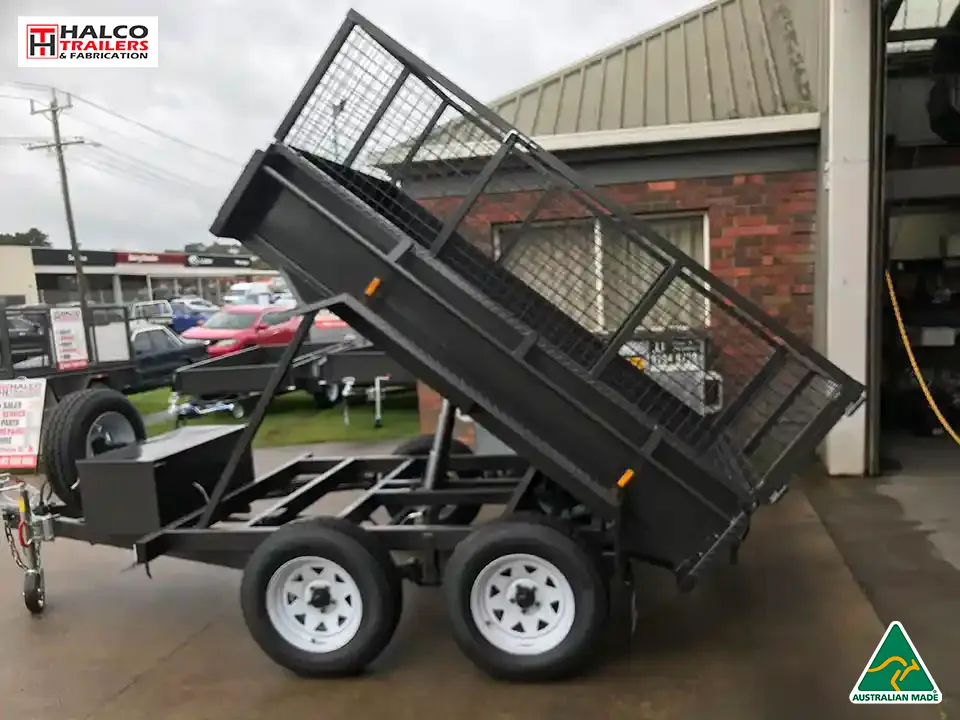
Hydraulic Tipper Trailers Melbourne Customers Can Configure
A hydraulic tipper trailer may be suitable when regular manual unloading is inefficient, physically demanding or impractical.
These trailers are commonly considered for:
- Soil
- Mulch
- Gravel
- Sand
- Green waste
- Firewood
- Farm supplies
- Landscaping materials
- Property-maintenance loads
- Suitable loose construction materials
The trailer should be selected around the actual material, expected load weight, unloading location and towing vehicle. Not every load is suitable for tipping, and not every worksite has enough space or ground stability for safe unloading.
Halco will confirm the proposed configuration after reviewing the intended application.
- Gross Vehicle Mass (GVM): 2000 kg to 4500 kg.
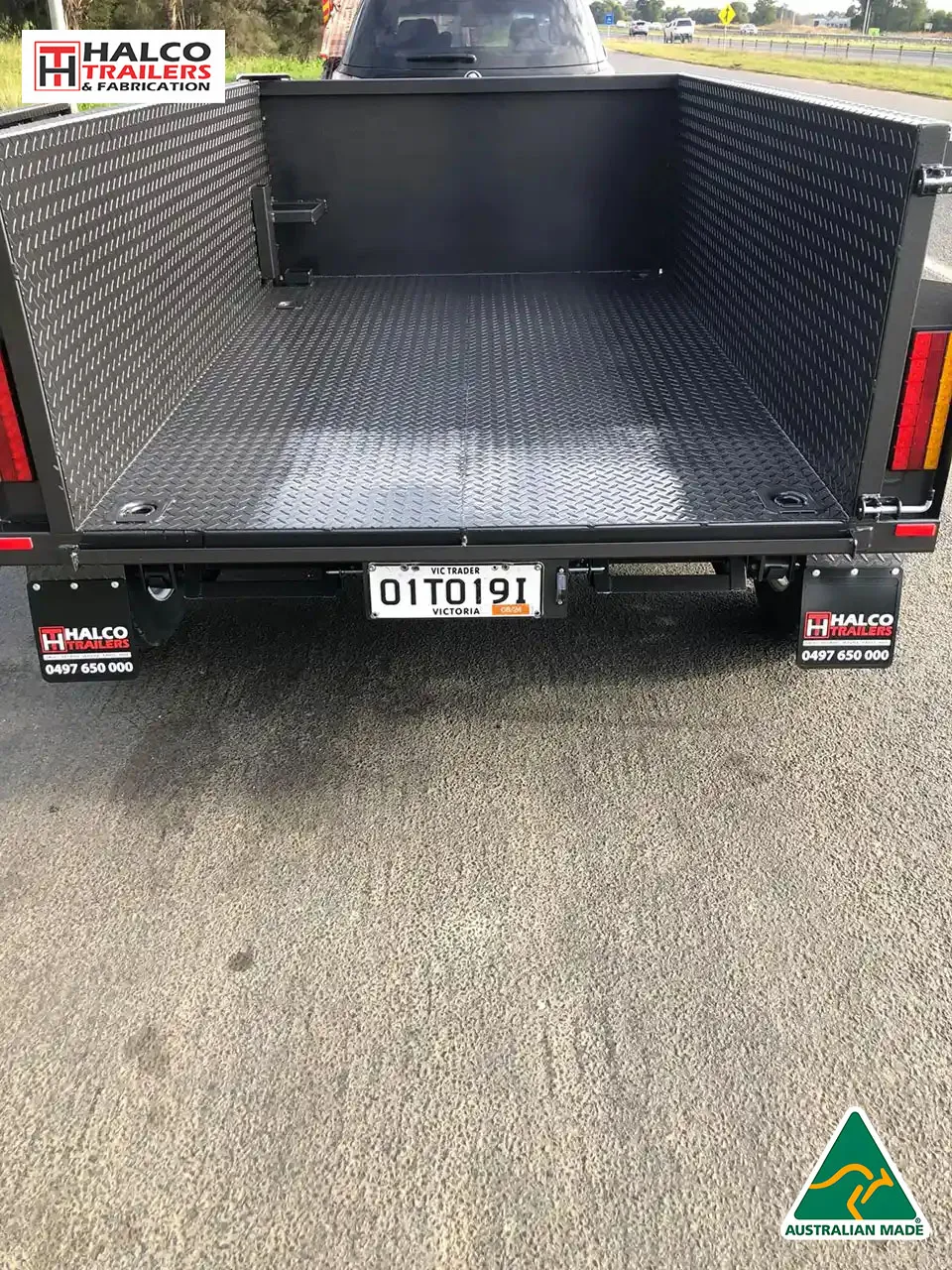
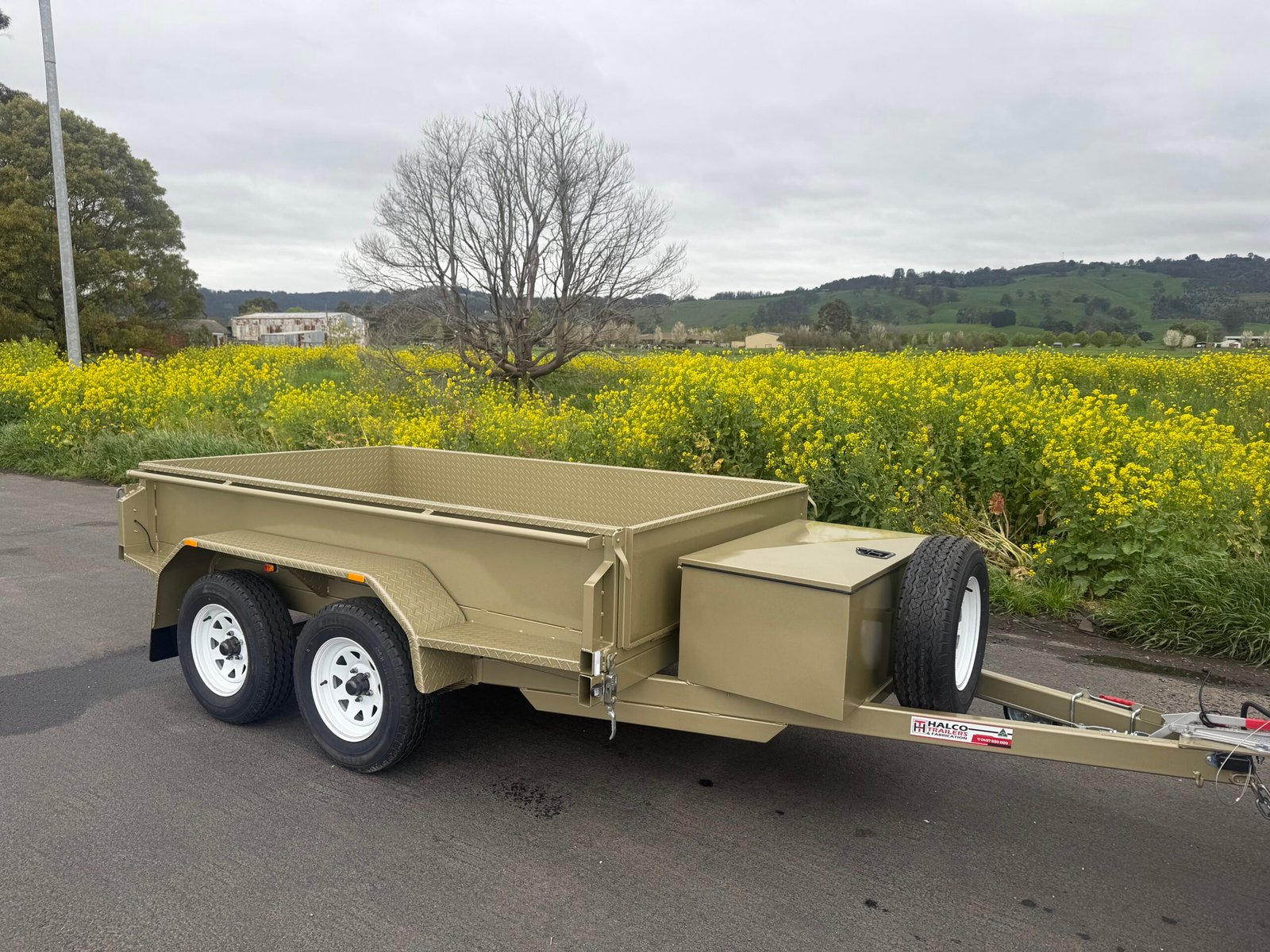
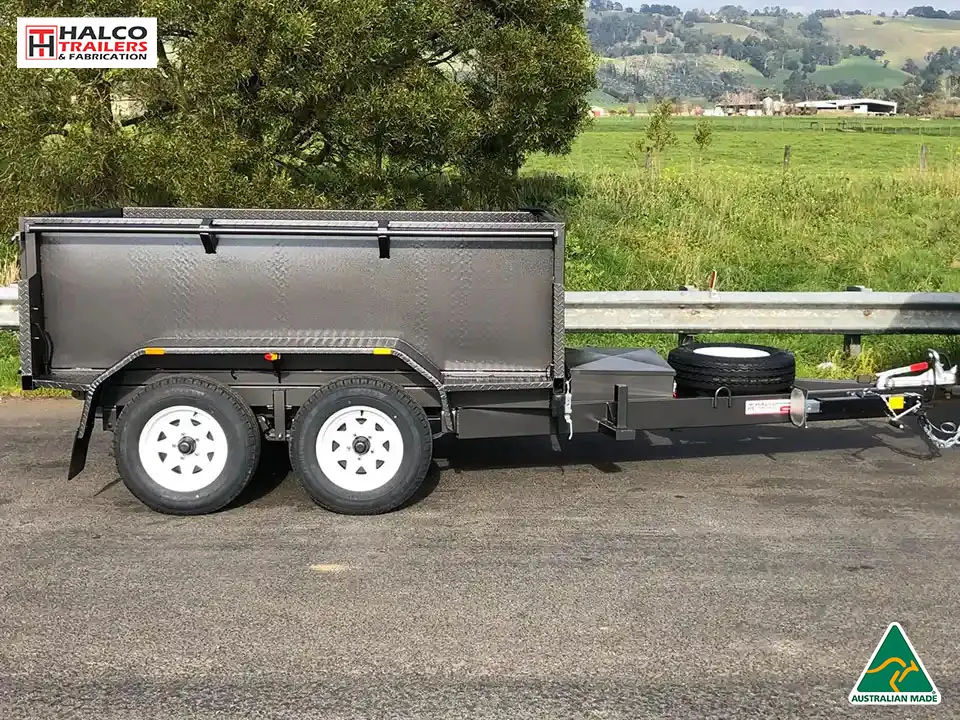
- Body Construction: Checker-plate folded steel bed for strength and durability.
- Tailgates: Drop down front and swingout rear tailgate for ease of loading and unloading. Heavy duty greaseable pivot hinges rated 7 Ton.
- Chassis: RHS / SHS (Square Hollow Section) high-strength chassis ensuring rigidity under load.
- Lighting: ADR-approved LED lights for visibility and compliance.
- Finish: Primed and painted in dark charcoal (other colours may be possible on request).
- Braking System: Mechanical or electric brake axle options.
- Ask us about other colour options
- Custom Sizes Available: 8x5 hydraulic tipper trailer, 10x5 hydraulic tipper trailer, 10x6 hydraulic tipper trailer for various hauling needs.
Common Uses for Hydraulic Tipper Trailers
Landscaping and garden work
Hydraulic tipper trailers can assist landscapers, gardeners and property-maintenance operators who regularly transport loose materials.
Typical use cases can include moving soil, mulch, gravel, sand, green waste and other suitable landscaping materials. The tipping body can reduce the need to shovel material out by hand, which may save time across repeated jobs.
Before selecting a trailer, consider the material type, expected weight, unloading area, access to the site and whether the load may shift during transport.
Construction and trade work
Construction, renovation and trade customers may use hydraulic tipper trailers for suitable loose materials, site clean-up and equipment-support tasks.
The trailer should be assessed according to the jobsite access, ground conditions, payload requirements, towing setup and unloading location. A narrow driveway, sloped site or confined work area may affect whether tipping is practical.
For equipment-focused transport, compare Halco’s plant trailers and flat-top trailers.
Farm and property applications
Farmers and acreage owners may use hydraulic tipper trailers for suitable materials around paddocks, sheds, driveways and property-maintenance areas.
Common considerations include ground surface, towing distance, access, material type, weather exposure and how often the trailer will be used.
For agricultural livestock transport, view Halco’s stock-crate trailers.
Trade and maintenance operations
Some trade and maintenance businesses need a trailer that can carry loose materials on one job and equipment or supplies on another.
A hydraulic tipper trailer may be discussed where the tipping function, body layout, storage features and towing setup suit the work. For tool-focused storage and workflow, compare Halco’s tradesman trailers.
Available Options Subject to Build Confirmation
The final specification will be confirmed in the written quotation. Options vary according to the trailer’s intended use, dimensions, approved mass, components and build requirements.
| Area | What Halco can discuss |
|---|---|
| Body layout | Tipping body, side height, tailgate arrangement and material suitability |
| Axle arrangement | Axle configuration proposed for the completed trailer design |
| Hydraulic system | Hydraulic lifting system, controls and operating requirements |
| Braking arrangement | Braking setup based on ATM, axle configuration and applicable requirements |
| Towing connection | Coupling, safety chains and towing-vehicle compatibility |
| Wheels and tyres | Components suited to the approved trailer specification |
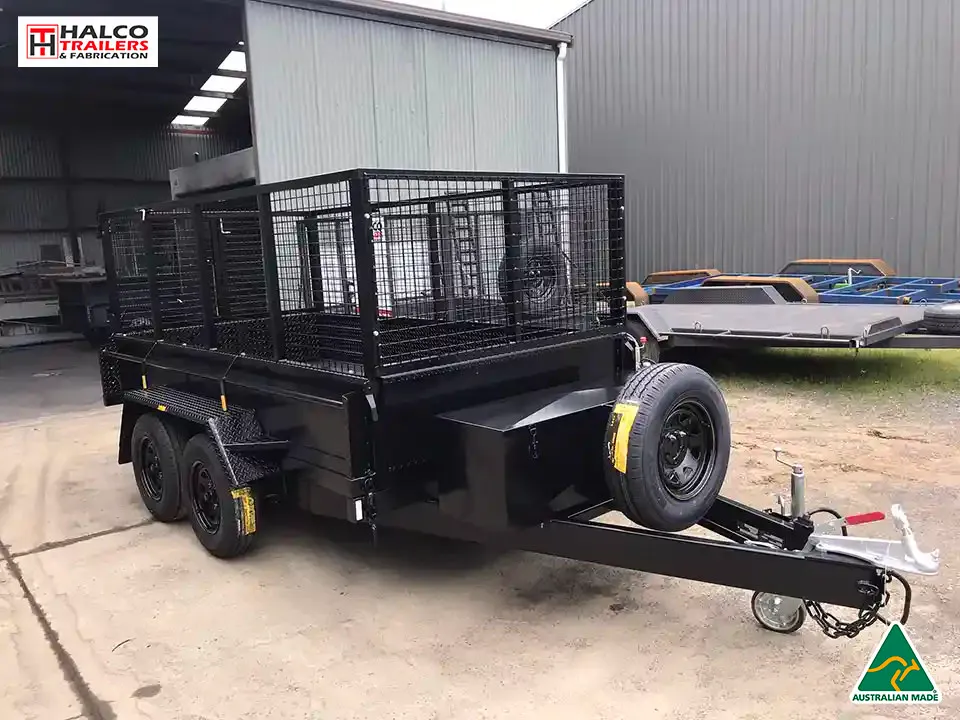
| Sides and cage options | Fixed sides, removable sides or cage-style additions where appropriate |
| Ramps and loading | Ramp or loading options where they suit the design and intended use |
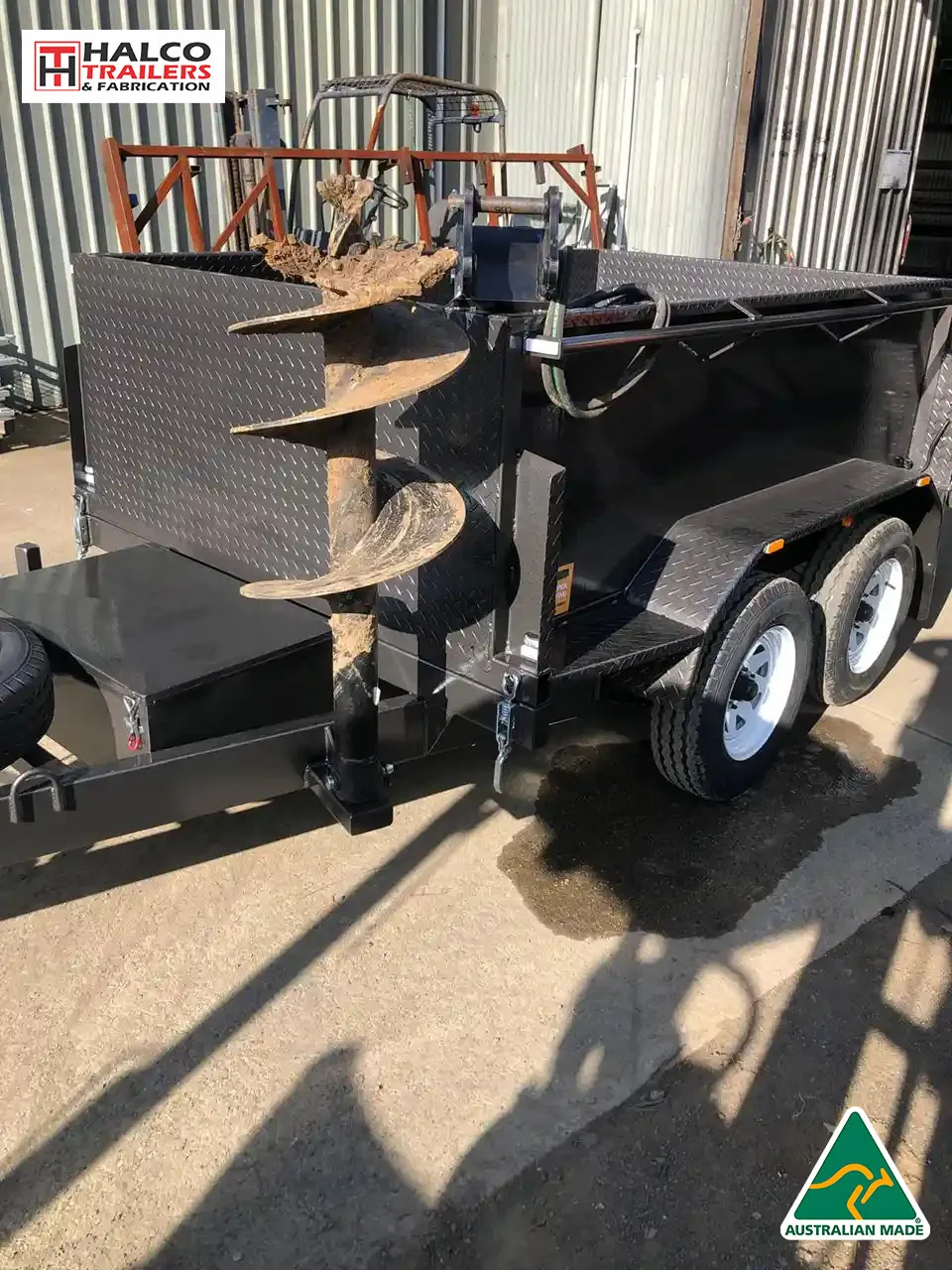
| Storage | Toolbox or accessory storage where it does not compromise the design |
| Lighting and wiring | Road lighting and electrical components suited to the trailer |
| Finish | Finish options confirmed according to the quotation and build specification |
Do not choose options in isolation. A heavier body, cage, toolbox, ramps or additional equipment can increase tare mass and reduce available payload within the same approved ATM.
Understanding ATM, Tare Mass and Payload
Hydraulic tipper trailers should be assessed by their approved mass ratings and completed empty weight, not by body size alone.
Aggregate Trailer Mass
Aggregate Trailer Mass, or ATM, is the total permitted mass of the trailer when carrying the maximum load recommended by the manufacturer. It includes the mass on the trailer wheels and the mass imposed on the towing vehicle through the coupling.
Tare mass
Tare mass is the weight of the completed trailer without cargo.
The tipping body, hydraulic system, sides, cage, ramps, toolbox, wheels, tyres, coupling and other permanent components all contribute to tare mass.
Payload
Payload is the amount of cargo the trailer can carry.
Payload = ATM − tare mass
Two hydraulic tipper trailers with the same ATM can have different payloads if one has a heavier body, cage, hydraulic system or permanent accessories.
For more buying and specification checks, read Halco’s trailer buying guide.
Braking, Towing and Registration Considerations
The braking arrangement for a hydraulic tipper trailer depends on the trailer’s ATM, axle configuration, completed specification and applicable requirements.
Trailers with an ATM of 4.5 tonnes or less are expected to comply with the Australian Design Rules applicable to their category under the Road Vehicle Standards framework. VSB 1 Revision 6 identifies ADR 38/05 as the trailer-braking standard relevant to trailer brake systems.
The towing vehicle, towbar, coupling and braking equipment must also be suitable for the trailer’s actual loaded mass. The lowest applicable rating in the vehicle-and-trailer combination should not be exceeded.
For Victorian registration, VicRoads states that a trailer being registered for the first time in Australia needs to be entered on the Register of Approved Vehicles. VicRoads also states that, for trailers up to 4,500 kg ATM, tare weight and ATM must be displayed on the trailer identification plate or recorded on the RAV.
Halco will confirm the documentation supplied with the individual trailer. Customers should check the current Victorian registration requirements that apply to their trailer before use.
Hydraulic Tipper Trailer Safety and Load Restraint
A tipping trailer still needs safe loading, correct restraint and suitable operation.
Before towing, the load should be positioned so the trailer remains stable and the towing vehicle remains within its limits. Loose materials should not exceed the trailer’s approved payload or create unsafe movement during travel.
Transport Victoria advises drivers to choose restraint equipment suited to the load, such as webbing straps, chains, ropes, cargo nets or tarpaulins. It also notes that tarpaulins, cargo nets and ropes are only suited to light loads, while chains are better suited to heavy loads.
Before tipping, consider:
- Whether the ground is firm and level
- Whether there is enough overhead clearance
- Whether people are clear of the trailer
- Whether the load is suitable for tipping
- Whether the body can tip without obstruction
- Whether the trailer and towing vehicle are positioned safely
- Whether the hydraulic system is operating normally
Do not tip on unstable ground or where the trailer may become unbalanced. If the load is stuck, uneven, overloaded or unsuitable for tipping, stop and reassess before continuing.
Hydraulic Tipper Trailer Build Process
Explain the intended use
Tell Halco what materials or equipment the trailer needs to carry, how often it will be used and where it will operate.
Confirm the towing vehicle
Identify the towing vehicle, towbar rating and any relevant towing or braking requirements.
Review the quotation
Check that the written quote identifies the agreed trailer type, dimensions, major components, accessories, finish and any included documentation.
Handover
At handover, review the trailer ratings, loading limitations, tipping operation, braking information, coupling, tyres, maintenance requirements and supplied documents.
Provide load details
Provide the maximum expected load weight, material type, typical volume, loading method and unloading location.
Discuss body and hydraulic requirements
Halco can discuss the proposed body size, side arrangement, hydraulic lifting system, tailgate, storage and other suitable options.
Fabrication and fit-out
After approval, the trailer proceeds through the required fabrication, hydraulic, electrical, assembly and finishing stages.
Hydraulic Tipper Trailers Compared With Other Trailer Types
A hydraulic tipper trailer is not the best choice for every transport task.
A box trailer may be more suitable for general cargo that benefits from fixed sides but does not require hydraulic unloading.
A flat-top trailer may be more suitable for pallets, machinery or materials requiring side or overhead loading access.
An enclosed trailer may be more suitable when tools, stock or equipment require a covered body and reduced public visibility.
A custom trailer may be appropriate when the load, workflow or access requirements do not match a standard trailer category.
For a broader comparison, read Halco’s types of trailers guide.
Request a Hydraulic Tipper Trailer Quote
Hydraulic tipper trailer pricing depends on the trailer dimensions, approved capacity, body construction, hydraulic system, braking arrangement, access features, storage, finish and any custom work required.
To help Halco assess your requirements, provide:
- Intended use
- Material or cargo description
- Maximum expected load weight
- Typical loading method
- Typical unloading location
- Towing vehicle
- Preferred body size
- Side or cage requirements
- Ramp or tailgate requirements
- Toolbox or storage requirements
- Preferred finish
- Photos, sketches or equipment specifications
Request a Hydraulic Tipper Trailer Quote
Phone: +61 497 650 000
Email: enquiry@halcotrailers.com.au
Workshop: 22 Pearse Street, Warragul, Victoria 3820
Hydraulic Tipper Trailer Specifications
| Feature | Specification |
|---|---|
| Trailer Type | Hydraulic Tipper Trailer |
| Sizes Available | 8×5, 10×5, 10×6, Custom Sizes |
| Load Capacity (GVM) | 2000kg to 4500kg |
| Axle Options | Single or Tandem Axle |
| Suspension | Independent Suspension Available |
| Braking System | Hydraulic or Mechanical Brakes |
| Floor | Checker Plate |
| Finish | Powder Coating (Custom Colors) |
| Lighting | ADR-Compliant LED Lights |
| Hydraulic Lifting System | Heavy-duty lifting capacity for easy unloading |
| Additional Options | Spare Wheel, Toolboxes, Side Rails |
Why Choose Us
Higher carrying volume
HALCO Trailers are designed to offer increased carrying volume, making them perfect for handling larger loads with ease. Whether for personal or professional use, our trailers are engineered to optimize space without compromising stability or performance. Experience greater capacity, reduced trips, and enhanced productivity with our expertly crafted trailers.
12-Month Structural Warranty
All HALCO Trailers come with a 12-month structural warranty, reflecting our commitment to quality and durability. Built to meet Australian standards, our trailers are engineered to withstand tough conditions. Enjoy reliable performance and confidence in your investment with a warranty that backs our superior craftsmanship.
Provides towing efficiency
HALCO Trailers are engineered for superior towing efficiency, minimizing fuel consumption and operational costs. Our streamlined designs and balanced weight distribution ensure smoother towing, reducing strain on your vehicle. Experience cost-effective performance and long-term savings without compromising on quality or functionality.
Increased storage and transport capacity
HALCO Trailers are designed to maximize storage and transport capacity, making them ideal for larger loads and heavy-duty tasks. With robust construction and efficient design, our trailers provide the space and strength needed to handle more in every trip. Optimize your transport needs with unmatched capacity and reliability.
Discuss Your Trailer Build
Tell Halco what the trailer must carry, where it will operate and how the load needs to be unloaded.
Halco will review the information and discuss a practical hydraulic tipper trailer configuration for the intended application.
Frequently Asked Questions (FAQ)
A hydraulic tipper trailer is used to transport and unload suitable materials using a tipping body and hydraulic lifting system.
Common applications include landscaping, construction, property maintenance, farming and trade work involving suitable loose materials.
They can be suitable where the trailer configuration, payload, towing vehicle and unloading area match the job.
Confined worksites, sloped ground, limited overhead clearance or unstable surfaces may affect whether tipping is practical.
Payload is calculated by subtracting the completed trailer’s tare mass from its ATM.
Permanent equipment such as the tipping body, hydraulic system, cage, ramps and toolbox increases tare mass and reduces available payload.
Suitable materials may include soil, mulch, gravel, sand, green waste and other appropriate loose loads.
The material type, weight, volume, moisture content and unloading method should be considered before selecting a trailer.
Cages, toolboxes, ramps and other features can be discussed where they suit the trailer design and intended use.
These additions may increase tare mass, affect payload and influence the final specification.
The braking arrangement depends on the trailer’s ATM, axle configuration, completed specification and applicable requirements.
Halco will confirm the proposed braking setup for the individual build.
A hydraulic tipper trailer may be better when regular unloading of suitable loose materials is required.
A box trailer may be more practical for general cargo that benefits from fixed sides but does not require hydraulic tipping.
Provide the intended load, maximum expected weight, towing vehicle, loading method, unloading location and required features.
Photos, sketches and equipment specifications can help Halco understand the required configuration.