

By Halco Trailers Team, Trailer Manufacturing / Safety Specialist
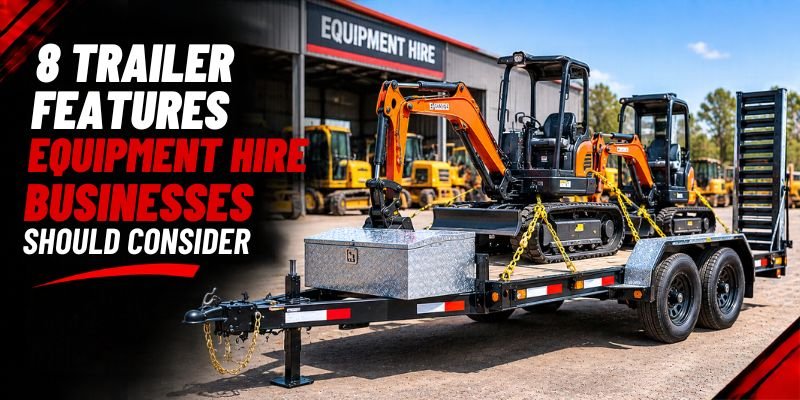
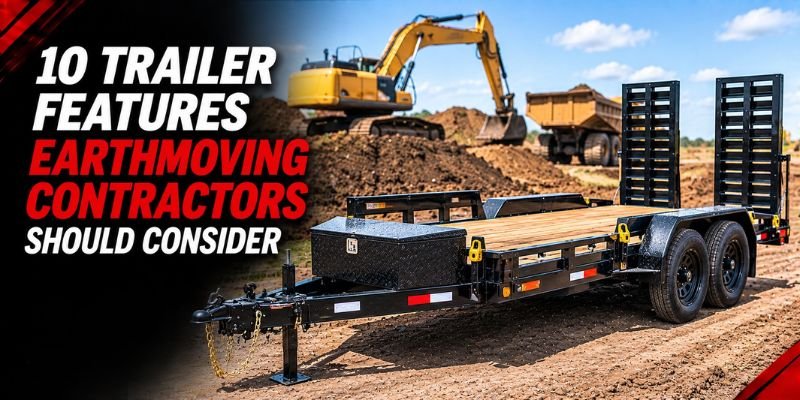
The most important earthmoving trailer features include suitable payload capacity, properly rated loading ramps, secure machinery tie-down points, an appropriately designed chassis and a compliant braking system. For excavation and civil construction contractors working across Warragul, Gippsland and Victoria, choosing the right trailer means matching its specifications to the machinery’s actual transport weight, dimensions and loading requirements.
Earthmoving contractors often transport mini excavators, skid steer loaders, compact track loaders, trenchers and other equipment between construction sites. Unlike general-purpose cargo, these machines can create concentrated loads and require specific loading and restraint arrangements.
A trailer that looks suitable may still be inappropriate if its ramps cannot safely accommodate the equipment, its available payload is insufficient or its deck dimensions make correct load positioning difficult.
Whether you operate a small excavation business, manage a landscaping team or transport machinery regularly for civil construction projects, understanding the right machinery trailer features can help you compare options more effectively.
Here are 10 features worth checking before choosing a machinery trailer for your business.
1. Payload Capacity That Matches Your Machinery
Payload capacity is one of the first factors to consider when choosing an earthmoving equipment trailer.
Excavators, skid steer loaders and compact construction machines vary significantly in weight. Even machines that appear similar in size may have different transport masses depending on their specifications and attachments.
Before selecting a trailer, identify the weight of the heaviest machine you intend to transport.
Important factors to check include:
- Actual machinery transport weight.
- Weight of fitted buckets and attachments.
- Additional tools and equipment being carried.
- Trailer tare mass and Aggregate Trailer Mass (ATM).
- Axle, tyre and coupling ratings.
- Tow vehicle and towbar limits.
- Applicable braking requirements.
For example, a contractor transporting a mini excavator may also need to carry a spare bucket, digging attachment and equipment restraints.
All these items must be included when assessing the complete load.
A trailer’s ATM represents the maximum permitted total mass of the loaded trailer. It is not the same as the weight available for machinery.

When comparing plant trailers, consider the actual trailer specifications and the complete equipment load rather than selecting a model based only on its deck size.
Practical tip: Obtain the machine’s documented transport weight and dimensions before requesting a machinery trailer quote.
2. Loading Ramps Designed for Your Equipment
Loading ramps are among the most important equipment trailer features for contractors transporting wheeled or tracked machinery.
A ramp must be suitable for more than the machine’s weight. Its length, width, loading angle, surface and attachment arrangement all influence whether equipment can be loaded safely.
Important loading ramp considerations include:
- Rated capacity of the complete ramp system.
- Ramp length and loading angle.
- Width and spacing for tracks or tyres.
- Surface traction.
- Suitable support and secure attachment.
- Clearance between the machine and trailer deck.
- Stability during loading and unloading.
For example, a mini excavator with limited ground clearance may have difficulty moving from a steep ramp onto the trailer deck.
Even if the ramp is rated for the machine’s weight, an unsuitable loading angle can create a risk of grounding or instability.
A skid steer loader may have different loading requirements because of its wheelbase, tyre arrangement and operating characteristics.
Depending on the trailer design, loading systems may include fold-down ramps, fixed ramps or other purpose-designed arrangements.
The safest option depends on the equipment manufacturer’s loading instructions and the complete trailer configuration.
Important: Do not assume that two ramps with a combined nominal capacity are suitable for a machine without checking how the load is distributed and how the ramp system is rated.
3. Strong Chassis Construction and Suitable Structural Support
Earthmoving equipment can place substantial loads on a trailer’s chassis and deck.
Tracked machines transfer weight through their track contact areas, while wheeled equipment can create concentrated loads around tyres and axle positions.
The trailer structure must be designed to support these loads during loading, transport and unloading.
When assessing the chassis, consider:
- Structural design and rated load capacity.
- Suitable cross-member support.
- Reinforcement where required.
- Drawbar construction.
- Deck support beneath machine contact areas.
- Corrosion protection.
- Suitability for the intended operating conditions.
For example, a contractor transporting a compact track loader regularly between construction sites should confirm that the trailer deck and underlying structure can accommodate the machine’s weight distribution.
A thicker-looking chassis does not automatically mean a higher approved capacity.
The complete trailer design, component specifications and manufacturing requirements determine whether a configuration is suitable.
Contractors working around Gippsland may also encounter wet conditions, road dust and repeated loading cycles.
Discuss these conditions with the manufacturer when comparing construction and finish options.
4. Rated Machinery Tie-Down Points and Restraint Systems
Machinery must remain properly secured throughout transport.
Excavators, compact loaders and other earthmoving equipment can shift during braking, cornering or travel over uneven roads if an appropriate restraint system is not used.
Suitable machinery trailers should include correctly positioned restraint points that are rated for their intended use.
Features to consider include:
- Rated tie-down attachment points.
- Suitable positions for machinery restraints.
- Appropriate chain or webbing systems.
- Access to designated machine restraint points.
- Secure arrangements for buckets and attachments.
- Protection against forward, rearward and sideways movement.
For example, transporting a mini excavator requires consideration of the machine’s tracks, boom, bucket and other movable components.
The correct transport position and restraint method should follow the machinery manufacturer’s instructions and applicable load-restraint requirements.
Do not rely on the machine’s parking brake or hydraulics as the only means of preventing movement.
For heavy vehicle operations, the National Heavy Vehicle Regulator provides a Load Restraint Guide. The National Transport Commission provides a separate guide for light vehicles.
Practical tip: Confirm that the machinery has suitable designated restraint points and that the complete restraint system meets the relevant requirements.
5. Suitable Axles, Suspension and Tyres
Axles, suspension and tyres are important parts of a machinery trailer’s load-carrying system.
Their specifications must suit the intended trailer capacity and operating conditions.
Some machinery trailers use tandem-axle arrangements, while other configurations may be suitable for different applications.
Important considerations include:
- Approved axle ratings.
- Tyre load and speed ratings.
- Suspension type.
- Wheel and bearing specifications.
- Load distribution between axles.
- Trailer stability and towing compatibility.
For example, a contractor who regularly transports a compact excavator on regional roads should consider the trailer’s approved mass and towing configuration.
A tandem-axle trailer may be appropriate for some heavier applications, but axle count alone does not determine how much machinery a trailer can legally carry.
The complete trailer must remain within its approved limits.
Similarly, suspension should be selected according to the trailer design rather than assuming one type is suitable for every load.
When comparing trailer options, ask the manufacturer to explain the specified axle and suspension configuration for your intended machinery.
Need a Trailer for Your Earthmoving Equipment?
Every excavator, loader and piece of construction equipment has different transport requirements.
Halco Trailers in Warragul can discuss suitable trailer configurations based on your machinery model, transport weight, dimensions, towing vehicle and loading needs.
Discuss Your Machinery Trailer Requirements
6. Durable Decking and Appropriate Load Support
The trailer deck must provide suitable support for the equipment being transported.
Machinery with tracks and machinery with tyres may distribute weight differently, making the deck and its supporting structure important considerations.
Possible deck materials and finishes depend on the trailer design and intended application.
When reviewing decking, consider:
- Load rating and structural support.
- Concentrated loads from tracks or tyres.
- Surface traction during loading.
- Resistance to wear and impact.
- Drainage and cleaning requirements.
- Corrosion protection.
For example, a compact track loader may place substantial weight through its track contact areas.
The deck must be capable of supporting these loads without exceeding the manufacturer’s specifications.
A wheeled skid steer may create different loading conditions because its weight is transferred through individual tyres.
The correct deck specification should be determined by the actual machine and the trailer’s structural design.
Avoid choosing flooring only because it looks heavy-duty. Confirm that the complete deck system is appropriate for the intended equipment.
7. Appropriate Deck Dimensions and Loading Height
A trailer’s usable length, width and loading height can affect whether machinery fits correctly and can be loaded safely.
Before purchasing a trailer, measure the equipment in its required transport configuration.
Measurements to confirm include:
- Overall machine length.
- Overall machine width.
- Transport height.
- Track or wheel spacing.
- Ground clearance.
- Bucket and attachment dimensions.
- Space required for restraint equipment.
For example, a mini excavator may fit within the trailer’s deck width but require additional usable length to accommodate its boom, blade or bucket in the correct transport position.
Loading height is another important factor.
A lower deck can reduce the ramp angle for some machinery, but the overall design must still provide suitable ground clearance and comply with relevant requirements.

For equipment that requires open-deck access or suitable side loading arrangements, flat top trailers may be worth considering.
The correct configuration depends on the machinery’s dimensions, approved trailer capacity and safe loading method.
8. A Braking System Suitable for the Trailer’s Mass
Braking is a critical part of plant trailer safety.

A machinery trailer must have a braking system that complies with applicable Australian requirements and is suitable for the trailer’s approved mass and design.
Depending on the specification, compliant trailer systems may use different braking arrangements.
Important considerations include:
- Trailer ATM.
- Applicable braking requirements.
- Brake controller compatibility.
- Parking brake arrangements.
- Brake condition and maintenance.
- Towing vehicle suitability.
For example, an earthmoving contractor towing a loaded machinery trailer through regional Victoria may encounter gradients, changing traffic conditions and wet roads.
Correctly specified and maintained brakes are essential for safe operation.
However, braking capacity does not compensate for overloading, incorrect machinery positioning or an unsuitable towing vehicle.
Before purchasing, confirm the exact braking configuration and whether the tow vehicle requires any compatible control equipment.
9. Practical Storage for Tools, Chains and Attachments
Earthmoving contractors often carry additional equipment alongside their machinery.
This may include buckets, tools, restraint chains, maintenance supplies and small accessories.
Without dedicated storage, these items can interfere with loading or become loose during transport.
Useful storage options include:
- Lockable toolboxes.
- Separate storage for chains and restraint straps.
- Compartments for suitable maintenance equipment.
- Secure mounting for compatible accessories.
- Protected storage for sensitive tools.
- Accessible spaces for frequently used items.
For example, a contractor transporting a mini excavator may also need to carry additional buckets or specialised attachments.
These items must be included in the trailer’s load calculations and secured appropriately.
For smaller equipment or tools requiring additional weather protection, Halco’s Enclosed Trailers page provides another category to explore.
An enclosed trailer may suit certain compatible equipment, but it should not automatically be considered suitable for an excavator or loader.
Internal dimensions, loading access, deck capacity, ventilation and approved mass must all be checked before selecting an enclosed configuration.
10. Custom Features Designed Around Your Machinery
Earthmoving contractors have different equipment transport requirements.
A landscaping business may transport a compact excavator, while a civil construction contractor may use a skid steer, trencher or other specialised machine.
A trailer designed around the equipment used most frequently can provide more practical loading and storage arrangements.
When discussing a custom configuration, consider:
- Machinery weight and dimensions.
- Ramp type and loading angle.
- Deck size and loading height.
- Restraint point locations.
- Axle and braking specifications.
- Additional equipment storage.
- Spare wheel placement.
- Worksite access conditions.
For example, a contractor transporting a compact excavator and several buckets may require dedicated attachment storage and suitable machine positioning.
Rather than adding accessories after purchasing a standard trailer, it may be useful to consider the complete working arrangement during the design stage.
Halco Trailers manufactures custom trailers in Warragul, Victoria.
Contractors can discuss trailer dimensions, ramp arrangements, storage and other requirements based on their machinery and towing specifications.
The objective should be a trailer that is appropriately rated, practical to load and suited to the equipment being transported.
Which Trailer Features Matter for Different Earthmoving Machines?
Different types of machinery place different demands on a trailer.
Understanding these differences can help contractors identify which features should receive the most attention.
Machinery type | Features to prioritise | What to check |
Mini excavator | Loading ramps, deck length, machine restraints | Transport weight, tracks, bucket, boom position and attachments |
Skid steer loader | Loading traction, deck support, suitable ramp design | Tyre spacing, loading angle, machine dimensions and weight |
Compact track loader | Strong deck support, rated ramps, restraint points | Track contact loads, transport mass and clearance |
Trencher | Secure equipment positioning and suitable loading access | Machine dimensions, track or wheel arrangement and restraint method |
Compact landscaping machinery | Practical loading access and suitable payload | Equipment weight, dimensions and additional accessories |
For example, a mini excavator and skid steer loader may have similar overall weights but different loading requirements.
The excavator may require particular attention to boom position and attachment restraint, while the skid steer may have different ramp traction and clearance requirements.
This is why contractors should select trailers using actual machine specifications rather than general equipment categories.
Which Trailer Type Is Suitable for Earthmoving Contractors?
Several trailer configurations may be considered for machinery transport.
Trailer type | Potential benefits | Important considerations |
Plant trailer | Machinery-focused loading and transport arrangements | Ramps, payload, restraints and machine dimensions |
Flat-top trailer | Open-deck loading access for suitable equipment | Deck capacity, restraints and loading method |
Enclosed trailer | Protected transport for compatible smaller equipment | Internal clearance, loading access and approved capacity |
Custom trailer | Configuration planned around particular machinery | Structural suitability, braking, dimensions and towing limits |
A machinery-focused trailer is generally the most relevant starting point for contractors transporting compact earthmoving equipment.
However, the correct trailer depends on the specific machine rather than the category name alone.
For example, a machine requiring side loading may benefit from a different arrangement from equipment loaded using rear ramps.
Similarly, a contractor carrying multiple attachments may require dedicated storage and a different deck layout.
Before selecting a trailer, compare the machinery’s actual requirements with the manufacturer’s approved specifications.
How Much Weight Can an Earthmoving Trailer Carry?
Understanding trailer payload is essential for safe machinery transport.
A common mistake is assuming that a trailer’s ATM represents the weight of equipment it can carry.
In reality, the trailer’s own weight must also be considered.
Example: Machinery Trailer Payload Calculation
Consider the following hypothetical trailer and equipment combination.
Item | Weight |
Trailer ATM | 3,500 kg |
Trailer tare mass | 900 kg |
Theoretical available payload | 2,600 kg |
Mini excavator transport mass | 2,300 kg |
Additional attachments and equipment | 150 kg |
Theoretical remaining load allowance | 150 kg |
Step 1: Calculate available payload
3,500 kg − 900 kg = 2,600 kg
Step 2: Calculate the additional load
2,300 kg + 150 kg = 2,450 kg
Step 3: Calculate the remaining allowance
2,600 kg − 2,450 kg = 150 kg
In this example, the theoretical remaining allowance is 150 kg.
However, this does not automatically mean that the combination is suitable for road transport.
Any fitted accessories not already included in tare mass must also be accounted for.
The loaded trailer must comply with the approved axle, tyre, coupling and braking limits, as well as the tow vehicle’s towing, towbar, Gross Combination Mass and other applicable ratings.
The position of the machine can also affect axle loads and towball download.
These figures are illustrative only and are not specifications for a Halco trailer.
Practical tip: Check the documented transport mass of your machine, including relevant attachments and equipment, before comparing trailer capacities.
Machinery Trailer Loading Checklist
Before loading equipment, review the following checklist.
Item | What to check |
Machine weight | Actual transport mass, including relevant attachments |
Trailer ATM | Approved maximum loaded trailer mass |
Available payload | Equipment and accessories within applicable limits |
Towing vehicle | Towing, towbar and combination ratings |
Ramp capacity | Suitable for the actual machine and loading method |
Ramp dimensions | Correct width, length and angle |
Deck condition | Suitable support and no visible damage |
Tie-down points | Rated and correctly positioned |
Restraint equipment | Suitable chains, straps or other approved systems |
Machine position | Appropriate balance and load distribution |
Trailer brakes | Correct operation and compliance |
Tyres and wheels | Suitable condition, pressure and ratings |
Coupling and safety chains | Properly connected and serviceable |
Transport clearance | Compliant height, width and length |
Final inspection | Machine, attachments and ramps secured |
This checklist does not replace a manufacturer-approved loading procedure or task-specific risk assessment.
5 Common Earthmoving Trailer Mistakes to Avoid
1. Choosing a Trailer Based Only on Machine Weight
A trailer must accommodate the machine and any additional items carried.
Buckets, tools, fuel and attachments can reduce the remaining payload allowance.
Calculate the complete load before choosing a trailer.
2. Using Ramps That Are Too Steep or Unsuitable
A ramp may have sufficient rated capacity but still be inappropriate for the machine’s ground clearance or track spacing.
Check the complete ramp system and follow the equipment manufacturer’s loading instructions.
3. Incorrect Machinery Restraint
Heavy machinery can move during transport if not properly restrained.
Use suitable restraint points and systems, including appropriate securement for attachments and movable components.
4. Poor Weight Distribution
Positioning the machine too far forward, rearward or to one side may affect towing stability and component loading.
Follow the trailer manufacturer’s recommendations and verify actual axle and towball loads where necessary.
5. Overlooking Trailer Maintenance
Machinery trailers experience repeated loading and may operate in demanding conditions.
Regularly inspect tyres, bearings, brakes, ramps, coupling components and restraint fittings.
Replace or repair damaged equipment before further use.
Practical Machinery Trailer Loading Tips
Correct loading practices are essential when transporting earthmoving equipment.
Before loading, choose a stable and suitable location.
Inspect the trailer and loading ramps for damage or defects.
Confirm that the equipment is within the trailer’s approved limits and that the loading arrangement follows the machinery manufacturer’s instructions.
During loading:
- Use the designated loading procedure for the machine.
- Ensure the loading area is clear of unnecessary personnel.
- Check that ramps are properly secured.
- Maintain appropriate control of the machine.
- Avoid abrupt movements that could affect stability.
- Follow any specified restrictions on loading direction and orientation.
Once the machine is positioned, prepare it for transport according to the manufacturer’s instructions.
Secure the machine and attachments using suitable restraints.
Before travelling, check that the trailer’s ramps, coupling, lights and restraints are correctly secured.
Do not assume that a machine is safe to transport simply because it remains stationary on the trailer.
Safety note: Machinery loading can create serious hazards. Only competent operators should undertake loading using an appropriate safe work procedure and risk assessment.
Earthmoving Trailer Requirements in Victoria
Earthmoving contractors operating around Warragul, Gippsland and regional Victoria must consider applicable vehicle standards, towing requirements and load-restraint rules.
Trailer Construction and Modification
Light trailers with an ATM of up to 4.5 tonnes are subject to relevant Australian trailer standards.
For further information, refer to Transport Victoria’s light trailer construction and modification guidance.
Load Restraint
Machinery must be properly restrained during transport.
The National Transport Commission maintains guidance for light vehicle load restraint, while the National Heavy Vehicle Regulator provides guidance relevant to heavy vehicles.
Contractors should use the guidance applicable to their vehicle combination.
Trailer Mass and Towing Limits
The loaded trailer must remain within all relevant approved ratings.
This includes the trailer, towing vehicle, towbar, coupling, axles, tyres and braking system.
A tow vehicle’s maximum advertised towing capacity should not be considered in isolation from its other limits.
Machinery Dimensions and Overhang
Machines and attachments must remain within the applicable vehicle and load dimension rules.
Equipment that exceeds standard dimensions may require additional permissions or operating conditions.
Always confirm the requirements for the particular machinery transport task.
Why Consider Halco Trailers for Earthmoving Equipment Transport?
Halco Trailers and Fabrication manufactures standard and customised trailer configurations at its Warragul workshop in Victoria.
The company supplies trailers for tradespeople, contractors, farmers, machinery operators and other customers across Gippsland, Melbourne and regional Victoria.
Halco’s machinery trailer range includes configurations that can be discussed according to trailer dimensions, ramp requirements, braking arrangements, storage and other intended-use considerations.
For earthmoving contractors, providing accurate machinery details can help the team assess suitable options.
Before requesting a quote, prepare:
- Machine make and model.
- Documented transport weight.
- Overall machine dimensions.
- Bucket and attachment details.
- Towing vehicle specifications.
- Preferred loading method.
- Required equipment storage.
- Frequency and conditions of use.
These details can help identify whether a standard trailer design may be appropriate or whether a different configuration should be considered.
Whether you operate a compact excavation business in Warragul, provide landscaping services around Drouin or transport machinery across Gippsland, selecting a suitable trailer starts with understanding your equipment.
Discuss Your Earthmoving Trailer Requirements with Halco Trailers
Choosing the right trailer for earthmoving work involves more than selecting a deck size or adding loading ramps.
The trailer must suit the machinery’s actual transport weight, dimensions, loading method and restraint requirements.
From suitable payload capacity and durable construction to loading access and practical storage, the right specifications depend on how the trailer will be used.
Halco Trailers manufactures standard and customised trailer configurations in Warragul, Victoria, serving customers throughout Gippsland, Melbourne and surrounding areas.
If you are looking for a trailer to transport a mini excavator, skid steer, trencher or other compact earthmoving equipment, contact Halco with your machinery specifications.
Request a Machinery Trailer Quote
Share your machinery model, documented transport weight, dimensions, towing vehicle and loading requirements so the Halco team can discuss a suitable configuration.