

What Is a Hydraulic Tipper Trailer and How Does It Work?
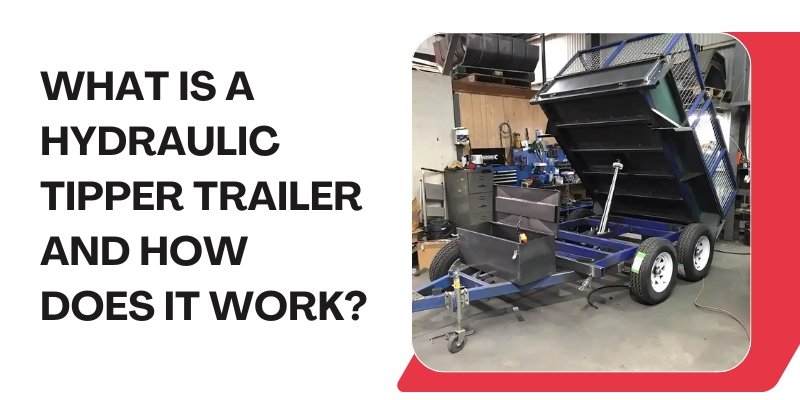
A hydraulic tipper trailer is a trailer with a tipping body that can be raised by a hydraulic system to help unload suitable loose material. Instead of manually shovelling everything out of the trailer, the body lifts so material can slide or discharge from the tray.
This beginner guide explains what a hydraulic tipper trailer is, how hydraulic tipping works, what electric-over-hydraulic systems do, what these trailers are commonly used for, and where they have limitations.
For current product details, view Halco’s hydraulic tipper trailer configurations.
Last updated: 27 July 2026
A hydraulic tipper trailer raises its trailer body using hydraulic force so suitable loose material can be unloaded more easily. It still needs to match the load, towing vehicle, payload, restraint method and unloading location.
Quick Summary
| Question | Beginner answer |
|---|---|
| What is it? | A trailer with a hydraulic tipping body |
| How does it work? | A hydraulic ram lifts the trailer body so suitable material can discharge |
| What does it carry? | Loose material such as soil, mulch, gravel, sand and green waste |
| What powers the lift? | A hydraulic system, sometimes using an electric-over-hydraulic setup |
| Is it always suitable? | No. Load weight, payload, site conditions and towing setup must be checked |
| Main limitation | Not all materials tip cleanly, and payload can be reached before the tray looks full |
What Is a Hydraulic Tipper Trailer?
A hydraulic tipper trailer is a trailer built with a body that can lift at an angle. The lifting action is created by a hydraulic system.
The tipping body is normally used to unload loose material from the trailer. This can reduce the amount of manual unloading needed, especially when carrying material that can slide or flow from the tray.
A hydraulic tipper trailer may include:
Trailer body or tray
Hydraulic ram
Hydraulic power unit
Battery or power source
Switch or remote control
Hydraulic hoses and fittings
Body pivot points
Tailgate
Coupling
Axles, wheels and brakes
Safety chains and lights
The exact setup depends on the trailer design, rating and intended use.
How Does Hydraulic Tipping Work?
Hydraulic tipping works by using pressurised fluid to move a ram. As the ram extends, it lifts the trailer body. The body pivots upward, allowing suitable material to move toward the tailgate or discharge point.
A simple tipping sequence usually looks like this:
The trailer is positioned safely.
The operator checks the load and surrounding area.
The tailgate or discharge area is prepared.
The hydraulic system is activated.
The ram extends and raises the body.
Material begins to slide or discharge.
The body is lowered after unloading.
The trailer is secured before towing again.
The process is simple in principle, but site conditions matter. The ground should be suitable, the trailer should remain stable, and people should stay clear of the tipping area.
Electric-Over-Hydraulic Basics
Some hydraulic tipping systems use an electric-over-hydraulic setup.
In simple terms, an electric power source operates a hydraulic pump. The pump moves hydraulic fluid, which extends the ram and raises the tipping body.
This type of system may include:
Battery
Hydraulic pump
Hydraulic fluid reservoir
Hydraulic ram
Hoses
Electrical switch or remote
Battery box
Wiring and charging setup
The system allows the trailer body to lift without manual lifting. However, it still needs basic care. Batteries can lose charge, hoses can wear, fittings can loosen, and moving parts can become damaged through frequent use or poor maintenance.
Common Materials
Hydraulic tipper trailers are mainly associated with suitable loose materials.
Common examples include:
Soil
Sand
Gravel
Mulch
Garden mix
Green waste
Firewood
Farm supplies
Property-cleanup material
Suitable rubble or site material
A material that fits in the tray may still be too heavy for the trailer’s approved payload. Wet soil can become heavier, gravel is dense, mulch is bulky, green waste may need containment, and rubble can be abrasive or uneven.
For detailed construction and landscaping examples, use a dedicated use-case article rather than expanding this beginner guide.
Benefits of a Hydraulic Tipper Trailer
A hydraulic tipper trailer can make material handling easier when it is matched to the right job.
Main benefits include:
Less manual unloading
Faster discharge of suitable loose material
Useful for repeated material trips
Practical for property, farm, trade and maintenance tasks
Support for loose-material cleanup
Better workflow where unloading happens often
The main benefit is unloading assistance. A tipping body helps when the material can move out of the trailer safely and predictably.
Limitations of a Hydraulic Tipper Trailer
A hydraulic tipper trailer is not suitable for every load.
Common limitations include:
Wet or sticky material may not slide cleanly
Dense material can exceed payload quickly
Uneven loads can affect stability
Tipping needs suitable ground
Overhead clearance is required
Hydraulic parts need inspection and maintenance
Loose material still needs containment
Some cleanup may still be needed after tipping
A hydraulic trailer should not be chosen only because it can tip. It should be chosen because the material, site and towing setup suit that style of unloading.
ATM, Tare Mass and Payload
Three weight terms are important for beginners.
ATM means Aggregate Trailer Mass. It is the total permitted mass of the trailer when carrying the maximum load recommended by the manufacturer.
Tare mass is the mass of the trailer without cargo.
Payload is the amount of weight left for the load.
Payload = ATM − tare mass
A hydraulic tipper trailer may have a higher tare mass than a basic trailer because it includes hydraulic equipment, a tipping body, battery, ram, hinges and other components.
That means payload should always be checked before loading. A large tray does not automatically mean a large carrying capacity.
The Australian Government’s VSB 1 trailer guidance applies to trailers with an aggregate trailer mass of 4.5 tonnes or less and explains the ADR framework for low-ATM trailers.
For wider pre-purchase checks covering payload, towing and trailer selection, read Halco’s buying trailers for sale in Melbourne guide.
Safety Considerations
Tipping should be treated as a controlled step.
Before tipping, check:
Ground firmness
Slope
Overhead clearance
People nearby
Vehicle and trailer stability
Tailgate position
Discharge direction
Load behaviour
Hydraulic operation
Whether the load may stick or bridge
Do not tip if the trailer is overloaded, unstable, unevenly loaded or positioned on unsuitable ground.
Load Restraint Basics
A tipping body does not remove the need for load restraint.
Loose material, tools, ramps, covers, cages and accessories still need to be secured before travel.
Transport Victoria states that loads must be properly restrained and that different loads need different transport methods. Its load-restraint guidance recommends suitable restraint equipment, rated equipment where possible, careful load positioning and regular checks during travel.
Before towing, check:
Tailgate is closed and latched
Loose material is contained
Covers or cages are secured
Ramps are locked or secured
Tools are stored safely
Load does not block lights or number plate
Load does not create unsafe overhang
Maintenance Basics
Hydraulic tipper trailers include moving, electrical and hydraulic components, so routine checks are important.
Basic checks include:
Tyres
Wheel nuts
Bearings
Brakes
Lights
Coupling
Safety chains
Hydraulic hoses
Hydraulic fittings
Battery condition
Ram condition
Pivot points
Tailgate and latches
Body hinges
Chassis and drawbar
After carrying wet, abrasive or corrosive material, clean the body and check around hinges, tailgates and moving parts.
Tipper Trailer vs Box Trailer vs Flat-Top Trailer
Different trailer types suit different tasks.
Hydraulic Tipper Trailer
A hydraulic tipper trailer is useful when the main task is moving and unloading suitable loose material.
It is commonly considered for:
Soil
Gravel
Mulch
Sand
Green waste
Site cleanup
Farm and property material
Its main advantage is assisted unloading.
Box Trailer
A box trailer has fixed sides and is often used for general cargo that benefits from containment.
It may suit:
Household loads
Garden supplies
Tools
General property work
Loose items that need fixed sides
A box trailer does not provide hydraulic unloading unless it is built as a tipping trailer.
Flat-Top Trailer
A flat-top trailer has an open deck and is useful when cargo needs side access, overhead loading or a clear deck.
It may suit:
Pallets
Machinery
Long materials
Frames
Equipment
Loads needing forklift access
A flat-top trailer is usually better for open loading access, while a tipper is better for suitable loose material that needs assisted unloading.
For a broader side-by-side comparison, read Halco’s types of trailers comparison guide.
When a Hydraulic Tipper Trailer May Not Be the Right Choice
A hydraulic tipper may not be the best fit when:
The main load is machinery
The cargo needs side loading
The cargo needs weather protection
The load is too dense for the available payload
The material does not tip cleanly
The site does not allow safe body lift
The towing vehicle is not suitable
A basic box trailer would handle the task more simply
The right trailer type depends on the job, not only on the trailer body style.
Registration and Road-Use Note
Registration and road-use requirements vary between Australian states and territories. The following information relates specifically to trailers used in Victoria.
VicRoads states that trailers or caravans must be registered if they are to be towed in Victoria unless they meet specific exemption criteria. VicRoads also states that a trailer being registered for the first time in Australia must be entered on the Register of Approved Vehicles. VicRoads trailer registration guidance
Registration and compliance details depend on the completed trailer specification, ATM and intended road use.
Beginner Checklist
Before choosing or using a hydraulic tipper trailer, check:
What material will be carried
Whether the material is suitable for tipping
Expected load weight
Trailer ATM
Trailer tare mass
Available payload
Towing vehicle capacity
Loading method
Unloading location
Ground conditions
Overhead clearance
Load-restraint method
Hydraulic system condition
Brake and lighting condition
Registration requirements
This checklist helps prevent choosing a trailer based only on tray size or appearance.
Final Thoughts
A hydraulic tipper trailer is designed to make unloading suitable loose material easier. It can be useful for soil, mulch, gravel, sand, green waste and similar material when the trailer, load and site are properly matched.
The key beginner concept is simple: the hydraulic system helps lift the body, but the trailer still needs to suit the load, payload, towing vehicle, restraint method and tipping location.
A hydraulic tipper is not automatically the right trailer for every job. For some tasks, a box trailer, flat-top trailer or plant trailer may be more suitable.
Faq's
A hydraulic tipper trailer is a trailer with a tipping body raised by a hydraulic system.
It is commonly used to unload suitable loose material such as soil, mulch, gravel, sand and green waste.
A hydraulic system extends a ram that lifts the trailer body.
As the body rises, suitable material can slide or discharge from the tray.
It may carry suitable loose materials such as soil, sand, gravel, mulch, green waste and property-cleanup material.
The load must remain within payload and suit the trailer body.
Electric-over-hydraulic means an electric power source operates a hydraulic pump that moves fluid to extend the ram.
This allows the tipping body to lift without manual lifting.
It depends on the job.
A hydraulic tipper is better for assisted unloading of suitable loose material. A box trailer is better for general cargo that mainly needs fixed sides.
It depends on the load.
A tipper suits loose material that needs assisted unloading. A flat-top suits pallets, machinery, long materials and cargo needing open side or overhead loading.
Payload is the weight available for cargo after tare mass is deducted from ATM.
Hydraulic equipment and accessories can increase tare mass and reduce available payload.
Yes. A tipping body does not remove the need for restraint.
Loose material, tools, ramps, covers and accessories must be secured before towing.