
By Halco Trailers Team, Trailer Manufacturing / Safety Specialist
Published: 15 September 2026
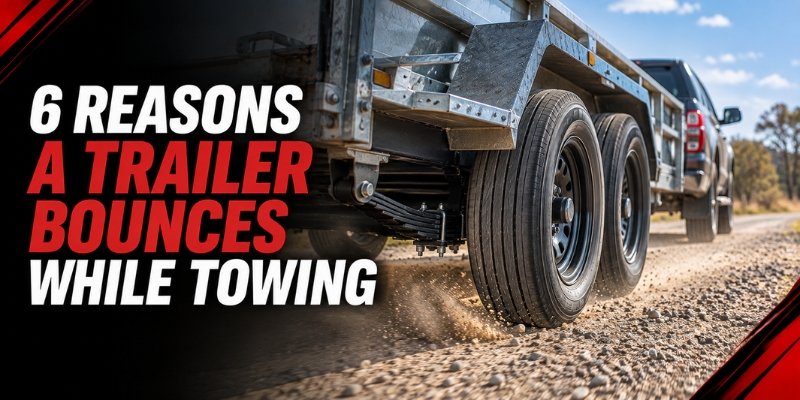
If you’re wondering why does my trailer bounce, the most common causes are poor load distribution, incorrect tyre pressure, unsuitable suspension, an incorrect towing setup, worn components or towing an empty/lightly loaded trailer. Persistent bouncing should be investigated before it affects stability, tyres or suspension components.
A trailer that repeatedly bounces over bumps can be uncomfortable, but it can also indicate that something is wrong with the way the trailer, load and tow vehicle are working together.
This matters particularly for tradies, contractors, landscapers, farmers and businesses using car trailers, tradesman trailers or flat top trailers. A trailer carrying tools or machinery can behave very differently from the same trailer when empty.
This why does my trailer bounce guide explains six common causes, how to identify them and what to check before your next trip.
Table of contents
- Why does my trailer bounce while towing?
- 1. The trailer is empty or lightly loaded
- 2. The load is distributed incorrectly
- 3. Tyre pressure is incorrect
- 4. The suspension is too stiff, worn or damaged
- 5. The trailer is not sitting correctly behind the tow vehicle
- 6. The trailer or tow vehicle has a mechanical problem
- How can you tell normal movement from a suspension problem?
- Why does my trailer bounce checklist
- Why does my trailer bounce common mistakes
- Why does my trailer bounce features to consider
- Why does my trailer bounce in Australia: what should owners know?
- When should you book trailer repair or servicing?
- Conclusion
- FAQs
Why does my trailer bounce while towing?
A trailer can bounce while towing when its suspension, tyres, load distribution and towing setup are not working together correctly. Empty trailers, poorly balanced loads, incorrect tyre pressure and worn suspension components are common causes of repeated vertical movement.
Some movement over bumps is normal. The concern is persistent or excessive bouncing, particularly when the trailer continues oscillating after a bump, becomes unstable or starts affecting the tow vehicle.
The Australian Government’s Vehicle Standards Bulletin 1 recognises different trailer axle arrangements and requires load-sharing suspension to be designed so each axle in a group carries the same load regardless of vertical axle movement.
That means bouncing should not automatically be blamed on one component. The trailer’s load, suspension, tyres and overall towing setup need to be considered together.
1. The trailer is empty or lightly loaded
One of the simplest answers to why does my trailer bounce is that there is not enough load for the suspension to operate through its intended range. A trailer designed for work loads can feel noticeably harsher when it is empty.
Leaf springs, axles and tyres all contribute to how a trailer responds to bumps. When there is very little weight over the axle, the suspension may not compress much before encountering road impacts.
Signs an empty trailer is the cause
You may notice:
- More bouncing when the trailer is empty
- A smoother ride after an appropriate load is added
- Increased tyre hop over corrugated surfaces
- More visible movement over speed humps
- Less bouncing when carrying a normal working load
However, do not add unnecessary weight just to stop bouncing. The trailer should never be overloaded or loaded simply to change its ride.
Instead, check whether the trailer is designed for the loads you actually carry.
A lightweight trailer used mainly for household jobs may behave differently from a heavy-duty trailer used to transport machinery or building materials.
What to do
Check:
- The trailer’s tare and rated capacity.
- Your normal operating load.
- Whether the suspension rating suits the trailer.
- Tyre pressure.
- Whether the trailer remains stable when correctly loaded.
If the trailer continues to bounce excessively under its normal working load, investigate the other causes below.
2. The load is distributed incorrectly
Poor load distribution is one of the most important causes of trailer bouncing. Heavy items positioned too far forward or too far rearward can change the load carried by the axle and coupling and make the trailer behave unpredictably.
The problem is not simply the total weight. Where that weight sits matters.
A machine positioned near the rear of a flat deck, for example, can create a very different towing response from the same machine positioned appropriately for the trailer and towing vehicle.
How load position can affect bouncing
Load condition | Possible effect |
Too much weight behind the axle | Can reduce coupling load and contribute to instability |
Excessive weight at the front | Can increase coupling load and tow vehicle rear suspension loading |
Heavy items concentrated on one side | Can create uneven suspension loading |
Load positioned high | Can increase body movement and instability |
Poorly restrained equipment | Load movement can amplify bouncing |
Correctly distributed load | Helps suspension and tyres work more predictably |
The National Transport Commission’s Load Restraint Guide states that loads must be safely restrained, must not exceed applicable mass limits and must not create hazards for other road users.
This is especially important when transporting wheeled machinery. The NHVR’s loading guidance notes that wheeled equipment can move because of tyre flex and that movement can contribute to bounce and stress on restraint systems.
Practical example
Imagine a tradie loading:
- A generator
- Several toolboxes
- Timber
- Compressors
- Other equipment
Putting the heaviest items wherever there is space may create an unstable load even when the total weight is within the trailer’s rating.
The solution is not necessarily a heavier trailer. It may be better load positioning, suitable restraint and a trailer configuration that matches the job.
3. Tyre pressure is incorrect
Incorrect tyre pressure can make a trailer bounce more noticeably because the tyres form part of the system absorbing and transmitting road impacts. Overinflated or underinflated tyres can change ride behaviour, heat generation and contact with the road.
Tyre pressure should be based on the tyre, wheel and trailer requirements rather than copying the pressure from the tow vehicle.
What incorrect pressure can cause
Tyre condition | Potential effect |
Too much pressure | Harsher ride and greater impact transmission |
Too little pressure | Excessive tyre flex, heat and potential instability |
Unequal pressures | Uneven behaviour from side to side |
Incorrect tyre load rating | Tyre may not be suitable for the actual trailer load |
Damaged or aged tyre | Increased failure risk |
Correct pressure | Better opportunity for predictable handling |
Always check tyres when they are cold and follow the applicable tyre and trailer manufacturer’s specifications.
Do not deliberately lower tyre pressure simply to make the trailer feel softer. Underinflation can create heat and handling problems.
Also check for uneven tyre wear
If one tyre is wearing differently from the others, bouncing may not be a tyre-pressure problem alone.
Uneven wear can point towards:
- Axle alignment problems
- Suspension wear
- Bent components
- Uneven loading
- Brake drag
- Wheel or bearing problems
If correcting pressure does not solve the problem, investigate the running gear rather than repeatedly changing tyre pressure.
4. The suspension is too stiff, worn or damaged
Suspension can cause bouncing when it is incorrectly matched to the trailer, excessively stiff for the actual load, worn, damaged or unable to control movement properly. Springs, bushes, shackles, hangers, axles and shock absorbers where fitted all deserve inspection.
A trailer suspension system is designed around the trailer’s intended load and configuration.
If the suspension is significantly too stiff for the operating load, an empty or lightly loaded trailer may feel harsh. If components are worn or damaged, the trailer may bounce even when correctly loaded.
Suspension components worth checking
Component | What to look for |
Leaf springs | Cracks, broken leaves, sagging or corrosion |
Shackles | Excessive movement or worn holes |
Bushes | Cracking, deterioration or metal-to-metal contact |
Hangers | Cracks, corrosion or distortion |
U-bolts | Looseness or damaged hardware |
Axles | Bending, movement or alignment problems |
Shock absorbers | Leaks or poor movement control where fitted |
Mounting points | Cracks or structural damage |
Halco’s existing trailer suspension guide explains that suspension supports the load, absorbs road movement and helps keep tyres in contact with the road. Persistent bouncing, clunking, leaning and uneven tyre wear can indicate that the suspension needs inspection.
When suspension bouncing is a serious warning
Do not treat bouncing as normal if you also notice:
- A cracked spring
- A visibly shifted axle
- Tyre rubbing
- Heavy leaning
- Loud metal-on-metal noises
- Broken or loose suspension hardware
- Severe uneven tyre wear
- Sway that continues after correcting the load
These symptoms warrant inspection before further loaded towing.
5. The trailer is not sitting correctly behind the tow vehicle
An incorrect towing position can contribute to bouncing and pitching. The trailer should be matched to the tow vehicle and coupling arrangement, with the loaded trailer sitting in an appropriate position rather than excessively nose-high or nose-low.
A poor towing angle can affect how the axle group and coupling carry the load.
Check the towing setup
Check | Why it matters |
Coupling height | Helps establish an appropriate trailer position |
Tow-ball rating | Must suit the towing application |
Coupling rating | Must not be exceeded |
Trailer load | Must remain within applicable limits |
Tow vehicle capacity | Must accommodate the loaded trailer |
Trailer attitude | Excessive nose-up or nose-down position can affect load distribution |
Suspension | Tow vehicle rear suspension must cope with the coupling load |
NSW Government towing guidance recommends checking that the vehicle and trailer are roadworthy before each trip and specifically includes tyres, wheel bearings, suspension, brakes, lights and safety chains in the pre-trip inspection. It also states that the trailer must be suitable for its intended task and that towing limits must not be exceeded.
If the tow vehicle’s rear suspension is heavily compressed, do not assume the trailer itself is the only problem.
Check the entire combination.
6. The trailer or tow vehicle has a mechanical problem
If bouncing continues regardless of load, tyre pressure and towing position, a mechanical problem may be responsible. Worn suspension components, damaged axles, wheel or bearing problems, tyre defects or tow vehicle suspension issues can all contribute to unusual movement.
This is where guessing becomes risky.
Trailer-side faults
Possible causes include:
- Damaged springs
- Worn bushes
- Bent axles
- Loose suspension hardware
- Wheel-bearing problems
- Damaged tyres
- Brake drag
- Uneven suspension loading
- Chassis damage
Tow-vehicle faults
The tow vehicle should also be considered.
Worn rear shocks, damaged suspension components or excessive rear-end movement can make the trailer appear to be the source of the bouncing when the problem actually starts with the vehicle.
A useful diagnostic sequence
If the trailer suddenly begins bouncing:
- Stop somewhere safe.
- Check whether the load has moved.
- Inspect the tyres.
- Look for visible suspension damage.
- Check for tyre-to-body rubbing.
- Check the trailer’s attitude behind the vehicle.
- Check whether one wheel or hub appears unusually hot.
- Do not continue loaded towing if the fault is unexplained or severe.
- Arrange professional inspection if the problem persists.
How can you tell normal movement from a suspension problem?
Some trailer movement is normal when travelling over bumps, potholes or uneven roads. A suspension problem is more likely when the trailer continues bouncing excessively, develops sway, leans, produces unusual noises or shows uneven tyre wear.
Normal vs concerning movement
Normal movement | Concerning movement |
Brief movement over a bump | Repeated bouncing after the bump |
Small movement on rough roads | Trailer continues oscillating |
Empty trailer feels firmer | Bouncing remains excessive when normally loaded |
Suspension compresses and settles | Trailer keeps pitching |
No unusual noise | Clunking, grinding or banging |
Tyres remain stable | Tyres hop, scrub or rub |
Trailer tracks normally | Trailer wanders or sways |
If the trailer starts to sway as well as bounce, treat that as a higher-priority handling problem.
NSW Government towing guidance advises drivers to use smooth acceleration, braking and steering and explains that trailers can develop sway or “snaking”.
Why does my trailer bounce checklist
Use this why does my trailer bounce checklist when the trailer starts moving excessively.
Before changing anything, check:
- Is the trailer empty or lightly loaded?
- Is the load correctly positioned?
- Is the load properly restrained?
- Are all tyres inflated to the specified pressure?
- Are tyre sizes and load ratings appropriate?
- Does the trailer sit correctly behind the tow vehicle?
- Are the springs intact?
- Are shackles and bushes worn?
- Are U-bolts and suspension mounts secure?
- Is the axle straight and correctly positioned?
- Are tyres wearing evenly?
- Is there any tyre-to-guard rubbing?
- Are there unusual noises?
- Does the tow vehicle’s rear suspension appear overloaded?
- Does the bouncing continue when the trailer is correctly loaded?
If several answers raise concerns, do not keep experimenting on public roads. Arrange an inspection.
Why does my trailer bounce common mistakes
The most common mistakes are changing tyre pressure without checking specifications, adding unnecessary weight, moving cargo without considering load distribution, replacing tyres without investigating uneven wear and assuming every bounce is caused by the trailer suspension.
Mistake 1: Adding weight to stop the bounce
Adding weight may change how a trailer moves, but deliberately adding unnecessary weight is not a safe repair.
Mistake 2: Ignoring load position
Being under the trailer’s maximum rating does not automatically mean the load is correctly positioned.
Mistake 3: Using the tow vehicle’s tyre pressure
Trailer tyres may have different requirements. Always follow the appropriate tyre and trailer specifications.
Mistake 4: Replacing tyres without diagnosing the cause
If an axle or suspension component is misaligned, new tyres may develop the same uneven wear.
Mistake 5: Assuming an empty trailer should ride like a loaded trailer
A work trailer may naturally behave differently when empty because the suspension is designed around its operating load.
Mistake 6: Continuing to tow after a new fault appears
A trailer that suddenly starts bouncing differently should be inspected rather than driven until the problem becomes worse.
Why does my trailer bounce features to consider
When choosing a trailer, consider suspension type, axle configuration, load rating, tyre specification, deck design, coupling arrangement and the trailer’s intended application. The right combination matters more than choosing one feature in isolation.
This why does my trailer bounce features to consider approach is particularly useful when buying a trailer for regular business work.
Features worth evaluating
Feature | Why consider it |
Appropriate suspension | Matches the intended load and operating conditions |
Correct axle configuration | Supports the intended mass and application |
Suitable tyre rating | Provides appropriate load capacity |
Adequate deck size | Helps position loads correctly |
Suitable coupling | Matches the towing vehicle and trailer |
Practical restraint points | Helps secure cargo correctly |
Correct braking system | Supports safe stopping where required |
Ground clearance | Reduces impact risk on rough worksites |
Quality suspension hardware | Supports long-term durability |
Correct trailer rating | Prevents using the trailer beyond its intended limits |
Halco’s trailer range includes car trailers, tradesman trailers, tandem trailers, plant trailers and flat-top trailers for different transport applications. The appropriate configuration depends on the load, dimensions, towing requirements and intended use.
Why does my trailer bounce Australia: what should owners know?
For why does my trailer bounce Australia, the important point is that trailer behaviour needs to be considered alongside Australian mass, towing, load-restraint and vehicle-standard requirements. Owners should not use overseas towing advice without checking whether it applies to their Australian trailer and vehicle.
The Department of Infrastructure’s current VSB 1 Revision 6 applies to trailers with an aggregate trailer mass of 4.5 tonnes or less and assists manufacturers with applicable Australian Design Rules under the Road Vehicle Standards framework.
Australian towing guidance also emphasises checking the trailer’s tyres, suspension, wheel bearings, brakes, lights and safety chains before each trip.
Australian owners should check
- Trailer ATM and relevant mass ratings
- Tow vehicle towing capacity
- Coupling and tow-bar ratings
- Tyre load ratings
- Suspension condition
- Axle and wheel condition
- Brake requirements where applicable
- Load restraint
- Trailer roadworthiness
- State or territory requirements where relevant
If you are unsure whether a trailer setup is appropriate, have the combination checked rather than relying solely on how the trailer feels during a short drive.
When should you book trailer repair or servicing?
Book trailer repair or servicing when bouncing persists after checking the load and tyre pressure, or when it occurs alongside uneven tyre wear, suspension noise, leaning, tyre rubbing, damaged springs, axle movement or other mechanical symptoms.
Routine trailer servicing can identify wear before it becomes a major failure. Halco also provides trailer repair support for faults involving brakes, bearings, lights, wiring, welding, panels and structural components.
Repair vs service
Situation | Appropriate action |
Trailer is due for routine inspection | Trailer servicing |
Tyres show unusual wear | Inspection and diagnosis |
Trailer suddenly starts bouncing | Running-gear inspection |
Spring is cracked | Repair/replacement |
Axle appears bent | Professional inspection |
Suspension clunks | Suspension inspection |
Tyre rubs on guard | Stop and investigate |
Trailer sways while bouncing | Stop loaded towing and inspect |
Multiple components are worn | Full trailer service |
Parts are damaged | Suitable trailer parts replacement |
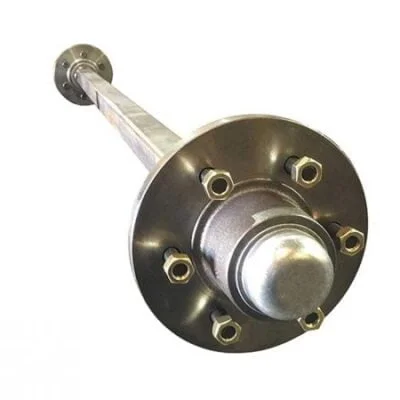
Halco’s trailer parts and servicing support can help identify whether the issue requires adjustment, replacement parts or a broader repair.
How to choose the right trailer when bouncing is a concern
If you’re asking how to choose why does my trailer bounce, the better question is how to choose a trailer that matches the load, towing vehicle and operating conditions. Suspension should be selected as part of the complete trailer configuration rather than as an isolated feature.
Start with these questions
- What will you carry?
- What will the maximum working load be?
- How frequently will you tow?
- Will the trailer travel on sealed roads, gravel or worksites?
- Will you carry machinery or wheeled equipment?
- Do you need a single axle or tandem configuration?
- What does your tow vehicle allow?
- How will the load be restrained?
- How much deck space is actually required?
- Will the trailer be empty frequently?
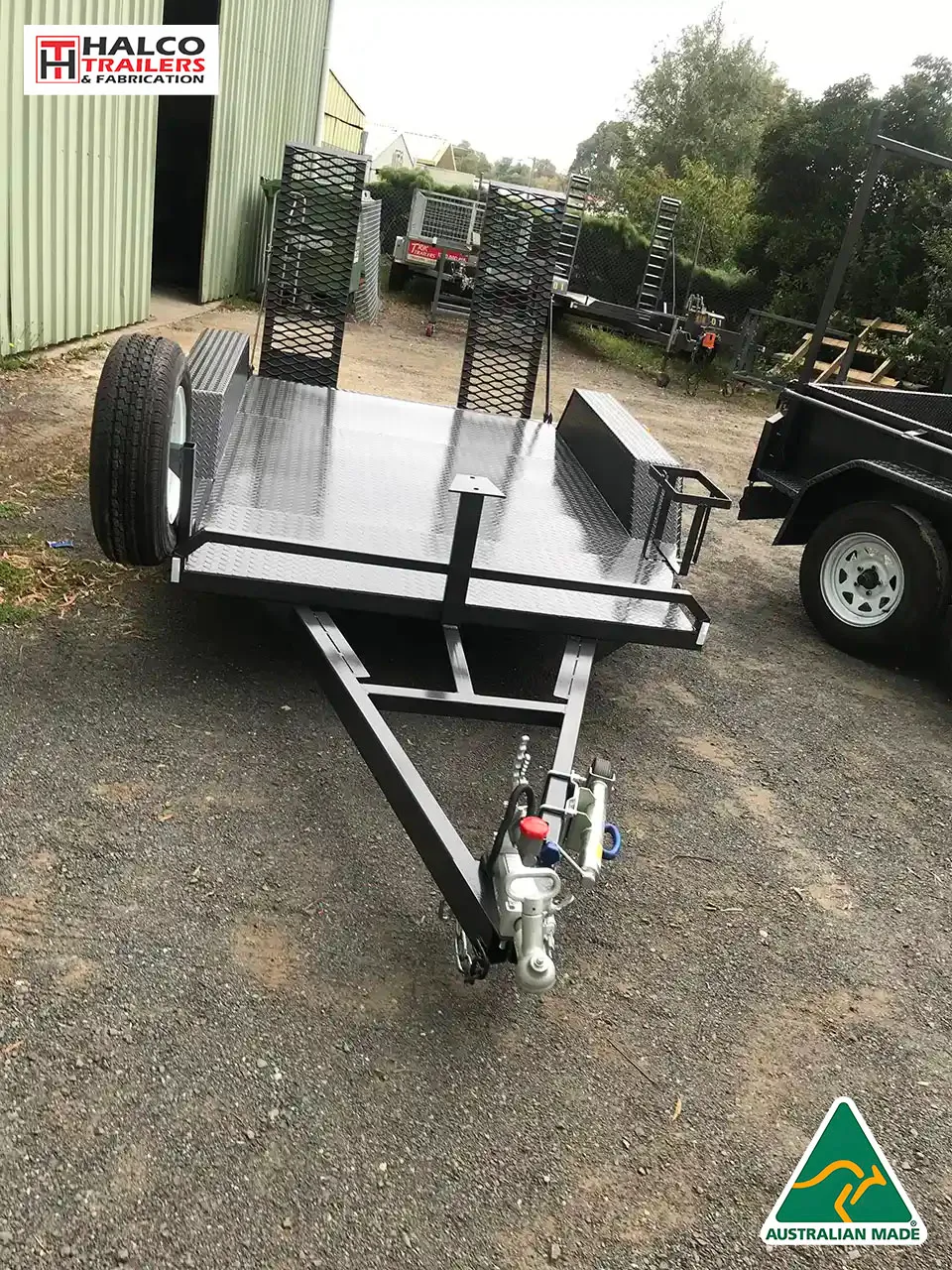
For vehicle transport, compare Halco’s car trailers. For organised tools and equipment, tradesman trailers provide a different configuration. For open-deck machinery and material transport, flat top trailers may be more appropriate.
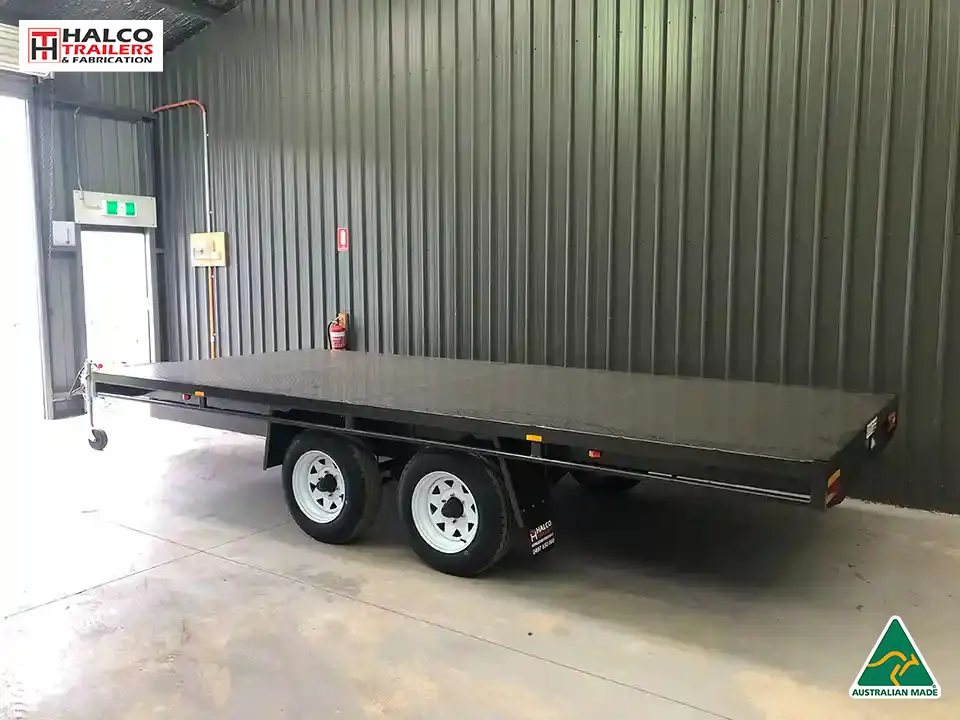
The objective is not simply to find the trailer with the strongest suspension. It is to choose a complete configuration that matches the real job.
Conclusion
If you’re asking why does my trailer bounce, start with the basics: load distribution, tyre pressure, trailer attitude and whether the trailer is empty. Then inspect suspension, axles, wheels, tyres and the tow vehicle if the bouncing continues.
Some movement is normal. Persistent bouncing, especially when combined with sway, tyre rubbing, leaning, unusual noise or uneven tyre wear, should not be ignored.
For trailer owners in Victoria and across Australia, Halco Trailers can help with trailer servicing, repair, parts and trailer configurations designed around different trade, machinery, vehicle and transport requirements.
A trailer should not simply move behind the tow vehicle. It should carry its intended load predictably, track correctly and remain suitable for the work it is being asked to do.