
By Halco Trailers Team, Trailer Manufacturing / Safety Specialist
Published: 05 September 2026
Uneven trailer tyre wear usually points to incorrect tyre pressure, axle misalignment, suspension wear, overload, bearing or hub problems, brake drag, or wheel and tyre issues. Finding the wear pattern early helps prevent premature tyre replacement and more serious trailer damage.
A trailer tyre can wear unevenly long before it becomes visibly damaged. You may notice one shoulder disappearing faster than the other, the centre of the tread wearing down, or one tyre looking noticeably different from its partner on the same axle.
For tradies, contractors, landscapers, farmers, automotive businesses, DIY owners and small fleets, these patterns matter. A trailer carrying tools, machinery, vehicles or landscaping materials puts significant demands on its tyres, particularly when it travels frequently or operates on rough Australian roads.
This guide explains the uneven trailer tyre wear causes worth checking first, what different wear patterns can tell you, how to inspect tyres before towing, and when to replace trailer tyres.
What are the main causes of uneven trailer tyre wear?
The seven main uneven trailer tyre wear causes are incorrect inflation pressure, axle misalignment, suspension problems, overloading, bearing or hub faults, brake drag, and damaged or unsuitable tyres. The tread pattern can help identify which area needs inspection first.
Uneven wear should never automatically be treated as a tyre-only issue. If you replace a tyre without fixing the underlying fault, the replacement can develop the same pattern.
Seven-cause diagnostic table
Cause | Typical wear or symptom | What to check |
Incorrect tyre pressure | Centre or shoulder wear | Cold pressure, load and tyre specification |
Axle misalignment | One-sided or scrub wear | Axle position and alignment |
Suspension problems | Inner/outer wear, cupping or irregular tread | Springs, bushes, shackles, hangers and axle |
Overloading | Shoulder wear, heat and accelerated wear | Trailer mass, payload and tyre load rating |
Bearing or hub problems | Irregular wear, wobble or heat | Bearing play, hub condition and wheel movement |
Brake drag | Heat, flat spots or abnormal wear | Brake adjustment and components |
Tyre or wheel problems | Cracks, bulges, imbalance or inconsistent wear | Tyre condition, wheel and correct specifications |
These causes can overlap. For example, an overloaded tandem trailer may develop suspension fatigue and axle alignment issues, which then cause one tyre to wear faster than the others.
1. Is incorrect tyre pressure causing uneven wear?
Incorrect tyre pressure can cause uneven tread wear because it changes how the tyre contacts the road. Underinflation commonly increases shoulder wear and heat, while overinflation can concentrate contact towards the centre of the tread.
Michelin explains that underinflated tyres can wear more heavily at the shoulders, while overinflated tyres can wear through the centre. It recommends checking pressure at ambient temperature with a reliable gauge and following the manufacturer’s specified pressure.
For a trailer, don’t simply copy the pressure from the tow vehicle. Use the trailer’s tyre placard, tyre specification and approved load requirements.
Pressure-related wear patterns
Wear pattern | Possible pressure issue | First check |
Both shoulders worn | Underinflation | Cold tyre pressure and slow leaks |
Centre tread worn | Overinflation | Recommended cold pressure |
One tyre lower than its partner | Leak, valve or damage | Valve, rim and tyre condition |
Rapid wear after loading | Pressure unsuitable for load | Tyre specification and trailer load |
A landscaping trailer is a good example. A tyre may look correctly inflated when empty but become heavily loaded with wet green waste. If pressure and load aren’t appropriate, heat and shoulder wear can develop rapidly.
2. Could axle misalignment be wearing your tyres?
Axle misalignment can cause tyres to scrub rather than roll cleanly in line with the trailer. This can create one-sided, diagonal or feathered wear, and the trailer may appear to track slightly sideways behind the tow vehicle.
The Department of Infrastructure’s current Vehicle Standards Bulletin 1 (Revision 6) provides current guidance for trailers with an aggregate trailer mass of 4.5 tonnes or less. Its tyre requirements state that tyres must have specifications suitable for the trailer’s intended use, including appropriate size, speed rating and load rating.
Misalignment can develop after impacts, rough worksites, potholes or damage to suspension and axle mounting components.
Signs that alignment deserves attention
- One tyre wears faster than its opposite tyre.
- The inner edge wears much faster than the outer edge.
- The trailer appears to sit or track differently.
- Tyres show feathering or scrub marks.
- Wear returns quickly after fitting new tyres.
- A wheel or axle appears out of position.
Don’t attempt to correct serious axle alignment by simply changing tyre pressure. The axle and running gear should be inspected properly.
3. Can suspension problems cause uneven tyre wear?
Suspension faults can create uneven tyre wear by changing wheel position, load distribution or the way the tyre contacts the road. Worn bushes, damaged springs, loose shackles, bent components and axle movement can all contribute to abnormal tread patterns.
Halco’s existing trailer suspension guide explains that leaning, clunking, poor tracking and uneven tyre wear can indicate suspension or axle issues. That article covers suspension diagnosis in detail; here, the key point is to treat unusual tyre wear as a possible running-gear warning rather than simply a tyre replacement trigger.
Suspension-related signs
Tyre symptom | Suspension area to inspect |
Inner-edge wear | Axle alignment, spring condition and bushes |
Outer-edge wear | Alignment, load distribution and suspension geometry |
Cupping or scalloping | Suspension movement, bearings or balance |
One tyre wearing faster | Load sharing, spring and axle condition |
Repeated wear after replacement | Underlying suspension or alignment fault |
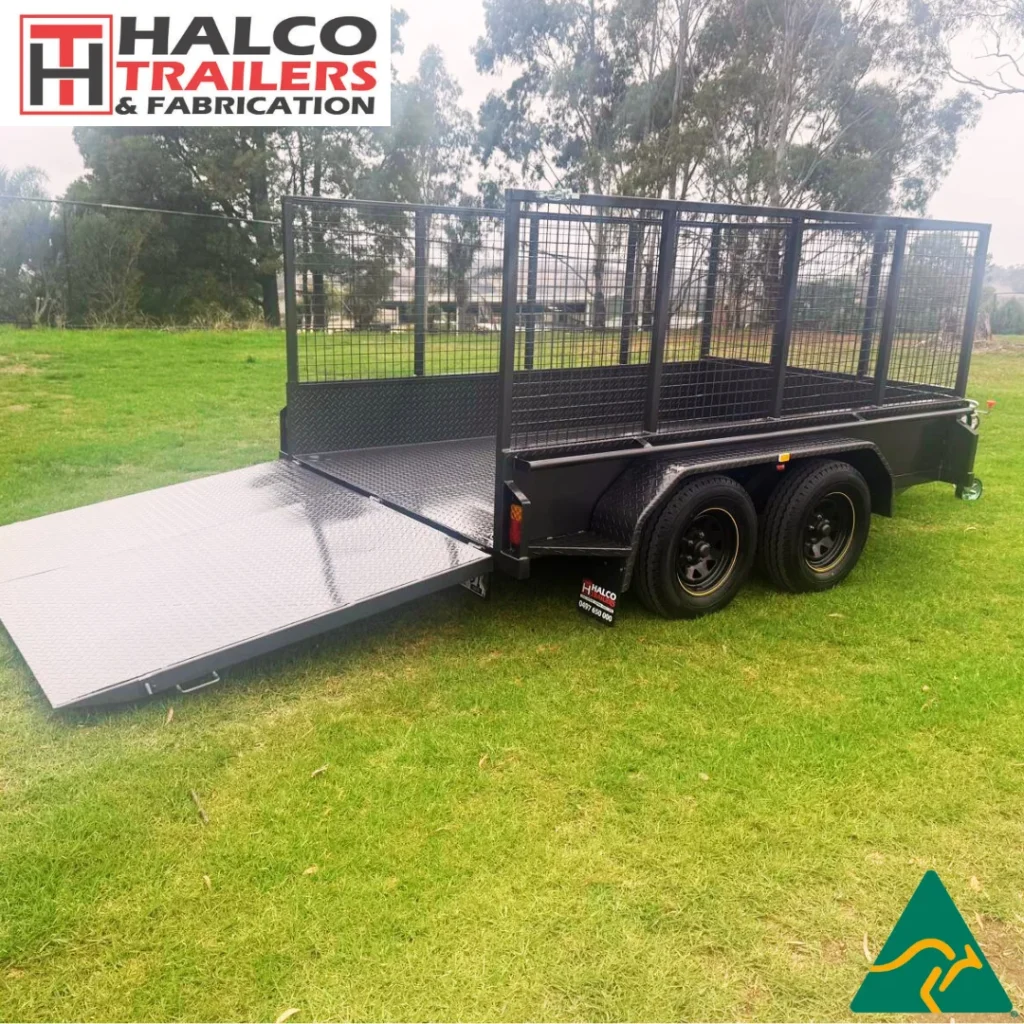
This is particularly important on tandem trailers, where two axles share the trailer load. A problem affecting one axle can influence how the trailer tracks and how the tyres wear.
4. Is overloading damaging your trailer tyres?
Overloading increases the forces carried by trailer tyres and can accelerate wear, heat build-up and structural stress. Unevenly distributing a heavy load can also put more weight through individual wheels, creating different wear rates across the trailer.
The National Transport Commission’s Load Restraint Guide states that trailer loads must be safely restrained and must not exceed applicable mass limits. Its guidance also explains that uneven load distribution can affect stability and braking because different wheels can carry different amounts of weight.
Loads that can create extra tyre stress
- Machinery loaded too far to one side
- Heavy tools concentrated in one compartment
- Wet soil or green waste
- Pallets loaded unevenly
- Vehicles positioned incorrectly on car trailers
- Equipment exceeding the trailer’s intended payload
- Repeated towing close to maximum capacity
For example, a tradesman trailer may gradually become heavier as toolboxes, shelving, generators and equipment are added. The trailer may still look normal, but the increased tare mass reduces the payload available for additional materials.
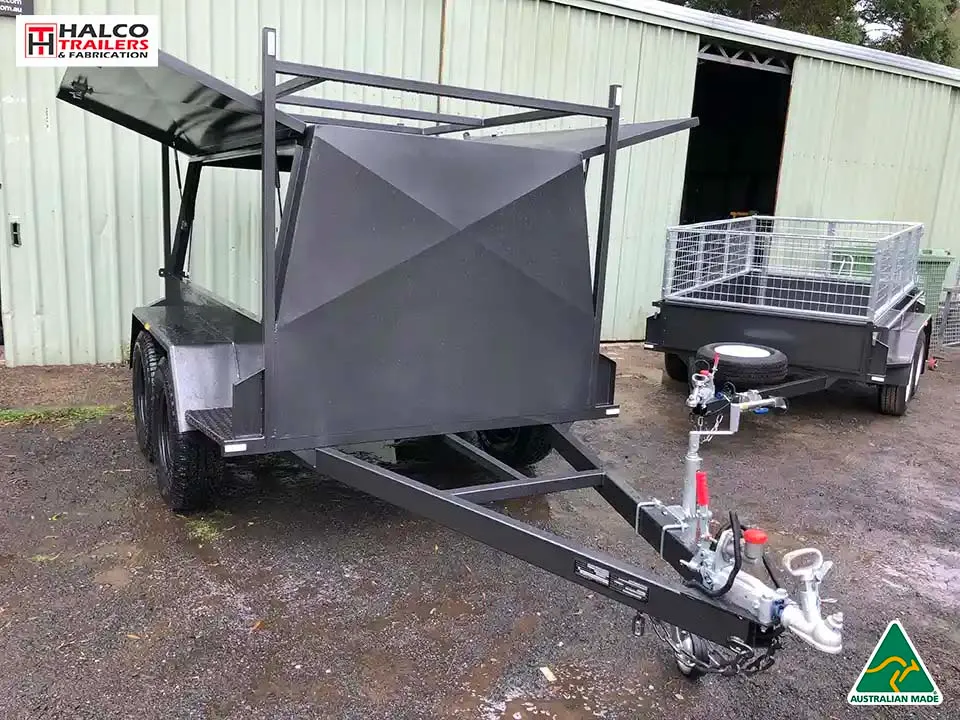
Always consider the complete trailer setup rather than looking at tyre capacity in isolation.
5. Could bearings, hubs or wheel problems be responsible?
Bearing, hub and wheel faults can create wobble, heat or irregular wheel movement that contributes to abnormal tyre wear. Excessive bearing play, damaged hubs, wheel imbalance or a bent wheel can prevent the tyre from running correctly.
This is one reason a tyre inspection should include the wheel assembly. If a new tyre develops unusual wear soon after installation, replacing another tyre without checking the hub and bearing condition may simply repeat the problem.
Wheel-end checks
Area | Warning sign |
Bearing | Roughness, rumbling or excessive play |
Hub | Excessive heat or movement |
Wheel | Visible damage, cracks or deformation |
Wheel nuts | Loose, missing or damaged hardware |
Rim | Corrosion, impact damage or sealing issue |
Tyre bead | Damage or abnormal seating |
If one wheel assembly is significantly hotter than the others after a short tow, stop and allow it to cool before investigating. A hot hub can have multiple causes, including bearing or brake problems.
6. Can brake drag create abnormal tyre wear?
Brake drag can create excess heat and abnormal wear because the affected wheel is being resisted while the trailer is moving. A dragging brake may also produce a burning smell, unusual heat, poor towing behaviour or rapid wear on one wheel.
Brake drag should not be diagnosed from tyre wear alone. The brake assembly, adjustment, wiring or hydraulic components need to be inspected to determine the cause.
Possible brake-drag clues
- One wheel is much hotter than the others.
- The trailer feels as though it is being held back.
- You notice a burning smell after towing.
- A wheel develops unusual flat spotting.
- Braking feels uneven.
- An electric brake controller reports a fault.
- A brake component remains partially applied.
If braking behaviour has changed, don’t continue towing simply because the tyres still have tread. Your existing trailer brakes and safety components should be checked as part of the diagnosis.
7. Are the tyres themselves causing the problem?
The tyre itself can be responsible when it is incorrectly specified, damaged, aged, overloaded, poorly seated or repeatedly operated at unsuitable pressure. However, tyre replacement should follow a basic diagnosis whenever the wear pattern is abnormal.
Current VSB 1 guidance says trailer tyres must have specifications suitable for their intended use, including size, speed rating and load rating. For trailers with GTM not exceeding 3,500 kg, the tyre placard also includes manufacturer-recommended tyre size, load rating, speed rating and cold inflation pressure.
Tyre condition checklist
Check every tyre for:
- Cracks and perishing
- Cuts and punctures
- Bulges
- Exposed cords
- Abnormal tread wear
- Tread wear indicators
- Incorrect size
- Incorrect load rating
- Visible impact damage
- Repeated pressure loss
Transport Victoria states that road tyres must have at least 1.5 mm tread depth in the principal grooves and must not have excessive uneven wear across their width.
That legal minimum is not a target for good maintenance. If a tyre has serious damage, deep cracking or another defect, don’t wait until it reaches the minimum tread depth.
What do different tyre wear patterns mean?
Different tread patterns can provide useful clues about tyre pressure, alignment, suspension, braking or load conditions. The pattern doesn’t always identify one exact fault, but it helps determine which parts should be inspected first.
Tyre wear pattern diagnosis
What you see | Possible cause | What to investigate |
Centre of tread worn | Overinflation | Cold pressure and specification |
Both shoulders worn | Underinflation or overload | Pressure, leaks and load |
One inner edge worn | Alignment or suspension | Axle, springs and bushes |
One outer edge worn | Alignment or load-related stress | Axle position and load distribution |
Feathered tread | Alignment or scrub | Axle alignment |
Cupping/scalloping | Suspension, balance or bearing issue | Running gear and wheel assembly |
Flat spot | Brake lock-up or severe braking event | Brakes and wheel assembly |
One tyre much more worn | Load imbalance or mechanical fault | Load distribution and running gear |
Michelin notes that one-sided and irregular wear can be associated with alignment or suspension issues, while uneven pressure can change the tyre’s contact patch and wear pattern.
The important rule is simple: read the wear pattern before replacing the tyre.
What should be on a trailer tyre inspection checklist?
A useful trailer tyre inspection checklist should cover pressure, tread, sidewalls, wear pattern, tyre specification, wheel condition, wheel nuts, load rating and visible damage. Inspect all tyres before towing, including the spare.
RACV recommends checking trailer tyres for uneven wear, bulges, cracks, cuts and other damage and notes that uneven wear can indicate alignment, suspension or inflation problems.
Trailer tyre inspection checklist
- Check cold tyre pressure before loading: use a reliable gauge and the trailer manufacturer’s specified pressure.
- Inspect the entire tread width: compare the centre, inner shoulder and outer shoulder.
- Check both sidewalls: look for cracks, cuts, bulges and impact damage.
- Compare tyres on the same axle: a major difference in wear deserves investigation.
- Check the tyre’s load and speed rating: confirm the specification suits the trailer.
- Inspect the wheel: look for dents, cracks, corrosion or visible damage.
- Check wheel nuts: look for missing, loose or obviously damaged hardware.
- Look for rubbing: check whether the tyre contacts a mudguard, chassis or suspension component.
- Inspect the spare: a flat or perished spare is not useful during a breakdown.
- Record unusual wear: photograph the pattern so a technician can compare it during servicing.
For a regular work trailer, repeat this inspection before heavy jobs rather than relying only on the annual service.
What should trailer tyre pressure be before towing?
Trailer tyre pressure before towing should follow the pressure specified for that trailer, tyre and load rather than a generic passenger-car recommendation. Check pressure when the tyres are cold, before the trailer starts travelling and before adding a heavy load.
The current VSB 1 guidance requires the tyre placard on applicable trailers up to 3,500 kg GTM to include the manufacturer’s recommended cold inflation pressure.
Pressure routine
When | What to do |
Before loading | Check cold pressure |
After long storage | Check pressure before movement |
Before heavy work | Recheck all tyres |
After a pressure-loss warning | Find the leak before continuing |
After tyre replacement | Confirm pressure and specification |
Monthly for frequently used trailers | Check and record cold pressure |
Don’t bleed air from a hot tyre to reach the cold-pressure figure. Let the tyre cool and check it again under the correct conditions.
When should you replace trailer tyres?
You should replace trailer tyres when they have serious damage, exposed cords, bulges, severe cracking, unsafe tread, excessive uneven wear, unsuitable load rating or another condition that makes them unroadworthy. If wear is uneven, diagnose the cause before fitting replacements.
Transport Victoria states that tyres must not have excessive uneven wear across their width and sets a 1.5 mm minimum tread depth in principal grooves, subject to the requirements stated on its tyre-maintenance guidance.
Halco’s trailer tyre replacement guide covers replacement triggers including tread wear, sidewall cracking, bulges, punctures, ageing, uneven wear, load rating and repeated pressure loss.
Replace or investigate first?
Situation | Replace tyre? | Diagnose cause? |
Deep sidewall crack | Yes | Yes |
Bulge or bubble | Yes | Yes |
Exposed cord | Yes | Yes |
Below applicable minimum tread | Yes | Yes |
Severe uneven wear | Yes | Yes |
Mild uneven wear | Maybe | Yes |
One-sided wear | Usually | Yes |
Correct tread but repeated wear | Not necessarily | Yes |
Wrong load rating | Yes | Confirm correct specification |
Repeated pressure loss | Usually | Yes |
Replacing only the worn tyre isn’t always the best solution. If an axle is misaligned or a suspension component is worn, the replacement tyre can quickly develop the same problem.
How can trailer servicing prevent repeat tyre wear?
Regular trailer servicing helps identify the mechanical causes behind abnormal tyre wear before they become expensive failures. A service should connect tyre condition with bearings, brakes, suspension, axles, wheels, coupling and chassis rather than treating the tyre separately.
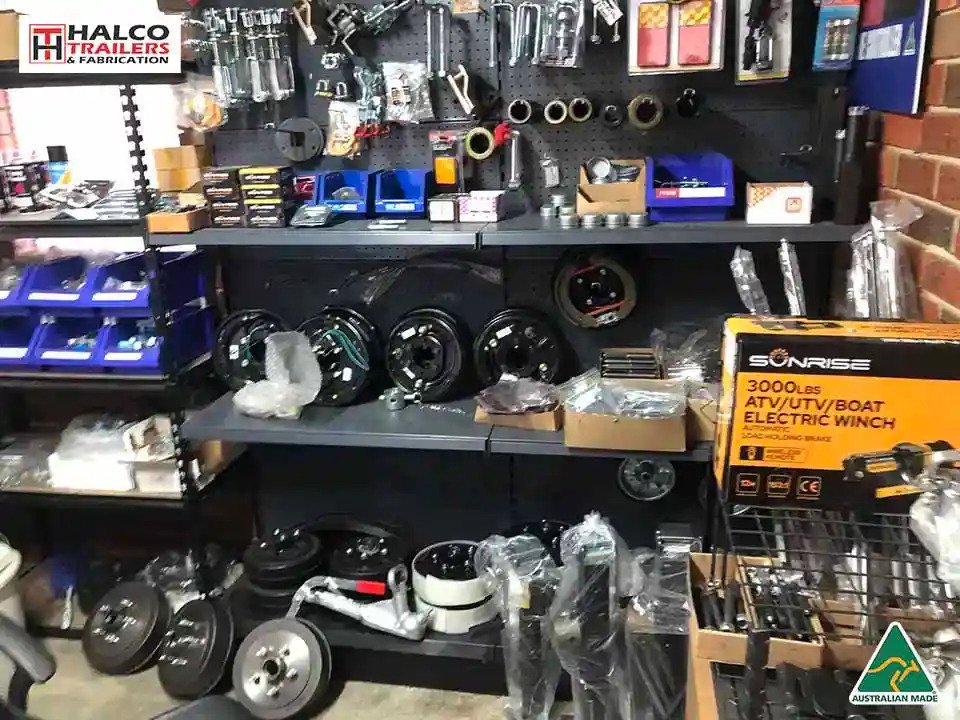
Halco’s trailer parts and servicing service information covers brake and bearing checks, running-gear inspections, electrical and lighting repairs, structural fault identification and other trailer service requirements.
What a tyre-focused service should connect
- Tyres → pressure and load rating
- Tyres → axle alignment
- Tyres → suspension condition
- Tyres → wheel bearings and hubs
- Tyres → brake operation
- Tyres → load distribution
- Tyres → wheel and rim condition
This is especially important for businesses. A trailer used every day by a landscaper or contractor has a different maintenance risk from one used twice a year by a homeowner.
If the same tyre keeps wearing abnormally after replacement, move beyond the tyre itself and inspect the trailer’s running gear.
Conclusion
Uneven trailer tyre wear is usually a warning that something else needs attention. Start with pressure and load, then investigate axle alignment, suspension, bearings, brakes, wheels and tyre condition.
If your trailer develops repeated one-sided wear, excessive heat, abnormal tread patterns or rapid tyre deterioration, don’t simply fit another tyre and return to work. A proper inspection can identify the underlying problem before it damages additional trailer parts or causes an avoidable roadside failure.
Halco Trailers supports trailer owners across Victoria with trailer servicing, repairs, parts and trailer solutions for trade, agricultural, vehicle transport and specialist applications.