
Table of Contents
By Halco Trailers Team, Trailer Manufacturing / Safety Specialist
Published: 18 September 2026
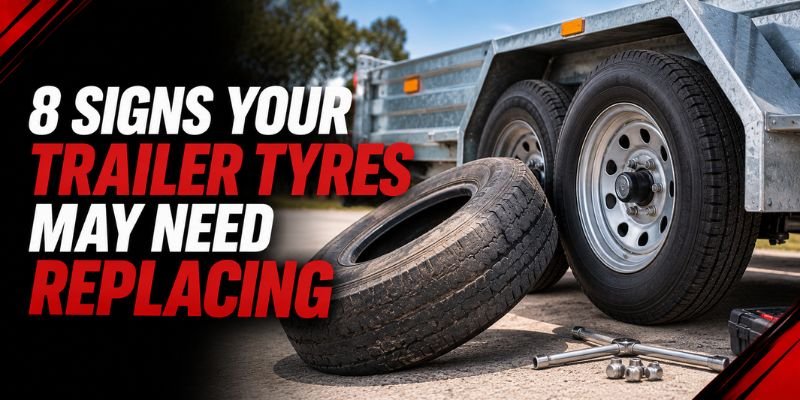
Trailer tyre replacement signs include low tread, sidewall cracking, bulges, uneven wear, repeated pressure loss, heat damage, unsuitable load rating and visible tyre or rim damage. Finding these issues early can help prevent a blowout, damaged trailer and an unexpected roadside breakdown.
Trailer tyres work differently from the tyres on a daily-driven car. They can spend long periods parked, carry heavy static loads and then suddenly face highway speeds, braking, cornering and rough worksites.
For tradies, contractors, landscapers, farmers, automotive businesses, homeowners and small business operators, checking tyres should be part of normal trailer maintenance rather than something done only after a puncture.
If you are unsure whether a tyre needs replacing, start with these eight signs.
1. The tread is worn close to the limit
Low tread is one of the clearest trailer tyre replacement signs. If the principal grooves are approaching or below the applicable legal minimum, or the tread is damaged or uneven, the tyre should be assessed before the trailer returns to the road.
Transport Victoria states that tyres must have at least 1.5 mm of tread depth in all principal grooves, except at tread-wear indicators. It also states that a tyre must not have excessive uneven wear across its width.
Transport Victoria – Tyre Maintenance and Repair
Do not treat 1.5 mm as a target you need to reach before thinking about replacement. A heavily used work trailer may need tyres replaced earlier because condition, age, cracking, heat and uneven wear also matter.
Tread condition guide
|
Tread condition |
What it means |
Recommended action |
|
Good tread, even wear |
No obvious tread-related issue |
Continue regular inspections |
|
Approaching minimum |
Replacement planning should begin |
Arrange tyre assessment |
|
At or below applicable minimum |
Roadworthiness issue |
Replace before road use |
|
Unevenly worn |
Possible underlying fault |
Inspect trailer running gear |
|
Damaged or separated tread |
Potential structural failure |
Replace immediately |
If you want a broader explanation of tyre replacement conditions, Halco’s trailer tyre replacement guide covers tread, cracking, pressure loss, ageing, load rating and other replacement triggers.
2. The sidewall has cracks or perishing
Sidewall cracking is a major trailer tyre wear sign because the tyre can deteriorate from age, UV exposure, storage and weather even when the tread still looks usable.
Trailer tyres are particularly vulnerable to ageing because trailers may sit outdoors for long periods. A tyre that spends months exposed to sunlight, heat and changing temperatures can deteriorate without accumulating many kilometres.
Look carefully at:
- the outer sidewall
- the inner sidewall
- areas close to the bead
- the tread shoulder
- the spare tyre
- sections hidden behind guards
Small surface marks should be monitored, but deep, spreading or structural cracks warrant replacement rather than continued loaded towing.
Signs of tyre ageing
|
Sign |
Concern level |
Action |
|
Minor surface weathering |
Monitor |
Inspect regularly |
|
Multiple sidewall cracks |
High |
Arrange replacement |
|
Deep or spreading cracks |
Serious |
Replace before towing |
|
Cracking around bead |
Serious |
Replace and inspect rim |
|
Cracked spare tyre |
Serious |
Replace spare |
|
Severe perishing across tread |
Serious |
Replace |
A trailer that is used only occasionally should not automatically be assumed to have “good tyres” simply because the tread is deep.
3. You can see a bulge, bubble or exposed cord
A bulge, bubble or exposed cord is a serious tyre replacement sign and should not be treated as cosmetic damage. It can indicate internal structural damage caused by an impact, overload, low-pressure operation or deterioration.
Do not continue towing to see whether the bulge becomes worse.
A damaged sidewall or exposed tyre structure can fail suddenly, particularly when heat builds during highway travel. The risk becomes more significant when the trailer is heavily loaded.
Immediate replacement signs
|
Visible problem |
Continue towing? |
Why |
|
Sidewall bulge |
No |
Possible internal structural damage |
|
Bubble |
No |
Indicates abnormal tyre structure |
|
Exposed cords |
No |
Structural material is exposed |
|
Major sidewall cut |
No |
Can compromise tyre integrity |
|
Severe tread separation |
No |
Potential sudden failure |
|
Impact damage with deformation |
No |
Internal damage may not be visible |
If a tyre has suffered a hard impact against a kerb, pothole, rock or worksite obstacle, have it inspected even if the damage appears minor.
4. The tyre is wearing unevenly
Uneven trailer tyre wear is one of the most useful warning signs because it can reveal a problem elsewhere in the trailer. The uneven wear may come from incorrect pressure, overload, axle alignment, suspension wear, bearing problems, brake drag or wheel damage.
This is why replacing a worn tyre without diagnosing the cause can be false economy.
Transport Victoria specifically identifies excessive uneven tyre wear as a tyre condition issue for roadworthiness.
Uneven trailer tyre wear causes
|
Wear pattern |
Possible cause |
|
Both shoulders worn |
Low pressure, overload or unsuitable operating pressure |
|
Centre tread worn |
Excessive pressure or incorrect pressure setting |
|
Inner edge worn |
Axle alignment, suspension or geometry issue |
|
Outer edge worn |
Alignment, loading or cornering stress |
|
One tyre wears faster |
Brake, bearing, axle or local suspension issue |
|
Scalloped wear |
Suspension, bearing, balance or alignment problem |
|
Feathered tread |
Tracking or alignment problem |
|
Patchy tread damage |
Worksite impact, debris or mechanical issue |
For example, if the inside edge of one tyre is disappearing faster than the others, fitting a new tyre without inspecting the axle and suspension may simply create the same wear pattern again.
What to inspect alongside an uneven tyre
- axle alignment
- suspension springs
- shackles and bushes
- wheel bearings
- hubs
- brakes
- wheel nuts
- rim condition
- tyre pressure
- load distribution
If your trailer has developed unusual tyre wear, Halco’s trailer servicing team can inspect applicable tyres, wheels, bearings, suspension, axles and related running gear.
5. The tyre keeps losing pressure
Repeated pressure loss is a trailer tyre warning sign that should be investigated rather than repeatedly corrected with an air compressor.
Possible causes include:
- a puncture
- damaged valve
- leaking valve stem
- rim damage
- bead-sealing problem
- sidewall damage
- corrosion around the rim
- tyre damage
- incorrect tyre fitment
A tyre that repeatedly loses pressure can run hotter than intended. Low pressure also changes how the sidewall flexes and how the tyre carries the trailer load.
Pressure-loss decision table
|
Situation |
What to do |
|
Pressure drops slightly over a long period |
Check valve and monitor |
|
Pressure drops noticeably between trips |
Inspect for a leak |
|
Pressure drops during one working day |
Stop and inspect |
|
Tyre is visibly soft |
Inflate only to the correct specification and investigate |
|
Valve leaks |
Repair or replace valve |
|
Rim is damaged |
Inspect rim before refitting tyre |
|
Tyre loses pressure after a puncture |
Professional inspection recommended |
|
Pressure loss occurs with visible sidewall damage |
Replace tyre |
Do not assume that repeatedly topping up a tyre makes it safe for another loaded trip.
6. The tyre shows heat, impact or worksite damage
Heat marks, impact damage, chunks missing from the tread, cuts, embedded objects and abnormal deformation can all indicate that a trailer tyre has experienced conditions outside normal operation.
This is especially relevant for trailers used around construction sites, farms, landscaping jobs, gravel roads and industrial yards.
A work trailer can encounter:
- nails and screws
- sharp rocks
- broken concrete
- kerbs
- potholes
- metal debris
- timber fragments
- rough shoulders
- deep ruts
A tyre does not necessarily need to be completely flat before it becomes unsafe.
Worksite damage checklist
|
Damage |
Replacement consideration |
|
Deep cut |
High |
|
Sidewall impact |
High |
|
Missing tread section |
High |
|
Embedded object |
Inspect before removing |
|
Heat discolouration |
Inspect immediately |
|
Repeated punctures |
Investigate tyre type and route |
|
Rim impact |
Inspect tyre and rim together |
|
Blowout damage |
Inspect nearby trailer components |
After a blowout, do not inspect only the replacement tyre. The failed tyre can damage the guard, wiring, brake components, mudguard, suspension or other nearby trailer parts.
7. The tyre rating no longer suits the trailer
A tyre may need replacing even when its tread and appearance look acceptable if its size, speed rating or load rating is unsuitable for the trailer’s intended use.
The current Vehicle Standards Bulletin 1 from the Australian Department of Infrastructure states that trailer tyres must have suitable specifications for the trailer’s intended use, including size, speed rating and load rating.
VSB 1 also specifies tyre-placard information for applicable trailers, including recommended tyre size, load rating, speed rating and cold inflation pressure.
Australian Government – Vehicle Standards Bulletin 1
When rating becomes a replacement issue
|
Situation |
Why it matters |
|
New trailer has different working load |
Existing tyres may not suit |
|
Trailer is now used for heavier equipment |
Load rating needs review |
|
Tyres are below required rating |
Replace with suitable specification |
|
Different tyre size fitted |
Fitment needs verification |
|
Speed rating differs |
Confirm suitability |
|
Trailer modification changes mass |
Recheck tyre requirements |
|
Towing application has changed |
Reassess tyre specification |
This is particularly important for businesses whose trailer has gradually moved from light-duty use into machinery, building materials, landscaping, vehicle transport or other heavier applications.
8. The tyre or rim shows age, vibration or repeated faults
Persistent vibration, wobble, repeated punctures or an ageing tyre-and-rim combination can indicate that replacement is needed even when the tread initially appears acceptable.
The problem may not be the tyre alone. A bent rim, damaged hub, worn bearing, wheel imbalance or suspension issue can create symptoms that appear to be tyre problems.
Check these components together
|
Symptom |
Also inspect |
|
Vibration at speed |
Tyre, rim, hub and wheel balance |
|
Wobble |
Wheel nuts, hub, bearing and rim |
|
Repeated punctures |
Tyre type, pressure and worksite conditions |
|
Tyre bead leak |
Rim and valve |
|
One wheel repeatedly overheats |
Brake, bearing and hub |
|
Tyre wears after replacement |
Axle and suspension |
|
Spare keeps ageing unused |
Spare tyre condition and storage |
|
Vibration after impact |
Rim, hub, tyre and suspension |
If the same tyre position keeps developing faults, investigate the wheel position rather than simply replacing the rubber each time.
What should be included in a trailer tyre inspection checklist?
A trailer tyre inspection checklist should cover every tyre, the spare, pressure, tread, sidewalls, age, load rating, rims, wheel nuts, wheel position and signs of heat or abnormal wear.
Walk around the trailer rather than checking only the tyres on the visible side.
Trailer tyre inspection checklist
Before every loaded trip:
- ☐ Check every tyre’s cold pressure.
- ☐ Check the spare tyre.
- ☐ Look across the entire tread.
- ☐ Inspect both visible sidewall areas.
- ☐ Look for cracks and perishing.
- ☐ Check for bulges and bubbles.
- ☐ Look for cuts or exposed cords.
- ☐ Check for embedded objects.
- ☐ Compare wear across all tyres.
- ☐ Check for tyre-to-guard rubbing.
- ☐ Inspect visible rim damage.
- ☐ Check wheel nuts are secure.
- ☐ Confirm tyre size and load rating are suitable.
- ☐ Check for recent pressure loss.
- ☐ Look for signs of overheating.
- ☐ Recheck after the first part of a long trip.
For commercial operators, add the inspection date, trailer identification, tyre position, tyre condition and any repair or replacement action to the service record.
What trailer tyre pressure should you check before towing?
Trailer tyre pressure should be checked when the tyres are cold and should follow the trailer, tyre or manufacturer specification applicable to the setup. Do not choose pressure simply because it is the number used on your passenger vehicle.
VSB 1 states that applicable trailers with a GTM not exceeding 3,500 kg must have a tyre placard showing, among other information, the manufacturer’s recommended cold inflation pressure.
The correct pressure should also be considered alongside load. A trailer carrying a mower, machinery, soil, building materials or a vehicle may operate under very different loads from an empty trailer.
Trailer tyre pressure before towing
|
Check |
Why |
|
Cold tyre pressure |
Gives a consistent starting measurement |
|
Manufacturer recommendation |
Matches the trailer’s intended setup |
|
Load being carried |
Affects tyre loading |
|
Tyre load rating |
Determines suitability for the application |
|
Spare pressure |
A flat spare is useless during a breakdown |
|
Pressure on both sides |
Helps identify uneven loading or leaks |
|
Pressure after storage |
Trailers can lose pressure while parked |
Do not release air from a hot tyre simply because its pressure is higher after driving. Check pressures when cold and use the applicable specification.
When should you replace trailer tyres rather than repair them?
You should replace trailer tyres rather than continue using them when they have structural damage, exposed cords, serious sidewall cracking, bulges, unsafe tread, unsuitable load rating, severe heat damage or other conditions that make them unsuitable for road use.
Some punctures can be repaired depending on their location and the tyre manufacturer’s requirements. Sidewall and structural damage should not be treated like a simple tread puncture.
Replace vs inspect table
|
Condition |
Replace? |
|
Tread at or below applicable minimum |
Yes |
|
Deep sidewall crack |
Yes |
|
Bulge or bubble |
Yes |
|
Exposed cords |
Yes |
|
Serious tread separation |
Yes |
|
Wrong load rating |
Yes |
|
Severe impact damage |
Yes |
|
Minor repairable tread puncture |
Professional assessment |
|
Uneven tread wear |
Inspect cause and replace if required |
|
Slow pressure loss |
Diagnose first |
|
Old but visually good tyre |
Assess age and condition |
|
Damaged rim |
Inspect tyre and rim together |
The Department of Infrastructure’s current VSB 1 Revision 6 is the appropriate government reference for applicable trailer construction and component requirements; state and territory requirements can also apply.
What are the common trailer tyre problems worth investigating?
The most common trailer tyre problems include low pressure, uneven wear, sidewall cracking, punctures, overloaded tyres, incorrect tyre specifications, heat damage, vibration and rim-related faults.
The important point is that tyre symptoms often connect to other trailer systems.
Common trailer tyre problems and possible causes
|
Problem |
Possible underlying cause |
|
Rapid tread wear |
Overload, pressure or alignment |
|
Inner-edge wear |
Axle or suspension issue |
|
Outer-edge wear |
Alignment or loading |
|
Centre wear |
Excessive pressure |
|
Shoulder wear |
Low pressure or overload |
|
Repeated punctures |
Worksite debris or unsuitable tyre |
|
Slow pressure loss |
Valve, rim or puncture |
|
One hot tyre |
Brake or bearing issue |
|
Vibration |
Tyre, rim, hub or bearing |
|
Tyre rubbing |
Suspension, load or clearance issue |
|
Cracking |
Age, UV or storage |
|
Blowout |
Damage, pressure, load, age or heat |
If several tyres are developing the same problem, do not treat them as separate failures. The trailer itself may need inspection.
What should you do after replacing trailer tyres?
After replacing trailer tyres, check the wheel and rim condition, confirm the tyre specifications, set the correct cold pressure, inspect wheel nuts and monitor wear during the first trips.
If the old tyres showed unusual wear, replacing them should be followed by diagnosis of the cause. Otherwise, the new tyres may develop the same fault.
Post-replacement check
- Confirm the tyre size.
- Confirm the load rating.
- Confirm the speed rating.
- Check rim compatibility.
- Set cold pressure correctly.
- Check wheel-nut security according to the trailer manufacturer’s requirements.
- Inspect clearance around the tyre.
- Check brakes and bearings if the old tyre showed heat damage.
- Monitor tread wear after use.
- Record the replacement date and tyre details.
For businesses, recording tyre replacements alongside trailer servicing makes it easier to identify recurring problems across a trailer or fleet.
Conclusion
The eight main trailer tyre replacement signs are low or damaged tread, cracking, bulges, uneven wear, repeated pressure loss, heat or impact damage, unsuitable tyre ratings and persistent vibration or tyre-related faults.
A tyre should not be judged by tread depth alone. Pressure, age, load rating, sidewall condition, wear pattern, rim condition and the trailer’s actual workload all matter.
For trailer owners across Warragul, Melbourne, Gippsland and regional Victoria, Halco Trailers can assist with trailer parts, servicing and repair inspections. If a tyre is damaged, repeatedly losing pressure or wearing unusually, have the cause checked before your next loaded trip.
FAQ'S
Can I tow with a cracked trailer tyre?
No, if the tyre has deep, spreading or structural sidewall cracks, it should not be used for loaded towing. Ageing, UV exposure, storage and weather can weaken trailer tyres even when tread remains.
Should I replace a trailer tyre with uneven wear?
Yes, if the tyre is excessively or dangerously worn, but first identify the cause of the wear. Axle alignment, suspension, bearings, brakes, pressure and loading can all contribute to uneven wear.
How often should I check trailer tyre pressure?
Check trailer tyre pressure before every loaded trip, preferably when the tyres are cold. Also check after long storage, after a puncture and whenever a trailer carries a substantially different load.
Is a bulge on a trailer tyre dangerous?
Yes, a bulge or bubble can indicate internal structural damage. Do not continue towing on a tyre with a significant bulge. Replace it and inspect the rim and surrounding components if an impact may have caused the damage.
Can trailer tyres look good but still need replacing?
Yes, tread condition alone does not determine tyre suitability. Age, cracking, load rating, pressure history, heat exposure, impact damage and internal deterioration can all affect whether a tyre remains suitable.
Should I replace all trailer tyres at once?
Not always. If one tyre has suffered an isolated, recent puncture and the other tyres are compatible and in good condition, replacement of one tyre may be appropriate. If tyres are similarly aged or worn, replacing them as a set or by axle may provide more consistent performance.
Can uneven trailer tyre wear be caused by suspension?
Yes, worn suspension, axle misalignment, damaged bushes, loose hardware or a bent component can contribute to uneven tyre wear. Inspect the running gear before fitting replacement tyres if the wear pattern is abnormal.
What should I do if a trailer tyre blows out?
Slow down safely, move to a suitable location and do not continue towing on a damaged tyre. After the tyre is replaced, inspect the rim, hub, brake, mudguard, wiring, suspension and surrounding trailer components for secondary damage.