

By Halco Trailers Team, Trailer Manufacturing / Safety Specialist
Published: 14 August 2026
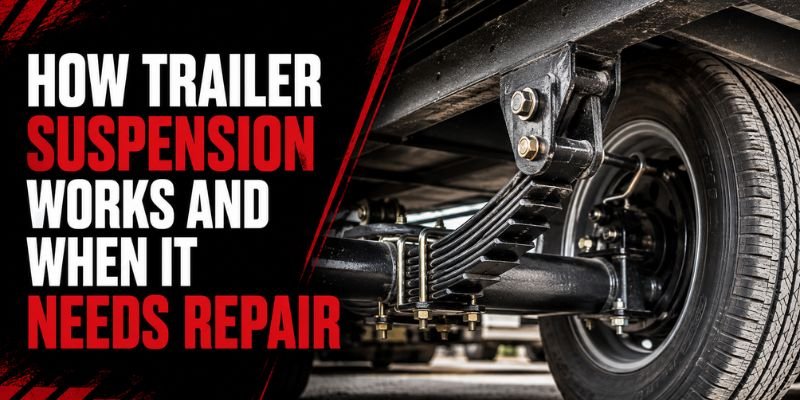
Trailer suspension supports the trailer’s load, absorbs road movement and helps tyres stay in contact with the road. It needs repair when the trailer leans, bounces, clunks, wears tyres unevenly, tracks poorly or shows spring, axle or hanger damage.
A trailer can look strong from the outside and still tow badly if the running gear underneath is tired. Springs, axles, shackles, bushes, hangers and U-bolts carry constant stress from bumps, braking, load shifts and rough worksites.
For tradies, contractors, landscapers, farmers, plant operators, automotive businesses, homeowners and tiny house builders, suspension is not just about ride comfort. It affects load support, tyre wear, braking stability, trailer lifespan and whether the trailer suits the work it is being asked to do.
Use this guide to understand the main trailer suspension types, how they behave under load and when trailer suspension repair is safer than continuing to tow.
What does trailer suspension actually do?
Suspension carries the trailer’s load through the wheels while reducing shock from bumps, potholes, braking and uneven surfaces. It also helps tyres track correctly, protects the chassis and improves stability when the trailer is loaded.
A trailer has no engine, but it still works hard. Every time the tow vehicle brakes, turns, reverses, climbs a driveway, enters a jobsite or crosses gravel, the trailer frame sends load through the suspension and axles.
A good system does three things at once: it supports weight, allows controlled movement and keeps tyres in useful contact with the road. When that system wears, the trailer may still move, but it can start leaning, bouncing, scrubbing tyres or loading one axle harder than the other.
According to the Department of Infrastructure’s Vehicle Standards Bulletin 1, known as VSB 1, an axle group may be single, tandem or tri-axle, and load-sharing suspension must be designed so each axle in the group carries the same load regardless of vertical wheel movement. That matters most on heavier work trailers.
Main suspension job table
Suspension job | What it means for owners |
Supports the load | Springs, axles and mounts carry trailer and cargo weight |
Absorbs movement | Reduces harsh shock from bumps, ramps and uneven ground |
Helps tyre contact | Keeps tyres working evenly instead of bouncing or scrubbing |
Protects the chassis | Reduces repeated shock through the frame and weld points |
Supports braking stability | Helps the trailer stay controlled when slowing or stopping |
Affects tyre wear | Worn or misaligned parts can destroy tyres quickly |
Works with load balance | Bad loading can overload even good suspension |
Affects trailer life | Repeated suspension stress can damage other running gear |
A realistic example is a mowing contractor with a loaded work trailer. The ride may feel rough, but the real clue is tyre wear: one side starts wearing faster because the trailer is leaning slightly under the same daily load. That is a suspension and load-balance issue, not only a tyre issue.
Which trailer suspension types are common in Australia?
Common trailer suspension types include eye-to-eye leaf springs, slipper springs, rocker roller tandem systems, rubber torsion axles and independent systems. Each type suits different loads, road conditions, service expectations and trailer designs.
The best system is not the one with the fanciest name. It is the one matched to the trailer’s job, axle rating, payload, ground clearance, service access and expected towing environment.
SureWeld’s comparison of parabolic, rocker roller and rubber torsion trailer suspension highlights the same practical point: different suspension systems suit different operating requirements, so the choice should be tied to the trailer’s real workload.
Suspension type comparison
Suspension type | How it works | Best suited to | Watch-outs |
Eye-to-eye leaf spring | Spring fixed through eyes at both ends | General box trailers, tradesman trailers and utility trailers | Bushes and shackles wear over time |
Slipper spring | One end fixed, one end slides under load | Simple heavy-duty work trailer setups | Can become noisy or wear at the slipper end |
Rocker roller tandem | Springs linked through rocker/equaliser hardware | Tandem trailers carrying heavier loads | Load-sharing hardware needs inspection |
Rubber torsion axle | Rubber inside the axle beam provides spring action | Some custom, low-profile or smoother-ride builds | Whole axle may need attention if worn |
Independent suspension | Each wheel moves more independently | Some off-road, caravan or specialised trailers | More complex and usually higher cost |
Parabolic spring | Tapered spring design with fewer leaves | Some premium work and machinery trailers | Must be matched carefully to load and trailer type |
Off Road Designs’ trailer suspension guide discusses multiple suspension categories for different towing needs, while ARV Suspensions notes that the best off-road trailer suspension should match intended use, axle load and design envelope. Those points apply just as strongly to trade and plant trailers as they do to touring setups.
How do you choose the right suspension for work trailers?
Choose suspension by matching the trailer’s real payload, axle layout, road surface, loading method, towing frequency and repair expectations. A work trailer that carries machinery, tools, soil or building materials needs more than a comfortable empty ride.
The mistake is choosing suspension based only on how the trailer feels when empty. Most business trailers spend their important hours loaded. That is when springs flatten, tyres heat, axles move, brakes work harder and weak mounting points show up.
Work trailer decision table
Trailer use | Suspension priority | Why it matters |
Tradie trailer | Durability and daily-service access | Tools and materials create repeated load cycles |
Landscaping trailer | Load support and corrosion resistance | Wet soil, mulch and green waste add weight quickly |
Farm trailer | Rough-ground strength and easy inspection | Paddock tracks, dust and mud stress hardware |
Plant trailer | Load rating, axle position and ramp height | Machinery loads are concentrated and heavy |
Car trailer | Stable ride and balanced axle loading | Vehicle transport needs predictable tracking |
Hydraulic tipper | Suspension, brakes and hydraulics working together | Tipping loads shift and stress the chassis |
Tiny house trailer | Long-term design and wheel-arch planning | Weight changes as the build progresses |
Domestic trailer | Simplicity and low maintenance | Occasional use still needs safe tyres and springs |
Halco’s trailer range explains that chassis, suspension, tyres, brakes, coupling and approved design must suit the intended application. That is the right starting point: the suspension choice should support the whole trailer package, not fight against it.
If the trailer is being used harder than originally planned, stronger parts alone may not fix the issue. The trailer may need a different axle rating, spring setup, load position or even a more suitable trailer type.
Why does tandem trailer suspension need special attention?
Tandem suspension needs special attention because two axles must share the load evenly. Worn equalizers, bushes, shackles, U-bolts or springs can make one axle carry too much weight, causing tyre scrub, clunks and poor tracking.
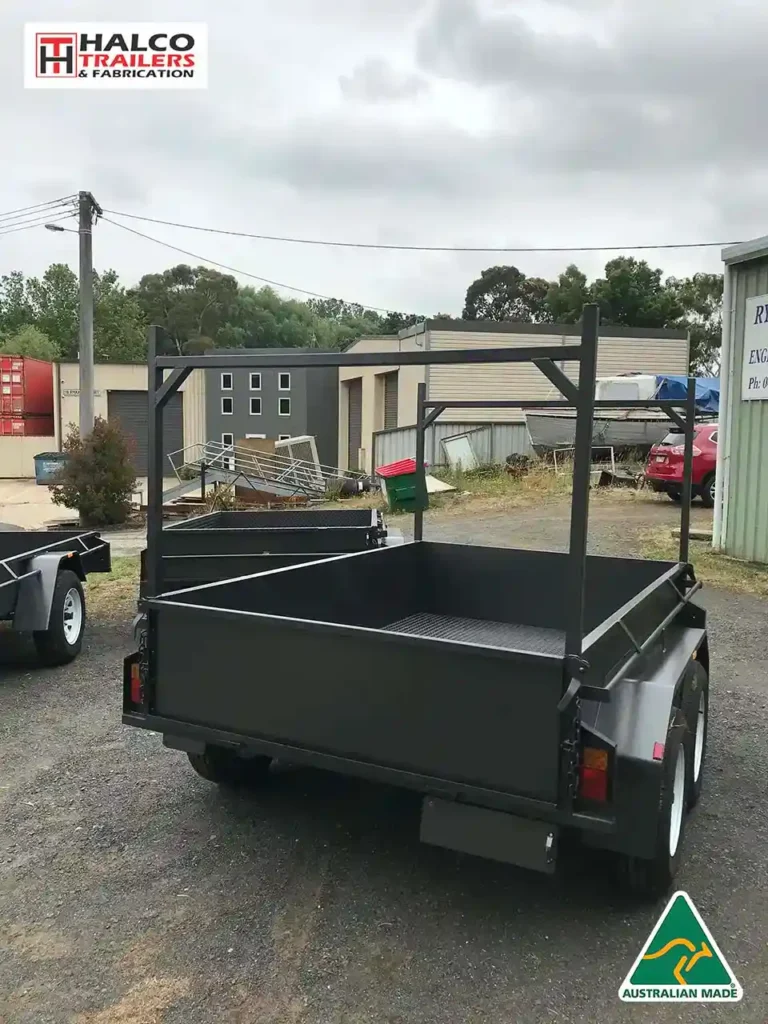
A tandem trailer has four tyres and more load capacity, but it also has more parts to inspect. If one spring, bush or hanger is worn, the problem can affect the way both axles work together.
For tandem trailers, Halco notes that two axles are positioned close together so the load is supported across four wheels. That helps with heavier transport requirements, but the suspension still needs to be checked as a system.
Tandem suspension checks
Area | What to check | Warning sign |
Equalizer / rocker | Smooth load-sharing movement | Clunking, seized movement or uneven ride height |
Springs | Cracks, flattening and uneven shape | One side sitting low |
Shackles | Hole wear and movement | Loose fit or knocking sounds |
Bushes | Rubber or metal wear | Metal-on-metal noise |
U-bolts | Tightness and alignment | Axle movement or rust marks |
Tyres | Even wear across all four tyres | One tyre wearing faster than others |
Axle position | Straight tracking and equal spacing | Trailer dog-tracking or tyre scrub |
Brakes and bearings | Heat and balance | One hub hotter than the others |
A tandem landscape trailer carrying wet soil can feel stable because it has four wheels, but that does not mean the load is shared properly. If one axle works harder than the other, tyre wear and brake heat can reveal the problem before a spring breaks.
How does plant trailer suspension handle machinery loads?
Plant trailer suspension must handle concentrated machinery weight, loading angles, ramp forces and repeated site travel. The suspension, axle position, tyres, brakes, ramps and chassis all need to match the machine being transported.
A mini excavator, skid steer, roller or scissor lift does not load a trailer like loose garden waste. Machinery has concentrated contact points, hard tyres or tracks, and a centre of gravity that changes as it moves up ramps.
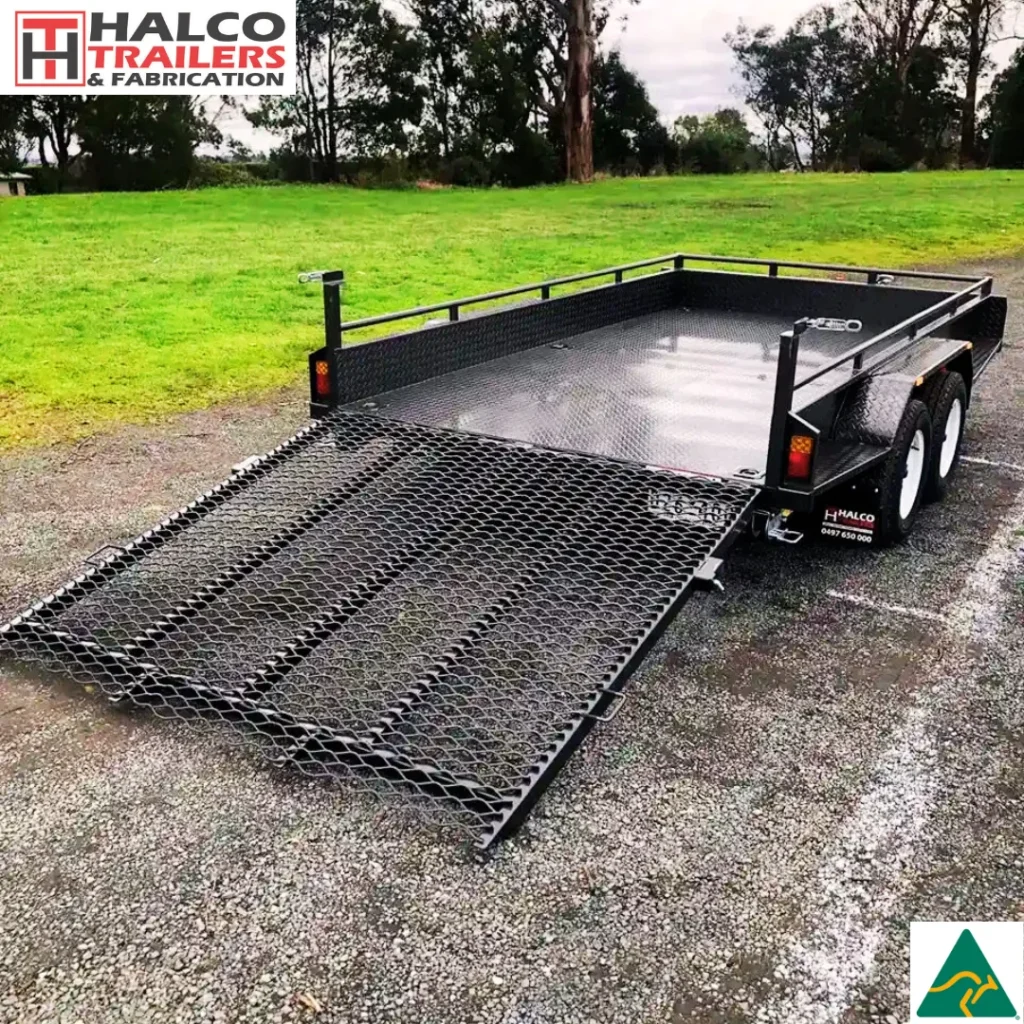
Halco’s plant trailer page says customers should discuss machinery dimensions, mass, ramp style, axle, suspension and braking requirements before choosing a plant trailer. That advice is important because a plant trailer that is almost right can still tow poorly under real machine weight.
Machinery transport considerations
Factor | Why it affects suspension |
Machine mass | Springs and axles must suit loaded weight |
Machine position | Poor placement changes tow-ball weight and axle load |
Ramp angle | Loading creates temporary shock loads |
Track or tyre type | Steel tracks, rubber tracks and wheels stress decks differently |
Tie-down points | Load movement can stress suspension and brakes |
Ground clearance | Low decks help loading but must clear worksites |
Braking system | Heavier trailers need braking matched to load |
Site access | Potholes, gravel and uneven ground increase fatigue |
According to the National Transport Commission’s Load Restraint Guide for Light Vehicles, loads must be restrained so they do not shift under normal driving conditions, including braking, cornering and acceleration. For plant trailers, that means load restraint is part of suspension health, not a separate checklist item.
What warning signs mean suspension needs repair?
Suspension needs repair when the trailer leans, clunks, bounces, scrubs tyres, tracks sideways, bottoms out, has cracked springs, loose U-bolts, worn bushes, bent hangers, shifted axles or visible damage around mounting points.
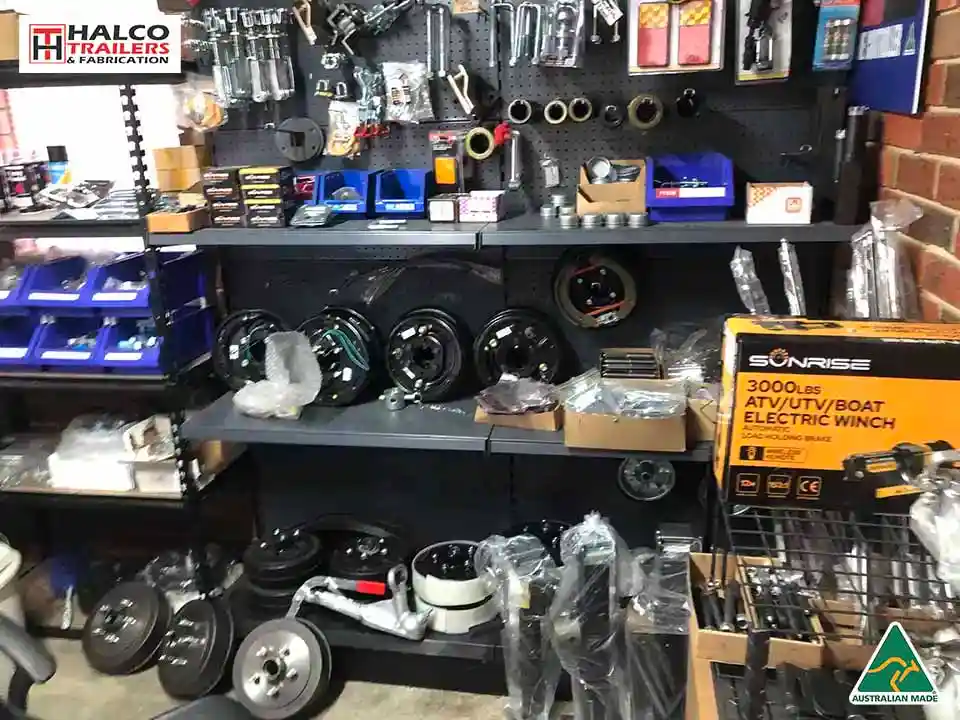
Do not judge suspension only by whether the trailer still moves. Many trailers keep towing while damaging tyres, bearings, brakes and chassis mounts.
Repair warning sign table
Warning sign | Possible cause | Safer next step |
Trailer leans on level ground | Sagging spring, broken leaf, bent axle or uneven load | Check load, then inspect suspension |
Clunking over bumps | Worn bushes, shackles, hangers or loose bolts | Book inspection before loaded towing |
Uneven tyre wear | Axle misalignment, worn bushes or overload | Diagnose before replacing tyres |
Tyre rubbing guard | Sagging suspension, overload or clearance issue | Stop before tyre damage worsens |
Trailer bounces excessively | Weak springs, failed shocks or poor load control | Inspect running gear |
Axle appears shifted | Loose U-bolts, damaged mount or bent hardware | Do not tow loaded |
Spring leaf cracked | Fatigue, corrosion or overload | Repair before road use |
Rust around hangers | Corrosion and possible fatigue | Inspect chassis mounting area |
Trailer tracks sideways | Bent axle, suspension wear or chassis issue | Stop heavy towing |
Suspension bottoms out | Overload or weak springs | Reduce load and inspect setup |
Transport Victoria’s roadworthiness requirements include steering and suspension, wheels and tyres, brakes, body and chassis, couplings and electrical wiring within the broader roadworthiness inspection context. That supports checking the trailer as one connected system.
For structural or running-gear faults, Halco’s trailer repair support is safer than tightening visible bolts and continuing with the same load.
How can owners inspect suspension before towing?
Owners can inspect suspension before towing by checking ride height, spring shape, shackles, bushes, U-bolts, hangers, axle position, tyre wear, clearance and visible cracks. This quick check catches obvious risk before loaded road travel.
A pre-trip check should not replace professional servicing, but it can stop unsafe towing before damage becomes expensive.
10-minute suspension inspection process
- Park on level ground: uneven ground can hide leaning, sagging and poor ride height.
- Stand behind the trailer and compare both sides: one side sitting lower can point to spring, axle or load-balance trouble.
- Check spring shape and condition: cracked, flattened, separated or heavily rusted springs need inspection.
- Look at shackles and bushes: worn holes, missing rubber and movement can create clunks and tyre scrub.
- Inspect U-bolts and axle seats: loose or shifted hardware can let the axle move under the trailer.
- Check hangers and chassis mounts: rust trails, cracks or bent brackets are warning signs.
- Look at tyre wear patterns: inner-edge wear, feathering or cupping often points beyond the tyre itself.
- Check clearance around tyres and guards: rubbing marks show the trailer may be sagging or overloaded.
- Listen during a low-speed test: clunks, squeaks and harsh bangs should not be ignored.
- Recheck after rough worksites: corrugations, paddock travel and building sites can loosen hardware quickly.
If the trailer is used by several staff members, turn this into a written weekly checklist. A small note such as “left rear tyre wearing inside edge” can help a workshop find a fault before it becomes a roadside failure.
When should suspension be repaired, replaced or upgraded?
Repair is suitable when the current setup still matches the job and one part has worn or failed. Replacement restores failed components, while an upgrade is needed when the trailer is repeatedly overloaded or no longer suits its work.
Trailer suspension repair should start with diagnosis. Replacing one spring may not fix a bent axle. Replacing tyres may not fix bush wear. Tightening U-bolts may not fix a damaged spring seat.
Repair, replacement or upgrade table
Situation | Best action | Example |
Loose hardware | Repair and inspect related parts | Clunk after rough driveway use |
Worn bushes | Replace bushes and inspect shackles | Metal-on-metal movement |
Cracked spring | Replace spring and inspect load rating | Trailer leaning under normal load |
Bent axle | Replace or specialist repair after diagnosis | Severe tyre scrub |
Rusted hanger | Repair mount and inspect chassis | Rust trails around spring bracket |
Repeated spring failure | Review load, rating and trailer type | Same side fails repeatedly |
Trailer used for heavier work than planned | Upgrade or choose a suitable trailer | Light trailer now moving machinery |
Multiple old running-gear faults | Repair-vs-replacement review | Springs, tyres, bearings and brakes all worn |
Halco’s trailer suspension support sits within its trailer parts, repairs and servicing work from Warragul. The team can inspect applicable axles, springs, mounting points, hubs, suspension hardware and related running-gear components before deciding whether repair or replacement is suitable.
How often should suspension be serviced?
Suspension should be visually checked before loaded towing and professionally inspected based on use. Daily work trailers, farm trailers, tandem trailers and machinery trailers need shorter service intervals than light domestic trailers used occasionally.
Time matters, but use matters more. A trailer that sits outside for months can corrode. A trailer that works daily can wear bushes, flatten springs and loosen hardware.
Suspension service frequency guide
Trailer use | Owner check | Workshop inspection |
Occasional household trailer | Before every tow | Annually or before major trips |
Regular domestic trailer | Before loaded trips | Every 12 months |
Tradie trailer | Weekly and before heavy jobs | Every 6 to 12 months |
Landscaping trailer | Before loaded runs | Before peak season and after heavy wet loads |
Farm trailer | Before road towing | After paddock use, storage or heavy loads |
Tandem work trailer | Before loaded towing | More often if tyres, bushes or springs show wear |
Plant trailer | Before every machine move | Scheduled by machine mass, distance and site conditions |
Stored trailer | Before reuse | Before road towing after months unused |
For businesses, schedule suspension checks with trailer servicing rather than waiting for visible failure. Planned inspection is usually easier than replacing tyres, springs or axles after a loaded job goes wrong.
How much can suspension repair cost in Australia?
Suspension repair costs depend on trailer size, axle count, spring type, rust, parts availability, labour access and whether tyres, bearings, brakes or chassis mounts also need attention. Accurate pricing should follow inspection first.
A visible symptom rarely tells the whole story. A worn tyre may come from axle alignment. A clunk may come from bushes. A lean may come from spring fatigue, incorrect loading or chassis damage.
Cost factor table
Cost factor | Why it affects price |
Single axle vs tandem axle | Tandem trailers have more springs, bushes and load-sharing hardware |
Suspension type | Leaf, slipper, rocker, torsion and independent systems use different parts |
Rust and corrosion | Seized bolts and weak mounts increase labour |
Axle condition | Bent or shifted axles add diagnosis and repair scope |
Tyre damage | Uneven wear may require tyres after the root cause is fixed |
Bearing and hub condition | Running-gear faults often overlap |
Brake system proximity | Brake lines, wiring or drums may need protection or removal |
Chassis mount condition | Cracked mounts can become structural repair |
Parts availability | Standard parts are easier than unusual or older components |
Commercial urgency | Faster turnaround depends on workshop capacity and parts supply |
For a small business, the cheapest repair is usually the one booked early. Fixing a bush, spring or hanger during scheduled servicing is easier than handling a broken loaded trailer on a weekday job.
Conclusion
Trailer suspension affects load support, tyre wear, braking stability and trailer lifespan, so it should be matched to the trailer’s real job and inspected before small faults become expensive.
For owners across Warragul, Melbourne, Gippsland and regional Victoria, Halco Trailers can help with trailer repair, servicing, parts and running-gear inspection. If your trailer leans, clunks, scrubs tyres or feels unstable under load, book an inspection before the next work trip.