
By Halco Trailers Team, Trailer Manufacturing / Safety Specialist
Trailer ramp types vary from fixed and fold-down ramps to removable, slide-under, hydraulic and low-angle designs. The right choice depends on your trailer height, load weight, wheelbase, loading frequency, storage space and how safely the ramp can be secured.
If you’re loading a ride-on mower every morning, a mini excavator twice a week or a low-clearance car occasionally, the same ramp design won’t necessarily suit all three jobs.
This trailer ramp types guide compares seven practical approaches and explains where each works best, what to check before choosing one and when a built-in ramp makes more sense than a portable option.
For businesses searching for trailer ramps Australia-wide, the useful question isn’t “Which ramp looks strongest?” It’s “Which ramp fits the equipment, trailer and loading routine without creating unnecessary handling or safety problems?”
Key takeaways
- Fixed ramps suit trailers that load the same equipment regularly and need a robust, simple setup.
- Fold-down ramps offer quick deployment while staying attached to the trailer.
- Removable ramps are flexible when different machines or loading locations are involved.
- Slide-under and upright ramps prioritise storage and fast access, particularly on car and machinery trailers.
- Hydraulic ramps reduce manual handling when ramps are large or heavy.
- Beavertail designs reduce the transition angle for low-clearance vehicles and equipment.
- Capacity, ramp length, width, traction, attachment and trailer rating matter as much as the ramp design itself.
Table of contents
- Which trailer ramp types suit different loading jobs?
- What are the 7 trailer ramp designs and where does each work best?
- How should you choose ramp length, width and load capacity?
- What safety checks should you perform before using trailer loading ramps?
- Which trailer ramp types suit plant, car and machinery trailers?
- What does Australian safety guidance say about trailer loading ramps?
- Which trailer ramp types make sense for frequent commercial loading?
- How much do trailer ramps cost in Australia?
- Conclusion
- FAQs
Which trailer ramp types suit different loading jobs?
Choosing trailer ramp types starts with the load, not the ramp itself. Match the ramp to the machine or vehicle weight, trailer deck height, ground clearance, wheel width, loading frequency and available storage before deciding on a design.
Quick comparison
Ramp design | Works best for | Main advantage | Main trade-off |
Fixed rear ramp | Regular machinery loading | Strong, simple and ready to use | Takes up permanent rear space |
Fold-down / hinged ramp | Mowers, plant and trade equipment | Fast deployment | Hinges and locks need maintenance |
Removable / portable ramp | Flexible loading jobs | Easy to remove and reposition | Requires manual setup and secure attachment |
Slide-under ramp | Car and machinery trailers | Compact storage | Requires suitable storage clearance |
Upright / standing ramp | Car carriers and work trailers | Quick storage and access | Adds rear vertical hardware |
Hydraulic ramp | Heavy or frequent machinery loading | Reduces manual handling | More complex and expensive |
Beavertail / low-angle rear | Low cars and low-clearance machinery | Gentler loading transition | Changes trailer deck design and usable length |
The important distinction is between ramp shape, ramp attachment and ramp storage. A folding ramp can also be hydraulic. A beavertail can be combined with removable ramps. A fixed ramp can be stored upright. The seven categories below are therefore practical design approaches rather than mutually exclusive engineering standards.
What are the 7 trailer ramp designs and where does each work best?
The seven useful trailer ramp designs are fixed rear ramps, fold-down ramps, removable ramps, slide-under ramps, upright stow-away ramps, hydraulic ramps and beavertail or low-angle rear ramps. Each solves a different loading, storage or access problem.
1. Fixed rear ramps
A fixed rear ramp stays permanently attached to the trailer and is ready whenever equipment needs to be loaded. It is a strong option for businesses that repeatedly move the same type of machinery and don’t want separate ramp storage.
Works best for:
- Plant and machinery trailers
- Ride-on mowers
- Landscaping equipment
- Small excavators
- Regular commercial loading
The biggest advantage is simplicity. There’s no ramp to find in the ute, no separate storage bracket and no repeated lifting before every loading job.
The trade-off is space. A permanent ramp can affect rear access, departure angle, storage and the way other equipment is loaded.
For a contractor who loads the same mower or machine every morning, that trade-off can be worthwhile.
2. Fold-down or hinged ramps
Fold-down ramps are attached to the trailer and rotate into the loading position when required. When raised, they can act as a rear gate or be stored vertically against the trailer.
Works best for:
- Landscaping trailers
- Lawn mower trailers
- Plant trailers
- General-purpose work trailers
- Equipment that is loaded frequently
The main benefit is speed. You don’t have to carry separate ramps from the workshop to the trailer.
Halco’s current plant trailer range includes fixed, fold-down and hydraulic ramp configurations, depending on the trailer build and equipment requirements.
A fold-down system needs regular attention to hinges, pins, locking hardware and the points where the ramp transfers force into the trailer structure. A ramp that looks strong can still be unsafe if its attachment hardware is worn.
3. Removable or portable ramps
Removable ramps are separate from the trailer and can be fitted when needed. They’re useful when one trailer needs to handle different machines or when the owner wants maximum flexibility.
Works best for:
- Occasional machinery loading
- Small businesses with multiple equipment types
- Motorbikes and ATVs
- Mowers
- Owners with limited trailer storage requirements
The major advantage is flexibility. You can choose different ramp lengths or capacities for different equipment rather than permanently committing the trailer to one configuration.
The disadvantage is setup. Every loading operation requires correct positioning and secure attachment.
Portable ramps also need to be stored safely between jobs. Leaving a heavy aluminium or steel ramp loose on a trailer deck can turn a useful tool into a projectile during transport.
4. Slide-under ramps
Slide-under ramps are designed to be stored underneath or within the trailer structure when not being used. They are particularly useful when keeping the rear of a trailer clear matters.
Works best for:
- Car trailers
- Vehicle transport
- Machinery trailers
- Low-profile work trailers
- Commercial operators who load regularly
The storage arrangement is the selling point. The ramps are still part of the trailer setup, but they don’t need to occupy the deck or hang prominently from the rear.
Halco’s car trailer range includes slide-under and upright ramp options, along with heavy-duty custom ramp arrangements for vehicle loading.
When specifying this design, check the storage clearance underneath the trailer. The ramp should slide smoothly without interfering with brakes, suspension, wiring, ground clearance or other components.
5. Upright or standing ramps
Upright ramps are stored vertically at the rear or front of the trailer when not being used. They provide a quick transition between transport and loading without requiring the operator to carry a separate ramp.
Works best for:
- Car carriers
- Vehicle transport
- Machinery trailers
- Regular loading operations
- Trailers where under-deck storage is unsuitable
The benefit is quick access. The operator can release the ramp, lower it into position and start loading.
The design needs secure retention when travelling. A ramp that is correctly positioned for loading but poorly restrained in its upright position can move, rattle or create a hazard on the road.
6. Hydraulic ramps
Hydraulic ramps use a hydraulic system to raise, lower or support the ramp. They make sense when the ramp is too heavy, large or frequently used to handle comfortably by hand.
Works best for:
- Heavy plant
- Frequent machinery loading
- Larger commercial trailers
- Equipment that requires controlled loading
- Operations where manual handling is a concern
Hydraulic systems add convenience but also add components. Cylinders, hoses, valves, controls and mechanical locking arrangements all need to be designed and maintained correctly.
WorkSafe Victoria has specifically warned about serious crush injuries involving uncontrolled hydraulic loading ramps and tailgate lifters. Its guidance recommends controls such as load-holding protection, suitable controls outside the crush zone, mechanical securing and regular inspection and maintenance.
For a business loading heavy equipment every day, the extra complexity can be justified. For an occasional mower, it may be unnecessary.
7. Beavertail or low-angle rear design
A beavertail is a sloping rear section of the trailer deck rather than simply a separate portable ramp. It creates a smoother transition from ground level to the main deck and can reduce approach-angle problems.
Works best for:
- Low-clearance cars
- Race cars
- Long-wheelbase vehicles
- Plant with limited ground clearance
- Equipment prone to bottoming out
The benefit is geometry. A low car may clear a normal ramp at the bottom but scrape as it transitions onto the trailer deck. A beavertail reduces that abrupt change.
The Car Trailer Guide identifies beavertail decks as one of the common low-angle loading approaches and distinguishes them from fold-out/removable ramps and tilt decks.
A beavertail does use some trailer length for the sloped section, so the gain in loading angle needs to be balanced against available deck space.
How should you choose ramp length, width and load capacity?
Ramp length, width and capacity determine whether loading feels controlled or awkward. A longer ramp usually creates a gentler incline, while adequate width, traction and rated capacity help keep equipment aligned and supported throughout the loading process.
1. Start with the actual machine weight
Use the machine’s real operating weight, not the brochure figure for a stripped-down version.
Include relevant attachments, fluids and other equipment that will remain on the machine during loading.
For example, a mini excavator with a bucket attached can be significantly different from the base machine specification.
2. Measure trailer deck height
Measure from the actual loading surface to the ground.
If the trailer is used with different tow vehicles, check whether the deck height changes materially between setups.
Suspension compression can also change the effective loading height.
3. Consider the machine’s ground clearance
Ground clearance matters at two points:
- Where the wheels or tracks first climb the ramp
- Where the machine transitions from ramp to trailer deck
Low-clearance equipment may need a longer ramp or curved/beavertail transition.
4. Match width to the equipment
The ramp needs enough width for the wheels or tracks to remain centred during loading.
Do not choose a ramp solely because its weight rating looks adequate. A narrow ramp can create an alignment problem even when its structural capacity is sufficient.
5. Understand the rating
Check whether the advertised capacity applies to:
- One ramp
- A pair of ramps
- A complete ramp system
Never assume a “3,000 kg ramp” means each individual ramp can carry 3,000 kg.
6. Consider the loading surface
Traction changes with conditions.
Mud, rain, grass, oil, hydraulic fluid and loose debris can reduce grip. A ramp suitable in a dry workshop may behave very differently on a wet regional Victorian jobsite.
7. Use the machine manufacturer’s limits
There is no single loading angle that is automatically safe for every machine.
Use the equipment manufacturer’s instructions where available, then match the trailer and ramp configuration to those limits.
The Ramp Match Framework
This is a practical five-point framework for comparing any ramp design:
Question | What to establish |
What are you loading? | Car, mower, ATV, excavator, skid steer or other equipment |
How heavy is it? | Actual operating weight including relevant attachments |
How high is the deck? | Ground-to-deck height in the working configuration |
How often will you load it? | Daily, weekly, occasional or emergency use |
How will the ramp be stored? | Attached, underneath, upright or separately |
If you can answer those five questions, most unsuitable ramp options can be eliminated before you start comparing prices.
What safety checks should you perform before using trailer loading ramps?
Before using trailer loading ramps, inspect the ramp, trailer deck, attachment points, hinges, pins, surface, tyres and surrounding ground. Then secure the ramp, confirm its rating and keep people clear of the equipment’s travel path.
Pre-loading ramp check
- Check the ramp rating against the actual machine weight: never load equipment that exceeds the manufacturer’s rated capacity.
- Inspect the ramp for cracks, bends and damaged welds: structural damage can worsen when the machine reaches the highest stress point.
- Check hooks, lips, pins and attachment points: the ramp must make a positive connection with the trailer.
- Inspect the trailer rear cross-member and deck: the trailer must be capable of accepting the loading forces.
- Clear mud, oil and debris from the ramp surface: contamination can reduce traction.
- Set the trailer on firm, suitable ground: avoid unstable surfaces that allow the trailer or ramp to move.
- Secure the ramp against kick-out: use the manufacturer-specified pins, straps, locks or attachment system.
- Keep bystanders outside the travel path: nobody should stand directly behind or beside moving equipment.
- Load slowly and maintain control: avoid sudden acceleration, braking or steering corrections on the ramp.
- Secure the equipment after loading: reaching the trailer deck does not complete the safety process.
According to the National Transport Commission’s Load Restraint Guide, loads on light vehicles and trailers must be restrained so they stay on the vehicle during normal driving, including heavy braking, cornering and acceleration. The guide also requires load-restraint systems to meet applicable performance standards.
That means the ramp is only one part of the loading system. The trailer, machine, restraints and towing setup all need to work together.
Which trailer ramp types suit plant, car and machinery trailers?
The best ramp configuration depends heavily on what your trailer carries. Plant trailers prioritise machinery access, car trailers need vehicle-friendly loading angles, while machinery trailers may require high-capacity ramps, stronger attachment points and greater ground clearance.
Plant trailers
Plant trailers are commonly used for excavators, compact machinery, rollers, scissor lifts and other equipment.
A fixed, fold-down or hydraulic ramp can make sense where the same machinery is loaded repeatedly.
Halco’s plant trailers are available in 10×5, 10×6, 12×6 and custom sizes, with fixed, fold-down or hydraulic ramp options depending on the build.
Car trailers
Cars introduce different ramp challenges because ground clearance varies enormously.
A standard sedan may tolerate a normal loading transition. A lowered vehicle, race car or long-wheelbase vehicle may scrape at the ramp-to-deck transition.
For those applications, slide-under, upright, beavertail or other low-angle arrangements can be more practical.
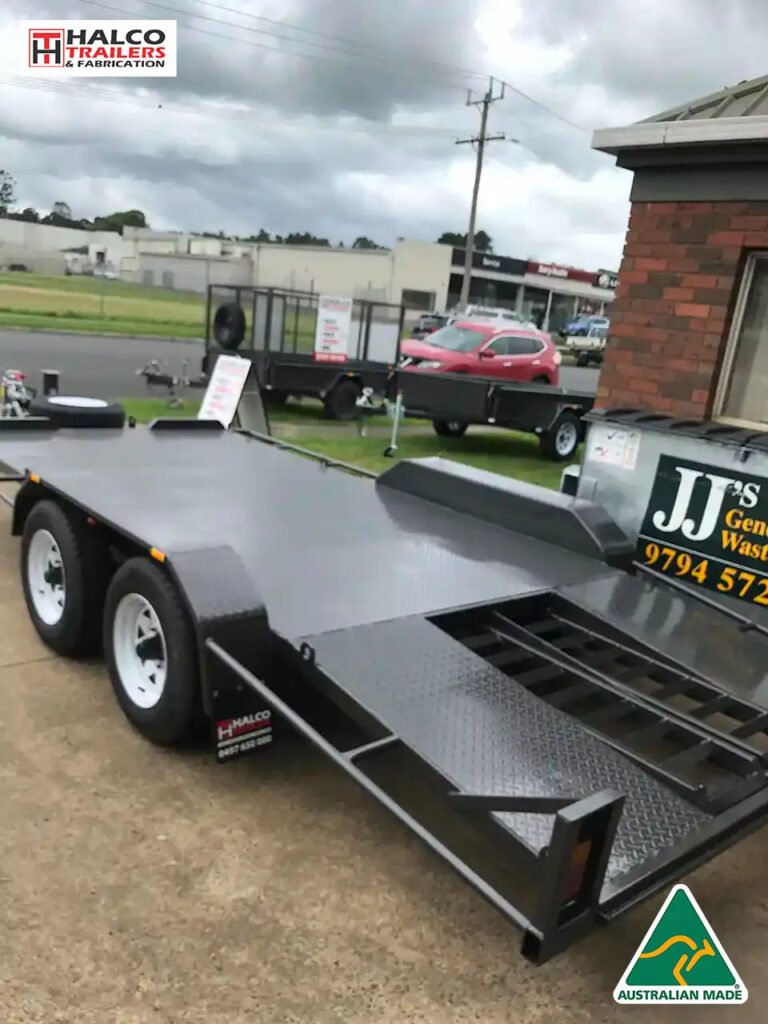
Halco’s car trailers can be configured with heavy-duty custom ramps, including slide-under and upright options.
Machinery trailers
Machinery trailers need to be designed around the equipment rather than simply adding the strongest available ramp.
Check:
- Machine operating weight
- Track or tyre width
- Ground clearance
- Wheelbase
- Loading angle
- Ramp attachment
- Tie-down points
- Trailer GVM and braking requirements
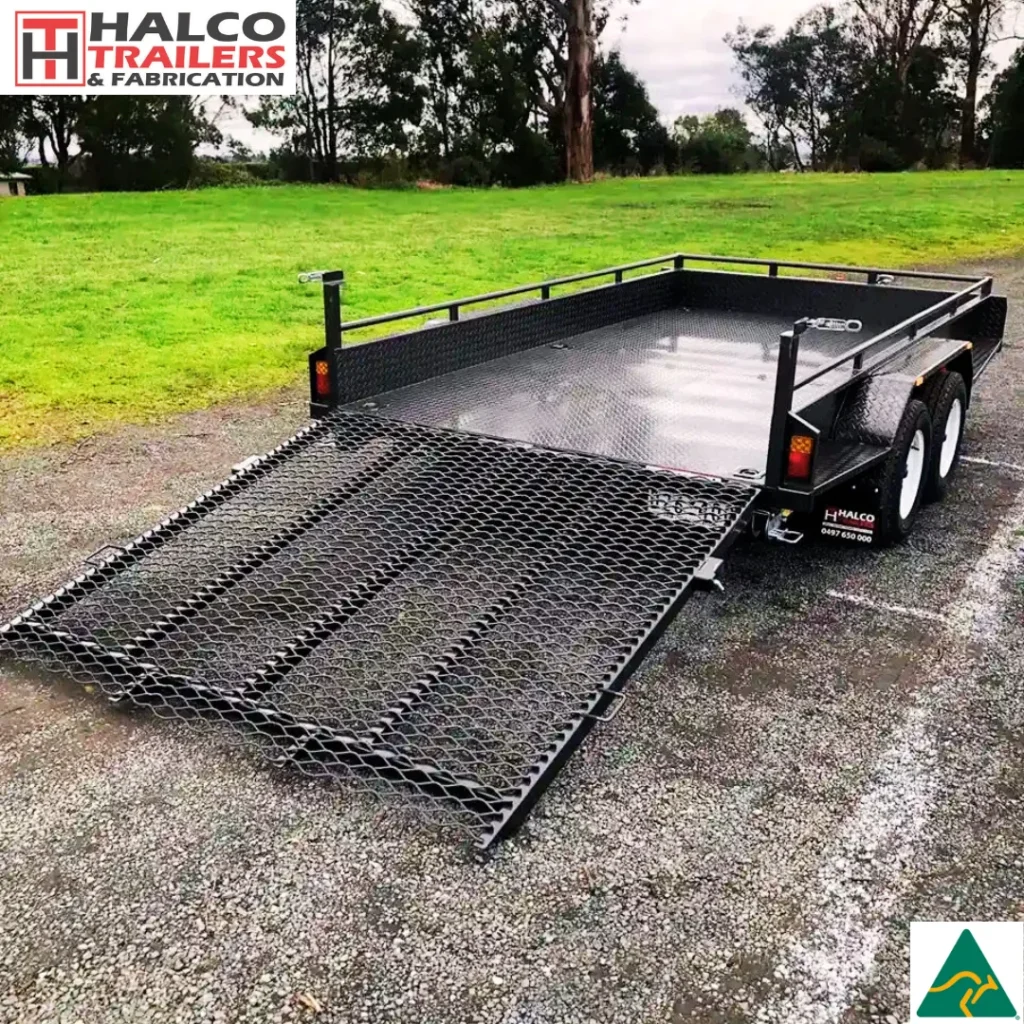
For customers looking for machinery trailers, Halco’s plant trailer range provides configurations for construction, landscaping, agriculture, property maintenance and commercial equipment transport.
Tandem trailers
A tandem configuration can be useful when the trailer needs greater stability and load distribution, but axle count alone does not determine whether a particular ramp will work.
The ramp still needs to match the equipment and rear structure.
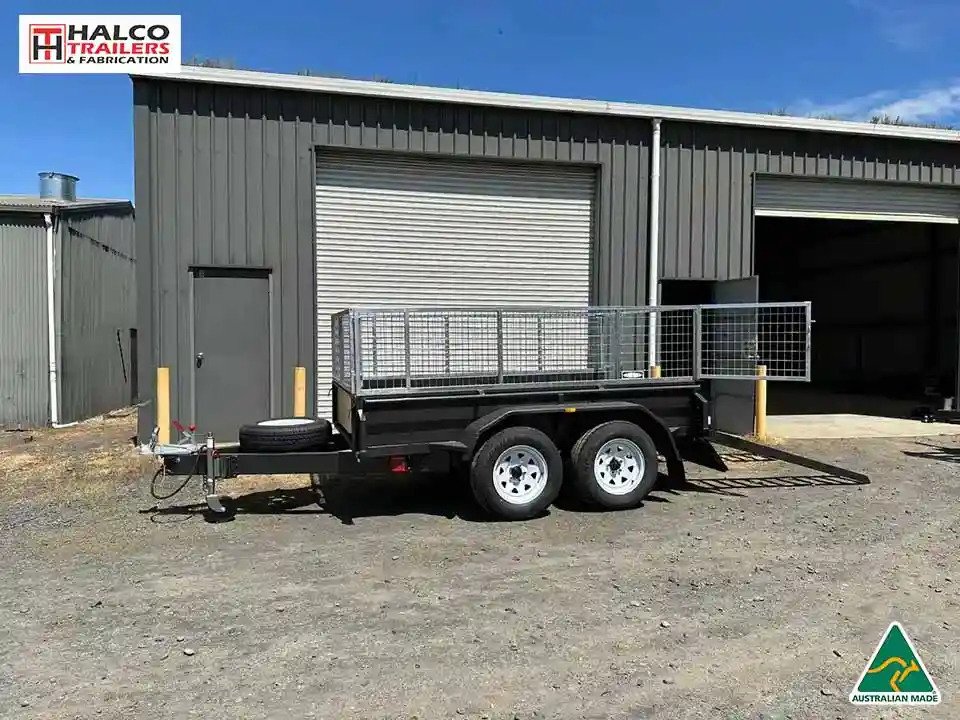
Halco’s tandem trailers can be configured with rear ramp options as part of the overall trailer specification.
What does Australian safety guidance say about trailer loading ramps?
Australian safety guidance focuses on ramp stability, rated capacity, secure setup and safe loading rather than choosing a ramp by appearance. Portable vehicle ramps within the ACCC standard have specific safety requirements, while workplace loading ramps need controlled operation and maintenance.
Portable vehicle ramps
According to the ACCC Product Safety mandatory standard for portable ramps, the mandatory standard applies to portable vehicle ramps consisting of an incline and platform onto which a vehicle is driven for maintenance or display, with a nominated capacity up to and including 1,500 kg per ramp. It specifies requirements covering design, construction, performance and safety markings.
This distinction matters: do not assume that the ACCC portable-vehicle-ramp standard is a blanket specification for every ramp permanently fitted to a machinery or plant trailer. The scope of the standard needs to match the product being used.
The Federal Register of Legislation identifies the Consumer Goods (Portable Ramps for Vehicles) Safety Standard 2017 as an in-force legislative instrument.
Workplace loading ramps
According to WorkSafe Victoria, uncontrolled hydraulic loading ramps and tailgate lifters can create serious crush hazards. WorkSafe recommends appropriate hydraulic protection, controls positioned away from crushing zones, mechanical securing and regular inspection and maintenance.
For Victorian contractors and businesses, this is particularly relevant when loading heavy plant at construction sites, farms, workshops and yards.
Trailer compliance
According to the Department of Infrastructure’s VSB 1 Revision 6, trailers with an aggregate trailer mass of 4.5 tonnes or less are expected to comply with applicable Australian Design Rules. VSB 1 helps manufacturers understand the ADR requirements applying to common low-ATM trailer categories.
A ramp should therefore be considered as part of the complete trailer design, including the deck, chassis, rear structure, load capacity and intended equipment.
Which trailer ramp types make sense for frequent commercial loading?
Choosing trailer ramp types for a commercial trailer is a design decision, not just an accessory choice. Fixed and hydraulic systems suit repeated heavy loading, while removable or slide-under options work better when storage, flexibility and quick deployment matter.
Choose fixed when consistency matters
If the same equipment is loaded repeatedly, a permanently attached ramp can save time.
Example:
A landscaping company loads the same ride-on mower onto the trailer several times each day. A fixed or fold-down ramp removes repeated lifting and positioning.
Choose hydraulic when manual handling is the problem
Large steel ramps can be awkward to lift repeatedly.
If several workers are needed simply to move the ramp into position, a hydraulic system may make the overall workflow more practical.
WorkSafe Victoria’s hydraulic-ramp guidance is especially relevant here because powered ramps introduce stored-energy and crush-zone hazards that need to be controlled.
Choose removable when the trailer has multiple jobs
A contractor may load a mower on Monday, an ATV on Wednesday and different equipment on Friday.
A removable system can provide flexibility, provided each ramp is correctly rated and securely attached for the job.
Choose slide-under or upright when deck space matters
For car and machinery transport, storing ramps without occupying the main deck can make the trailer easier to use.
This is particularly useful when the trailer carries other equipment alongside the machine being loaded.
Consider a custom trailer when loading is unusual
A custom build makes sense when:
- The machine is unusually heavy or wide
- Ground clearance is limited
- Loading happens several times each day
- Standard ramps interfere with deck space
- Storage needs are unusual
- Hydraulic operation is preferred
- The trailer must handle more than one equipment type
Halco’s custom trailer design service plans trailer dimensions, capacity, axle configuration, loading method, ramps, tie-down points and storage as part of one complete specification.
How much do trailer ramps cost in Australia?
Trailer ramp prices in Australia vary widely with capacity, length, material, folding mechanism and whether the ramp is portable or integrated into the trailer. Current online examples range from roughly A149forlighterfoldingrampstomorethanA1,700 for heavy-duty pairs.
A current Australian market snapshot shows lightweight folding aluminium ramps around A$149, medium-duty folding pairs around A$889, 3,000 kg-class pairs around A$1,249, and a 4,500 kg-rated pair listed around A$1,797. These are retail product examples, not fitted custom-trailer prices.
What changes the final cost?
Cost factor | Effect on price |
Ramp capacity | Higher-rated ramps generally require stronger construction |
Ramp length | Longer ramps require more material and can add weight |
Material | Aluminium, steel and other materials have different costs |
Folding mechanism | Hinges and locking systems add components |
Hydraulic operation | Adds cylinders, hoses, controls and hydraulic hardware |
Custom fabrication | Requires measuring, design and fabrication |
Trailer integration | Structural mounting can add fabrication work |
Surface and traction | Specialist surfaces can affect cost |
Storage system | Slide-under and upright arrangements need additional structure |
Installation | Labour and any trailer modifications add to the final price |
For a business, the cheapest ramp is not automatically the lowest-cost option.
If a ramp takes two people to position 20 times a week, a lighter or hydraulic design may save significant handling time. If a ramp is used twice a year, paying for a complex permanent system may not make financial sense.
Conclusion
The right trailer ramp types depend on what you load, how often you load it and how your trailer is built. Fixed and fold-down ramps suit regular work, removable ramps provide flexibility, hydraulic ramps reduce manual handling, and beavertail designs help with low-clearance loading.
Before choosing a ramp, confirm the equipment weight, trailer height, loading angle, width, capacity, attachment method and storage requirements. If the loading setup is unusual, discuss the ramp as part of the complete trailer design rather than treating it as a bolt-on accessory.
For custom trailer solutions in Warragul, Melbourne, Gippsland and regional Victoria, speak with Halco Trailers about a trailer configured around your equipment and loading requirements.