

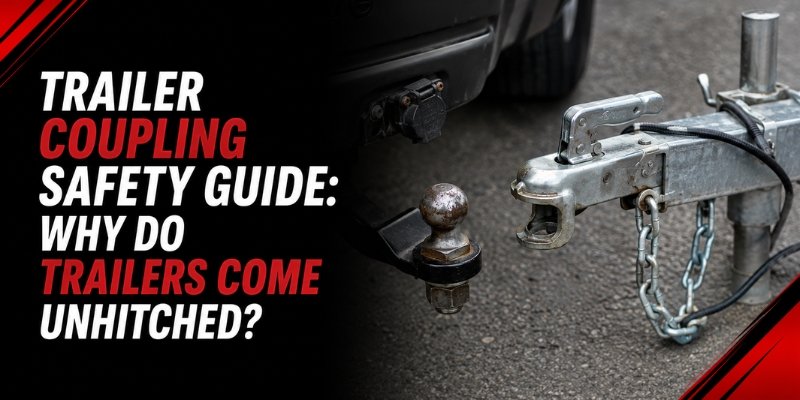
By Halco Trailers Team, Trailer Manufacturing / Safety Specialist
Published: 11 August 2026
Last updated: 11 August 2026
This trailer coupling safety guide explains why trailers come unhitched and how owners can prevent it. Most failures involve poor seating, wrong tow ball size, loose latches, worn couplings, unsafe chains, incorrect height or rushed checks.
A trailer rarely disconnects for no reason. In most real-world cases, the warning signs were there before the tow: the latch did not sit properly, the tow ball was mismatched, the jockey wheel was not fully stowed, the chains dragged, or the trailer sat nose-high under load.
For tradies, contractors, landscapers, farmers, homeowners, vehicle operators and small business owners, a coupling failure can damage equipment, delay jobs and put other road users at risk.
Use this trailer coupling safety guide to understand why trailers come unhitched, how trailer hitch safety works, what to check before towing and when the coupling, tow ball, chains or drawbar need workshop inspection.
Why do trailers come unhitched?
Trailers come unhitched when the coupling does not stay securely locked to the tow ball or hitch. Common causes include poor seating, wrong tow ball size, worn parts, missing safety pin, incorrect height, overload or driver shortcuts.
A coupling failure often starts as a small routine mistake. A driver backs under the coupling, drops the latch, connects the chains and leaves. But the coupling may be sitting on top of the tow ball instead of around it. It may also be locked with dirt, rust or wear preventing full engagement.
Common unhitched-trailer causes
Cause | What happens | Safer action |
Coupling not fully seated | Latch appears closed but ball is not captured properly | Do a lift/tug check before towing |
Wrong tow ball size | Coupling cannot grip correctly | Match tow ball and coupling size |
Worn coupling | Excess movement develops under braking | Inspect and replace if worn |
Missing safety pin or clip | Latch can move under vibration | Fit the correct locking pin or clip |
Tow ball too high or low | Trailer rides nose-up or nose-down | Correct height before loaded towing |
Loose tow ball nut | Tow ball moves inside tongue | Tighten and inspect towbar hardware |
Damaged drawbar | Coupling alignment changes | Stop towing and inspect structure |
Chains too long | Drawbar can hit ground after disconnection | Adjust chain length correctly |
Rushed hookup | Steps are skipped under time pressure | Use a repeatable pre-tow checklist |
Load imbalance | Coupling is stressed during braking and bumps | Reposition and restrain load |
A realistic example is a landscaping crew leaving early with a mower, fuel cans and tools. The trailer was hitched in a hurry, the coupling looked closed, but it was not seated fully. The first speed bump or roundabout exposes the mistake.
What parts make up a safe trailer hitch connection?
A safe trailer hitch connection includes the tow ball or hitch, coupling, latch, locking pin, drawbar, safety chains, shackles, breakaway cable where fitted, electrical plug and load balance. Each part supports the connection under movement.
According to the Department of Infrastructure’s VSB 1, quick release couplings must have a positive locking mechanism and a separate means of automatically retaining that mechanism in the locked position, with locking readily verifiable by visual examination. VSB 1 also explains that 50 mm ball couplings must be marked with the manufacturer or trademark, “50” for tow-ball diameter and the coupling rating.
Hitch connection parts table
Part | Safety role | What to check |
Tow ball | Provides the towing connection point | Correct size, rating, tightness and wear |
Coupling | Locks trailer onto the tow ball | Correct rating, positive latch and full seating |
Latch or handle | Holds the coupling closed | Smooth movement, locking position and no looseness |
Safety pin or clip | Helps retain the latch position | Correct fit, not bent, not improvised |
Drawbar | Transfers towing force to trailer frame | Cracks, rust, bends and weld condition |
Safety chains | Backup if coupling disconnects | Rating, length, attachment and wear |
Shackles | Connect chains to tow vehicle | Fit-for-purpose, compatible and not padlocks |
Breakaway cable | Activates brakes where fitted | Correct routing and separate attachment |
Electrical plug | Carries light and brake signals | Secure fit, clean pins and no damaged wiring |
Load position | Affects hitch load and stability | Balanced, restrained and within limits |
A coupling is not “safe” just because it clicks. It is safe when the coupling, tow ball, latch, chains, drawbar and load work together under braking, turning, rough roads and vibration.
How should owners use this trailer coupling safety guide before every tow?
This trailer coupling safety guide should be used as a repeatable pre-tow routine. Connect on level ground, confirm the ball is captured, lock the latch, attach chains, secure the jockey wheel, connect lights and recheck after moving.
The key is consistency. Do the same checks in the same order every time, even when the trip is short. Short jobs still involve braking, reversing, speed bumps, driveways, slopes and roundabouts.
10-step trailer coupling check
- Park on level ground before hitching: level ground makes coupling height and trailer angle easier to judge.
- Raise the coupling above the tow ball: the tow ball should sit directly under the coupling cup before lowering.
- Lower the coupling fully onto the ball: partial seating is one of the easiest ways to create a false connection.
- Close the latch and fit the safety pin or clip: the latch needs its retaining device before road movement.
- Raise the jockey wheel slightly for a tug check: this helps confirm the trailer is captured by the tow ball.
- Attach safety chains to rated tow points: chains must not be connected to weak or decorative points.
- Check chain length and ground clearance: chains need turning movement without dragging heavily.
- Connect the electrical plug: test indicators, brake lights and tail lights separately.
- Secure the jockey wheel in travel position: a loose jockey wheel can hit the road or interfere with turning.
- Recheck after 10 to 20 kilometres: vibration, load settling and rough surfaces can reveal a poor connection.
This routine also improves trailer hitch safety for new drivers, casual staff and anyone who does not tow daily. For business trailers, turn it into a laminated yard checklist or phone note.
What coupling mistakes are most likely to cause problems?
The most dangerous coupling mistakes are assuming the latch is locked, using the wrong tow ball size, skipping the tug check, forgetting the safety pin, letting chains drag, ignoring clunks and towing with the trailer sitting badly out of level.
Most mistakes happen during normal work pressure. The job is waiting, the trailer was fine yesterday, and the driver wants to leave quickly. That is exactly when a repeatable process matters.
Coupling mistake table
Mistake | Why it matters | Better habit |
Looking only at the latch | The latch can close without full seating | Check ball capture underneath |
No lift/tug check | False coupling may go unnoticed | Lift slightly with jockey wheel |
No retaining clip | Latch can move under vibration | Use the correct pin or clip |
Chains twisted | Strength and movement can be affected | Untwist before connecting |
Chains dragging | Chain links can wear and spark | Adjust length correctly |
Tow ball covered in damage | Coupling can wear or bind | Inspect ball surface regularly |
Too much grease and dirt | Locking action can be hidden | Clean and inspect moving parts |
Trailer nose-high | Hitch load and stability can suffer | Correct tow ball height or load |
Ignoring a clunk | Wear or looseness may be present | Inspect coupling, ball and drawbar |
Wrong trailer for the load | Coupling is stressed beyond practical use | Use a suitable trailer and load plan |
A common scenario is a plant operator loading a compact machine onto a trailer. The trailer sits lower at the rear, the tow ball angle changes and the coupling starts clunking. The real issue may be load position, hitch height or coupling wear, not just “normal trailer noise.”
How do safety chains and shackles reduce risk?
Safety chains reduce risk by keeping the trailer connected to the tow vehicle if the coupling fails. They must be rated, correctly attached, short enough to control the drawbar and connected with suitable shackles or approved connectors.
According to Queensland Government towing equipment guidance, tow bars must have safety-chain attachments that can withstand the rated load capacity, and the attachments should be adjacent to the tow coupling and arranged to maintain trailer direction if the coupling fails. The same page says padlocks should not be used for connecting safety chains.
VSB 1 also states that safety chain attachment points must be attached to a substantial structural member of the trailer and located as near as practical to the trailer coupling.
Safety chain decision table
Chain issue | Risk | What to do |
Chain too long | Drawbar may hit the road if disconnected | Shorten or adjust correctly |
Chain too short | Turning may be restricted | Check full steering movement |
Chain dragging | Wear, sparks and weakening | Raise or adjust connection |
Rusted links | Strength may be reduced | Replace if heavy rust or wear appears |
Twisted chain | Load path may be affected | Untwist before towing |
Unknown rating | Chain may be unsuitable | Use marked, suitable chain |
Padlock used as connector | Not a proper towing connector | Use compatible shackle or approved connector |
Damaged attachment point | Chain may fail when needed | Stop and repair before towing |
Crossing two chains is often used to create a cradle under the drawbar if the coupling separates. But chain length, rating, attachment strength and connector choice matter more than the crossing pattern alone.
How does tow ball height affect coupling safety?
Tow ball height affects coupling safety because the trailer should sit level when loaded. A nose-high or nose-low trailer can change tow-ball load, braking feel, tyre wear, coupling stress and the chance of poor seating.
According to VSB 1, 50 mm tow balls fitted under the applicable standard must be adjustable between 350 mm and 460 mm from the ground to the centre of the ball when the vehicle is fully loaded, and trailers should be designed to be level within this range.
Tow height and load table
Trailer position | What it can suggest | Safer response |
Trailer sits level | Best starting point | Still check load, coupling and chains |
Nose too high | Rear-heavy load or tow ball too high | Rebalance load or correct hitch height |
Nose too low | Excess tow-ball load or low hitch | Check load position and vehicle setup |
Coupling angled sharply | Poor ball height or load shift | Stop and correct before towing |
Coupling clunks on braking | Wear, poor fit or height/load issue | Inspect tow ball, latch and drawbar |
Trailer sways after loading | Load balance or suspension issue | Reposition load before road towing |
According to the National Transport Commission’s Load Restraint Guide, loads must be properly restrained, not exceed mass limits, not overhang dangerously and not cover lights, indicators, reflectors or the number plate. Load position and restraint are therefore part of trailer hitch safety, not separate jobs.
When does a coupling, hitch or drawbar need repair?
A coupling, hitch or drawbar needs repair when it clunks, sticks, fails to lock, shows cracks, has worn parts, damaged chains, loose tow-ball hardware, bent drawbar sections or any movement that feels different under load.
Do not keep towing because the trailer still moves. Coupling faults often show themselves during braking, turning, reversing, rough roads or loaded work. Those are exactly the moments when the connection is under stress.
Repair warning sign table
Warning sign | Possible cause | Safer next step |
Coupling will not close smoothly | Dirt, wear, damage or poor alignment | Clean, inspect and service |
Latch closes but feels loose | Worn coupling or tow ball | Stop and inspect before towing |
Loud clunk when braking | Coupling wear, tow-ball play or load shift | Check connection and load |
Safety pin missing or bent | Latch retention compromised | Replace with correct part |
Tow ball nut moves | Loose towbar hardware | Stop until corrected |
Drawbar crack or rust line | Structural fatigue | Do not tow loaded |
Chain attachment point cracked | Backup connection compromised | Repair before road use |
Breakaway cable damaged | Emergency braking may fail | Replace and test where fitted |
Coupling rating unreadable | Suitability uncertain | Identify or replace component |
Trailer jumps on the ball | Poor seating, wear or height issue | Inspect coupling and hitch setup |
Halco’s trailer parts and servicing support can include inspection of couplings, safety chains, lighting, braking equipment, tyres, wheels, structure, axles and suspension from its Warragul workshop.
How does coupling safety change by trailer type?
Coupling safety changes by trailer type because different loads create different hitch forces. Plant trailers, mower trailers, farm trailers, tradie trailers and car trailers vary in weight, balance, ramp use, braking demand and loading frequency.
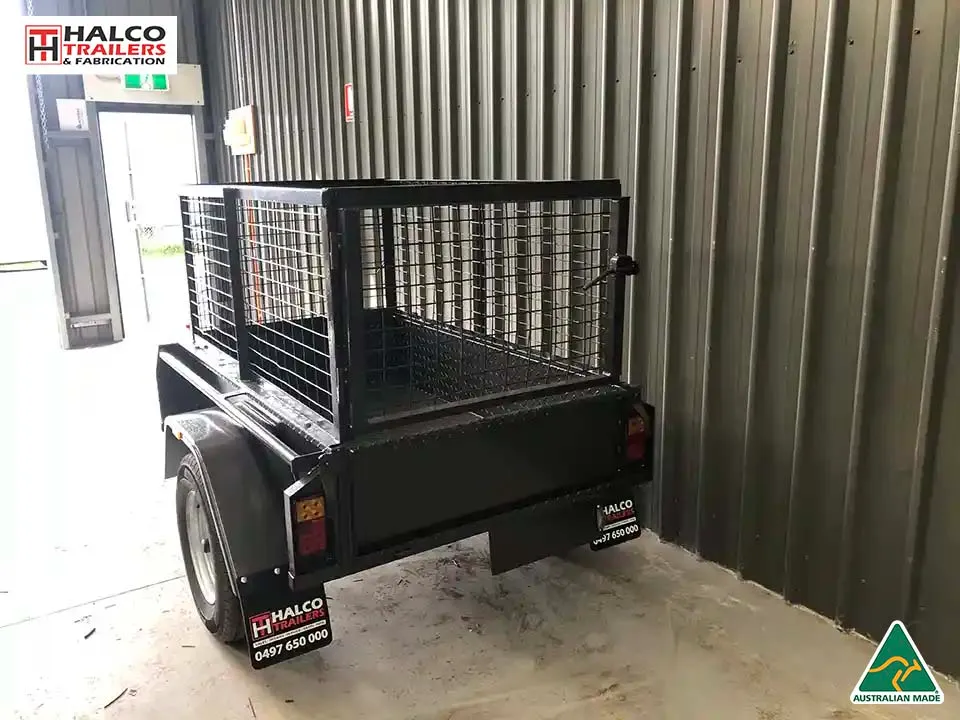
A light box trailer may only carry household goods. A plant trailer may carry a compact excavator with high point loads. A mower trailer may be connected and disconnected several times per week, with ramps, fuel cans, tools and machines affecting balance.
Trailer type | Coupling safety priority |
Box trailer | Correct seating, chains, lights and basic load balance |
Tradesman trailer | Daily latch checks, tool load balance and chain wear |
Landscaping trailer | Wet loads, mowers, ramps and frequent jobsite movement |
Farm trailer | Rough tracks, corrosion, chain wear and drawbar stress |
Car trailer | Braking, wheel straps, tow ball load and hitch rating |
Plant trailer | Machine position, coupling rating, brakes and drawbar stress |
Lawn mower trailer | Frequent connection checks, ramps, fuel and equipment balance |
Hydraulic tipper | Heavy shifting loads, braking and hitch shock under tipping work |
Tiny home trailer | Long-term weight planning, chassis connection and level towing |
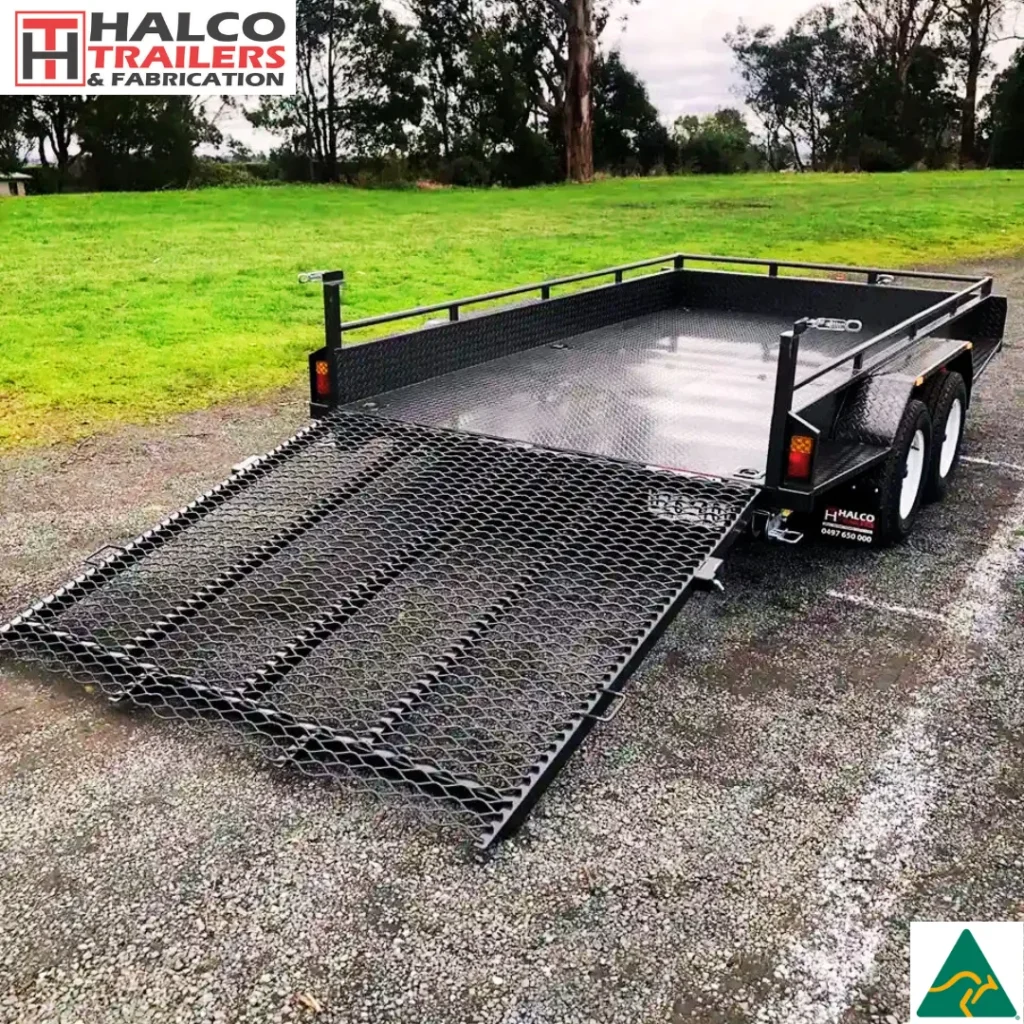
For machinery work, Halco’s plant trailer options are designed around machinery dimensions, weight, ramp style, axle, suspension and braking needs. For landscaping businesses, Halco’s lawn mower trailers can be configured with ramps, tie-down points, toolboxes, braking options and custom layouts.
How often should trailer couplings be inspected or serviced?
Trailer couplings should be checked before every tow and professionally inspected during regular trailer servicing. Work trailers, heavy trailers and trailers used on rough sites need closer inspection than occasional household trailers.
A coupling is a wear part and a safety-critical connection. It deals with vibration, dust, water, braking force, load movement, reversing loads, sharp turns and rough surfaces. Regular checks prevent small looseness turning into a serious failure.
Coupling inspection frequency table
Trailer use | Owner check | Workshop inspection |
Occasional household trailer | Before every trip | Yearly or before a major trip |
Tradie trailer | Daily or weekly | Every 6 to 12 months |
Landscaping trailer | Before loaded job runs | Before peak season and after heavy wet work |
Farm trailer | Before road towing | After rough paddock use or long storage |
Plant trailer | Before each machine move | Based on machine weight and job frequency |
Lawn mower trailer | Before weekly work use | Regularly if ramps, brakes or chains show wear |
Car trailer | Before every vehicle transport | Before long-distance towing |
Commercial fleet trailer | Recorded checks | Planned service schedule |
During servicing, the coupling should be assessed with the tow ball, chains, shackles, drawbar, brakes, wiring and load-restraint points. A hitch fault may actually be caused by load balance, brake grab, worn suspension or poor drawbar alignment.
For urgent clunks, damaged chains or drawbar faults, Halco’s trailer repair centre content is the better internal support page to connect from this article.
Conclusion
Use this trailer coupling safety guide before every tow: confirm the coupling is fully seated, locked, retained, correctly rated and supported by safe chains, suitable tow-ball height and balanced loading.
For trailer owners across Warragul, Melbourne, Gippsland and regional Victoria, Halco Trailers can help with trailer inspections, coupling checks, repairs, servicing and custom trailer advice. If your trailer clunks, jumps, sits out of level or feels loose at the hitch, book an inspection before the next loaded trip.