
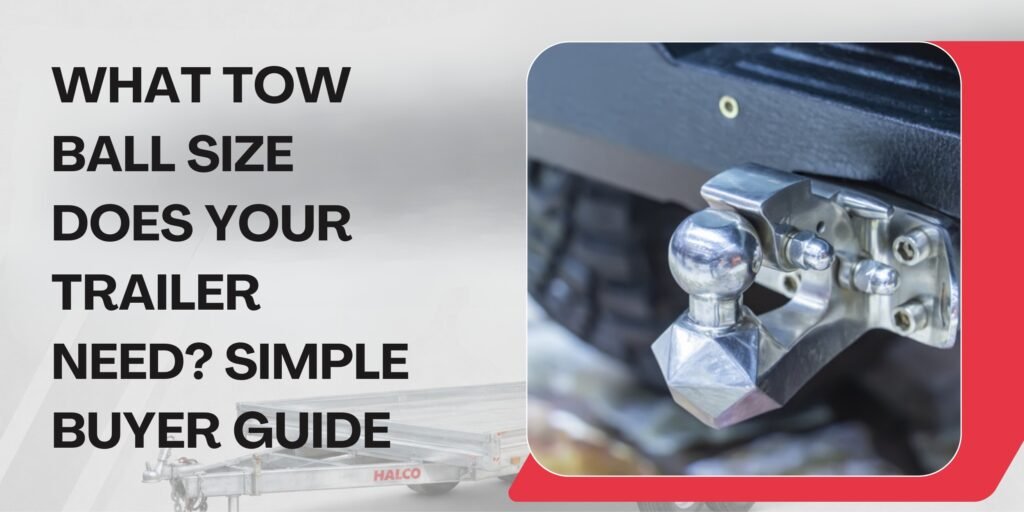
In Australia, 50mm is the most common tow ball diameter for many light trailers, including box trailers, cage trailers and general-purpose trailers. However, older, imported and specialist trailers may use different coupling sizes.
The correct tow ball must match the trailer coupling’s specified diameter, type and load rating. You must also check your towing vehicle’s limits, towbar rating and tow ball mounting requirements before towing.
This guide explains Australian tow ball sizes, how to identify the correct match, and the essential safety checks to complete before connecting a trailer.
Australian Tow Ball Sizes – Quick Reference
Tow balls come in several sizes, and choosing the wrong one is a common and preventable mistake. Tow ball sizes used across different towing applications include 50mm, 1-7/8 inch, 2 inch and 70mm suited to different trailer types, coupling designs, and load ratings.
|
Tow Ball Size |
Approximate Measurement |
Common Use |
|
1-7/8 inch |
47.63mm |
Some smaller, older, or imported trailers |
|
50mm |
50mm |
Common Australian light trailer size |
|
2 inch |
50.8mm |
Common in some overseas towing products |
|
70mm |
70mm |
Heavy-duty or specialist towing applications |
A 50mm coupling should be matched with a 50mm tow ball. A 2-inch tow ball is not automatically the same thing. It may look close, but towing parts are designed to work as a matched system.
Using the wrong tow ball can create poor coupling fit, excessive movement, or unsafe towing conditions. This is why checking the coupling stamp matters more than guessing by appearance.
Need the right tow ball, coupling, or trailer parts for your setup? Halco Trailers stocks trailer parts and accessories for everyday and heavy-duty towing across Warragul, Gippsland, and Victoria.
Important: A 50mm tow ball is not interchangeable with a 2-inch (50.8mm) tow ball. Even when sizes look similar, use only a tow ball that matches the coupling’s specified diameter, type and rating. Never select a tow ball based on appearance alone.
What Is Tow Ball Size?
Tow ball size refers to the diameter of the ball that connects to your trailer coupling. The trailer coupling sits over the tow ball and locks onto it so the trailer can be towed behind the vehicle.
The correct tow ball size depends on the coupling stamped on your trailer, the trailer’s loaded weight, and the rating of the towbar setup. Many Australian light trailers use 50mm tow balls, but you should always check the coupling before buying or towing.
Tow ball size is only one part of the setup. You also need to check:
- Tow ball rating
- Trailer coupling rating
- Towbar rating
- Towbar tongue rating
- Trailer ATM
- Shank size and length
- Safety chains
- Brakes, where fitted
A tow ball may physically fit, but that does not automatically mean the setup is safe for the trailer’s loaded weight.
Are All Tow Balls 50mm? Most Common Sizes in Australia
No, not all tow balls are 50mm. While 50mm is the most common tow ball size on Australian light trailers, older trailers, imported trailers, and specialist setups may use 1-7/8 inch, 2 inch, 70mm, or other sizes. Always check the coupling stamp before buying never assume based on appearance or what came with the vehicle.
For many everyday Australian trailers, the 50mm tow ball is the standard. You will often see this on small box trailers, cage trailers, many tandem trailers, and general-purpose work trailers.
But “common” does not mean “guaranteed.”
Older trailers, imported trailers, and specialist trailers may use a different coupling size. Some may use imperial tow ball sizes such as 1-7/8 inch or 2 inch. Heavy-duty trailers may require a different coupling setup altogether.
The safest place to check is the trailer coupling itself. Look for a stamped or labelled size on the coupling. It may show the ball size and load rating. If the coupling says 50mm, use a 50mm tow ball. Do not assume another size is close enough.
For example, a homeowner towing a small garden trailer may use a 50mm tow ball without issue. A contractor towing machinery on a plant trailer needs to check more carefully because the trailer’s loaded weight, brakes, coupling, and tow vehicle capacity all matter.
How to Know Your Tow Ball Size: Step-by-Step Check
The most reliable way to know your tow ball size is to Check the trailer coupling markings directly. Do not rely on appearance or information from a previous owner. Work through the towing setup step by step before buying anything.
Step 1: Check the Trailer Coupling
Start with the trailer coupling at the front of the drawbar. Look for stamped information on the coupling body.
You may see the ball size, load rating, and manufacturer details. The size may be shown as 50mm, 1-7/8 inch, 2 inch, or another measurement.
If the marking is unclear, do not guess. Ask a trailer specialist or replace the coupling if it is worn, damaged, or unreadable.
Step 2: Check the Coupling Rating
The coupling should have a load rating. This tells you the maximum trailer load the coupling is designed to handle.
A coupling that fits the tow ball but has the wrong rating is not suitable. A trailer used for tools, machinery, green waste, or building materials may weigh much more when loaded than when empty.
Step 3: Check the Trailer ATM
ATM means Aggregate Trailer Mass the maximum loaded weight of the trailer, including the trailer itself and everything on it.
This matters because you are not towing an empty trailer in real life. A landscaper’s trailer may be loaded with mowers, soil, and green waste. A builder’s trailer may carry timber, tools, and materials. A farmer may tow equipment or supplies across rural roads.
Always think about the loaded trailer, not only the empty trailer.
Step 4: Check the Towbar and Tongue Rating
Your tow ball may have a strong rating, but the towbar and tongue must also be suitable.
The towing setup is only as strong as its lowest-rated part. If your tow ball is rated higher than your towbar tongue, the towbar tongue becomes the limit.
This is where many people make mistakes. They buy a heavy-rated tow ball and assume the whole setup can handle that load. It cannot unless the vehicle, towbar, tongue, tow ball, coupling, and trailer are all rated correctly.
Step 5: Check the Shank Size and Fitment
The tow ball has a threaded shank that passes through the towbar tongue. The shank diameter and length must suit the tongue.
If the shank is too small, too short, or not fitted correctly, the tow ball may not sit securely. The washer and nut must also be fitted correctly and tightened to the manufacturer’s requirements.
When buying trailer parts, do not only check the ball diameter. Check the shank size too.
Need Help with Your Trailer Coupling?
Choosing the correct tow ball is only one part of ensuring a safe towing setup. If your trailer coupling is worn, damaged or difficult to secure, have it inspected before towing.
Halco Trailers provides trailer servicing, repairs and parts support from Warragul, Victoria.
Explore Trailer Repairs & Parts or contact our team to discuss your trailer requirements.
Why Tow Ball Rating Matters as Much as Tow Ball Size
Tow ball size tells you whether the ball physically matches the coupling. Tow ball rating tells you whether it is designed to handle the load.
Both matter.
A 50mm tow ball may be available in different ratings. That means two tow balls can have the same ball diameter but different load capacities.
Australian Government Vehicle Standards Bulletin 1 (VSB1), Revision 6, identifies 750kg, 2,000kg and 3,500kg rating classes for relevant 50mm ball couplings. These ratings are not interchangeable, and a 50mm diameter does not automatically mean a coupling is rated to 3,500kg.
The full towing setup can be limited by any of these:
-
Vehicle towing capacity
-
Towbar rating
-
Towbar tongue rating
-
Tow ball rating
-
Trailer coupling rating
-
Trailer ATM
-
Safety chain rating
-
Brake setup
Here is a simple example. A tow ball may be rated to 3,500kg, but if the towbar tongue is rated to 2,000kg, your setup is not automatically suitable for 3,500kg. The lower-rated component can limit the towing combination.
This is especially important for business owners using trailers every week. A tradie towing tools, a landscaper towing equipment or a contractor using a plant trailer cannot rely on guesswork.
Always check the coupling’s marked rating and the towing limits of the vehicle, towbar and other relevant components before towing.
Does Tow Ball Size Depend on Trailer Type?
Tow ball size is determined by the trailer’s fitted coupling, not simply by trailer type. Box trailers, cage trailers, tandem trailers, tippers, plant trailers and car trailers can have different towing requirements depending on their approved configuration, loaded weight and coupling system.
Use the table below as a general guide, then confirm the actual coupling markings and component ratings before towing.
|
Trailer Type |
What to Check |
|
Small box trailer |
Coupling size, trailer ATM, and tow ball rating |
|
Cage trailer |
Coupling fit, safety chains, and loaded weight |
|
Coupling rating, towbar rating, and loaded trailer weight |
|
|
Higher working loads, brakes, coupling rating, and tow vehicle capacity |
|
|
Machinery weight, ATM, coupling rating, and brake requirements |
|
|
Tow ball rating, load position, and tongue rating |
|
|
Boat trailer |
Coupling condition, corrosion, and tow ball fit |
|
Specialist towing setup, engineered chassis, and rated coupling |
A landscaper towing a tandem trailer should check the loaded weight after adding tools, mowers, and green waste. A contractor using a plant trailer for machinery should check the ATM, brake setup, and tow vehicle capacity before towing.
For hydraulic tipper trailers, the trailer may be loaded with soil, gravel, mulch, or construction waste. The load can increase quickly, so the tow ball rating and coupling rating need to suit the actual working load.
For tandem trailers, do not assume the extra axle means the towing setup is automatically safe. The coupling, tow ball, towbar, brakes, and loaded weight all still need to be checked.
Not sure whether your tow ball and coupling are rated for your trailer? Halco Trailers can help with tow ball selection, coupling checks, and parts advice for tandem trailers, plant trailers, tipper trailers, and custom builds across Gippsland and Victoria.
Do Shank Size and Shank Length Matter?
Yes. The ball diameter is only the part that connects to the trailer coupling. The shank is the threaded section that secures the tow ball to the towbar tongue.
Before buying tow balls or related trailer accessories, check:
- Shank diameter
- Shank length
- Thread size
- Washer and nut fitment
- Towbar tongue hole size
- Correct tightening requirements
A tow ball with the correct ball size but the wrong shank may not fit safely. It may sit poorly, move under load, or fail to tighten correctly.
What Size Is the Tow Ball Nut in Australia?
The tow ball nut size in Australia depends on the shank diameter and thread specification of the tow ball. Common tow ball nuts in Australian setups are typically 32mm or 36mm across the flats for standard 50mm tow balls, though this varies between manufacturers and shank specifications.
Always check the tow ball manufacturer’s specifications rather than assuming a standard size. Tighten the tow ball nut to the torque specified by the manufacturer. Insufficient tightening can allow the assembly to loosen.
If you are replacing a tow ball nut, take the old nut or the tow ball shank to a trailer parts supplier to confirm the correct fitment rather than buying by appearance alone.
Common Tow Ball Size Mistakes to Avoid
The most common mistake is assuming every trailer uses a 50mm tow ball. Many do, but not all.
Another common mistake is treating 2 inch and 50mm as the same size. They are close in measurement, but towing equipment should be matched properly, not approximately.
Other mistakes include:
- Ignoring the coupling stamp
- Buying a tow ball only because it is cheap
- Not checking the tow ball rating
- Forgetting to check the shank diameter
- Using the wrong tow ball nut size or torque
- Towing above the lowest-rated component
- Using a rusty or worn tow ball
- Forgetting the safety pin or locking clip
- Not checking trailer lights
- Ignoring safety chains
- Towing with the trailer sitting badly nose-up or nose-down
A worn tow ball can also create poor fitment. If the coupling feels loose or does not lock properly, do not tow until the issue is inspected and resolved.
Pre-Tow Safety Checklist Before You Hit the Road
Before towing, take a minute to check the setup. This is especially important when the trailer is used for work and may be loaded differently each day.
Check that:
- The tow ball matches the trailer coupling
- The tow ball nut is tightened to the correct torque
- The coupling is fully locked
- The safety pin or locking clip is fitted
- Safety chains are connected correctly
- Trailer lights are working
- Brakes are connected where fitted
- Tyres are inflated and undamaged
- The load is secured and within the trailer’s rated capacity
- The trailer is not overloaded
- The jockey wheel is raised and secured
- The number plate is visible
A quick check can prevent major problems. It is much easier to fix a loose connection in the driveway than on the side of the road with a fully loaded trailer.
When Should You Replace a Tow Ball?
A tow ball should be replaced when it is worn, damaged, rusty, or incorrectly rated for the trailer you are towing.
You should also replace it if:
- The shank or thread is damaged
- The coupling does not lock securely
- The tow ball rating is too low for the trailer
- You change to a heavier trailer
- You change the towbar or tongue setup
- The ball surface is badly worn or pitted
Tow balls are important trailer parts. They should not be treated as one-size-fits-all items or left in service past their useful life.
For example, someone who previously towed a small box trailer may later buy a tandem trailer or hydraulic tipper trailer. The old tow ball may physically fit the new coupling, but the rating and full towing setup still need to be confirmed before towing.
Choosing Trailer Parts and Accessories for Safer Towing
Choosing the right tow ball is easier when you think about the full towing setup rather than the ball in isolation.
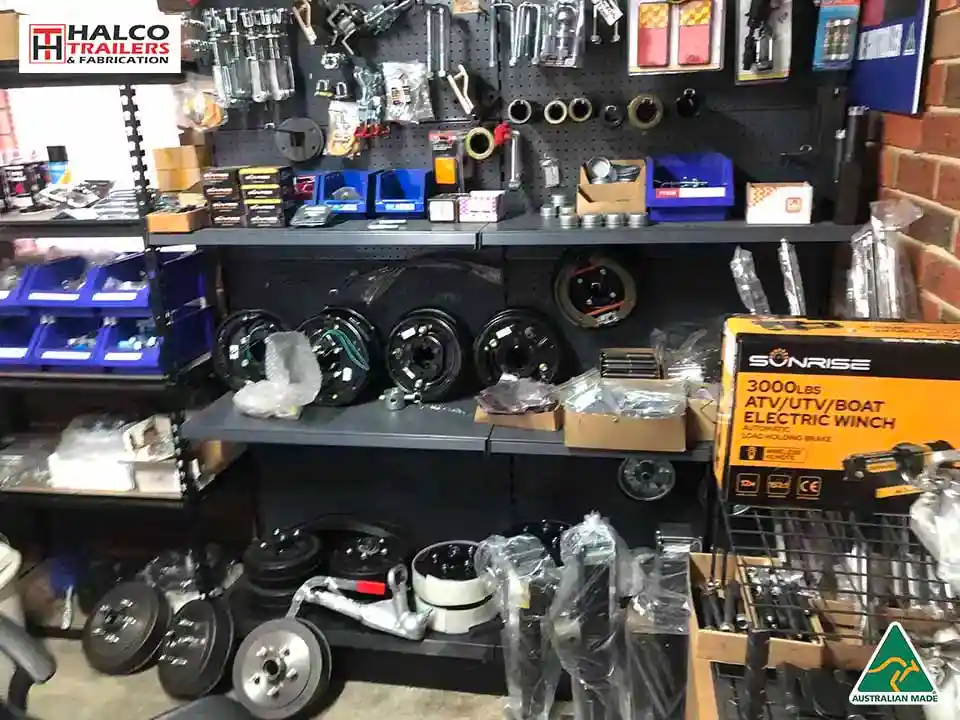
Useful trailer parts and trailer accessories may include:
- Tow balls
- Couplings
- Safety chains
- Jockey wheels
- Trailer plugs
- Trailer lights
- Brake components
- Tie-down straps
- Wheel chocks
- Spare wheels
- Trailer locks
For a tradie, reliable trailer accessories help keep work moving. For a landscaper, strong tie-downs, working lights, and the right coupling matter every day. For a farmer, checking towing gear regularly is part of keeping equipment safe on rural roads. For a homeowner, the right setup helps avoid mistakes when towing garden waste, furniture, or renovation materials.
Instead of only asking “What tow ball size do I need?” it is better to ask: “Is my full towing setup rated, fitted, and safe for the trailer I am using?”
Final Advice: Match the Coupling, Rating, and Real Load
The right tow ball size is the one that matches your trailer coupling. But the safest towing setup also depends on the tow ball rating, coupling rating, shank fitment, towbar rating, trailer ATM, and actual load.
For small trailers, this check may be simple. For tandem trailers, hydraulic tipper trailers, plant trailers, and business-use trailers, it becomes more important because the loads are heavier and the trailer is used more often.
Never rely on appearance alone. Check the coupling stamp, confirm the rating, and make sure the full towing setup is suitable before you hit the road.
Need help choosing the right tow ball size, coupling, or towing setup?
Halco Trailers stocks trailer parts and accessories and can advise on tandem trailers, hydraulic tipper trailers, plant trailers, and everyday towing setups across Warragul, Gippsland, Melbourne, and regional Victoria.