

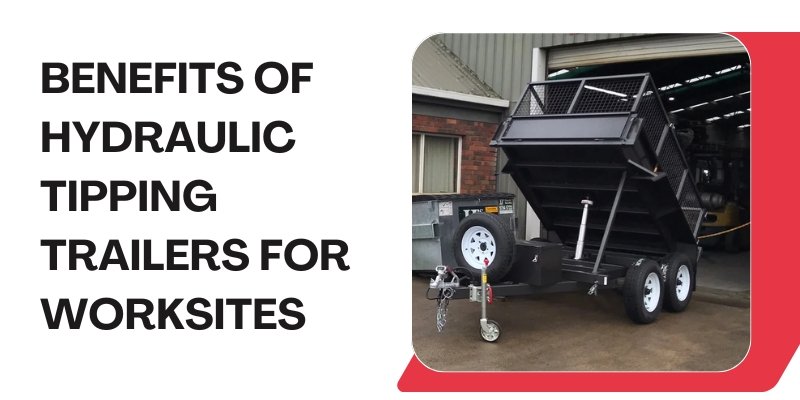
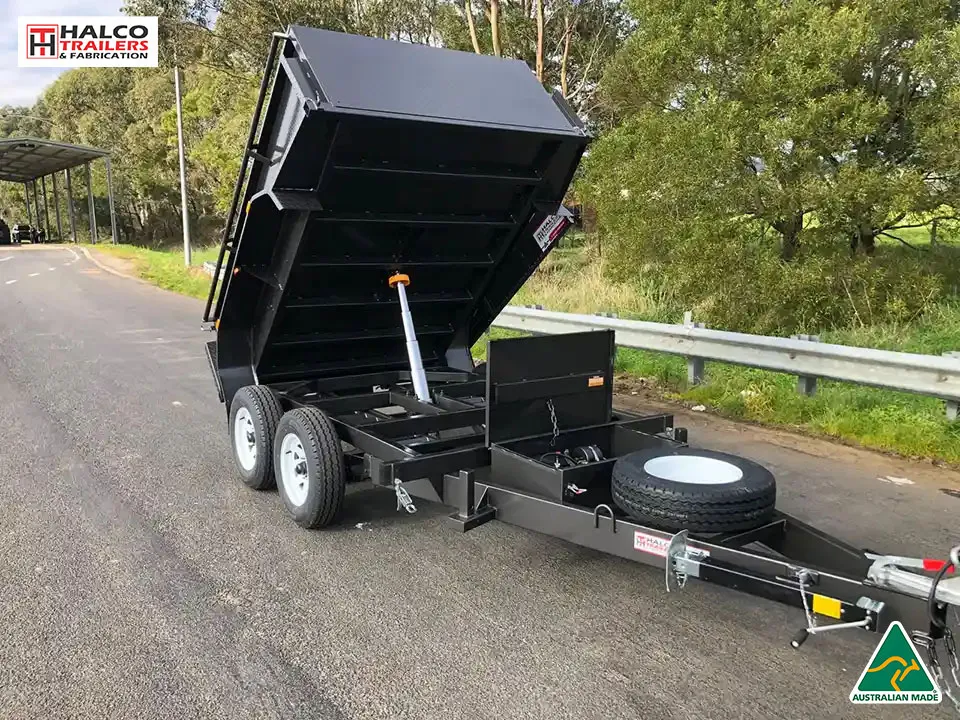
Hydraulic tipping trailers can support worksites where suitable loose materials need to be loaded, transported and unloaded regularly. Their main benefit is simple: the tipping body helps discharge material without relying entirely on manual shovelling.
This can be useful for landscaping, property maintenance, farm work, construction support, garden clean-up and trade tasks where soil, mulch, sand, gravel, green waste or similar materials need to be moved.
However, the benefits depend on the right trailer setup, suitable material, safe loading, correct payload and a suitable unloading location.
For current configurations and product details, view Halco’s hydraulic tipping trailers.
Last updated: 27 July 2026
Hydraulic tipping trailers help reduce manual unloading and improve material-handling workflow, but they still need to match the load, payload, towing vehicle, restraint method and tipping location.
Quick Benefits Summary
| Benefit | Why it matters on worksites |
|---|---|
| Reduced manual unloading | Less reliance on repeated shovelling from the trailer body |
| Faster material handling | Suitable loose material can be discharged more efficiently |
| Cleaner unloading | Material can be tipped into a planned area when conditions allow |
| Better workflow | Useful when multiple material trips are needed |
| Flexible worksite use | Can support landscaping, farm, property and trade tasks |
| Reduced unloading effort | Reduces some manual lifting and unloading work |
| Useful for loose materials | Works well when the material can discharge from the body |
| Easier site clean-up | Helps move suitable waste or loose material away from work areas |
1. Reduced Manual Unloading
The biggest benefit of a hydraulic tipping trailer is reduced manual unloading.
With a standard fixed-body trailer, loose material often needs to be removed by shovel, rake, bucket or machine. A tipping body helps by raising the trailer so suitable material can slide or discharge from the tray.
This can reduce repetitive unloading work when carrying materials such as:
- Soil
- Mulch
- Sand
- Gravel
- Garden mix
- Green waste
- Firewood
- Suitable site-cleanup material
Manual work may still be needed after tipping. Material may need to be spread, moved, raked or cleared from the discharge area. The benefit is that the trailer can reduce the amount of material that needs to be manually lifted out of the body.
2. Faster Material Handling
Hydraulic tipping can make material-handling tasks faster when the load is suitable and the site is ready.
This matters where the trailer may be used for repeated trips, such as:
- Delivering mulch
- Moving soil
- Removing green waste
- Carrying gravel
- Cleaning up loose material
- Moving farm or property supplies
- Supporting small construction tasks
The time saving comes from reducing the unloading step. Instead of manually emptying the trailer each time, the operator can position the trailer, check the area and use the tipping body to discharge the material.
The speed benefit depends on practical conditions. A tight site, unstable ground, unsuitable material or poor discharge area can reduce the advantage.
3. Cleaner Unloading
A hydraulic tipping trailer can help unload material into a planned area when the site allows it.
This may help keep work more organised because the operator can choose where the material will discharge. For example, loose material may be tipped near a garden bed, stockpile, driveway repair area, farm track or clean-up zone.
Cleaner unloading depends on:
- Trailer position
- Tailgate setup
- Material type
- Ground conditions
- Discharge direction
- Space around the trailer
- Whether the load moves evenly
Not every load tips neatly. Wet soil, sticky material, compacted loads or unevenly distributed material may not discharge cleanly. Some final manual spreading or clean-up may still be required.
4. Useful for Common Worksite Materials
Hydraulic tipping trailers are most useful when the material is loose and suitable for tipping.
Common worksite materials include:
Soil
Useful for garden work, landscaping, filling and site preparation. Wet soil can be much heavier than dry soil.
Mulch
Often bulky and lighter than dense materials. It may need higher sides, a cage or suitable containment.
Gravel
Useful for driveways, drainage, paths and property maintenance. Gravel is dense, so payload must be checked carefully.
Sand
Common for landscaping, building support and maintenance work. It should be carried within the trailer’s approved capacity.
Green waste
Branches, leaves and garden material can be bulky and irregular. Containment and restraint are important.
A material that fits in the tray may still exceed payload. Tray volume and load weight should be considered together.
5. Better Workflow for Repeated Trips
Hydraulic tipping trailers can improve workflow where the same type of material is moved repeatedly.
This can apply to:
- Landscaping crews moving mulch or soil
- Property owners clearing green waste
- Farmers moving loose supplies
- Maintenance teams cleaning work areas
- Trades handling site material
- Gardeners moving bulk product between locations
Repeated manual unloading can slow a job down. A tipping body can help reduce unloading time and make the workflow more predictable when the loading and tipping locations are suitable.
The main workflow benefit comes from matching the trailer to the job. The load, towing setup and discharge area should be planned before the trailer is used.
6. Reduced Unloading Effort
Hydraulic tipping trailers can reduce some of the physical effort involved in manually unloading suitable loose materials.
This can be useful when carrying loose materials over multiple trips. Repeated shovelling, bending, lifting and clearing can be tiring, especially with wet soil, gravel or garden waste.
A tipping trailer does not remove all manual work. Operators may still need to:
- Spread material after tipping
- Clear material from the tailgate area
- Secure covers or cages
- Check restraints
- Clean the body
- Rake or reposition material
The benefit is reduced unloading effort, not automatic handling of the entire job.
7. Supports Site Clean-Up
Hydraulic tipping trailers can support site clean-up where suitable loose material needs to be moved away from the work area.
This may include:
- Garden waste
- Loose soil
- Small branches
- Broken material
- Sand or gravel
- Property clean-up loads
- Suitable farm or maintenance material
The trailer should still be loaded carefully. Sharp, heavy, uneven or mixed material may require extra attention to body suitability, containment and load restraint.
Site clean-up often involves varied material, so each load should be assessed before travel and before tipping.
8. Safe Operation Still Matters
A hydraulic tipping trailer is only helpful when it is used safely.
Before towing, the load should be within payload, contained where required, and secured so it cannot move or leave the trailer. Before tipping, the operator should check that the ground, clearance, discharge area and trailer position are suitable.
Transport Victoria states that loads must be properly restrained and that different loads need different transport methods. Its load-restraint guidance recommends suitable restraint equipment, rated equipment where possible, careful load positioning and regular checks during travel.
9. Payload and Weight Awareness
Hydraulic tipping trailers should not be judged by tray size alone.
Payload is the weight available for the material after the trailer’s tare mass is deducted from its approved mass rating.
Payload = ATM − tare mass
A tipping trailer can have a higher tare mass than a basic trailer because it may include a hydraulic system, battery, tipping body, hinges, sides, cage, ramps or toolbox. These components can reduce the remaining payload available for material.
The Australian Government’s VSB 1 trailer guidance applies to trailers with an aggregate trailer mass of 4.5 tonnes or less and explains the ADR framework for low-ATM trailers.
For this benefits article, the key point is simple: dense material can exceed payload before the body looks full, so load weight matters as much as tray volume.
10. Maintenance Supports Long-Term Use
A hydraulic tipping trailer includes moving, electrical and hydraulic components, so routine checks support safe and reliable use.
Basic checks may include:
- Tyres
- Wheel nuts
- Bearings
- Brakes
- Lights
- Coupling
- Safety chains
- Tailgate
- Latches
- Body hinges
- Hydraulic hoses
- Hydraulic fittings
- Battery condition
- Ram and pivot points
- Chassis and drawbar
Clean the body after carrying wet, abrasive or corrosive material. Soil, green waste, gravel and site debris can build up around hinges, tailgates and moving parts.
Limitations to Consider
Hydraulic tipping trailers provide clear benefits, but they are not suitable for every task.
Common limitations include:
- Sticky material may not slide cleanly
- Dense loads can exceed payload quickly
- Uneven material can affect tipping behaviour
- Tipping needs suitable ground
- Overhead clearance is required
- Hydraulic components need care
- Loose material still needs restraint
- Some manual clean-up may still be needed
- Machinery, pallets or long materials may suit another trailer type better
A tipping trailer should be selected because the unloading method suits the job, not only because the trailer body can lift.
Final Thoughts
Hydraulic tipping trailers can reduce manual unloading, improve material-handling workflow and support cleaner unloading when the load and site conditions are suitable.
Their benefits are strongest for loose materials that can discharge safely from a tipping body. The trailer still needs to match the payload, towing vehicle, restraint method, hydraulic system and unloading location.
Used appropriately, a hydraulic tipping trailer can make regular movement and unloading of suitable worksite materials more practical.