

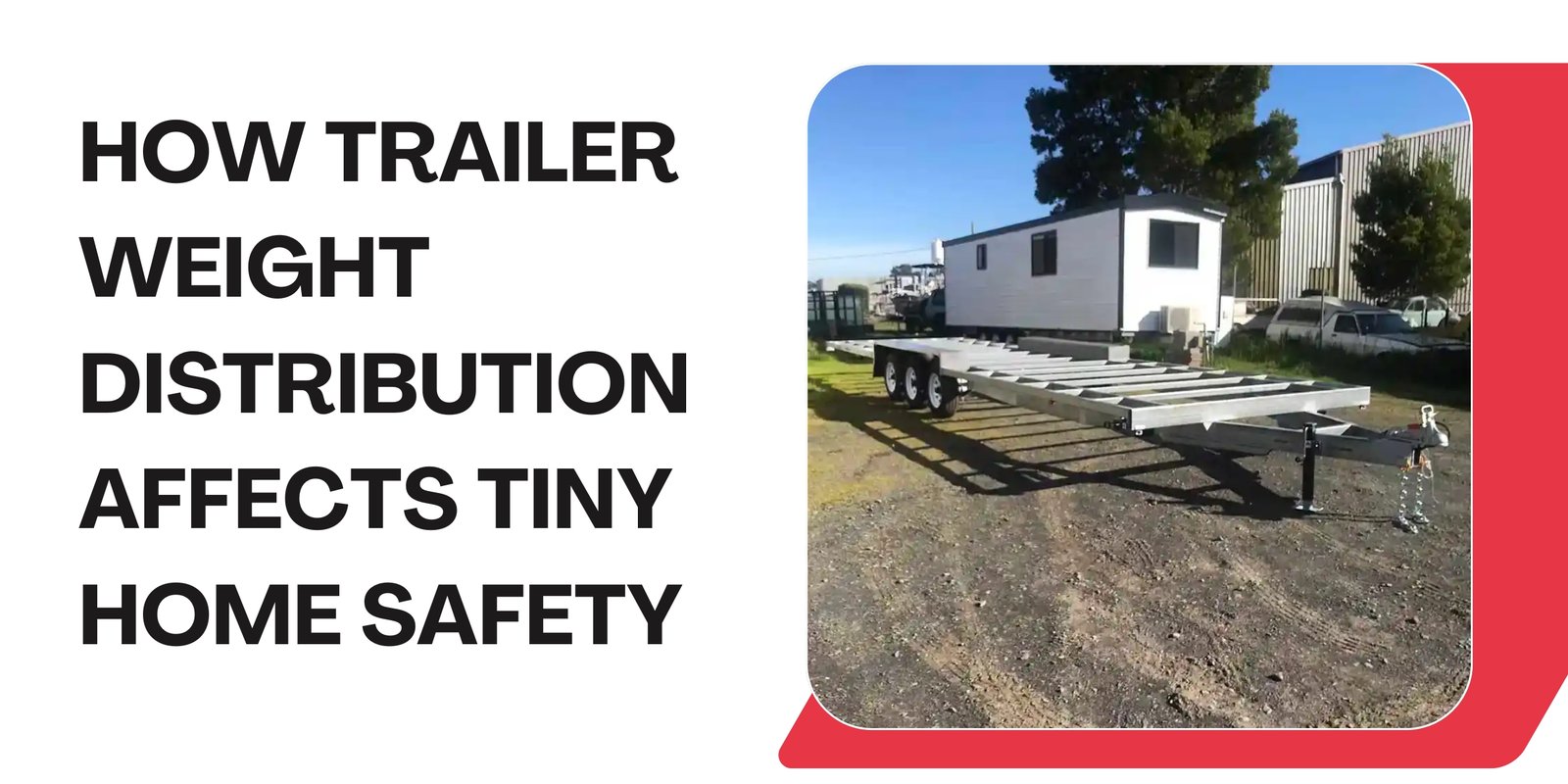
Tiny homes continue to grow in popularity because they offer flexibility, affordability, and a simpler lifestyle. However, one of the most important factors behind a safe and stable tiny home is often overlooked trailer weight distribution.
A tiny home trailer does far more than support the structure. It plays a major role in towing stability, road safety, structural durability, and long-term performance. Poor weight distribution can lead to dangerous towing conditions, uneven tyre wear, trailer sway, structural stress, and increased risk during transport.
Even a well-built tiny home can become unsafe on the road if the trailer weight is not balanced correctly.
Many towing and trailer stability issues occur because weight is not distributed correctly across the trailer chassis and axles. Whether you are building a new tiny home or planning to transport an existing one, understanding trailer weight distribution is essential.
In this guide, we’ll explore how trailer weight distribution affects tiny home safety, why proper balance matters, and what builders and owners should consider before towing a tiny home.
What Is Trailer Weight Distribution?
Trailer weight distribution refers to how the total weight of a tiny home is spread across the trailer frame, axles, tyres, suspension, and tow hitch.
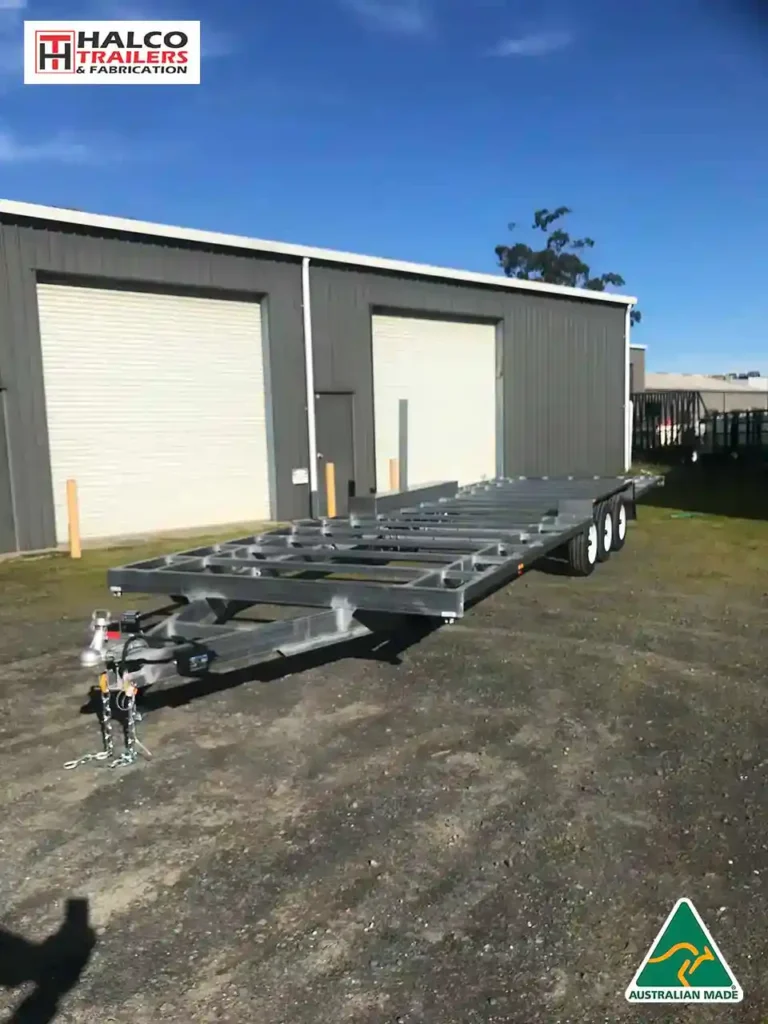
A balanced trailer distributes weight evenly so the trailer remains stable while towing. When weight is uneven or overloaded in certain areas, the trailer can become harder to control and unsafe on the road.
Key Areas Affected by Weight Distribution
- Axles
- Suspension system
- Tyres
- Tow hitch
- Trailer chassis
- Braking performance
Proper weight distribution is critical because tiny homes are heavier than standard trailers and often carry uneven interior loads such as appliances, water tanks, furniture, and storage.
Why Weight Distribution Matters for Tiny Home Safety
Tiny homes are unique because they combine residential structures with mobile transport requirements. Unlike standard cargo trailers, tiny homes contain concentrated weight in specific areas.
Why Proper Weight Distribution Is Important
- Improves towing stability
- Reduces trailer sway
- Supports safer braking
- Prevents axle overload
- Reduces tyre stress
- Protects the trailer frame
- Improves road handling
Without proper balance, even a high-quality trailer can experience safety and structural problems over time.
How Poor Weight Distribution Creates Safety Risks
To understand why balance matters, it’s important to look at the risks caused by improper weight distribution.
Poor trailer balance can affect both the trailer and the towing vehicle. Even small weight imbalances can become dangerous at highway speeds.
Tiny homes often carry concentrated weight from kitchens, bathrooms, water tanks, batteries, and loft areas, making correct balance even more important during transport.
Common Problems Caused by Poor Weight Distribution
- Trailer sway during towing
- Uneven tyre wear
- Reduced steering control
- Excessive stress on axles
- Increased braking distance
- Suspension damage
- Structural strain on the tiny home frame
These problems become more serious when transporting a fully built tiny home over long distances or uneven roads.
Understanding Tongue Weight
Tongue weight refers to the amount of weight pressing downward on the trailer hitch.
For most tiny home trailers, proper tongue weight should generally remain within a safe percentage of the total trailer weight. Too much or too little tongue weight can reduce towing stability.
Incorrect tongue weight is one of the most common causes of trailer sway during highway towing.
Too Much Tongue Weight Can Cause
- Excess strain on the tow vehicle
- Reduced steering control
- Suspension overload
- Poor braking balance
Too Little Tongue Weight Can Cause
- Increased trailer sway
- Reduced towing stability
- Greater risk of loss of control
- Poor tracking behind the tow vehicle
Maintaining correct tongue weight helps keep the trailer balanced and easier to tow safely.
How Axle Placement Affects Tiny Home Stability
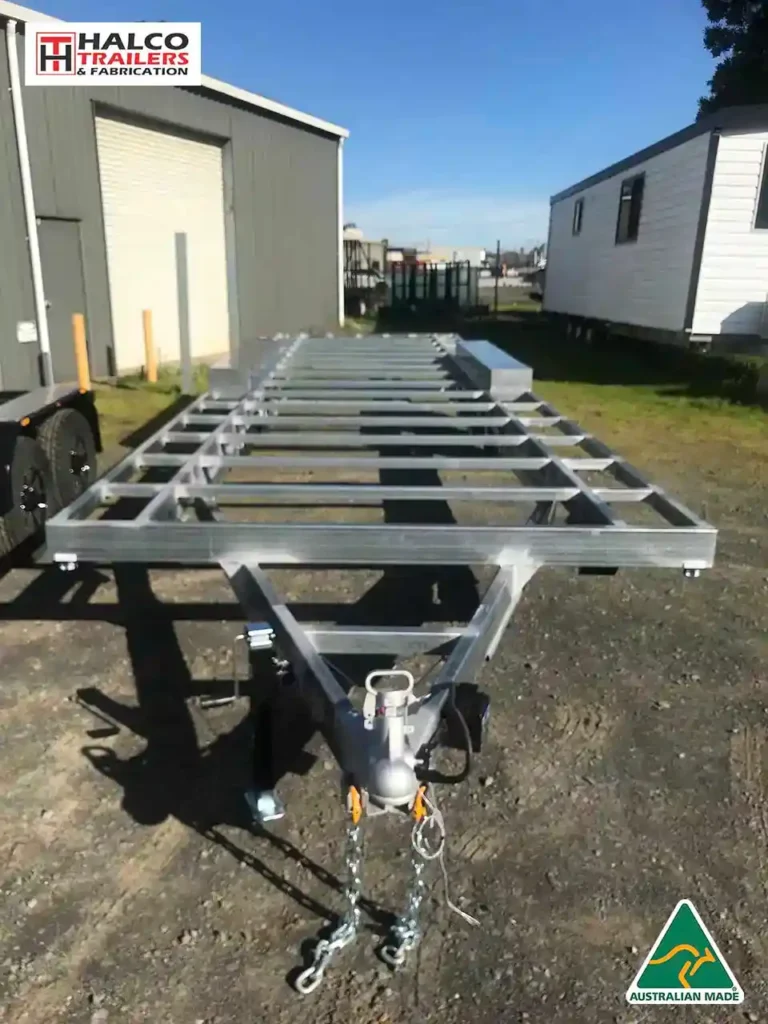
Axle placement is one of the most important design considerations for tiny home trailers.
The location of the axles determines how weight is distributed across the trailer and how the load is supported during towing.
Why Axle Placement Matters
- Helps balance the tiny home structure
- Supports even weight distribution
- Improves highway stability
- Reduces stress on the trailer frame
- Improves tyre and suspension performance
Improper axle placement can create uneven loading conditions that affect both safety and trailer lifespan.
The Role of Trailer Chassis Strength
A strong trailer chassis is essential for supporting tiny home weight safely over time.
Tiny homes place constant pressure on the trailer frame because the structure remains permanently mounted to the chassis. This means the trailer must be designed for long-term load support, not just occasional towing.
Why Chassis Design Matters
- Supports structural integrity
- Handles heavy concentrated loads
- Reduces frame flex during towing
- Improves long-term durability
- Supports safer transport
Weak or poorly designed chassis systems may develop cracks, warping, or structural fatigue under heavy loads.
How Interior Layout Affects Weight Distribution
Many tiny home owners focus on interior design and functionality without considering how the layout impacts trailer balance.
Heavy items placed unevenly can shift the centre of gravity and create towing instability.
Heavy Components That Affect Balance
- Water tanks
- Kitchens and appliances
- Bathrooms
- Storage systems
- Solar batteries
- Furniture
- Loft structures
Balancing these components correctly helps improve overall trailer safety and towing performance.
The Importance of Centre of Gravity
The centre of gravity refers to the point where the weight of the tiny home is concentrated.
Tiny homes with high or uneven centres of gravity can become unstable during towing, especially during cornering, braking, or crosswinds.
How to Improve Centre of Gravity Balance
- Keep heavy items lower in the structure
- Avoid excessive roof weight
- Balance interior storage evenly
- Distribute appliances carefully
- Avoid placing too much weight on one side
A lower and more balanced centre of gravity improves road handling and towing control.
How Suspension Systems Support Safety
The suspension system helps absorb road impact and maintain stable contact between the tyres and road surface.
A quality suspension system is essential for tiny homes because of their size and weight. Without proper suspension support, road shock can place additional strain on both the trailer and the home structure.
Benefits of Proper Suspension
- Reduces vibration during transport
- Improves towing stability
- Protects the tiny home structure
- Reduces tyre wear
- Improves braking performance
A suitable suspension system helps the trailer handle bumps, dips, and road movement more safely.
Tyres and Load Ratings Matter
Tyres play a major role in supporting tiny home safety.
Each tyre has a specific load rating that determines how much weight it can safely carry. Using tyres with insufficient load capacity can create serious safety risks during transport.
Why Correct Tyres Matter
- Supports safe towing
- Reduces blowout risk
- Improves road grip
- Handles heavy loads properly
- Improves braking stability
Tyres should always match the trailer’s load requirements and be checked before transport.
Common Tiny Home Weight Distribution Mistakes
Even well-designed tiny homes can experience problems if weight distribution is not planned carefully.
Mistakes to Avoid
- Overloading one side of the trailer
- Poor axle positioning
- Excessive rear weight
- Uneven storage placement
- Ignoring tongue weight
- Using undersized trailers
- Choosing incorrect tyre ratings
- Placing heavy items too high
Avoiding these mistakes helps improve both towing safety and trailer lifespan.
How Proper Weight Distribution Improves Towing Performance
When weight is distributed correctly, towing becomes safer, smoother, and easier to control.
Balanced weight distribution improves overall towing behaviour and reduces stress on the trailer, tow vehicle, and tiny home structure.
Benefits of Proper Balance
- Smoother towing experience
- Better steering response
- Reduced trailer sway
- Improved braking control
- Safer highway handling
- Reduced wear on components
When the trailer is balanced correctly, both the trailer and towing vehicle perform more efficiently.
Factors to Consider Before Building a Tiny Home Trailer
Before building or buying a tiny home trailer, it is important to plan for weight distribution from the beginning.
Important Design Considerations
- Trailer load capacity
- Axle configuration
- Chassis strength
- Suspension type
- Interior layout
- Water tank placement
- Appliance positioning
- Overall trailer dimensions
Proper planning helps reduce future safety issues, structural problems, and towing risks.
What to Look for in a Tiny Home Trailer
Choosing the right trailer foundation is essential for long-term safety, durability, and towing performance.
Important Trailer Features
- Suitable load capacity
- Strong chassis construction
- Correct axle setup
- Quality suspension
- Proper trailer dimensions
- Reliable braking system
- Correct tyre load ratings
- Practical towing setup
A tiny home trailer should be designed to support both the structure and the movement of the home during transport.
Who Benefits Most from Proper Tiny Home Trailer Design
Correct trailer weight distribution benefits:
- Tiny home builders
- Mobile homeowners
- Off-grid living projects
- Transport companies
- Tiny home manufacturers
- DIY builders
Anyone transporting a tiny home should prioritise safe trailer design and balanced loading.
Quick Summary
✔ Proper weight distribution improves tiny home safety
✔ Balanced trailers reduce sway and improve control
✔ Axle placement affects towing performance
✔ Strong chassis systems improve durability
✔ Correct tyre ratings support safer towing
✔ Interior layout directly impacts trailer balance
Conclusion
Trailer weight distribution plays a critical role in tiny home safety, towing stability, and long-term structural performance. A properly balanced tiny home trailer improves road handling, reduces strain on components, and helps create safer transport conditions.
From axle placement and tongue weight to suspension systems, tyre ratings, chassis strength, and interior layout, every design decision affects how the trailer performs on the road.
Whether you are building a custom tiny home or planning future transport, understanding trailer weight distribution helps protect your investment and improve safety during every journey.
If you are planning a tiny home build, choosing the right trailer setup is essential for safe towing and long-term structural support.
Halco Trailers provides tiny home trailer solutions designed for strength, balance, and reliable transport performance. Understanding load capacity, axle configuration, and weight distribution can help you build a safer and more stable tiny home foundation.
Explore trailer options designed for tiny home projects
Get guidance on trailer sizing and load capacity
Invest in safer towing and long-term trailer reliability
Build with confidence and choose practical trailer solutions with Halco Trailers.