

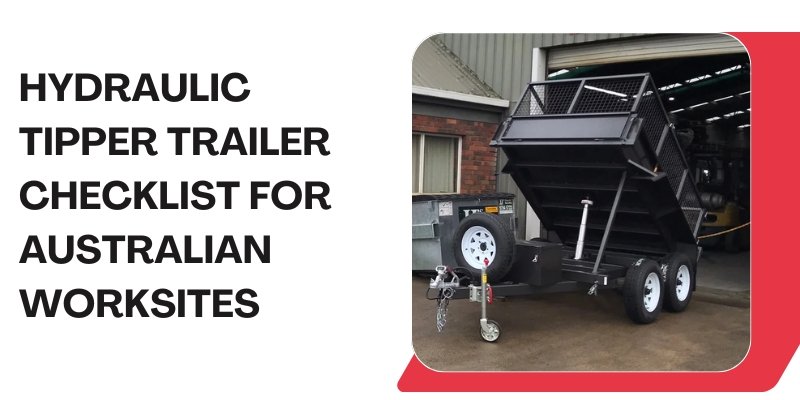
Hydraulic tipper trailers can support worksites where suitable loose materials need to be loaded, transported and unloaded regularly. Before choosing or using one, the trailer should be assessed as a complete system: load type, payload, hydraulic setup, towing vehicle, access, restraint and tipping conditions all matter.
This checklist is designed for Australian worksites where trailers may be used for trade, farm, landscaping, maintenance or construction-related tasks. It focuses on practical checks rather than ranking one trailer as “best” for every job.
For current configurations and product details, view Halco’s hydraulic tipper trailer range.
A hydraulic tipper trailer should be checked against the load, worksite, towing setup and unloading location before use. Tray size alone does not confirm whether the trailer is suitable.
Quick Worksite Checklist
| Check | What to confirm |
|---|---|
| Load type | Soil, mulch, gravel, green waste, rubble or mixed material |
| Load weight | Whether the material can be carried within available payload |
| Loading method | Hand loading, machine loading, forklift loading or bagged material |
| Site access | Entry width, turning space, surface condition and overhead clearance |
| Tipping area | Ground firmness, slope, discharge direction and people nearby |
| Hydraulics | Ram, hoses, battery, controls, fittings and body movement |
| Payload | ATM, tare mass and available carrying capacity |
| Brakes and towing | Tow vehicle, towbar, coupling, brakes, tyres and safety chains |
| Load restraint | Tailgate, covers, cages, ramps, tools and loose accessories |
| Maintenance | Tyres, bearings, brakes, lights, hydraulic parts and body hardware |
1. Load Type and Weight
Start with what the trailer needs to carry.
Common worksite loads may include soil, mulch, gravel, sand, green waste, rubble, firewood, farm supplies, site-cleanup material and bagged products.
The important question is not only whether the material fits in the body. It is whether the material can be carried within the trailer’s approved capacity and unloaded safely.
Dense materials such as gravel, wet soil and rubble can reach payload limits before the tray appears full. Bulky materials such as green waste or mulch may need containment, but still need to be secured for travel.
Check:
- Main material type
- Maximum expected load weight
- Whether the material is loose, wet, sticky, sharp or bulky
- Whether the body and floor suit the material
- Whether the material can discharge safely during tipping
2. Loading Method
The way the trailer is loaded affects body, floor, side and access requirements.
Worksite loading may involve:
- Hand loading
- Shovel loading
- Mini loader loading
- Excavator loading
- Tractor bucket loading
- Forklift loading
- Bags, bins or containers
Machine loading can place concentrated force on the trailer body. Heavy material dropped from height can also affect the floor, sides, hinges and tailgate.
Before use, confirm whether side access, rear access, ramps, higher sides, a cage or a reinforced body layout is needed.
3. Site Access and Tipping Conditions
A hydraulic tipper is useful only when the site allows safe towing, positioning and unloading.
Before taking the trailer onto a worksite, check:
- Entry width
- Turning space
- Driveway or ground slope
- Ground firmness
- Overhead wires, branches or structures
- Nearby fences, walls, vehicles or people
- Where the material will discharge
- Whether the body has enough clearance to lift
- Whether the trailer and towing vehicle can remain stable
Do not tip where the trailer is overloaded, unstable, unevenly loaded or positioned on unsuitable ground.
If the material does not move as expected, stop and reassess. Wet, sticky or compacted material may not slide cleanly from the body.
4. Hydraulic System Checks
The hydraulic system should be checked before regular worksite use.
Depending on the trailer, the system may include a hydraulic ram, power unit, battery, switch or remote, hoses, fittings, pivot points and body-support arrangement.
Check for:
- Visible hydraulic leaks
- Damaged hoses
- Loose fittings
- Battery issues
- Slow or uneven lifting
- Unusual noises
- Damaged pivots
- Control faults
- Obstructions around the tipping body
- Whether the body lowers and secures correctly
Hydraulic components should be inspected more often when the trailer is used frequently, carries abrasive material or works in wet, dusty or rough conditions.
5. ATM, Tare Mass and Payload
Payload is the carrying capacity available after the trailer’s tare mass is deducted from its approved mass rating.
Payload = ATM − tare mass
Aggregate Trailer Mass, or ATM, is the total permitted mass of the trailer carrying the maximum load recommended by the manufacturer. Tare mass is the mass of the completed trailer without cargo.
The Australian Government’s VSB 1 trailer guidance applies to trailers with an aggregate trailer mass of 4.5 tonnes or less and explains the ADR framework for low-ATM trailers.
Payload can be reduced by fitted equipment such as hydraulic components, batteries, cages, ramps, toolboxes, higher sides, spare wheels and heavier body materials.
Before loading, confirm:
- Trailer ATM
- Completed tare mass
- Available payload
- Material weight
- Tow vehicle capacity
- Towbar rating
- Tyre and axle suitability
- Whether fitted accessories reduce payload
For wider pre-purchase checks, read Halco’s buying trailers for sale in Melbourne guide.
6. Braking and Towing Setup
The trailer and towing vehicle must be suitable as a combination.
Check:
- Towing vehicle capacity
- Towbar rating
- Coupling compatibility
- Safety chains
- Brake setup
- Tyre condition and rating
- Wheel and axle suitability
- Trailer ATM
- Expected loaded trailer weight
- Whether the trailer remains stable when loaded
The required braking setup depends on the trailer’s ATM, axle configuration, completed specification and applicable Australian Design Rules.
The Federal Register of Legislation publishes Australian Design Rule 38/05 — Trailer Brake Systems, which applies to trailer brake-system requirements.
7. Load Restraint
A tipping body does not remove the need to restrain or contain the load.
Transport Victoria states that loads must be properly restrained and that each type of load needs to be transported differently. Its load-restraint guidance recommends suitable restraint equipment, rated equipment where possible, careful load positioning and regular checks during travel.
Before towing, check:
- Loose material is contained
- Tailgate is closed and latched
- Cages or covers are fitted correctly
- Ramps are locked or secured
- Tools are secured separately
- Lights and number plate remain visible
- Load does not create unsafe overhang
- Restraints are suitable for the load
Transport Victoria notes that tarpaulins, cargo nets and ropes are suited only to light loads.
8. When to Choose a Tipper, Flat-Top, Box or Plant Trailer
A hydraulic tipper trailer is not always the right trailer type.
Choose a hydraulic tipper trailer when the main job is moving and unloading suitable loose material.
Compare a flat-top trailer when the load involves pallets, machinery, long materials or cargo needing open side or overhead loading.
Compare a box trailer when the load benefits from fixed sides but does not need a hydraulic tipping body.
Compare a plant trailer when the main task is machinery transport with ramps, loading angles and equipment-specific restraint points.
For a broader side-by-side comparison, read Halco’s types of trailers comparison guide.
9. Pre-Use Safety Checklist
Before leaving for a job, check:
- Tyres appear serviceable
- Wheel nuts are secure
- Lights are working
- Coupling is connected correctly
- Safety chains are connected
- Body is fully lowered
- Tailgate is latched
- Hydraulic system is not leaking
- Battery is charged where applicable
- Ramps are secured
- Tools and accessories are secured
- Load is within payload
- Load is distributed appropriately
- Number plate and lights are visible
Before tipping, check:
- Ground is suitable
- Trailer is positioned safely
- People are clear
- Overhead clearance is adequate
- Discharge area is clear
- Load is not stuck or bridged
- Towing vehicle and trailer remain stable
- Hydraulic system operates correctly
10. Maintenance Checklist
Hydraulic tipper trailers used on worksites should be inspected regularly.
Check:
- Tyres
- Wheel nuts
- Bearings
- Brakes
- Lights and wiring
- Coupling
- Safety chains
- Hydraulic hoses
- Hydraulic fittings
- Battery condition
- Ram and pivot points
- Tailgate
- Latches
- Body hinges
- Ramp storage
- Chassis and drawbar
- Corrosion or impact damage
Clean the body after carrying wet, abrasive or corrosive material. Material buildup around hinges, tailgates and moving parts can affect operation.
11. Registration and Road-Use Checks
Registration and road-use requirements vary between Australian states and territories. The following information relates specifically to trailers used in Victoria.
If a trailer is used on public roads in Victoria, registration and identification requirements must be considered.
VicRoads states that trailers or caravans must be registered if they are to be towed in Victoria unless they meet specific exemption criteria. VicRoads also states that a trailer being registered for the first time in Australia must be entered on the Register of Approved Vehicles. VicRoads trailer registration guidance
Check:
- Registration status
- VIN or identification details
- ATM
- Tare mass
- Number plate visibility
- Lighting
- Safety chains
- Brake setup
- Coupling
- Any documents supplied with the trailer
Registration and compliance details depend on the completed trailer specification.
Common Worksite Mistakes
Choosing by tray size only
A larger tray does not automatically mean the trailer can carry more weight.
Filling the tray by volume
Dense material can exceed payload before the tray looks full.
Ignoring the tipping location
The site must allow safe positioning, body lift and material discharge.
Assuming all materials tip the same way
Wet soil, gravel, mulch and rubble can behave differently when unloaded.
Skipping restraint because the trailer has sides
Loose materials, tools, ramps and accessories still need suitable restraint.
Using the wrong trailer type
Machinery, pallets or long materials may suit a flat-top or plant trailer better than a tipping body.
Not checking hydraulic components
Hoses, fittings, batteries, rams and pivot points are part of the working system.
Final Thoughts
A hydraulic tipper trailer can support Australian worksites when suitable loose materials need to be moved and unloaded efficiently.
The right setup depends on more than tray size. Material type, payload, hydraulic system, ground conditions, access, braking, towing and restraint all affect whether the trailer suits the job.
Before using a trailer on a worksite, confirm what it needs to carry, how it will be loaded, where it will be tipped and whether the towing vehicle and trailer configuration are suitable.
For current configurations and product details, view Halco’s hydraulic tipper trailer range.
Frequently Asked Questions (FAQs)
Check the load type, payload, towing vehicle, hydraulic system, restraint method, site access and tipping location.
The trailer should suit both the material and the worksite environment
Payload is more important when assessing how much material the trailer can carry.
Tray size affects volume, but ATM and tare mass determine available carrying capacity.
It can when the body, payload, towing vehicle and unloading method suit the material.
Gravel and wet soil can be heavy, so the load must be checked against available payload.
No. The load still needs to be restrained or contained so it cannot move or leave the trailer.
Tools, ramps and accessories should also be secured separately.
A flat-top trailer may be better when the main load is machinery, pallets, long materials or cargo requiring side or overhead loading.
A tipper is more useful when suitable loose material needs assisted unloading.
Service frequency depends on load type, use frequency, road conditions and storage environment.
Regular checks should include tyres, bearings, brakes, lights, coupling, hydraulic hoses, battery, ram, pivots, tailgate and structural areas.