

By Halco Trailers Team, Trailer Manufacturing / Safety Specialist
Published: 24 August 2026
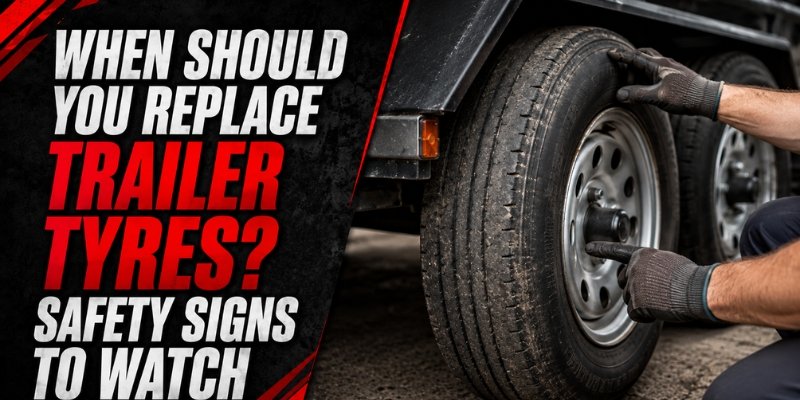
This trailer tyre replacement guide explains when tyres should be replaced because of low tread, sidewall cracks, bulges, punctures, ageing, uneven wear, poor load rating, heat damage or repeated pressure loss before towing.
Trailer tyres often age differently from car tyres. A work trailer may sit loaded in the sun, bounce over worksites, carry uneven loads, run short trips on low pressure, then suddenly tow at highway speed with tools, soil, machinery or green waste onboard.
For tradies, contractors, landscapers, farmers, automotive businesses, DIY owners and small fleets, this trailer tyre replacement guide shows the tyre safety signs that matter before a blowout, wheel damage or roadside delay interrupts work.
When should trailer tyres be replaced?
Trailer tyres should be replaced when tread is below safe depth, sidewalls are cracked, cords are visible, bulges appear, punctures cannot be repaired, pressure keeps dropping, tyres are overloaded or uneven wear shows a deeper trailer problem.
Do not wait for a tyre to fail on the road. A trailer tyre works hard because it carries load, heat and side forces while following the tow vehicle. On work trailers, tyre failure can also damage guards, wiring, brake lines, mudguards and the load itself.
Trailer tyre replacement decision table
Tyre condition | Replace now? | Why |
Tread below legal or safe depth | Yes | Grip and water displacement are reduced |
Sidewall cracks or perishing | Yes | The tyre structure may be ageing or weakened |
Bulge or bubble | Yes | Internal damage may cause sudden failure |
Exposed cords or belts | Yes | Tyre is unsafe for road use |
Repeated pressure loss | Usually yes | Puncture, valve, bead or rim issue may exist |
Uneven wear across one tyre | Inspect first, then replace | Cause may be axle, suspension, brake or pressure related |
One tyre much older than the others | Inspect and likely replace | Age can matter even with visible tread |
Tyre overloaded for the trailer | Yes | Load capacity is not suitable |
Vibration or wobble | Inspect before replacing | Tyre, rim, bearing or hub may be involved |
Spare tyre cracked or flat | Replace or repair before travel | A useless spare does not help during a breakdown |
A common example is a landscaper towing a tandem trailer with wet soil. One tyre looks low, but the job is close, so the trailer goes out anyway. The tyre overheats, damages the sidewall and fails. The replacement cost becomes downtime, recovery and a missed booking.
What trailer tyre safety signs should owners check first?
The first trailer tyre safety signs to check are tread depth, cracks, bulges, punctures, pressure loss, uneven wear, heat, rim damage, missing valve caps, tyre age and whether the load rating suits the trailer’s actual work.
A tyre check should happen before every loaded tow. It does not need to be complicated, but it needs to be consistent. Walk around the trailer, look closely at every tyre and compare both sides rather than checking only the most visible wheel.
Two-minute trailer tyre safety check
- Check tyre pressure before loading: low pressure can create heat and sidewall damage once the trailer is carrying weight.
- Look across the tread face: uneven wear often points to pressure, alignment, suspension, axle or brake issues.
- Inspect both sidewalls: cracks, cuts, bulges and age marks can be more serious than tread wear.
- Check the valve stem and cap: a damaged valve can cause slow pressure loss.
- Look at the rim edge: dents, rust, cracks or bead damage can affect sealing and balance.
- Check the spare tyre: it should be inflated, usable and matched to the trailer’s needs.
- Feel for unusual heat after short towing: one hot tyre or hub needs investigation.
- Recheck after 10 to 20 kilometres: newly loaded trailers often reveal pressure, heat or vibration problems once moving.
For owners buying trailer tyres, photos of the sidewall, tread, rim, tyre size and load rating help the workshop understand what needs replacing before parts are ordered.
How does tread depth affect trailer tyre replacement?
Tread depth affects water grip, braking support, stability and roadworthiness. Replace trailer tyres before they reach the legal minimum if the trailer carries heavy loads, travels highways, works in wet conditions or shows uneven wear.
According to Transport Victoria’s tyre maintenance and repair guidance, tyres must have at least 1.5 mm tread depth in all principal grooves, except at tread wear indicators. That is a legal minimum, not a smart target for every work trailer.
Tread depth decision table
Tread condition | What it means | Safer action |
Above legal minimum and wearing evenly | Tyre may still be usable | Keep checking pressure, age and sidewalls |
Close to 1.5 mm | Near roadworthy limit | Replace before work towing or wet travel |
Below 1.5 mm in principal grooves | Unroadworthy | Replace before road use |
Worn on inner edge | Axle, alignment, suspension or pressure issue | Inspect cause before replacing |
Worn in centre | Possible overinflation or load issue | Check pressure and load pattern |
Worn on both shoulders | Possible underinflation or overload | Check pressure, load and tyre rating |
Feathered or scalloped wear | Suspension, bearing or alignment issue | Book inspection before fitting new tyres |
One tyre worn faster than others | Local fault on that wheel position | Inspect brakes, bearing, axle and suspension |
For business trailers, replacing slightly early can be cheaper than waiting for a failure. A tyre that is technically legal but close to the limit may not be the right choice for wet roads, gravel, farm use or a loaded weekday job.
Why do tyre age, cracks and bulges matter?
Tyre age, cracks and bulges matter because rubber degrades even when tread remains. Trailers may sit in sun, carry static loads and move infrequently, so tyres can perish or weaken before they look worn out.
This is one of the biggest differences between trailer tyres and daily-driver car tyres. A car tyre usually wears from kilometres. A trailer tyre may age from time, UV exposure, storage, pressure loss, moisture, salt, mud and load sitting in one place.
Toyo Tires Australia notes that a common industry standard is to replace caravan and camper trailer tyres at 10 years from manufacture, regardless of remaining tread or appearance. For work trailers, severe cracking, bulges or damage should trigger replacement much earlier. (toyotires.com.au)
Age and damage signs table
Sign | What it may mean | Replace? |
Fine surface cracking | Early ageing or UV exposure | Inspect closely and monitor |
Deep sidewall cracks | Structural ageing | Yes |
Bulge or bubble | Internal cord separation or impact damage | Yes, immediately |
Cut reaching cords | Tyre structure exposed | Yes |
Weathered spare tyre | Spare may fail when needed | Replace if cracked or old |
Flat spot after storage | Long static load or low pressure | Inspect; replace if severe |
Tyre older than expected | Age risk despite tread | Check date code and condition |
Repaired puncture near sidewall | Unsafe repair zone | Replace |
A tyre blowout on a trailer can also damage nearby parts. On some trailers, a shredded tyre can hit guards, wiring, brake lines, mud flaps, toolboxes or hydraulic hoses. That is why trailer tyre safety is also trailer body safety.
How do load rating and tyre pressure affect trailer safety?
Load rating and tyre pressure affect whether trailer tyres can safely carry the trailer’s real working weight. The tyre must match the trailer, load, speed, rim and pressure requirements, especially for heavy work trailers.
According to VSB 1 from the Department of Infrastructure, wheels fitted to trailers must be suitable for their dimensions, speed and load performance. VSB 1 also identifies tyre load rating as part of trailer compliance information.
The South Australian Government’s light vehicle towing regulations also state that the loaded mass of the trailer must not exceed tyre capacity and tyres must be inflated to recommended pressures. That principle is useful for any Australian trailer owner.
Load and pressure table
Issue | Why it matters | What to do |
Tyre load rating too low | Tyre may overheat or fail under load | Replace with correct load-rated tyre |
Pressure too low | Increases heat and sidewall flex | Inflate to the correct recommendation before towing |
Pressure too high | Can reduce contact and affect wear | Use suitable pressure for tyre and load |
Trailer overloaded | Tyres, bearings, suspension and brakes are stressed | Reduce load or use a suitable trailer |
One side loaded heavier | Tyres wear unevenly and heat differently | Redistribute load |
Wrong rim or tyre size | Fitment and load capacity may be unsuitable | Match tyre, rim and trailer specification |
Old spare with low pressure | Spare may fail immediately | Check spare during every service |
Mixed tyre ratings | Weakest tyre may limit safety | Fit compatible tyres for the trailer’s use |
If the trailer’s work has changed, the tyres may need to change too. A trailer originally used for light household loads may not be suitable for machinery, wet soil, pallets, car transport or daily trade use just because it still rolls.
What causes uneven tyre wear on trailers?
Uneven trailer tyre wear usually comes from underinflation, overinflation, overload, bent axles, worn bearings, brake drag, poor alignment, loose suspension hardware, mismatched tyres, wheel damage or repeated side-heavy loading.
Uneven wear is a symptom, not the full diagnosis. Replacing the tyre alone may make the trailer look fixed for a few weeks, but the new tyre can wear the same way if the cause remains.
Uneven wear diagnosis table
Wear pattern | Possible cause | What to inspect |
Both shoulders worn | Underinflation or overload | Pressure, load weight and tyre rating |
Centre worn | Overinflation or unsuitable pressure | Pressure and load pattern |
Inner edge worn | Bent axle, alignment or suspension issue | Axle, springs, bushes and hangers |
Outer edge worn | Alignment, cornering stress or side load | Axle, wheel position and load balance |
Cupping or scalloping | Suspension, bearing or balance issue | Bearings, hubs, shocks and suspension hardware |
One tyre worn more | Brake drag, bearing heat or local fault | Brake, hub, axle and wheel position |
Feathered tread | Toe or tracking issue | Axle alignment and suspension mounts |
Random cuts or chunks | Worksite debris or rough terrain | Tyre type, route and site conditions |
Halco’s trailer servicing support is useful when tyre wear points to more than rubber. Brakes, bearings, suspension, axles and hubs should often be checked before fitting new tyres to the same position.
How should tandem trailers handle tyre replacement?
Tandem trailers should use compatible tyres across axle positions, with suitable load rating, size, pressure and condition. If one tyre fails from age, overload or uneven wear, inspect the matching tyre and the running gear nearby.
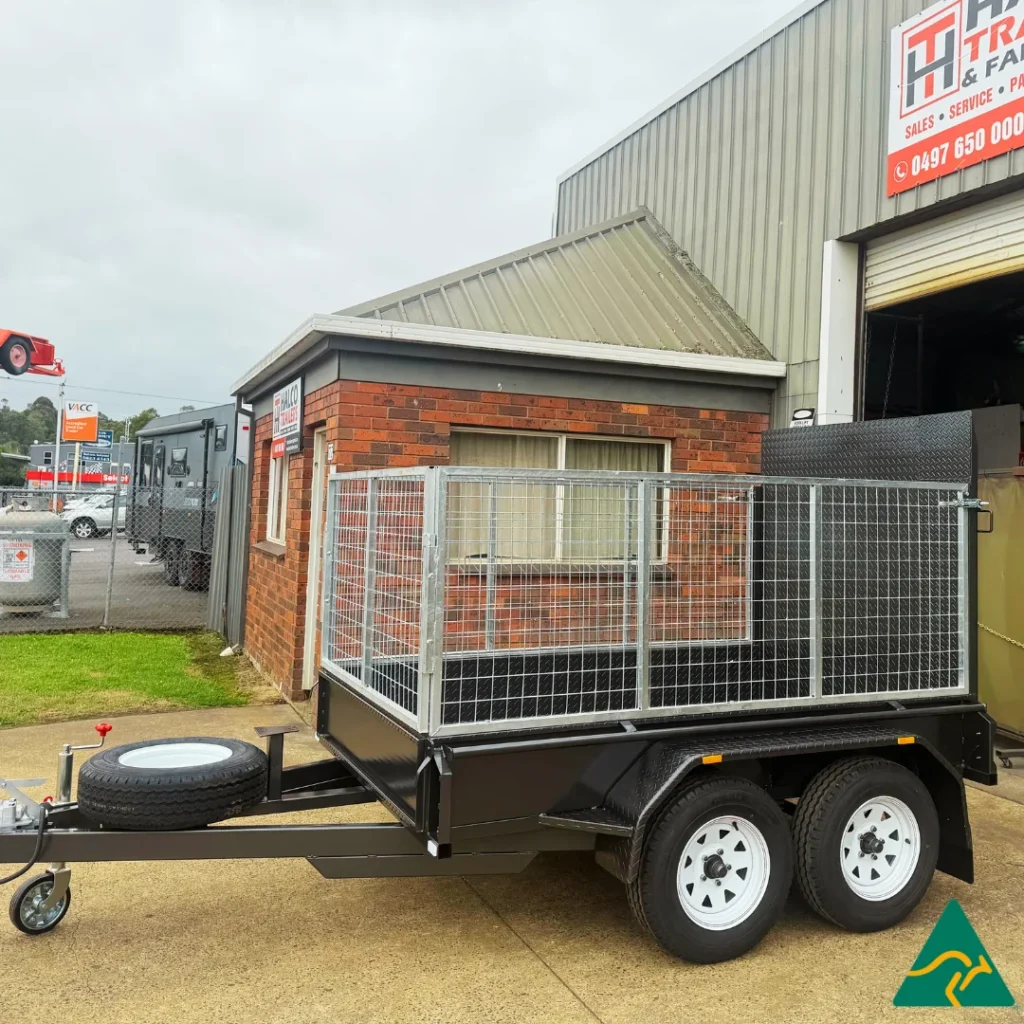
A tandem trailer spreads load across more tyres, but that does not make worn tyres less important. It adds more inspection points. One damaged tyre can affect tracking, load sharing, brake performance, suspension wear and the remaining tyres.
Tandem trailer tyre checklist
Check | Why it matters |
Match tyre size across the trailer | Different rolling diameters can affect load sharing |
Check load rating on every tyre | The lowest-rated tyre can become the weak point |
Inspect tyres on the same side together | One side may have been overloaded or impacted |
Compare wear across both axles | Uneven patterns show axle or suspension issues |
Check bearing and hub heat | Heat can damage tyres and point to running-gear faults |
Inspect brake drag | A dragging brake can overheat one tyre position |
Check the spare matches the trailer | Wrong spare size can create towing problems |
Recheck after replacement | New tyres can reveal existing alignment or suspension faults |
For tandem trailers, tyre replacement should be treated as part of the full running-gear picture. Springs, bushes, axles, bearings and brakes all influence tyre life.
When should tyre replacement be combined with trailer servicing?
Tyre replacement should be combined with trailer servicing when tyres show uneven wear, heat, vibration, repeated pressure loss, brake drag, bearing noise, suspension movement, cracked rims or damage after rough worksites, farm use or heavy loads.
A tyre can fail because of the tyre itself, but it can also fail because the trailer is causing the tyre problem. That is why fitting new rubber without checking related parts can waste money.
Tyre replacement plus service decision table
Tyre issue | Also check |
Inner-edge wear | Axle, suspension and alignment |
One hot tyre | Brake drag, bearing heat and hub condition |
Repeated punctures | Worksite debris, tyre type and pressure |
Pressure keeps dropping | Valve, rim bead, puncture or cracked rim |
Blowout damage | Mudguard, wiring, brake line and trailer body |
Vibration | Rim, bearing, tyre balance and hub |
Cracked old tyres | Spare tyre, valve stems and storage conditions |
Low tread across all tyres | Full trailer inspection before heavy use |
Halco can assist with trailer parts, tyre-related inspection, running-gear checks and replacement-part discussions from its Warragul workshop. If the tyre damage is linked to a larger fault, trailer repair should come before another loaded tow.
How much can trailer tyre replacement cost in Australia?
Trailer tyre replacement cost depends on tyre size, load rating, rim condition, valve stems, fitting, balancing, spare tyre condition, axle count and whether related servicing or repairs are needed at the same time.
The tyre itself is only part of the cost. A simple single-axle tyre replacement is different from a tandem trailer needing four load-rated tyres, new valves, rim checks and inspection for uneven wear.
Cost factor table
Cost factor | Why it changes the job |
Tyre size | Some trailer sizes are easier to source than others |
Load rating | Higher-rated tyres may cost more |
Single vs tandem trailer | More tyres and more inspection points |
Rim condition | Rust, cracks or dents may need repair or replacement |
Valve stems | Old valves can cause slow leaks |
Spare tyre | A cracked spare should be replaced too |
Fitting and balancing | Labour and equipment are required |
Running-gear checks | Bearings, brakes and suspension may add workshop time |
Emergency replacement | Roadside downtime can cost more than planned service |
Business use | Lost work may be the biggest cost |
For businesses, the cheaper option is usually planned replacement during service. A tyre failure on the way to a job can cost more through lost time than through the tyre invoice itself.
Conclusion
Use this trailer tyre replacement guide before every loaded trip: check tread, age, pressure, sidewalls, load rating, spare tyre, uneven wear and signs of heat or damage.
For trailer owners across Warragul, Melbourne, Gippsland and regional Victoria, Halco Trailers can help with trailer tyres, trailer parts, trailer servicing and repair support. If your tyres are cracked, worn, overloaded, unevenly wearing or losing pressure, book an inspection before the next tow.