

By Halco Trailers Team, Trailer Manufacturing / Safety Specialist
Published: 21 August 2026
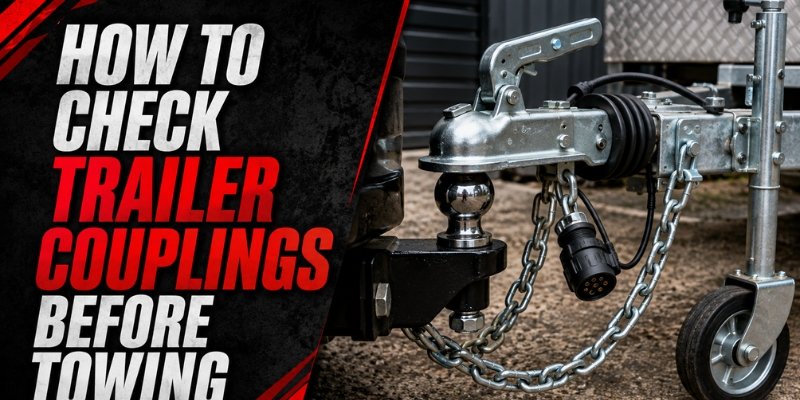
Trailer coupling inspection means checking the coupling body, latch, tow ball fit, mounting bolts, safety chains, shackles, drawbar and electrical connections before towing. A secure coupling helps prevent separation, clunking, poor control and unsafe road use.
A trailer can have good tyres, working lights and strong brakes, but still be unsafe if the connection to the tow vehicle is loose, worn, mismatched or not locked properly. That is why the coupling should never be treated as a quick click-and-go step.
Use this trailer coupling inspection guide to check the parts that keep the trailer attached, understand trailer coupling safety basics and decide when trailer servicing or trailer repair is the safer option.
Why does trailer coupling inspection matter before towing?
Trailer coupling inspection matters because the coupling is the main connection between trailer and tow vehicle. If it wears, cracks, loosens or fails to lock, the trailer can clunk, sway, disconnect or become unsafe under load.
The coupling carries towing force every time you accelerate, brake, reverse, turn or travel over uneven ground. On a work trailer, that force increases when the trailer is loaded with tools, machinery, soil, green waste, building materials or vehicle transport equipment.
According to the Department of Infrastructure’s Vehicle Standards Bulletin 1, known as VSB 1, quick-release couplings for trailers up to 3.5 tonnes ATM must include a positive locking mechanism and a separate means of automatically retaining that mechanism in the locked position. VSB 1 also says this locking must be readily verifiable by visual examination.
Coupling safety decision table
Situation | Risk level | Safer next step |
Coupling locks clearly and fits the correct tow ball | Lower | Complete chain, plug, light and brake checks |
Coupling feels loose on the tow ball | Medium to high | Inspect adjustment, wear and tow ball size |
Coupling does not lock cleanly | High | Do not tow until repaired or replaced |
Locking handle sticks or jams | Medium | Clean, inspect and service before loaded towing |
Mounting bolts are loose | High | Stop and inspect coupling and drawbar |
Bolt holes are elongated | High | Arrange repair before towing |
Coupling body is cracked or bent | Critical | Do not tow |
Trailer clunks when braking or taking off | Medium to high | Inspect coupling, tow ball, brakes and load position |
Safety chains are damaged | High | Repair or replace before road use |
Coupling rating is unknown | High | Confirm rating before towing loaded |
A common site example is a tradesman trailer that clunks every time the driver brakes at traffic lights. The noise may be dismissed as “normal trailer movement,” but it can point to coupling wear, wrong tow ball fit, loose bolts, brake grab or load movement. The connection deserves inspection before the next loaded job.
What parts make up the trailer coupling system?
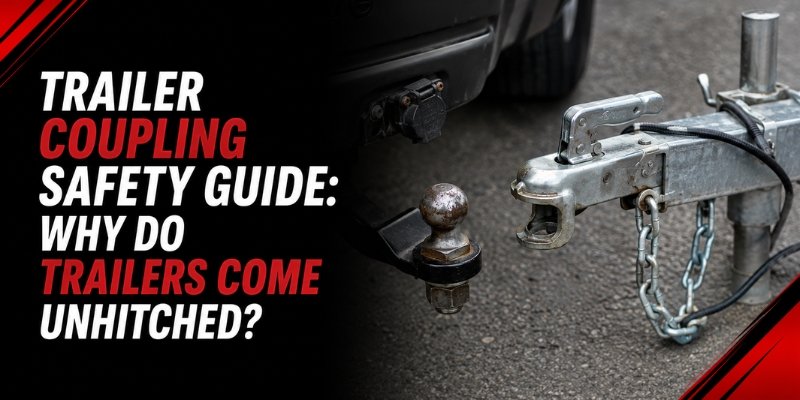
A trailer coupling system includes the coupling body, latch, tow ball or pin connection, mounting bolts, drawbar, safety chains, shackles, breakaway lanyard where fitted, electrical plug, brake connection and nearby wiring or light hardware.
The coupling is not one isolated part. It sits at the front of the trailer where multiple safety systems meet. When you connect the trailer, you are not only joining metal to metal. You are linking the tow vehicle, trailer brakes, lighting circuit, safety chains and load forces.
Coupling system parts table
Part | What it does | What to check |
Coupling body | Houses the socket or connection point | Cracks, bends, rust, damage and rating |
Locking latch | Locks the coupling onto the tow ball or pin | Smooth movement, firm lock and secure retaining pin |
Tow ball / pin | Provides the vehicle-side connection | Correct size, rating, wear and tightness |
Mounting bolts | Hold coupling to drawbar | Tightness, washers, rust and stretched holes |
Drawbar | Transfers towing load to the trailer chassis | Cracks, bends, weld condition and corrosion |
Safety chains | Backup connection if coupling fails | Rating, wear, rust and attachment points |
Shackles | Connect chains to towbar points | Correct fit, secure pin and suitable rating |
Breakaway lanyard | Activates breakaway brakes where fitted | Separate attachment, battery and switch condition |
Trailer plug | Connects lights and electric brakes | Corrosion, cable strain and secure fit |
Jockey wheel | Supports trailer while coupling | Raised, locked and clear before towing |
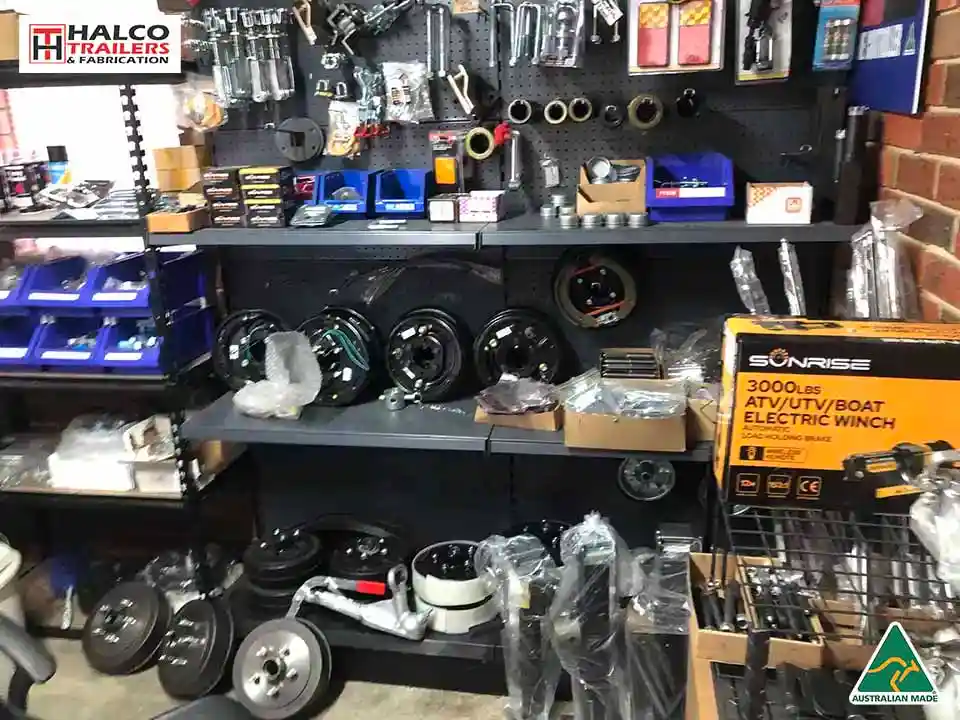
Halco’s trailer parts and servicing support can help owners identify compatible couplings, chains, wiring, latches and related front-end hardware where workshop fitment or inspection is needed.
How do you inspect a coupling before towing?
Inspect a trailer coupling before towing by parking level, checking the coupling body, matching the tow ball size, locking the latch, testing movement, connecting chains, plugging lights, securing the jockey wheel and rechecking after loading.
This is a hands-on check, not a quick glance. Dirt, dry grease, poor alignment, worn sockets and loose bolts can hide around the coupling area. Use a torch and rag if the trailer has been stored outside or used on muddy worksites.
12-step pre-tow coupling check
- Park on flat ground: level ground makes it easier to judge coupling height, drawbar angle and trailer movement.
- Check the tow ball or pin rating: the vehicle-side connection must suit the trailer’s loaded weight.
- Inspect the coupling body: cracks, bends, heavy rust or missing parts are stop signs.
- Clean dirt from the socket area: old grease, grit and mud can hide wear or stop smooth locking.
- Lower the coupling fully onto the tow ball: partial seating can feel connected before it moves under load.
- Close the latch and fit the safety pin or lock: a handle is not enough if the retaining device is missing.
- Perform a gentle lift or tug check: excessive vertical or sideways movement can reveal poor fit.
- Check mounting bolts and plate: loose bolts, stretched holes or cracked mounts need repair.
- Connect chains to rated towbar points: chains should not drag or become too tight while turning.
- Attach the breakaway lanyard separately where fitted: it must activate the switch if the trailer separates.
- Plug in wiring and test lights: brake lights, indicators and tail lights must work before road use.
- Raise and secure the jockey wheel: it should not drop, rotate loose or hit the road while towing.
A practical trailer coupling inspection should happen after the trailer is loaded as well as before. A heavy load can change drawbar height, tow ball weight and coupling angle, especially on tandem trailers, plant trailers and hydraulic tippers.
What warning signs mean the coupling needs repair or replacement?
A coupling needs repair or replacement when it has cracks, bends, heavy wear, loose locking, elongated bolt holes, poor tow ball fit, missing retaining hardware, clunking, jamming, rust damage or movement that continues after correct connection.
Do not tow because the coupling “mostly works.” A coupling fault sits at the one point where the trailer and tow vehicle depend on each other. If it fails, chains and breakaway systems become backup protection, not a normal driving setup.
Coupling warning signs table
Warning sign | Possible cause | Safer action |
Coupling lifts on the tow ball | Wrong ball size, wear or poor adjustment | Stop and inspect |
Latch will not close fully | Dirt, wear, internal damage or mismatch | Do not tow until fixed |
Latch opens too easily | Worn lock or missing retaining part | Repair or replace |
Clunking when braking | Coupling wear, tow ball movement, brake grab or load shift | Inspect full front connection |
Heavy rust around coupling | Corrosion and possible weakened hardware | Clean, inspect and assess |
Cracked coupling body | Impact, fatigue or overload | Replace before towing |
Bent mounting plate | Impact or poor previous repair | Inspect drawbar and bolts |
Elongated bolt holes | Movement under load | Repair mounting area |
Loose bolts after tightening | Thread, hole or plate damage | Workshop inspection |
Tow ball visibly worn | Vehicle-side hardware issue | Replace or inspect tow setup |
Manutec’s coupling wear guide also highlights damage around the tow ball socket, loose bolts, elongated holes, poor locking and excessive movement as warning signs owners should not ignore. That aligns with the practical workshop approach: diagnose the connection before road speed exposes the fault.
How do safety chains and shackles support coupling safety?
Safety chains and shackles support coupling safety by providing a backup connection if the coupling disconnects. They must be correctly rated, properly attached, close to the coupling and short enough to help control the drawbar.
According to Queensland Government towing equipment guidance, trailers up to 2,500 kg ATM need at least one complying safety chain, while trailers over 2,500 kg and not exceeding 3,500 kg ATM need two complying safety chains. It also says chain length must prevent the drawbar hitting the ground if the trailer detaches.
The NSW Government towing guidance says couplings must be strong enough for a fully loaded trailer, should show the manufacturer’s name or trade mark and rated capacity, and must have a positive locking mechanism. It also says safety chains should be crossed if two are fitted.
Safety chain and shackle checks
Check | What to look for |
Chain rating | Marking or evidence that suits trailer ATM |
Chain condition | No stretched, cracked, badly rusted or twisted links |
Attachment point | Strong structural point near the coupling |
Chain length | Allows turning but does not drag heavily |
Two-chain setup | One each side of centreline where required |
Shackle fit | Pin fits correctly without side loading or looseness |
Shackle condition | No deformation, stripped thread or heavy rust |
Ground clearance | Chains should not scrape continuously |
Drawbar backup | Chains help reduce drawbar drop if coupling separates |
Breakaway lanyard | Attached separately where fitted, not tangled with chains |
Do not use a padlock as a working chain connector. Do not connect chains to weak accessory points. Do not assume a large shackle is suitable if its fit, rating or condition is wrong.
How does coupling safety change by trailer type?
Different trailer types place different loads through the coupling. A box trailer, tradesman trailer, tandem trailer, plant trailer, car trailer and tiny-house chassis need coupling checks matched to weight, load position, braking and towing frequency.
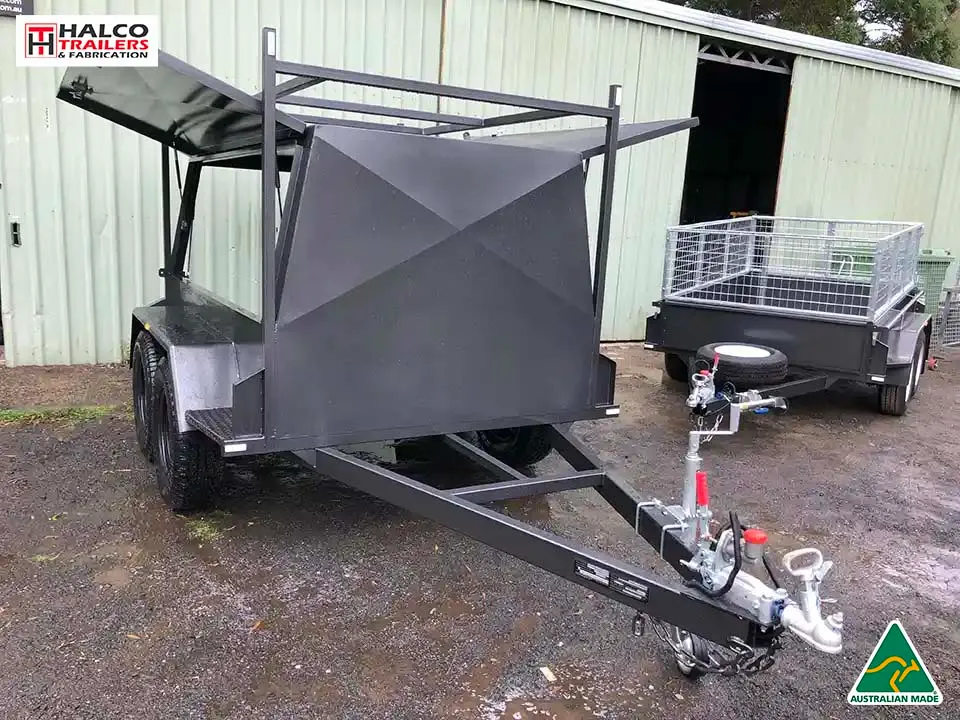
A domestic trailer may mostly need basic fit, lock and light checks. A daily work trailer needs closer inspection because the coupling sees repeated load cycles, worksite vibration, braking shock, reversing pressure and driver changes.
Trailer type coupling table
Trailer type | Coupling safety focus |
Box trailer | Correct tow ball size, lock, chains, lights and basic wear |
Tradesman trailer | Daily latch checks, tool load balance and bolt movement |
Landscaping trailer | Mud, grit, wet load and tipper-related drawbar stress |
Tandem trailer | Higher tow forces, load balance and chain rating |
Plant trailer | Machine position, drawbar load and braking interaction |
Car trailer | Vehicle loading, ramp use and controlled braking |
Farm trailer | Rust, rough-track impact, chains and loose hardware |
Hydraulic tipper | Heavy loads, braking shock and hydraulic-worksite vibration |
Tiny-house trailer | Long-term static load, chassis design and tow connection planning |
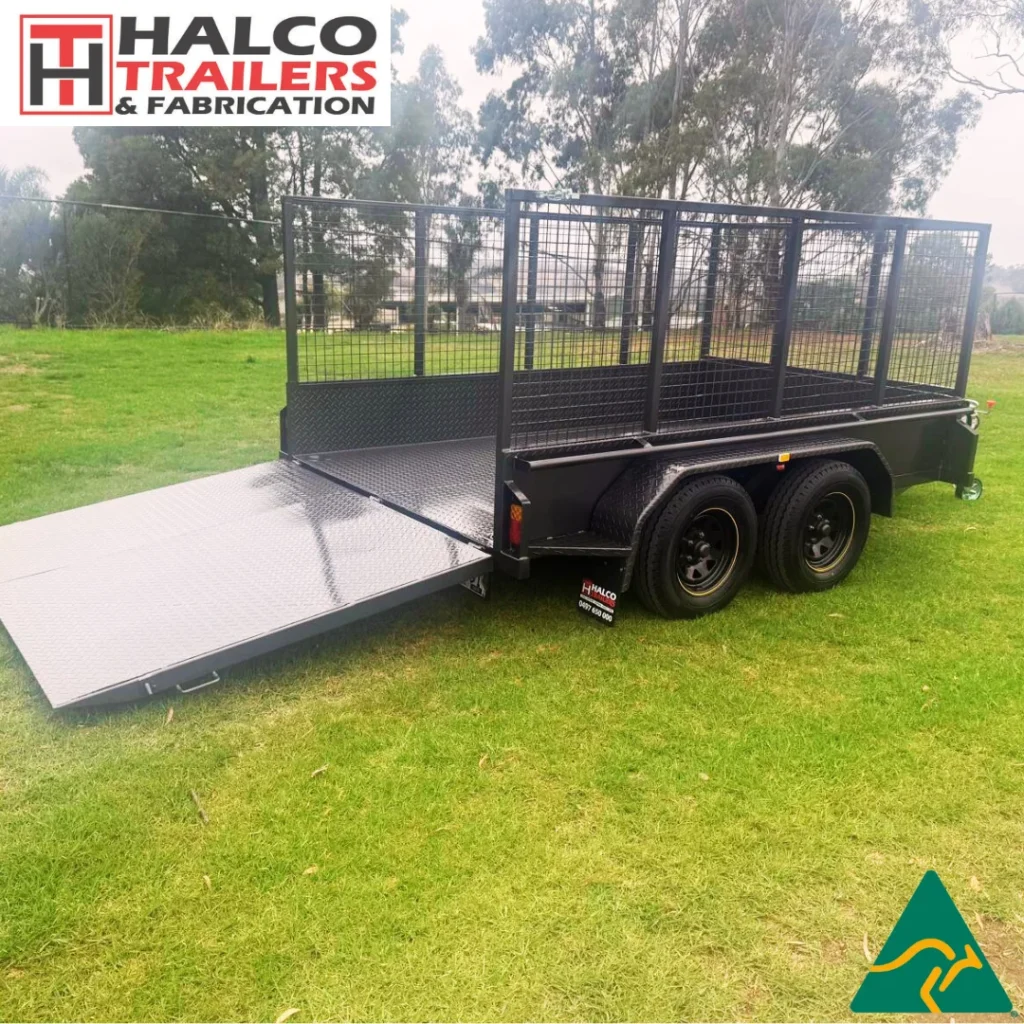
For heavier builds, Halco’s tandem trailers and plant trailer pages are useful internal references because coupling choice should match load capacity, axle setup, braking and the real job the trailer is built to do.
When should you book professional trailer servicing?
Book professional trailer servicing when the coupling does not lock properly, shows cracks, has excessive play, clunks under braking, has damaged bolts, uses uncertain chains or sits on a trailer that tows differently under load.
Owner checks are useful, but coupling diagnosis often needs workshop judgement. A loose front end may be the coupling, tow ball, drawbar, brake adjustment, suspension movement or load balance. Replacing one visible part without checking the system can miss the cause.
DIY check vs workshop service table
Issue | DIY check is enough? | Book servicing when |
Dirty coupling socket | Clean and inspect | Locking still feels rough or loose |
Dry latch movement | Clean and lubricate if suitable | Latch jams, sticks or will not retain |
Clunking | Visual check only | Noise continues under braking or acceleration |
Loose mounting bolts | Do not guess | Holes, plate or threads may be damaged |
Worn tow ball | Replace if clearly worn | Fit and rating are uncertain |
Chain surface rust | Inspect condition | Links are worn, stretched or rating unclear |
Bent drawbar area | No | Structural assessment is needed |
Coupling mismatch | No | Correct replacement must be confirmed |
Trailer used for heavy work | Owner checks help | Schedule planned inspection |
Recent accident or impact | No | Inspect coupling, drawbar and chassis together |
Halco’s trailer servicing support includes applicable trailer coupling, chains, lights, wiring, brakes, bearings, suspension, drawbar and chassis checks from its Warragul workshop.
How often should couplings be checked and maintained?
Owner checks should happen before every tow, while workshop maintenance depends on load, distance, storage, road surface and business use. A daily work trailer needs more frequent coupling checks than an occasional household trailer.
Frequency should follow risk. A coupling used on sealed-road domestic trips wears differently from one exposed to building sites, farms, gravel roads, wet landscaping loads or repeated reversing into tight job sites.
Coupling maintenance frequency table
Trailer use | Owner coupling check | Workshop inspection |
Occasional domestic trailer | Before every trip | Yearly or before long trips |
Regular household trailer | Before loaded towing | Every 12 months |
Tradie trailer | Daily or weekly | Every 6 to 12 months |
Landscaping trailer | Before loaded runs | Before peak season and after heavy wet use |
Farm trailer | Before road towing | After rough paddock use or storage |
Tandem work trailer | Before every loaded tow | More often if clunks or movement appear |
Plant trailer | Before each machine move | Scheduled around machine weight and use |
Stored trailer | Before reuse | Before road towing after months unused |
Fleet trailers | Recorded driver checks | Planned service schedule by trailer ID |
Cruisemaster’s coupling maintenance content recommends visual checks before trips and more detailed maintenance at suitable service intervals for its coupling systems. The same general habit is useful for Halco owners: check every time, then service properly before faults become roadside problems.
How much can trailer coupling repair cost in Australia?
Trailer coupling costs depend on coupling type, trailer ATM, bolt pattern, drawbar condition, safety chains, shackles, wiring, labour access and whether the mounting plate or chassis area also needs repair.
A simple coupling replacement is different from repairing elongated holes, cracked mounts or a bent drawbar. The visible part may be cheap compared with the labour required to make the front-end connection safe again.
Coupling cost factor table
Cost factor | Why it changes price |
Coupling type | Standard ball, off-road, pintle or specialised couplings differ |
Load rating | Higher-rated parts can cost more |
Bolt pattern | Mismatched holes may need drilling or repair |
Drawbar condition | Cracks, rust or bends increase repair scope |
Chain replacement | Chains and attachment points may need work |
Shackle suitability | Correct fit and rating may require replacement |
Tow ball mismatch | Vehicle-side hardware may also need checking |
Wiring position | Front wiring may need protection during work |
Previous poor repair | Incorrect old repairs increase labour |
Business urgency | Faster turnaround depends on parts and workshop capacity |
For businesses, the real cost is downtime. A coupling issue found during planned trailer repair or servicing is easier to manage than a trailer that cannot leave the yard on a booked workday.
Conclusion
Use trailer coupling inspection as a non-negotiable pre-tow habit. Check the coupling body, latch, tow ball fit, mounting bolts, chains, shackles, plug, lights and drawbar before loaded road use.
For trailer owners across Warragul, Melbourne, Gippsland and regional Victoria, Halco Trailers can help with trailer parts, trailer repair and trailer servicing. If your coupling clunks, feels loose, will not lock or shows visible damage, book an inspection before the next trip.