

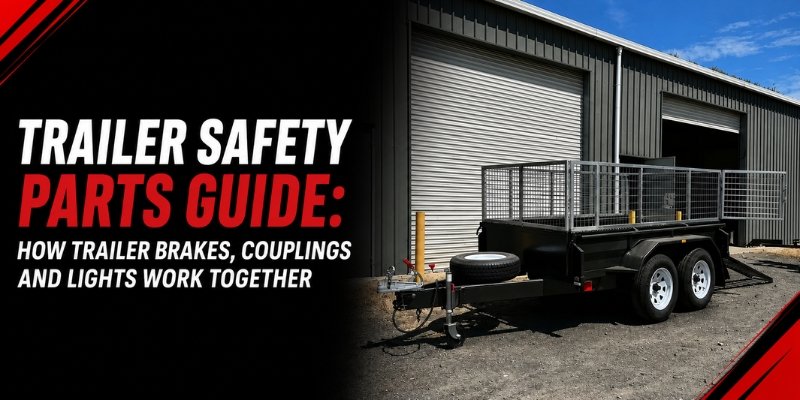
This trailer safety parts guide explains how brakes, couplings, lights, safety chains and load-restraint hardware work together. Inspect these systems before towing because one weak part can affect stopping, connection security, visibility and control quickly.
A trailer is not safe because one part looks new. It is safe when the important parts work as a connected system. A strong coupling will not help if the brakes are badly adjusted. Good brakes will not help other drivers if the brake lights fail. Bright lights will not prevent a runaway trailer if the coupling, chains or breakaway system are wrong.
For tradies, contractors, landscapers, farmers, vehicle owners, tiny house builders and small business operators, this trailer safety parts guide shows what to check before towing, when to book professional help and how to avoid treating safety parts as isolated accessories.
Why should trailer brakes, couplings and lights be checked together?
Trailer brakes, couplings and lights should be checked together because they control three connected safety jobs: stopping the load, keeping the trailer attached and signalling your movements. If one system fails, the others are placed under more pressure.
Think about a landscaper towing a loaded tandem trailer with soil, tools and green waste. If the coupling is loose, every brake application creates a harsh jolt. If the brakes grab, the coupling and drawbar take shock loads. If the brake lights fail, the vehicle behind may not react when the trailer slows.
That is why good trailer safety parts are not just a list of items. They are a chain. The safest trailer is the one where the whole chain works under real towing conditions.
Safety system decision table
Safety area | What it does | If it fails |
Brakes | Help slow and control the trailer | Longer stopping distance, pulling, brake fade or sway risk |
Coupling | Connects trailer to tow vehicle | Clunks, poor control or possible disconnection |
Safety chains | Backup connection if coupling fails | Trailer may separate completely if chains are wrong |
Breakaway system | Applies brakes if heavy trailer disconnects | Runaway trailer risk on larger braked trailers |
Lights | Shows braking, turning and night visibility | Other drivers cannot read your movement |
Wiring and plug | Transfers electrical signals | Intermittent lights or brake controller problems |
Tyres and bearings | Keep wheels rolling safely | Heat, wobble, blowouts or roadside failure |
Load-restraint points | Keep cargo stable | Load shift can overload brakes, coupling and tyres |
For business owners, the bigger risk is not just the repair bill. A poor safety part can delay a job, damage cargo, injure workers or take a trailer out of service during the busiest week of the season.
What are the main trailer safety parts owners should understand?
The main trailer safety parts are brakes, couplings, safety chains, lights, wiring, tyres, bearings, suspension, drawbar, load-restraint points and rated hardware. Each part supports towing control, visibility, load stability or mechanical connection during normal driving and emergency situations.
According to the Department of Infrastructure’s Vehicle Standards Bulletin 1, known as VSB 1, component type approvals can apply to lamps, couplings, brake systems, tyres, safety chains and chassis including drawbars. That is a useful way to think about safety parts: they are not decorative add-ons; they are regulated functional components.
Part | Safety role | Practical owner check |
Brakes | Slows trailer and supports tow vehicle control | Check response, grabbing, delay, noise and heat |
Coupling | Locks trailer to tow ball or approved connection | Check latch, rating, wear and correct seating |
Safety chains | Backup if coupling disconnects | Check chain condition, rating and attachment points |
Breakaway system | Applies trailer brakes after disconnection | Check battery, switch, lanyard and function where fitted |
Lights | Shows braking, turning, position and night visibility | Test brake lights, indicators, tail lights and reflectors |
Wiring plug | Transfers signals between vehicle and trailer | Look for corrosion, loose pins and damaged cable |
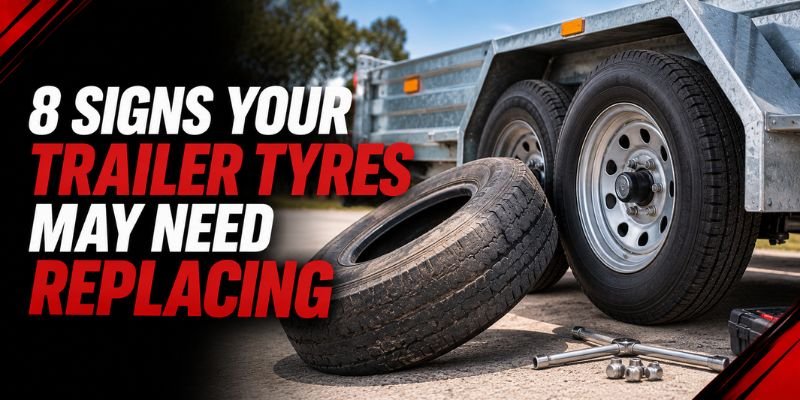
Tyres | Carry load and maintain road contact | Check pressure, cracks, tread, load rating and age |
Bearings and hubs | Let wheels rotate without excessive heat or play | Check rumble, grease leakage, wobble and hub temperature |
Drawbar and chassis | Carries towing and load forces | Look for cracks, bends, rust and poor repairs |
Tie-down points | Hold load in position | Check rated points, welds, bolts and wear |
Halco’s trailer parts and servicing page lists brakes, bearings, hubs, axles, suspension, lights, wiring, couplings, jockey wheels, safety chains, latches, ramps and tie-down equipment among the parts and repair areas the workshop can discuss.
How do trailer brakes support safer towing?
Trailer brakes help control the trailer’s weight during slowing, downhill travel, emergency stops and heavy work towing. The heavier the trailer and load, the more important correct brake type, adjustment, wiring and breakaway function become.
According to VSB 1 from the Department of Infrastructure, trailers over 750 kg GTM require an efficient service braking system. VSB 1 also explains that trailers over 2,000 kg GTM require brakes operating on all wheels and a breakaway system that applies the brakes if the trailer accidentally disconnects.
Brake type comparison
Brake setup | Common use | Owner watch-outs |
No trailer brakes | Very light trailers within legal limits | Tow vehicle does all stopping, so load weight matters |
Mechanical override brakes | Some medium trailers | Check coupling movement, adjustment and smooth operation |
Hydraulic brakes | Boat, plant or heavier work trailers depending on setup | Watch fluid, leaks, corrosion and brake balance |
Electric brakes | Tandem, plant, tradesman and custom trailers | Check controller, magnets, wiring, adjustment and battery systems |
Breakaway braking | Heavier braked trailers where required | Check battery charge, switch, lanyard and function |
Brakes are not just “working” or “not working.” A trailer may still stop but pull to one side, grab sharply, drag, overheat or respond late. Those faults can affect tyres, bearings, coupling wear and driver confidence.
A practical example is a hydraulic tipper carrying wet soil. The trailer may tow normally when empty, then feel heavy and slow to respond when loaded. That change tells you the brake system, load position and trailer rating need attention together.
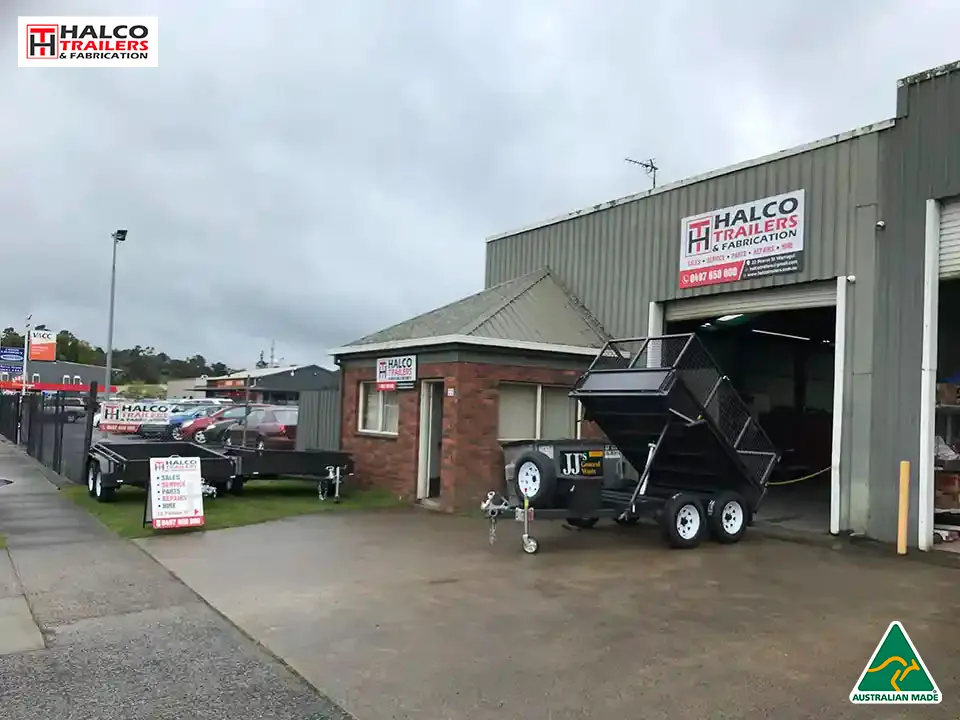
For regular heavy towing, especially with hydraulic tipper trailers, brake checks should be treated as planned maintenance, not only a repair after something feels wrong.
How do couplings, safety chains and breakaway systems protect the connection?
Couplings, safety chains and breakaway systems protect the physical connection between trailer and tow vehicle. The coupling carries normal towing forces, chains provide backup connection, and breakaway systems help stop heavier trailers if separation occurs.
A coupling is more than the latch you close before driving away. It must suit the trailer rating, tow ball or connection type, drawbar design and intended load. A worn or incorrectly seated coupling can create clunking, harsh braking feel, poor tracking or disconnection risk.
Queensland Government towing equipment guidance explains that tow bars must have safety-chain attachments able to withstand the tow bar’s rated load capacity, and chain attachments should be mounted near the coupling to help maintain direction if the connection fails. The same practical principle matters for owners in every state: the backup connection must be strong, positioned correctly and used every time.
Coupling and chain check process
- Confirm the rating before towing: the coupling, tow ball, towbar and trailer rating must suit the loaded trailer.
- Lower the coupling fully onto the tow ball: partial seating can feel attached in the driveway but move under load.
- Lock the latch and check the indicator or pin: a closed handle is not enough if the lock is not engaged properly.
- Raise the jockey wheel slightly for a tug check: this helps confirm the trailer is sitting securely on the tow ball.
- Connect safety chains to rated tow points: chains should not be connected to weak, decorative or unrated points.
- Check chain length and ground clearance: chains should allow turning but should not drag heavily on the road.
- Attach the breakaway lanyard separately where fitted: it must be able to activate the breakaway switch if the trailer separates.
- Recheck after rough ground or loading: site vibration, paddock use and repeated reversing can reveal looseness quickly.
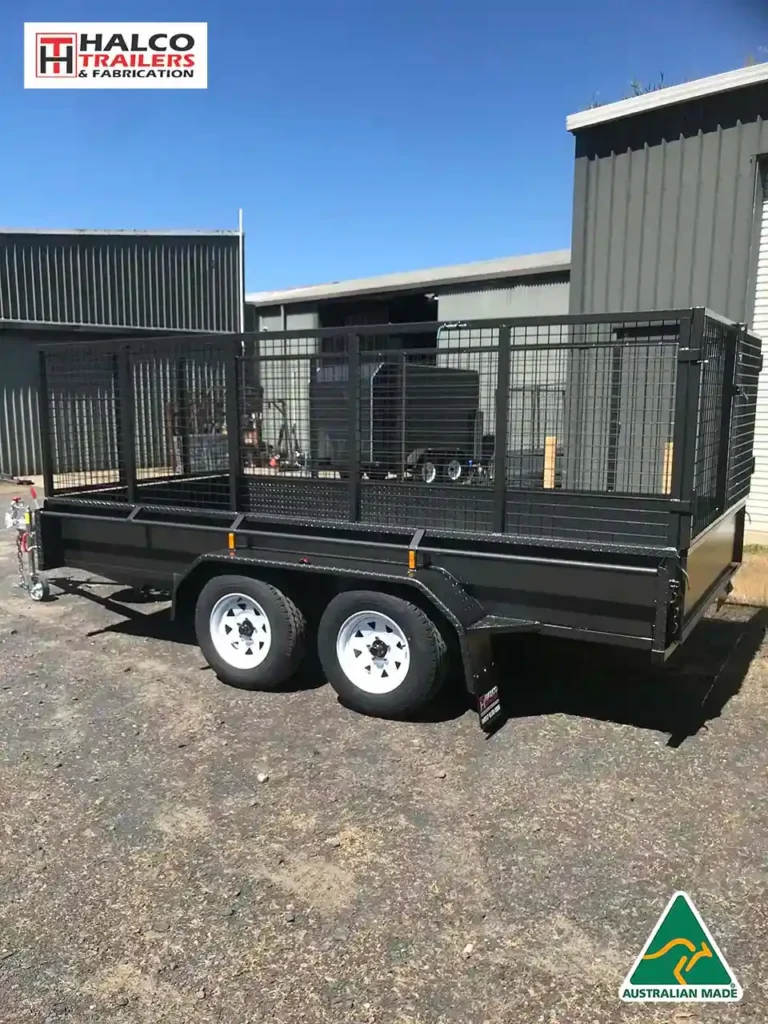
For tandem trailers, the connection is especially important because heavier loads place more force through the drawbar, coupling, chains and braking system during stopping and turning.
Why do trailer lights and wiring matter for road safety?
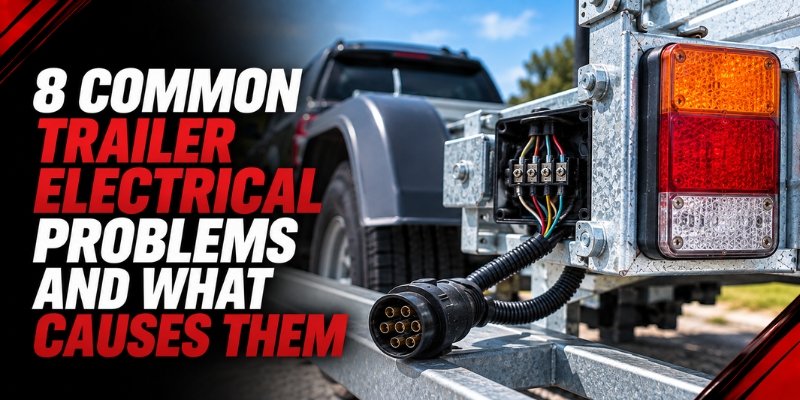
Trailer lights and wiring let other road users see when you brake, turn, reverse, slow down or travel in low light. Faulty wiring can also affect electric brake signals and create intermittent faults that appear only while towing.
According to the Australian Light Vehicle Standards Rules 2015, a trailer built after June 1973 must have at least one tail light fitted on or towards each side of the rear. In practice, owners should also check brake lights, indicators, reflectors, number plate lighting and any required marker or clearance lights for the trailer design.
Lights fail for simple reasons: corroded plugs, broken earth wires, crushed cables, water inside lamps, poor repairs, loose connectors or mismatched sockets. The problem is often hidden until the trailer is connected to the vehicle.
Light and wiring fault table
Symptom | Possible cause | Safer next step |
No lights work | Plug, earth, fuse or socket issue | Test tow vehicle and trailer separately |
One side fails | Broken wire, lamp fault or poor earth | Inspect lamp, cable and connector |
Indicators flash fast | Failed globe, LED mismatch or wiring fault | Check lamp type and wiring continuity |
Brake lights stay on | Incorrect wiring or switch issue | Stop and diagnose before towing |
Lights flicker over bumps | Loose plug, earth or damaged cable | Secure and repair wiring |
Electric brakes behave strangely | Brake wiring, plug or controller issue | Book inspection before heavy towing |
Lights dim when brakes apply | Voltage drop or poor earth | Clean terminals and inspect earth path |
Water inside lamps | Damaged seal or cracked housing | Replace or repair before corrosion spreads |
Halco’s how to wire a trailer plug article is useful for owners who want to understand plug checks, lighting faults and safe trailer wiring basics before booking repairs.
How does this trailer safety parts guide apply before every trip?
This trailer safety parts guide works as a pre-trip routine: check connection first, then lights, brakes, tyres, visible wiring, chains, load restraint and warning signs. The goal is to catch safety faults before road speed exposes them.
Pre-trip checks should be fast enough to do every time and detailed enough to catch obvious risk. Do not leave them only for long trips. A five-minute run to a jobsite can still involve braking, reversing, roundabouts, wet roads and other drivers.
12-point pre-trip safety parts check
- Park on level ground before connecting: this makes coupling, load position and trailer height easier to judge.
- Check the coupling rating and lock: the trailer must be correctly seated and locked to the tow vehicle.
- Attach chains and breakaway lanyard where fitted: backup systems only work when connected correctly.
- Raise and secure the jockey wheel: a loose jockey wheel can hit the road or interfere with turning.
- Test brake lights, indicators and tail lights: use a helper or reflective surface before leaving.
- Check electric brake controller response if fitted: weak, delayed or aggressive braking needs adjustment or repair.
- Inspect visible wiring and plug condition: damaged cables, loose plugs and corrosion create intermittent faults.
- Check tyres, wheels and wheel nuts visually: cracks, low pressure, bulges and missing nuts are stop signs.
- Look for hub heat after recent towing: excessive heat can point to bearing or brake trouble.
- Confirm the load is restrained: load movement can overload brakes, coupling and tyres.
- Check ramps, tailgates, latches and toolboxes: loose hardware can become a road hazard.
- Recheck after 10 to 20 kilometres: straps, chains, plugs and hubs often reveal problems once the trailer settles.
According to the National Transport Commission’s Load Restraint Guide for Light Vehicles, loads must be properly restrained, must not overhang dangerously, must not exceed mass limits and must not cover lights, indicators, reflectors or number plates. That makes load restraint part of safety parts inspection, not a separate job.
How often should trailer safety parts be serviced or replaced?
Service frequency depends on trailer load, distance, surface, storage, corrosion exposure and business reliance. A trailer used daily for work needs more frequent checks than a domestic trailer used occasionally for tip runs or weekend jobs.
There is no single calendar rule for every trailer. Instead, match the interval to risk. A landscaper’s tipper carrying wet soil, mulch and green waste works harder than a small domestic trailer carrying cardboard once a month.
Service frequency guide
Trailer use | Owner check | Workshop servicing |
Occasional household use | Before each tow | Annually or before a major trip |
Tradie trailer | Weekly, plus before heavy loads | Every 6 to 12 months depending on use |
Landscaping trailer | Before loaded runs | Before peak season and after heavy tipper use |
Farm trailer | Before road towing | After rough paddock use or long storage |
Plant trailer | Before each machine move | Scheduled servicing based on machine weight and frequency |
Car trailer | Before each transport job | Before long-distance or commercial vehicle transport |
Tandem work trailer | Before loaded towing | More often if braking, tyres or bearings show wear |
Stored trailer | Before reuse | Before towing after months unused |
Use this pattern: inspect often, service before busy periods and replace parts before they fail under load. For work trailers, maintenance timing should protect the schedule, not only the trailer.
Halco’s trailer servicing support covers general, trade, agricultural and specialised trailers, including box trailers, tandem trailers, plant and machinery trailers, hydraulic tipper trailers, enclosed trailers, car trailers and tradesman trailers.
How do safety parts change by trailer type and load?
Safety parts change by trailer type because different trailers place different stress on brakes, coupling, lighting, suspension, tie-down points and chassis. The right setup depends on weight, load shape, access, unloading method and road conditions.
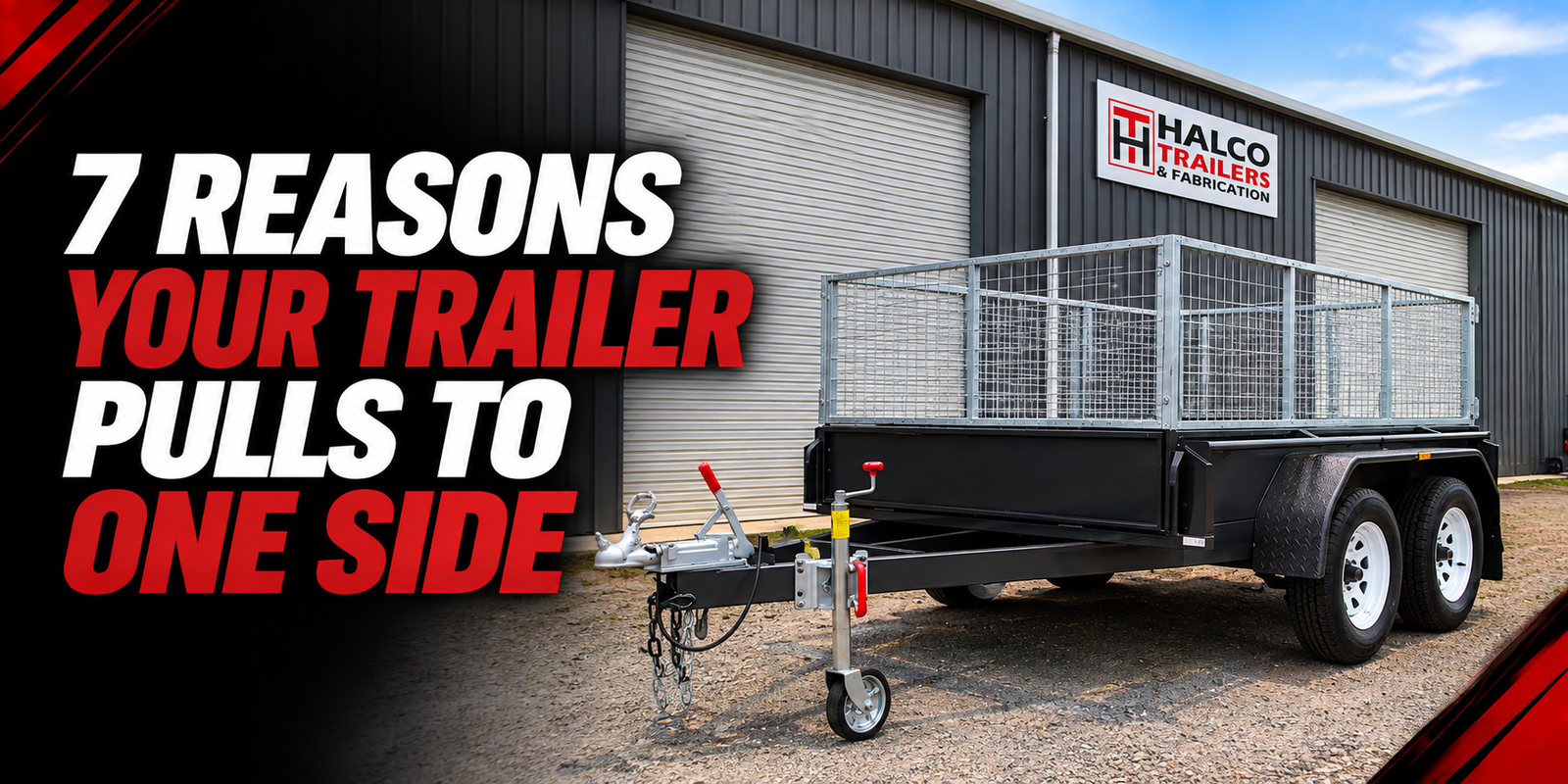
A box trailer carrying household items may need simple, reliable basics. A tandem work trailer needs stronger braking and connection checks. A plant trailer needs rated tie-down points and brake confidence. A hydraulic tipper needs attention to load movement, body operation and wiring around hydraulic components.
Trailer type | Safety parts that matter most |
Box trailer | Coupling, chains, tyres, lights, floor and latches |
Tandem trailer | Brakes, load balance, coupling, chains, tyres and suspension |
Hydraulic tipper trailer | Brakes, hydraulic system, load restraint, lights and hinges |
Plant trailer | Brakes, ramps, tie-down points, tyres and suspension |
Tradesman trailer | Locks, lights, coupling, weight distribution and tool storage |
Farm trailer | Coupling, tyres, lights, bearings, mudguards and corrosion resistance |
Car trailer | Brakes, ramps, wheel straps, lights and breakaway system |
Tiny house trailer | Chassis, coupling, braking setup, lights and long-term weight planning |
Boat trailer | Lights, wiring, corrosion-resistant parts, bearings and coupling |
For customers comparing heavier work builds, Halco’s tandem trailers and hydraulic tipper trailers pages show how trailer design, load capacity, braking options and lighting need to be considered together rather than treated as separate upgrades.
When should you book trailer servicing instead of DIY checks?
Book professional servicing when brakes, couplings, lights, bearings, suspension, wiring, chassis or safety chains show faults, or when the trailer carries heavy business loads. DIY checks are useful, but they cannot replace mechanical diagnosis.
The dividing line is a safety-critical function. You can visually check lights and coupling before a trip. But you should not guess at brake adjustment, bearing noise, structural cracks, poor earth faults, breakaway problems or repeated wiring issues.
DIY check vs professional servicing table
Issue | DIY check is enough? | Book servicing when |
Lights not working | Basic plug and globe check | Fault returns, wiring is damaged or brakes are affected |
Coupling feels loose | Visual check only | Latch, wear, rating or fit is uncertain |
Brakes grab or pull | No | Any brake control fault appears |
Wheel hub is hot | No | Heat, rumble or wobble is present |
Safety chain is rusty | Visual check only | Links are worn, stretched, unrated or poorly attached |
Trailer sways | No | Load is correct but sway continues |
Tyres wear unevenly | No | Alignment, axle, suspension or brake drag may be involved |
Breakaway system uncertain | No | Battery, switch or lanyard function is not confirmed |
Drawbar or chassis cracks | No | Any structural damage is visible |
Regular work use | Owner checks help | Schedule planned servicing to reduce downtime |
Halco can assist with safety-focused inspection, repairs and replacement components through its trailer parts and servicing workshop in Warragul. For work trailers, combine safety checks with planned maintenance so faults do not appear during loaded towing.
Conclusion
A trailer is safest when the brakes, coupling, lights and other key systems work together. Use this trailer safety parts guide to check the full chain before towing, not just the part that failed last time.
For trailer owners across Warragul, Melbourne, Gippsland and regional Victoria, Halco Trailers can help with trailer servicing, replacement parts, repairs and custom trailer advice. If your trailer brakes poorly, clunks at the coupling, flickers lights or feels unstable under load, book an inspection before the next work trip.