

By Halco Trailers Team, Trailer Manufacturing / Safety Specialist
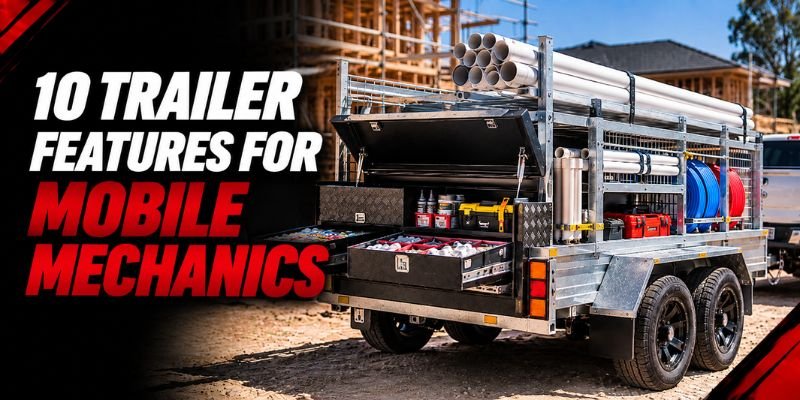
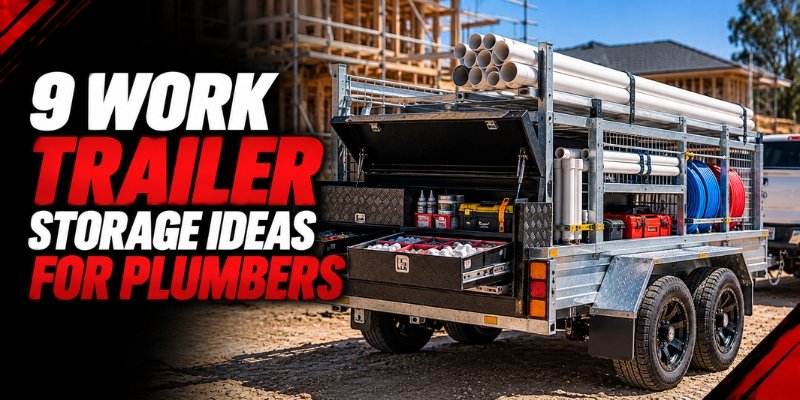
A practical fencing contractor trailer setup should make it easier to transport fence posts, rails, power tools and installation equipment while keeping everything properly secured. For fencing contractors working across Warragul, Gippsland and regional Victoria, the right trailer layout depends on the materials carried, equipment weight and daily loading requirements.
Fencing work involves transporting materials of different shapes, sizes and weights. Timber posts, steel panels, wire rolls, post-hole diggers, power tools and fixing accessories all need suitable storage and loading arrangements.
Without a well-planned trailer, contractors may spend unnecessary time searching for equipment, rearranging materials or unloading items to reach essential tools.
Whether you specialise in residential boundary fences, rural fencing, Colorbond fencing or commercial installations, choosing a suitable fencing trailer can help keep your daily operations organised.
Here are eight practical trailer setup ideas to consider before buying or upgrading a trailer for your fencing business.
1. Choose Secure Toolboxes and Organised Storage Compartments
Fencing contractors carry a wide range of tools, including cordless drills, impact drivers, levels, measuring tapes, grinders, hammers and specialist installation equipment.
Without dedicated storage, smaller tools and accessories can become mixed together or move around during transport.
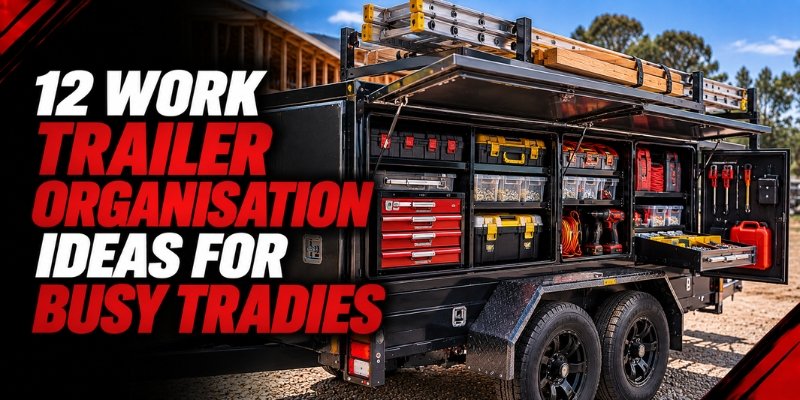
Lockable toolboxes and organised compartments can help keep valuable equipment protected and accessible.
Useful storage features include:
- Lockable toolboxes for cordless tools and batteries.
- Separate drawers for screws, brackets and fasteners.
- Weather-resistant compartments for electronic equipment.
- Heavy-duty storage for hand tools.
- Secure compartments for frequently used installation accessories.
For example, a contractor installing residential timber fencing may need immediate access to a drill, level, measuring tape, screws and brackets.
Keeping these items in a dedicated storage area can reduce unnecessary searching between installation tasks.
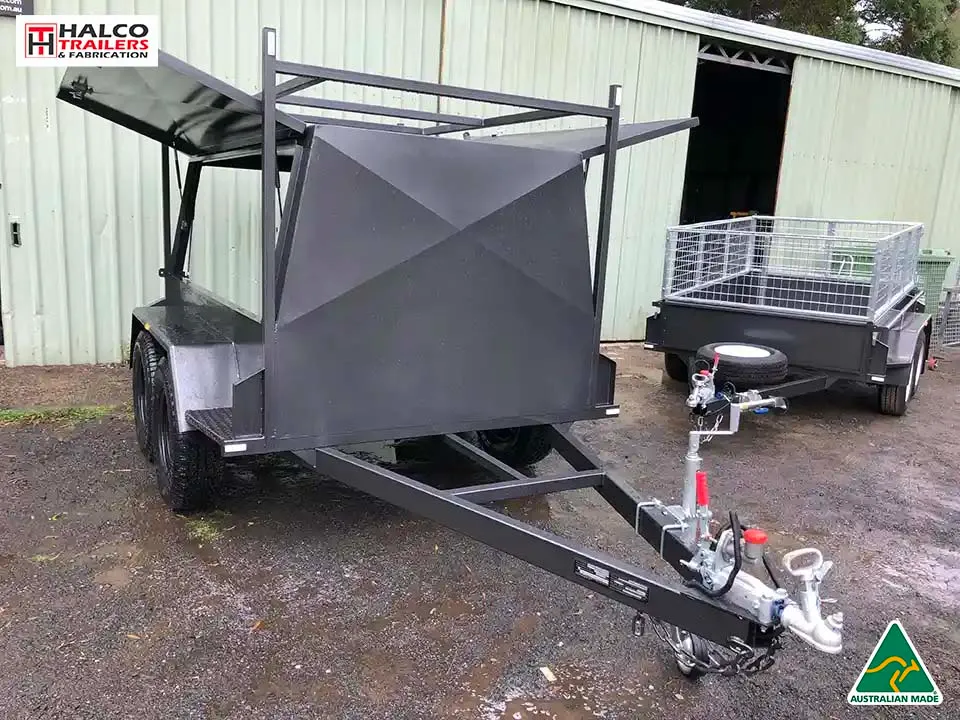
Some fencing businesses may find tradesman trailers suitable for their tool storage requirements.
Halco Trailers offers tradesman trailer configurations with options such as lockable compartments, lift-up access doors, shelving and drawers.
When choosing a storage layout, consider both security and accessibility. A toolbox should be easy to reach without interfering with other equipment or materials.
2. Plan Dedicated Space for Fence Posts and Rails
Fence posts, timber rails and steel fencing sections can be difficult to transport because of their length and weight.
A suitable fencing equipment trailer should provide adequate space and support for the materials carried regularly.
Before choosing a trailer, measure the typical length, width and weight of your fencing materials.
Consider the following:
- Length of timber or steel fence posts.
- Space required for rails and fencing panels.
- Appropriate support for long materials.
- Suitable load-restraint points.
- Loading access from the rear or sides.
- Applicable vehicle dimension and overhang limits.
For example, a rural fencing contractor may regularly transport timber posts, steel posts, fencing wire and tensioning equipment.
Separating long materials from smaller tools can make loading more organised.
However, longer materials may require a purpose-designed trailer or approved support arrangement.
Do not assume that a post or rail can be carried safely simply because it fits across the trailer deck.
The load must be adequately supported, restrained and transported within applicable legal limits.
Practical tip: Choose a trailer based on the longest and heaviest materials you routinely carry, not just the equipment used on smaller jobs.
3. Add Suitable Ladder and Material Racks
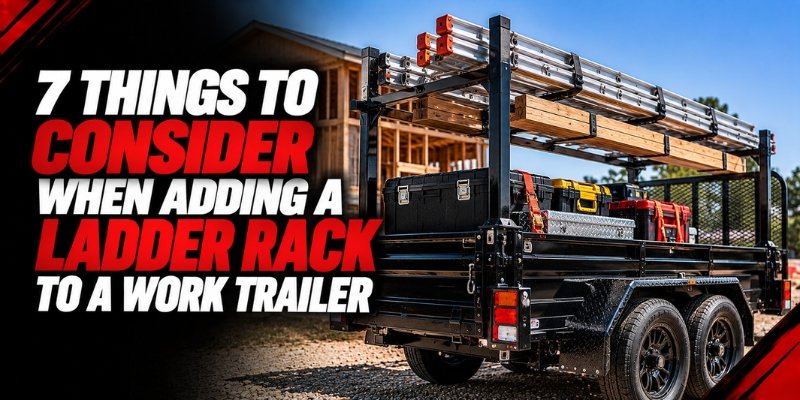
Ladder racks and material support systems can help fencing contractors organise longer equipment without occupying the entire trailer floor.
Depending on the work performed, contractors may need to transport ladders, straightedges, lightweight rails and other long tools.
A suitable rack can provide a dedicated storage position while keeping other compartments accessible.
Important considerations include:
- Rack load rating.
- Secure mounting to the trailer structure.
- Appropriate width and length.
- Suitable restraints for the carried equipment.
- Clearance around access doors.
- Overall trailer height and stability.
For example, a contractor installing fencing along uneven ground may need a ladder or long measuring equipment.
A properly designed rack can keep these items separate from power tools and smaller components.
However, elevated storage is not suitable for every load.
Heavy fencing posts or machinery should not be placed on a rack unless the complete rack and trailer arrangement has been assessed for that purpose.
Positioning heavy equipment too high can raise the centre of gravity and affect towing stability.
Before fitting racks, discuss their intended loading requirements with the trailer manufacturer.
4. Organise Small Fencing Materials into Dedicated Storage Zones
Fencing installation involves numerous smaller components, including screws, staples, bolts, hinges, brackets, latches and wire tensioners.
These items can become difficult to locate when stored together in an unorganised toolbox.
A practical contractor trailer setup should provide dedicated storage areas for frequently used materials.
Consider using:
- Labelled storage containers.
- Divided drawers for fasteners.
- Separate bins for gate hardware.
- Secure compartments for fencing accessories.
- Weather-resistant storage for suitable consumables.
For example, a contractor installing Colorbond fencing may regularly use screws, brackets and other components specific to that system.
Keeping these materials in clearly labelled compartments can make it easier to check stock before travelling to a job.
A useful approach is to organise storage by work type.
One area may contain timber fencing accessories, another may hold metal fencing components, and a separate compartment may be used for gate installation hardware.
This can be particularly useful for contractors who handle different fencing projects throughout the week.
Planning a Fencing Trailer for Your Business?
A trailer should suit the tools and materials you transport most often.
Halco Trailers in Warragul can discuss trailer configurations based on your fencing equipment, material dimensions, loading requirements and towing vehicle.
Discuss Your Trailer Requirements with Halco
5. Choose Convenient Loading Access and Suitable Ramps
Loading and unloading can be a regular part of a fencing contractor’s working day.
Depending on the project, contractors may transport post-hole diggers, compact machinery, generators, fencing materials and installation equipment.
A trailer with appropriate loading access can reduce unnecessary manual handling and improve equipment accessibility.
Features worth considering include:
- Suitable rear loading ramps.
- Drop-down or removable sides.
- Accessible tailgates.
- Appropriate deck height.
- Clear loading areas.
- Rated equipment restraint points.
For example, a contractor transporting a wheeled post-hole digging machine may require a ramp suitable for the machine’s operating weight, wheel arrangement and dimensions.
The ramp should be correctly supported and secured during loading.
Ramp angle, grip and the equipment manufacturer’s loading instructions should also be considered.
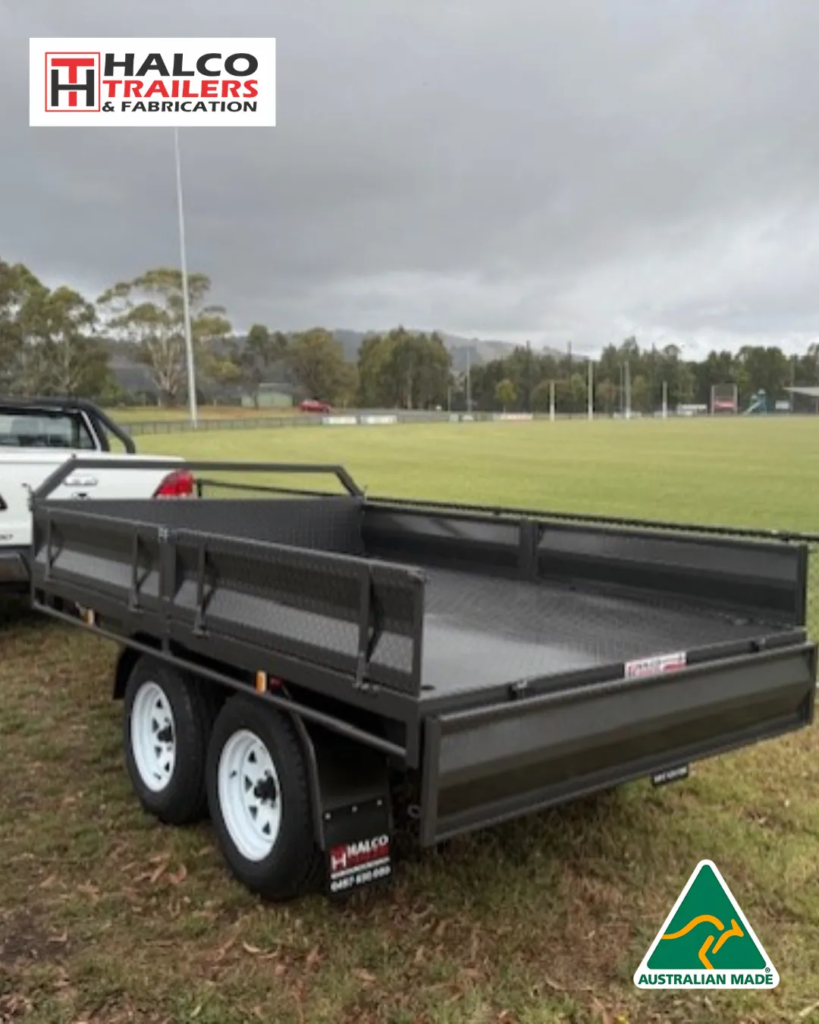
For contractors transporting bulky fencing materials, pallets, posts or equipment requiring side access, flat top trailers may be worth considering.
An open-deck design can provide access from multiple directions, depending on the trailer configuration and available loading space.
However, an open trailer still requires appropriate load restraint and may not provide weather protection for sensitive tools.
The most suitable loading arrangement depends on the equipment you transport and the conditions at your worksites.
6. Include Rated Tie-Down Points and Suitable Load Restraints
Load restraint is one of the most important considerations for any fencing trailer.
Fence posts, steel rails, wire rolls and machinery can shift during braking, cornering or travel over uneven roads if they are not properly secured.
A practical trailer should provide restraint arrangements suitable for the types of equipment and materials being carried.
Consider:
- Rated tie-down points.
- Suitable webbing straps or chains.
- Restraints designed for long materials.
- Secure positioning of machinery.
- Separate restraints for heavy equipment.
- Regular inspection of restraint equipment.
For example, a bundle of timber fence posts may need to be restrained differently from a compact post-hole digging machine.
The appropriate method depends on the weight, shape, stability and surface characteristics of the load.
Transport Victoria advises that loads must be suitably secured and distributed to maintain vehicle stability.
For more information, refer to the National Transport Commission’s Load Restraint Guide.
Remember that trailer side panels alone may not provide adequate restraint for every load.
Loose tools, heavy equipment and materials capable of rolling or sliding may require separate securing arrangements.
Inspect restraints before departure and check them during the journey where necessary.
7. Improve Trailer Lighting and Electrical Accessories
Fencing contractors may begin work early in the morning or finish loading equipment after sunset.
Some rural properties and construction sites may also have limited lighting.
A practical lighting arrangement can improve visibility around storage compartments and loading areas.
Useful lighting options may include:
- LED compartment lights.
- Lighting near frequently used toolboxes.
- External work lights around loading areas.
- Suitable switches for accessory lighting.
- Protected wiring and electrical connections.
For example, a rural fencing contractor preparing tools before sunrise may benefit from lighting around the main equipment storage area.
This can make it easier to identify tools and check that equipment is ready for the next job.
Additional lighting should be positioned to minimise glare and must not interfere with legally required trailer lights, indicators or reflectors.
Electrical accessories should be installed using suitable components and wiring protection.
Before modifying the trailer’s electrical system, confirm that the proposed work meets applicable Australian requirements.
8. Plan Spare Wheel Mounting and Essential Trailer Accessories
Fencing contractors often travel between multiple properties and construction sites.
For businesses working across regional Gippsland, planning for routine trailer maintenance and unexpected tyre problems is particularly useful.
A securely mounted spare wheel is one accessory worth considering.
The mounting location should allow reasonable access without interfering with other equipment.
Other useful trailer accessories may include:
- A properly rated spare wheel carrier.
- Secure storage for wheel-changing tools.
- Suitable wheel chocks.
- Additional lockable toolboxes.
- Rated loading ramps.
- Storage for restraint straps.
- Mudguards and protective fittings.
For example, a contractor travelling between rural properties may prefer a spare wheel position that does not require unloading fencing posts or other materials before access.
However, spare wheel placement can affect weight distribution and available storage space.
The carrier must be suitable for the wheel and securely mounted to an appropriate part of the trailer structure.
Accessories also add weight, so they should be considered when calculating available payload.
The goal is to choose accessories that support everyday operations without creating unnecessary weight or access problems.
Which Trailer Setup Suits Your Fencing Business?
Different fencing jobs require different equipment and material transport arrangements.
The right trailer configuration depends on the type of fencing work, the materials carried and the towing vehicle.
Fencing work | Trailer type to consider | Main requirements |
Residential timber fencing | Flat-top or suitable box trailer | Posts, rails, tools and convenient loading |
Rural fencing | Flat-top or purpose-designed trailer | Long materials, wire rolls and equipment restraint |
Colorbond and metal fencing | Flat-top with appropriate supports | Panel protection, dimensions and secure transport |
Gate installation | Tradesman or customised trailer | Power tool storage, fixings and access |
Mixed fencing services | Customised configuration | Combined tool storage, material transport and loading access |
These are general selection considerations. Actual suitability depends on the complete trailer specification and intended load.
When to Consider a Tradesman Trailer
A tradesman-style trailer may suit fencing businesses that regularly transport valuable power tools, smaller equipment and installation accessories.
Secure compartments can keep tools organised, while external access doors may make everyday equipment handling more convenient.
When to Consider a Flat-Top Trailer
A flat-top design may be suitable for transporting long fencing materials, pallets and bulky equipment.
Open-deck access can make loading from different directions possible, but suitable support and restraint arrangements remain essential.
When to Consider a Custom Trailer Configuration
A customised arrangement may be useful for fencing contractors carrying a combination of machinery, fencing materials and specialist tools.
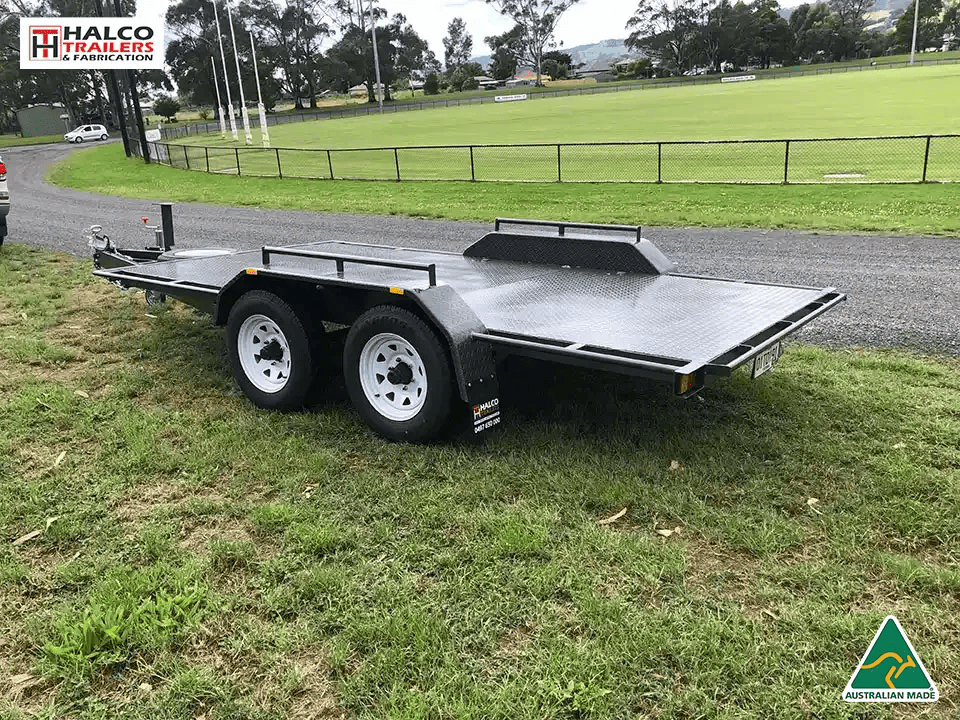
For example, a business that regularly transports a post-hole digger, long fence posts and several toolboxes may require a layout with separate storage and loading areas.
The final design should account for equipment weight, dimensions, restraints and towing requirements.
How Much Weight Can a Fencing Trailer Carry?
Understanding trailer payload is essential when planning a fencing contractor trailer setup.
Fencing materials can become heavy, particularly when transporting timber posts, concrete products, steel components and machinery.
To estimate the available payload, you need to understand two important terms:
Aggregate Trailer Mass (ATM): The total maximum permitted mass of the loaded trailer, including the load supported through its coupling, as specified by the manufacturer.
Tare mass: The mass of the trailer in its defined unladen condition.
The difference between ATM and tare mass provides an initial estimate of how much additional load the trailer can carry.
Example: Fencing Trailer Payload Calculation
Consider a hypothetical trailer with the following figures:
Item | Weight |
Trailer ATM | 2,500 kg |
Trailer tare mass | 800 kg |
Theoretical available payload | 1,700 kg |
In this example:
2,500 kg − 800 kg = 1,700 kg
The theoretical available payload is 1,700 kg.
However, this does not automatically mean that 1,700 kg of fencing materials can be loaded safely.
Any toolboxes, racks, spare wheel carriers or other accessories not included in the tare mass reduce the remaining payload.
The loaded trailer must also comply with its axle, tyre, coupling and other component ratings, along with the towing vehicle’s relevant limits.
These figures are illustrative only and do not represent a specific Halco trailer.
Practical tip: Calculate the weight of the materials and equipment you carry on a typical busy day, rather than estimating capacity from trailer size alone.
Fencing Contractor Trailer Setup Checklist
Before purchasing or customising a trailer, use this checklist to review your requirements.
Requirement | What to check |
Trailer dimensions | Enough usable space for normal fencing materials |
Payload capacity | Suitable ATM, tare mass and loaded capacity |
Towing vehicle | Compatible towing and towball download limits |
Tool storage | Lockable, accessible compartments |
Fence post storage | Suitable length, support and restraints |
Ladder racks | Appropriate mounting and load rating |
Small accessories | Organised drawers and storage containers |
Loading equipment | Suitable ramps or loading access |
Tie-down points | Suitable ratings and positions |
Lighting | Functional road lighting and useful work lighting |
Spare wheel | Compatible tyre and secure carrier |
Trailer maintenance | Condition of tyres, brakes, bearings and coupling |
Future requirements | Space for planned equipment changes |
Reviewing these details before requesting a quote can make it easier to compare trailer configurations.
It also helps identify whether a standard design is suitable or whether additional features need to be discussed.
5 Common Fencing Contractor Trailer Setup Mistakes to Avoid
A trailer may have plenty of space but still be inconvenient or unsafe if its layout has not been properly planned.
1. Choosing a Trailer Without Calculating Load Weight
Fence posts, wire rolls, concrete products and machinery can add substantial weight.
Prepare a complete equipment list and calculate the expected load before selecting a trailer.
2. Transporting Long Materials Without Suitable Support
Long posts and rails must be properly supported and restrained.
Check material dimensions, load distribution and applicable overhang requirements.
3. Installing Toolboxes in Difficult-to-Reach Positions
Tool storage should remain accessible when the trailer is carrying normal working loads.
Plan drawer and door clearance before finalising the layout.
4. Using Unsuitable Loading or Restraint Equipment
Ramps, straps, chains and mounting points must be appropriate for the equipment being handled.
Do not assume that one loading or restraint arrangement will suit every type of fencing material.
5. Adding Accessories Without Rechecking Payload
Toolboxes, racks and other permanent fittings increase trailer mass.
Recalculate the available payload and verify compliance after significant modifications.
What Should Fencing Contractors Know About Trailer Safety in Victoria?
Fencing contractors working in Warragul, Gippsland and elsewhere in Victoria must comply with applicable towing, vehicle dimension and load-restraint requirements.
Three areas are particularly important.
Load Restraint
Posts, rails, machinery and other equipment must be properly secured.
The restraint system must suit the load and prevent unsafe movement during transport.
Overhanging Materials
Long fencing posts and rails may extend beyond the trailer’s load area.
However, specific overhang and vehicle dimension limits apply.
Warning flags or lights may also be required depending on how far a load projects and the operating conditions.
For details, refer to Transport Victoria’s overhang guidance.
Trailer and Tow Vehicle Limits
Check the loaded trailer mass, tow vehicle limits, towball download, braking requirements and applicable component ratings.
A trailer should never be loaded beyond its approved limits.
For further information, review Transport Victoria’s load-securing guidance.
These considerations should be reviewed before transporting fencing equipment on public roads.
Why Consider Halco Trailers for Your Fencing Business?
Halco Trailers and Fabrication manufactures standard and customised trailer configurations in Warragul, Victoria.
The company supplies trailers for tradespeople, contractors, businesses and general equipment transport requirements.
For fencing businesses, Halco offers trailer categories that may be considered for tool storage, material transport and custom working arrangements.
When discussing a trailer, provide the team with:
- The type of fencing work you perform.
- The usual lengths and weights of fencing materials.
- Details of tools and machinery transported.
- Your towing vehicle specifications.
- Preferred toolbox and storage arrangements.
- Loading access requirements.
- Any rack or accessory requirements.
This information can help Halco discuss suitable trailer configurations and provide a more relevant quotation.
Whether you install residential fences around Warragul, complete rural fencing projects across Gippsland or work on commercial sites throughout Victoria, choosing the right trailer starts with understanding your actual equipment requirements.
Plan Your Fencing Contractor Trailer with Halco Trailers
A well-planned fencing contractor trailer setup can help keep tools organised, materials properly secured and equipment accessible throughout the working day.
From secure storage compartments to appropriate loading arrangements, the most useful features depend on the type of fencing work you perform.
Halco Trailers manufactures standard and customised trailer configurations in Warragul, Victoria, serving customers across Gippsland, Melbourne and surrounding areas.
Whether you are starting a fencing business, upgrading an existing trailer or looking for a layout that better suits your equipment, speak with Halco about the available options.
Discuss Your Fencing Trailer Requirements and Request a Quote
Share your equipment list, usual fencing material dimensions, towing vehicle details and preferred storage requirements to discuss a trailer suited to your business.