

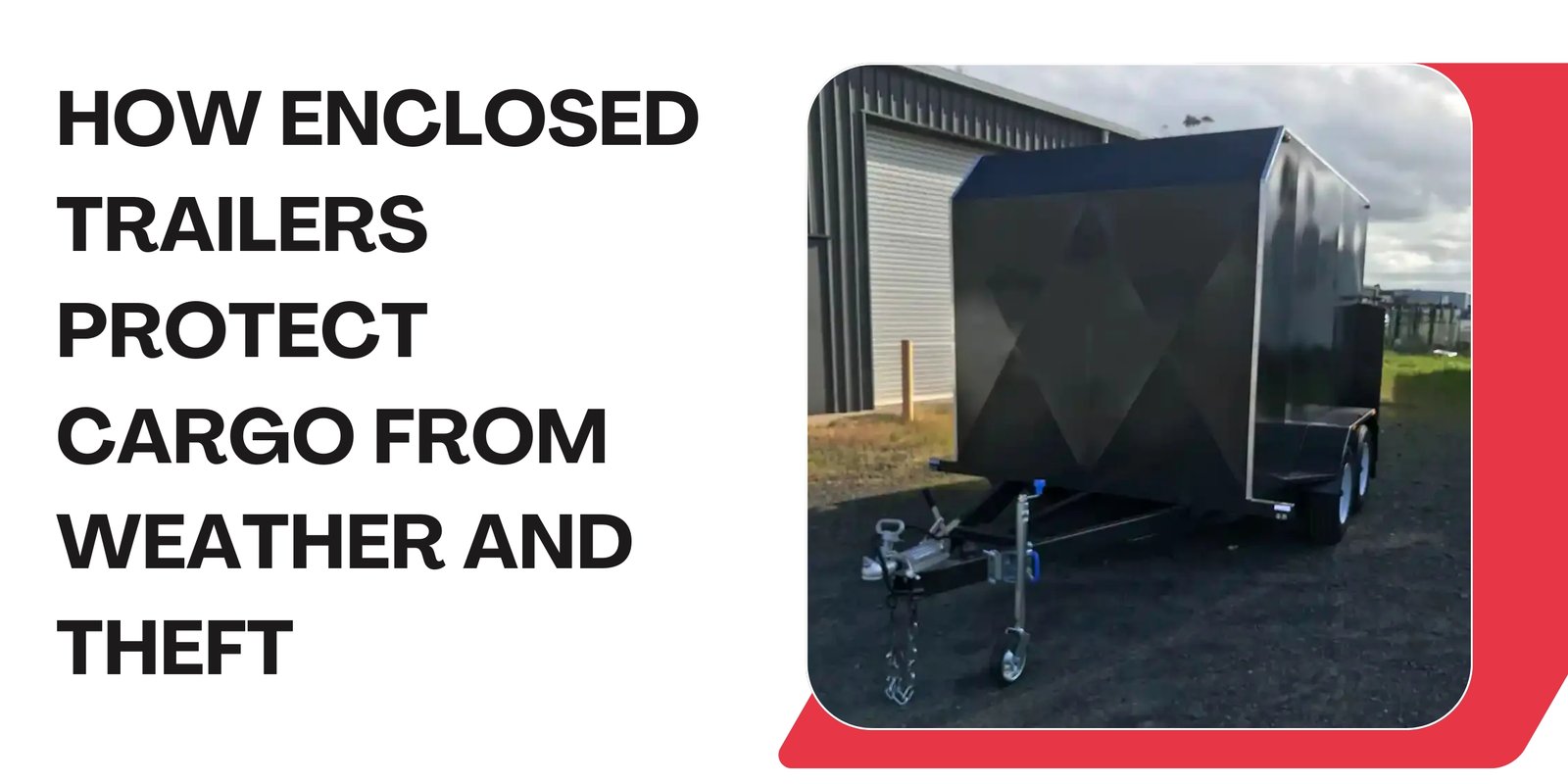
Tools, machinery, motorcycles, vehicles and commercial stock can be exposed to rain, dust, road spray, stones and unwanted attention when transported on an open trailer. An enclosed trailer places a fixed roof, full-height body and controlled access points around the load, creating a more protected transport environment.
That protection has limits. An enclosed trailer should not automatically be treated as completely waterproof or theft-proof. Its effectiveness depends on the body construction, doors, seals, locks, ventilation, load restraint, storage location and ongoing maintenance.
For tradespeople and businesses travelling between Melbourne, Warragul and regional Victorian worksites, changing road and weather conditions make these details especially important. Buyers considering covered transport can explore Halco’s enclosed trailers for sale and discuss a configuration suited to the cargo, towing vehicle and access requirements.
An enclosed trailer helps protect cargo by reducing direct exposure to weather, road debris and public visibility. Lockable access and additional security devices can also make theft more difficult, but no trailer can eliminate every risk.
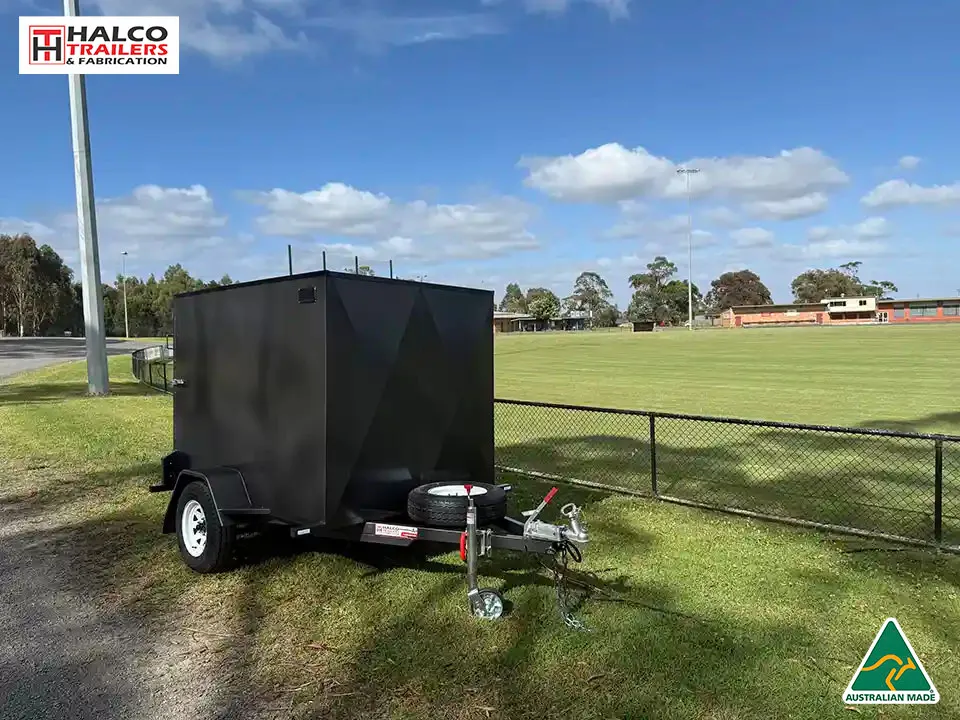
How Enclosed Trailers Reduce Weather Exposure
An enclosed body creates a physical barrier between the cargo and outside conditions. It can reduce exposure to rain, road spray, dust, loose stones and direct sunlight while travelling or parked.
The actual level of protection depends on the complete trailer, including the roof joints, panel seams, door fit, seals, vents and maintenance condition.
Rain and road spray
Rainwater and spray from wet roads can affect tools, electrical equipment, untreated materials, packaged goods and vehicle finishes.
A fixed roof, full-height panels and closed doors help limit direct water contact. However, water may still enter through worn seals, damaged panel joints, loose fasteners or poorly maintained access points.
Melbourne and Gippsland drivers can encounter wet roads, changing weather and muddy worksite conditions within the same trip. Inspecting the doors, roof joints and seals before travel can reduce the chance of preventable water entry.
Cargo that is highly sensitive to moisture may still require waterproof containers, internal covers or protective packaging.
Dust and windblown material
Unsealed roads, farms, industrial areas and construction sites can expose cargo to dust and fine debris.
An enclosed body can help keep direct contamination away from power tools, electrical equipment, display materials, vehicle parts, furniture and packaged stock. Some dust may still enter when doors are opened or through ventilation points, so delicate equipment may need additional internal protection.
The trailer interior should also be cleaned regularly. Dust that enters during one trip can settle on tools and cargo stored inside later.
Stones and road debris
Open trailers can leave vehicles, machinery and equipment exposed to gravel, grit and debris thrown up by passing traffic or the towing vehicle.
The front, sides and roof of an enclosed trailer create a barrier around the load. This can reduce the risk of chips, scratches and impact damage to painted surfaces, lights, windscreens and exposed equipment.
The body does not replace proper restraint. Loose tools or components can still move inside the trailer and damage the cargo during braking or cornering.
Sun and heat exposure
A fixed roof and full-height body help block direct sunlight and reduce ultraviolet exposure to the cargo.
This can benefit paint, plastics, rubber components and equipment that may deteriorate after long periods in direct sun. However, the trailer interior may still become hot when parked, especially when airflow is limited.
Heat-sensitive items may need ventilation, insulation, temperature monitoring or shorter storage periods. The right approach depends on the type of cargo and how long it will remain inside.
Which Loads Benefit Most From Enclosed Transport?
Enclosed transport can be useful when the cargo is valuable, weather-sensitive, difficult to replace or regularly stored inside the trailer between jobs.
Trade tools and equipment
Tradespeople often move tools, consumables and equipment between several worksites.
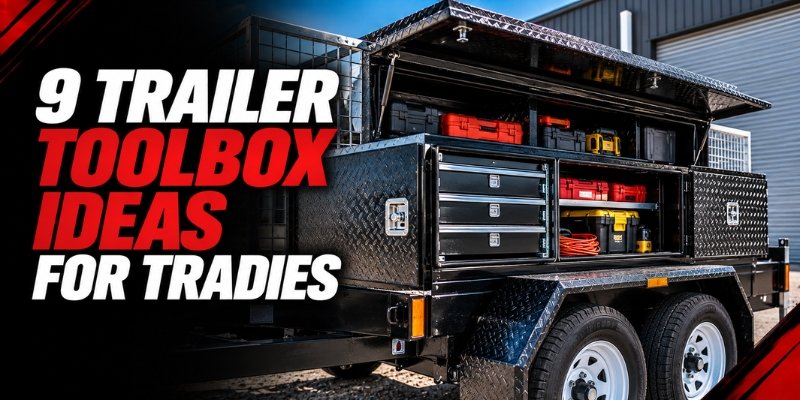
An enclosed body reduces direct exposure to rain and public view. Internal shelving, toolboxes and equipment mounts can also create a more organised workspace, provided they are included in the trailer’s weight and layout planning.
Valuable tools should still be removed when practical. Locking the doors does not protect the trailer coupling, wheels or storage location.
Motorcycles and recreational equipment
Motorcycles, bicycles, camping equipment and recreational gear can benefit from protection against road spray, dust and stones.
The trailer must still provide enough internal space, door clearance and payload for the equipment. The ramp angle and tie-down positions also need to suit the motorcycle or vehicle being loaded.
A trailer that is large enough externally may still be unsuitable if the door opening, internal height or available payload is inadequate.
Classic and motorsport vehicles
An appropriately specified enclosed trailer can reduce exposure to rain, road debris and public attention when transporting a classic car, race car, show vehicle or project vehicle.
Vehicle transport requires more than sufficient floor space. The trailer must account for the vehicle’s overall dimensions, track width, ground clearance, ramp angle, driver access, restraint points and weight.
The towing vehicle must also remain within its rated limits when the trailer is fully loaded.
Commercial stock and event equipment
Market stock, display equipment, audio gear and packaged goods can benefit from a covered transport area.
The interior should allow the load to be secured without damaging packaging or blocking access to frequently used items. Shelves and partitions can improve organisation, but permanent fixtures also increase tare mass and reduce available payload.
How Enclosed Trailers Can Help Deter Theft
An enclosed body reduces cargo visibility and allows lockable access points to be fitted. These features may deter opportunistic theft, but they work best as part of a wider security plan.
Keeping cargo out of immediate view
Equipment carried on an open trailer can be visible during fuel stops, roadside breaks or overnight parking.
An enclosed body prevents passers-by from immediately seeing the contents. Keeping cargo out of view may reduce opportunistic attention, although it does not eliminate the risk of theft.
A trailer parked in an isolated, poorly lit or predictable location may still be targeted.
Protecting doors and access points
Rear and side doors can be secured with locking arrangements suited to the trailer design.
The effectiveness of a lock depends on the strength of the door, frame, latch, hinges and installation. A strong lock attached to a damaged door or weak latch may provide limited protection.
Inspect locking hardware regularly. Bent latches, loose fasteners and worn hinges can weaken an otherwise suitable security setup.
Preventing the trailer from being moved
Locking the doors protects the cargo access points, but it does not stop someone from attempting to tow the entire trailer away.
Useful additional measures can include a coupling lock, wheel clamp, alarm, tracking device, secure off-street parking or anchoring the trailer to a fixed point.
Victoria Police trailer-safety guidance recommends securing trailer access points, removing or concealing valuables, using devices such as coupling locks and wheel clamps, and storing trailers in secure, well-lit locations.
Using more than one security layer
No single lock can address every type of theft.
A more practical setup combines locked doors with measures that protect the coupling, wheels and storage location. Lighting, surveillance and a concealed tracking device can provide additional layers.
The level of security should reflect the value of the cargo, where the trailer is stored and how long it will be left unattended.
Proper Load Restraint Still Matters
An enclosed body contains the load, but it does not restrain it.
Tools, vehicles and equipment can move during acceleration, braking, cornering or travel over uneven roads. Loose cargo may damage the trailer interior, other equipment or the load itself.
Transport Victoria load-restraint guidance explains that loads must be properly restrained with suitable equipment, positioned securely and checked during travel.
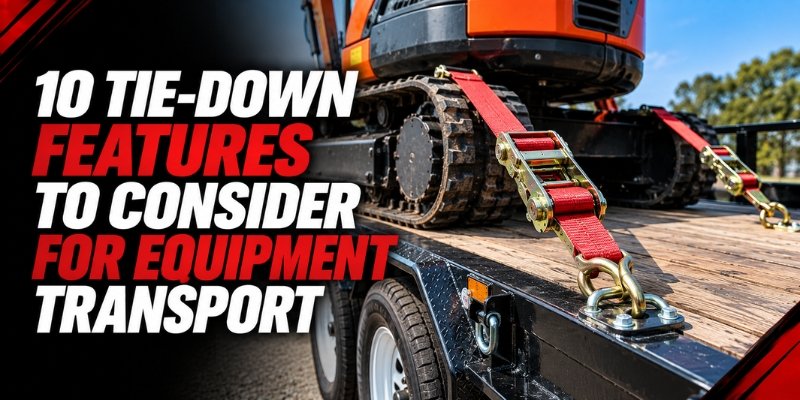
Depending on the cargo, suitable restraint equipment may include rated webbing straps, chains, wheel supports, equipment mounts, cargo barriers or rated anchor points.
Weight distribution affects towing
Cargo position can affect trailer stability, steering, braking and tow-vehicle handling.
Heavy items should be positioned according to the trailer design and load-distribution requirements. Permanent shelving, toolboxes and workbenches also contribute to the trailer’s tare mass.
Payload = Aggregate Trailer Mass − tare mass
The towing vehicle, towbar, coupling, tyres, brakes and trailer components must all be suitable for the actual loaded mass.
Features That Influence Cargo Protection
When comparing enclosed trailers Melbourne, look beyond the exterior appearance. Protection depends on the doors, seals, ventilation, restraint points and internal layout as well as the trailer body.
Door configuration
The door arrangement affects loading, access, weather exposure and security.
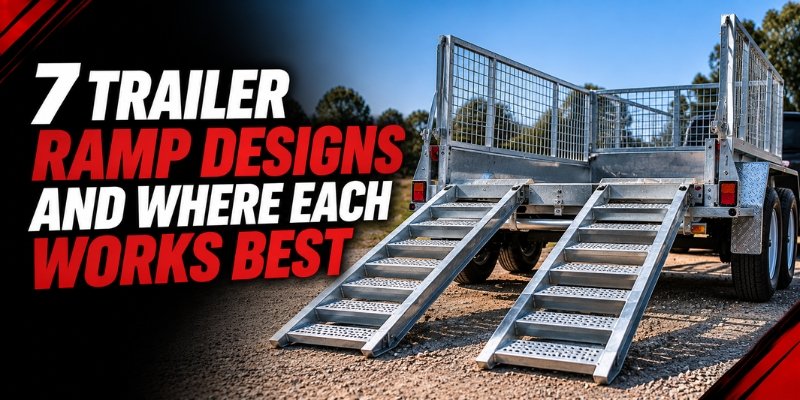
Rear barn doors can suit manually loaded cargo, while a rear ramp may be more practical for motorcycles, vehicles or wheeled equipment. Side doors can provide faster access to tools or storage without opening the main rear entry.
The best arrangement depends on the cargo and how often it must be accessed.
Seals, seams and joints
Door seals, roof joints, panel seams, hinges and fasteners are common areas to inspect.
Wear, separation or impact damage can create gaps. Cleaning the contact surfaces and replacing damaged seals can help maintain weather resistance.
Ventilation
Ventilation can help manage heat, moisture and condensation, but each opening affects the enclosed body.
Motorcycles, machinery, batteries, fuel-powered equipment and temperature-sensitive goods may have different airflow requirements. Discuss these needs before the body and internal layout are finalised.
Interior storage
Shelving, drawers and equipment mounts can make tools easier to organise, but permanent storage affects tare mass, payload and weight distribution.
A practical layout should keep frequently used equipment accessible without blocking doors or creating uneven loading.
Tie-down points
Tie-down points should be positioned around the cargo rather than fitted only where space is available.
Motorcycles, machinery, vehicles and mixed trade loads may require different anchor locations and restraint methods.
Enclosed-Trailer Protection Checklist
Before travelling
Inspect the doors, hinges, latches and seals. Confirm that the cargo is restrained, all access points are locked and the coupling and safety connections are secure.
Check the tyres and lights, and make sure the actual load remains within the applicable trailer and towing limits.
When parking
Choose a secure, well-lit location where possible. Lock all doors and consider using a coupling lock or wheel clamp.
Remove portable valuables when practical. Tracking or alarm equipment may provide additional protection for trailers carrying high-value tools or vehicles.
During routine maintenance
Inspect the roof, panels, door seals, hinges and locking hardware for wear or damage.
Check the floor and interior for moisture, examine tie-down points and investigate any sign of water entry before it causes corrosion or further deterioration.
What an Enclosed Trailer Cannot Guarantee
An enclosed trailer can improve cargo protection, but it cannot guarantee:
- Complete water exclusion in every condition
- Prevention of condensation
- A temperature-controlled interior
- Protection from every forced-entry method
- Prevention of whole-trailer theft
- Safe transport without proper restraint
- Suitability for loads beyond its approved capacity
Correct specification, loading, maintenance and storage remain essential.
Terms such as “waterproof,” “theft-proof” or “completely secure” should only be used when supported by defined testing and evidence.
How to Choose the Right Protection for Your Cargo
Start with the risks associated with the load.
Consider whether rain, dust, road debris or heat could cause damage. Think about how often the trailer will be left unattended, where it will be stored and whether valuable equipment will remain inside overnight.
Also confirm how the cargo will be loaded and restrained, which doors need frequent access and what security devices will be used.
These details help determine whether an enclosed trailer is appropriate and which features should be prioritised.