
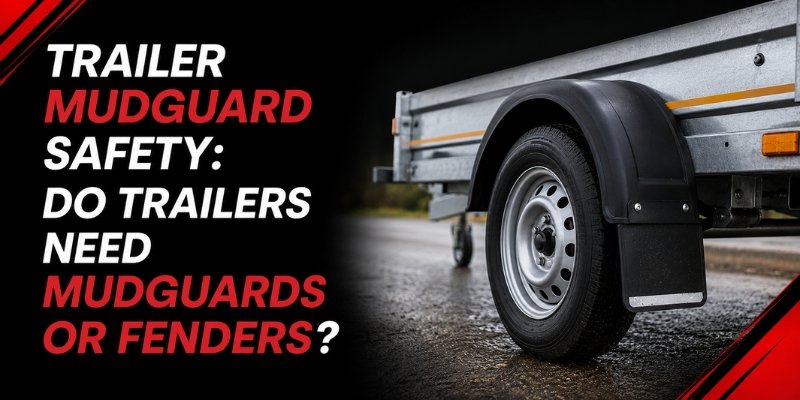
Trailer mudguard safety is about protecting other road users, your trailer body and anyone near moving wheels. In Australia, trailers need wheel guards that reduce thrown-up stones, mud, water, tyre spray and contact risks around exposed tyres.
A mudguard looks like a small part until it breaks, rusts through, rubs on a tyre or disappears after a rough jobsite run. For tradies, landscapers, farmers, contractors, vehicle transport operators, tiny house builders and DIY owners, mudguards are part of safer towing, not just a cosmetic finish.
Use this trailer mudguard safety guide to understand when trailers need mudguards or fenders, how coverage works, what materials suit different jobs and when a damaged guard should be repaired or replaced.
Do trailers legally need mudguards or fenders in Australia?
Yes. Australian trailer wheels generally need wheel guards, commonly called mudguards or fenders, because exposed tyres can throw stones, mud and spray and create contact hazards for people working near or walking past the trailer.
According to the Department of Infrastructure’s Vehicle Standards Bulletin 1, known as VSB 1, all trailer wheels must be fitted with wheel guards or mudguards. VSB 1 says these guards must protect other road users against thrown-up stones, mud, snow, ice and water, and help prevent people contacting moving wheels.
For owners, the practical answer is simple: if the trailer has road wheels, do not treat mudguards as optional trim. A missing or damaged guard can become a safety, roadworthy and defect issue, especially if the tyre is exposed or the remaining metal has sharp edges.
Mudguard compliance decision table
Situation | Is it acceptable? | Safer next step |
Each wheel is covered by a secure, correctly sized guard | Usually acceptable if all other requirements are met | Inspect mounts, clearance and sharp edges before towing |
One mudguard is missing | No | Replace before normal road use |
Guard is cracked but still attached | Risky | Inspect immediately; repair or replace before loaded towing |
Guard rubs on the tyre | No | Stop and correct clearance before towing |
Tandem guard covers both wheels on one side | Can be acceptable if coverage is correct | Check continuous coverage and bracket strength |
Trailer body structure acts as the guard | Can be acceptable if it performs the guard function | Confirm it covers the tyre width and is not sharp |
Loose mud flap forms part of the guard system | Not acceptable if it cannot hold position | Refit, reinforce or replace |
Guard blocks lights, reflectors or number plate view | No | Reposition the guard, lights or plate hardware |
Transport Victoria’s roadworthiness guidance explains that roadworthiness standards are aimed at detecting excessive wear, deterioration or alterations that could affect safety or registration compliance, and its inspection sections include body and chassis items such as wheel guards. That makes mudguards relevant beyond new trailer design.
Why does trailer mudguard safety matter for owners?
Trailer mudguards protect more than paintwork. They reduce road spray, stone throw, mud build-up, body damage, tyre-area contact risks and nuisance for other drivers, especially when a trailer is loaded, wet, muddy or travelling at highway speed.
The safety issue is worst when a trailer leaves a messy worksite, farm track, gravel driveway, garden job or coastal boat ramp. Mud and stones caught in tyres can flick outward and backward. Water spray can reduce visibility for drivers behind. A person walking near a loaded trailer can also be exposed to the moving wheel area if guards are absent or broken.
A common example is a landscaping trailer carrying wet soil and green waste after rain. The tow vehicle may feel stable, but the trailer tyres are throwing mud and stones behind the load. Good guards do not make the trailer clean, but they reduce what gets thrown at other vehicles, tools, panels and pedestrians.
Trailer mudguard safety also matters for the trailer itself. Repeated spray and debris can accelerate rust around floors, brackets, lights, wiring and lower panels. On work trailers, that turns a small guard issue into a maintenance cost.
What is the difference between mudguards, fenders, wheel guards and mud flaps?
Mudguards, wheel guards, fenders and mud flaps are related terms, but they are not always identical. In Australia, “mudguard” and “wheel guard” are common, while “trailer fenders” is often used by parts suppliers and buyers.
A mudguard or fender is usually the shaped cover over the wheel. A wheel guard is the broader compliance term used in Australian guidance. A mud flap is usually a flexible extension or hanging section that helps intercept spray behind the wheel. In some trailer designs, the body, guard and mud flap work together as one wheel-guard system.
Term | What it usually means | Practical owner note |
Mudguard | Australian term for the guard over the wheel | Use this term when discussing compliance or local repairs |
Wheel guard | Compliance-style term for the protective wheel covering | Often used in official guidance and roadworthy contexts |
Trailer fenders | Common parts-store term, especially online | Useful when searching for replacement parts |
Mud flap | Flexible flap behind or below the guard | Helpful for spray control but not always a full guard by itself |
Tandem guard | Longer guard over two close wheels | Common on tandem work trailers |
Body-integrated guard | Trailer body shape performs guard function | Must still cover and protect correctly |
For Halco customers, the best term to use depends on the conversation. If you are asking about legal requirements, say wheel guards or mudguards. If you are searching online for parts, trailer fenders may produce more product results. If you are booking repairs, photos are even better than terminology.
What size and coverage should trailer mudguards have?
A safe mudguard should cover the relevant wheel and tyre width, stay secure at road speed and suit the trailer’s axle layout. Poor coverage, loose brackets or sharp damaged edges can turn a safety component into a hazard.
According to VSB 1, mudguards may be formed by the trailer’s body structure, shaped covers over the wheels, mud flaps, or a combination of these. VSB 1 also states that mudguards must be wide enough to fully cover the widest tyre and wheel combination that may be fitted by the manufacturer as options.
For axle groups, VSB 1 allows separate guards for each wheel or one continuous mudguard covering the wheels on each side when two or more axles form an axle group. That detail is important for tandem trailers, plant trailers, car trailers and hydraulic tippers because one long guard may be correct if it provides the required protection.
Basic owner coverage checks
- Look from above the tyre: the guard should cover the tyre width rather than leaving the outer tread exposed.
- Check tyre clearance under load: the guard should not rub when the trailer is loaded, cornering or moving over bumps.
- Check both sides equally: a bent bracket may make one side look acceptable while the other exposes the tyre.
- Look for sharp edges: cracked steel, broken plastic or torn aluminium can injure people or damage tyres.
- Check the rear spray path: mud flaps may be needed where spray control relies on flexible extensions.
- Confirm the guard is secure: the best-shaped guard is unsafe if bolts, brackets or welds are failing.
For a work trailer, do this check with the trailer empty and then again when loaded to normal operating height. Suspension compression can change clearance between the tyre and the guard.
Which mudguard material suits work trailers?
The best mudguard material depends on load, road conditions, corrosion exposure and repair expectations. Steel suits hard work, aluminium helps reduce corrosion, plastic suits lighter use, and custom fabricated guards suit unusual builds or equipment trailers.
There is no universal “best” material. A mower trailer used around suburbs, a farm trailer used on gravel, a car trailer travelling highways and a tiny-home chassis exposed during a long build all place different stress on guards.
Mudguard material | Best suited to | Main advantage | Watch-out |
Painted steel | Tradie, plant, farm and heavy-duty work trailers | Strong and repairable | Needs corrosion protection if chipped |
Galvanised steel | Rural, wet and general-purpose work use | Better corrosion resistance than bare steel | Finish can still be damaged by impact |
Aluminium | Coastal, boat and lighter custom trailers | Lightweight and corrosion-resistant | Can dent or fatigue depending on design |
Plastic / polyethylene | Light domestic, boat and occasional-use trailers | Rust-free and affordable | Can crack, fade or deform from impact and UV |
Stainless steel | Premium or exposed applications | Strong corrosion resistance and clean finish | Higher cost |
Custom fabricated guards | Special machinery, modified layouts, unusual tyre sizes | Built around the trailer | Requires proper design and fitting |
If the trailer carries heavy tools, machinery, stock equipment, pallets or landscaping gear, avoid choosing by price alone. A cheaper guard that cracks or loosens every season is not cheaper for a business trailer.
How should owners inspect mudguards before towing?
Inspect mudguards before towing whenever the trailer has been loaded, stored, repaired, used off-road or driven through mud. A two-minute check can catch loose mounts, cracks, tyre rub and sharp edges before they become road hazards.
A mudguard inspection should sit beside your normal pre-trip check for tyres, lights, chains, coupling and load restraint. It is quick, but it needs to be hands-on.
- Stand back and compare both sides: uneven guard height can reveal a bent bracket, tyre clearance issue or past impact.
- Push the guard gently by hand: movement tells you bolts, brackets or welds may be loose.
- Check tyre-to-guard clearance: rubbing can cut tyres, damage wiring or tear the guard loose.
- Look underneath the guard: trapped mud, stones and wet grass can hide corrosion and damage.
- Inspect fasteners and brackets: missing washers, cracked welds and rust trails show movement.
- Check lights and wiring nearby: guards often sit close to side marker lights, tail lights or exposed wiring.
- Look for sharp or jagged edges: broken guards can injure workers and pedestrians.
- Recheck after rough travel: corrugations, paddock use and building sites can loosen hardware quickly.
For businesses, add mudguards to a written weekly trailer checklist. That small habit helps pick up repeat damage before it becomes a roadside failure.
When should damaged mudguards be repaired or replaced?
Repair minor mudguard problems when the guard is still secure and correctly shaped. Replace it when coverage is lost, brackets fail, cracks spread, tyre clearance changes or the guard becomes sharp, loose, rusted through or unsafe.
A small dent is not always urgent. A bent guard touching the tyre is. The decision depends on whether the guard still performs its job without creating a new hazard.
Damage found | Repair or replace? | Why |
Loose bolts only | Repair | Refastening may restore safe function |
Small dent with no tyre contact | Usually repair | Shape can often be corrected |
Guard rubbing tyre | Replace or refit immediately | Tyre damage can become serious fast |
Cracked plastic guard | Usually replace | Cracks spread under vibration |
Rusted-through steel | Replace | Strength and edge safety are compromised |
Torn mud flap | Repair or replace | Spray protection may be reduced |
Broken bracket | Repair bracket and inspect guard | Guard may detach if ignored |
Sharp broken edge | Repair or replace before use | Injury and tyre damage risk |
A typical jobsite example is a tandem tipper reversing near a pile of rubble. The guard catches a rock, bends inward and starts touching the tyre. It may look like a minor cosmetic hit, but once rubber starts rubbing metal, towing should stop until the clearance is fixed.
Halco’s Warragul workshop can inspect damaged guards as part of broader trailer accessories, repairs, servicing and replacement-part work. Halco’s parts and servicing page confirms the workshop supports trailer repairs, servicing and replacement parts from Warragul.
How do mudguard needs change by trailer type?
Mudguard needs change with wheel count, load height, access points and trailer purpose. A small box trailer, tandem work trailer, hydraulic tipper, boat trailer and tiny-home chassis may all need different guard shapes and mounting strength.
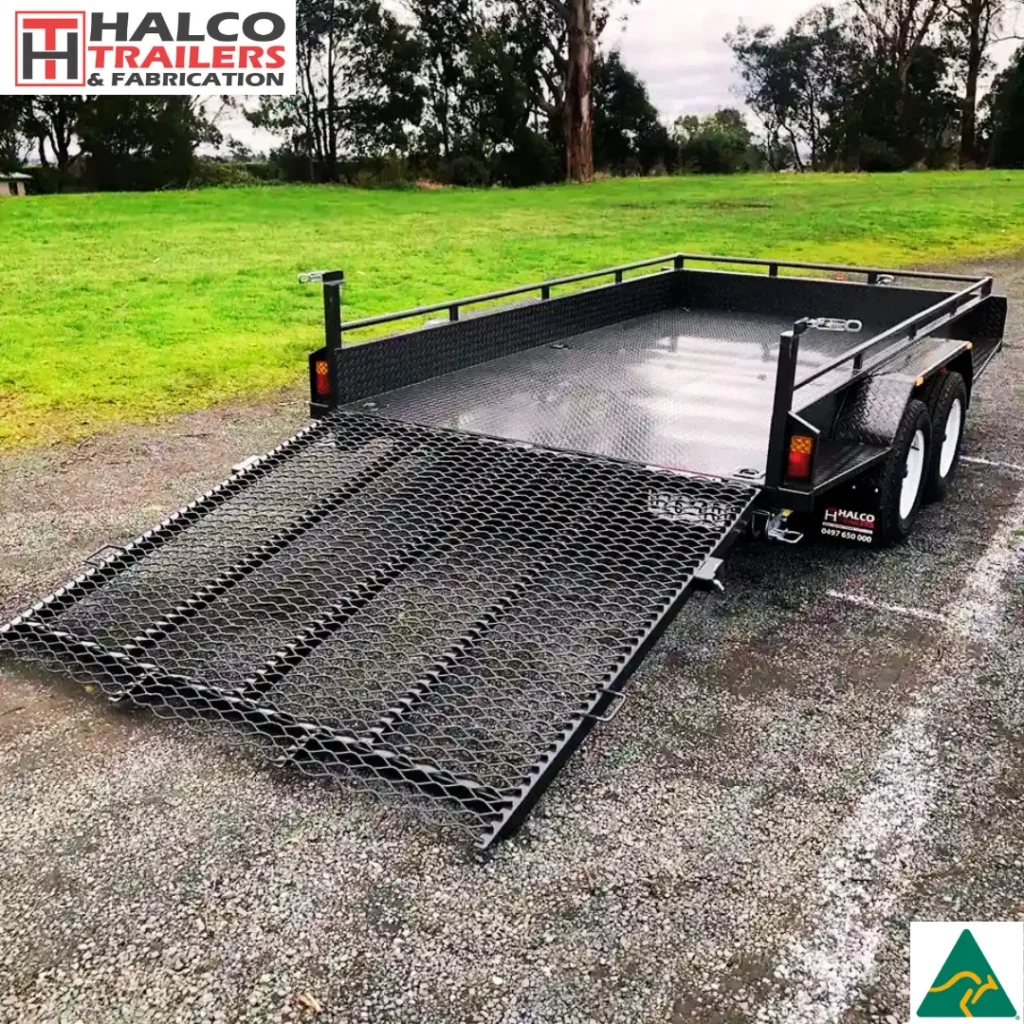
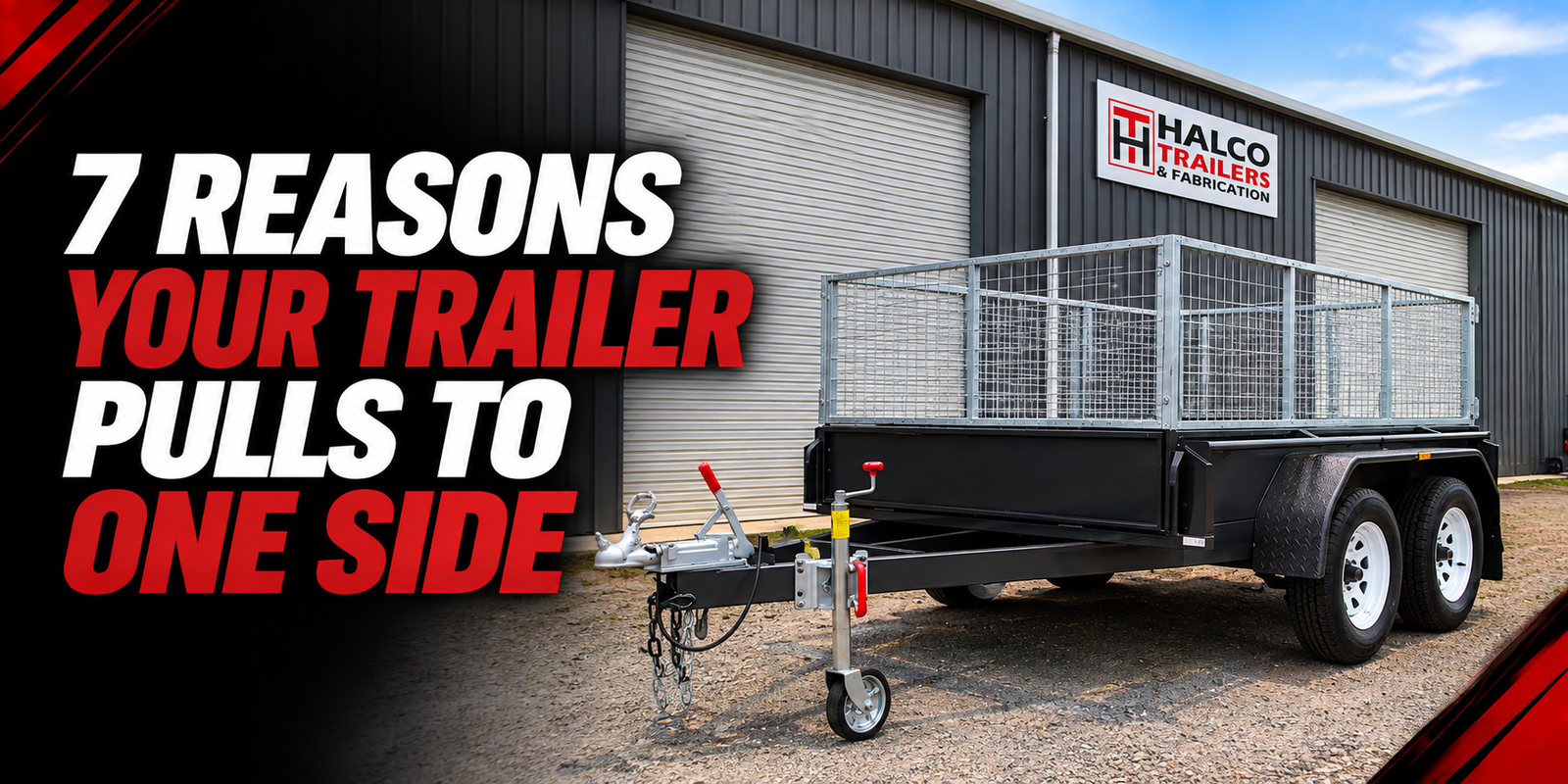
Single axle domestic trailers usually need simple, secure wheel coverage. Commercial tandem trailers need stronger brackets because the guards are longer and more exposed to vibration. Plant and car trailers need guards positioned so machinery, ramps and tie-down points remain usable. Tipper trailers need guards that survive mud, loose material and body movement.
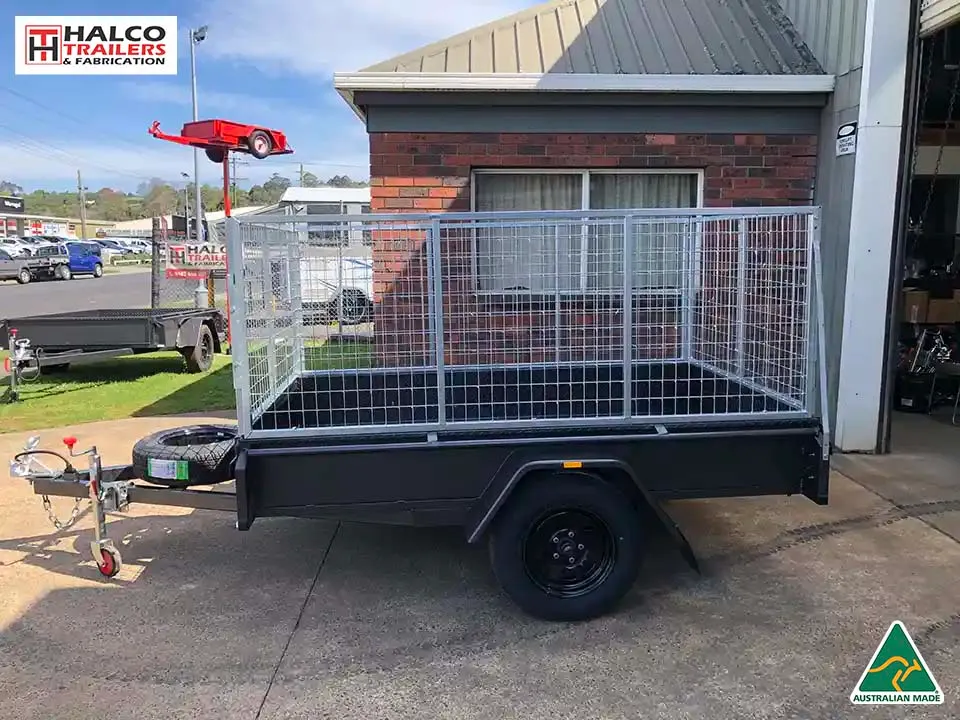
For tandem trailers, the key question is whether each wheel has its own guard or one continuous guard covers the axle group correctly. For a tiny house trailer, guard planning should happen early because walls, cladding, deck width and wheel-arch access can affect the final build.
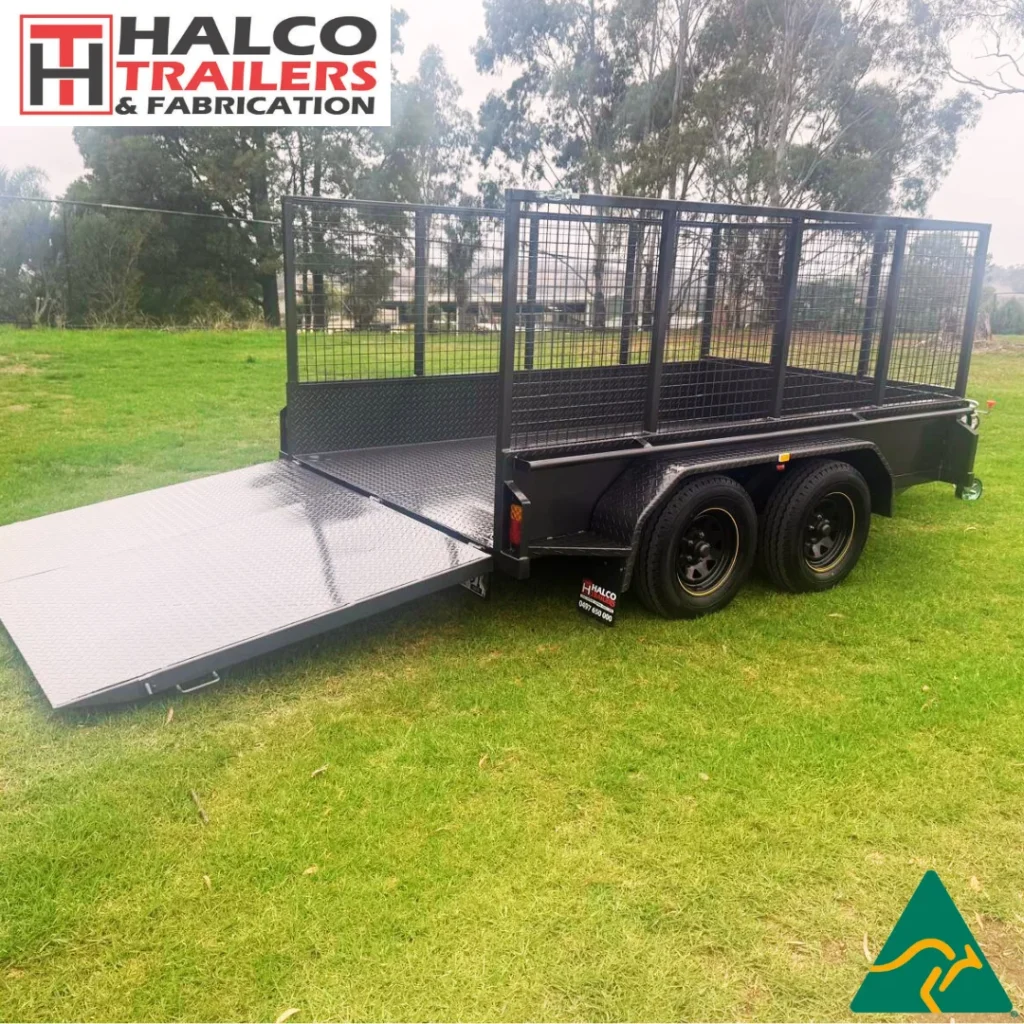
Trailer type | Mudguard priority |
Basic tyre coverage, secure bolts and low maintenance | |
Strong guards that tolerate daily loading, tools and site knocks | |
Landscaping trailer | Mud, green waste and frequent wash-down resistance |
Farm trailer | Gravel, paddock damage and corrosion control |
Continuous coverage or correctly fitted separate guards | |
Clearance around ramps, tyres and machinery access | |
Car trailer | Tyre coverage without interfering with loading or straps |
Hydraulic tipper | Strong mounting and protection from loose material |
Boat trailer | Corrosion resistance and wash-down access |
Tiny-home chassis | Early design planning around future wheel arches and walls |
When choosing a new trailer, ask about guard material, replacement access, tyre size options and whether future modifications could reduce coverage.
How much do trailer mudguards cost in Australia?
Trailer mudguard costs vary from simple bolt-on replacement guards to custom fabricated steel work. Budget depends on material, size, axle layout, paint or galvanising, bracket repairs and whether lights or wiring need to be moved.
As a rough retail indicator, Trek Hardware lists some trailer mudguard products from small hardware kits through single plastic guards and steel single-axle guards, with examples shown around $13.90 for a plastic guard nut and bolt pack, $64.70 for selected 14-inch plastic guards and $90.00 for a single axle guard at the time viewed. Actual fitted cost will differ once labour, brackets, paint, freight or fabrication are included.
Job type | Typical cost driver |
Bolt-on replacement guard | Part size, material and hardware |
Tandem guard replacement | Longer guard, extra mounting and alignment time |
Mud flap replacement | Flap material and bracket condition |
Bracket repair | Welding, drilling, reinforcement or rust repair |
Custom guard fabrication | Measuring, cutting, shaping, welding and finishing |
Repainted or colour-matched guard | Surface preparation and paint finish |
Corrosion-resistant upgrade | Galvanised, aluminium or stainless material |
Guard plus wiring repair | Lights or wiring may need to be moved or replaced |
For business trailers, the real cost question is downtime. A small guard repair booked with other servicing is usually easier to manage than a damaged guard tearing loose during a loaded weekday run.
Conclusion
Trailer mudguard safety is simple: cover the wheels properly, keep guards secure and fix damage before it affects tyres, pedestrians, road users or compliance.
For owners using trailers across Melbourne, Warragul, Gippsland and regional Victoria, Halco Trailers can help with trailer builds, servicing, repairs and replacement parts. If your mudguards are loose, rusted, rubbing, missing or unsuitable for your trailer type, book an inspection before the next loaded tow.