

By Halco Trailers Team, Trailer Manufacturing / Safety Specialist
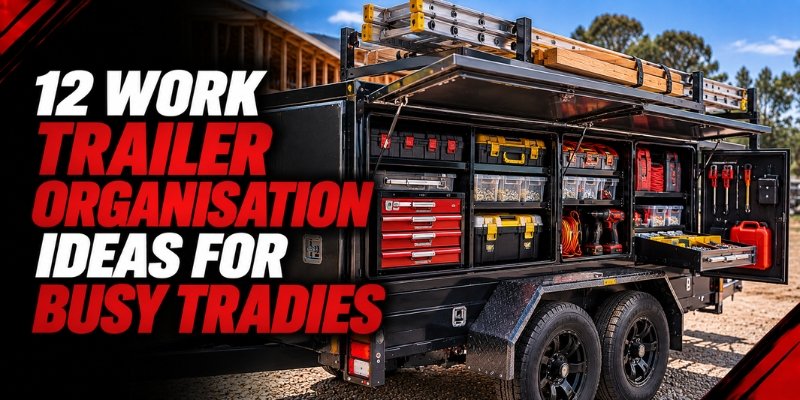
Work trailer organisation ideas help busy tradies create faster access, safer storage and a cleaner mobile workspace. Start by zoning tools, using vertical space, securing heavy equipment, labelling small parts and keeping frequently used gear near the trailer’s easiest access points.
For a builder, electrician, plumber, landscaper, contractor or mobile maintenance business, the trailer can be part of the daily workflow. If you spend five minutes searching for a drill, fitting, cable, hose or fastener on every job, that wasted time adds up.
The best setup isn’t necessarily the most expensive one. It is the one that puts the tools you use most where you naturally reach for them, keeps heavy equipment stable and makes packing up almost automatic.
How can these work trailer organisation ideas improve daily workflow?
These work trailer organisation ideas focus on one outcome: making the right tool easy to find, safe to transport and quick to return. A well-planned trailer can reduce clutter, unnecessary movement and repeated unloading during busy Australian workdays.
Think of the trailer as a mobile workplace rather than a box that happens to carry tools.
A good layout should answer three questions immediately:
- Where is the tool I need?
- Can I reach it without moving five other things?
- Will it stay there while the trailer is moving?
Before-and-after organisation framework
|
Problem |
Poor setup |
Better setup |
|
Daily hand tools |
Mixed in one toolbox |
Dedicated drawer or grab zone |
|
Power tools |
Stacked randomly |
Modular cases or dedicated shelf |
|
Small fittings |
Loose bags |
Labelled divided containers |
|
Ladders |
Across the floor |
Dedicated rack |
|
Extension cords |
Coiled in a pile |
Wall hooks or reel |
|
Heavy equipment |
Wherever it fits |
Low, balanced storage |
|
Consumables |
Mixed together |
Trade-specific bins |
|
End-of-day pack-up |
“Put it somewhere” |
Every item has a home |
The objective is not to make the trailer look perfect for a photo. The objective is to make Monday morning easier.
How should you plan your trailer layout before adding storage?
Start with your workflow, not the storage products. Before adding shelves, drawers or racks, map what you carry, how often you use it, where you stand when loading, and which items need to remain accessible without unloading other equipment.
Use a five-zone layout
A practical trailer can be divided into five zones:
Zone 1 – First-out: tools you use on almost every job.
Zone 2 – Daily work: drills, saws, hand tools, testing equipment and common consumables.
Zone 3 – Specialist gear: equipment used only for particular jobs.
Zone 4 – Bulk storage: materials, spare stock and larger equipment.
Zone 5 – Long items: ladders, levels, conduit, pipe, hoses, poles and similar equipment.
This creates a simple access hierarchy. The more frequently you use something, the less effort it should take to reach it.
Plan before drilling
- Empty the trailer completely: seeing the real floor, walls and access points makes wasted space obvious.
- Group equipment by task: keep items that are normally used together in the same zone.
- Mark heavy equipment first: decide where compressors, generators, saws and other heavy items will sit before adding lightweight storage.
- Mark access paths: make sure drawers, doors, ramps and walkways can operate without moving other equipment.
- Test the layout with cardboard boxes: mock up shelf and drawer positions before permanently mounting anything.
Halco’s current tradesman trailer information similarly recommends choosing storage layout around tools, load weight, towing vehicle and equipment access, with options including drawers, shelving, ladder racks, compressor boxes and lift-up access doors.
What are 12 work trailer organisation ideas for busy tradies?
The most useful work trailer organisation ideas combine zoning, dedicated storage and secure transport. The following twelve ideas are designed for busy tradies who need practical trailer organisation, faster access and a layout that stays useful across different jobs.
1. Create a dedicated first-out tool zone
Put the tools you use on almost every job near the rear doors or easiest side access.
For a builder, this might mean a drill, impact driver, tape measure, square and fastener organiser. For an electrician, it could be testers, hand tools and cable accessories.
The rule is simple: if you use it every day, don’t store it where you need to unpack half the trailer first.
2. Divide the trailer into trade-specific zones
Create physical areas for power tools, hand tools, consumables, materials and specialist equipment.
This works particularly well when you regularly switch between different types of jobs.
A plumber might have:
- Pipe and fittings
- Hand tools
- Power tools
- Sealants and consumables
- Specialist equipment
A landscaper could instead have:
- Handheld garden tools
- Mower equipment
- Irrigation supplies
- PPE
- Green-waste equipment
3. Use vertical wall storage
Floor space disappears quickly in a work trailer. Walls give you another storage layer without filling the aisle.
Use suitable racks, hooks, shelves or mounting systems for:
- Levels
- Brooms
- Shovels
- Rakes
- Extension cords
- Hoses
- Hand tools
- Protective equipment
Keep mounted items securely fixed. Anything hanging from a wall still needs to remain secure during transport.
4. Give small parts their own drawers
Screws, bolts, washers, electrical fittings, plumbing connectors and other small parts are difficult to manage when thrown into a large toolbox.
Use divided drawers or containers and label them clearly.
Instead of one drawer labelled “electrical”, consider:
- Connectors
- Terminals
- Cable ties
- Fuses
- Clips
- Fasteners
The more specific the label, the less time you spend opening containers looking for one small part.
5. Label every major storage location
Labels make the system easier to maintain, particularly when apprentices, employees or subcontractors use the trailer.
Use durable labels such as:
POWER TOOLS →
FASTENERS →
ELECTRICAL →
PLUMBING →
PPE →
SPARE PARTS →
Labels also turn your trailer into an inventory check. An empty location can immediately tell you that something needs replacing.
6. Create dedicated storage for long items
Long equipment becomes awkward when it is placed across the trailer floor.
Create dedicated locations for:
- Ladders
- Levels
- Conduit
- Pipe
- Timber lengths
- Brooms
- Handles
- Hoses
- Extension leads
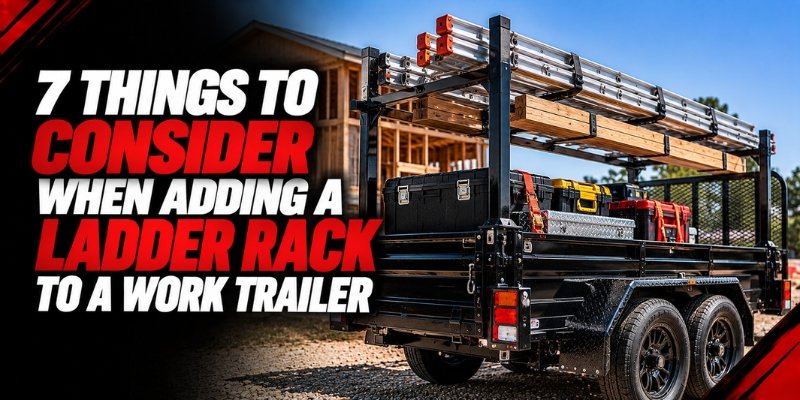
Halco’s tradesman trailer range includes ladder racks and other storage features designed around practical access to trade equipment.
How can you make work trailer storage easier to access?
Good work trailer storage makes frequently used equipment visible and reachable while keeping less-used gear out of the way. Use doors, walls, drawers, bins and racks strategically so the floor stays open for larger equipment and safe movement.
7. Add a dedicated charging station
Cordless tools create another organisation problem: batteries and chargers.
Instead of leaving chargers loose, create one charging area for:
- Battery chargers
- Spare batteries
- Power boards
- Leads
- Adapters
- Charging accessories
Keep electrical equipment protected from moisture and secure during travel. Follow the individual battery and charger manufacturer’s storage instructions rather than treating every battery type the same.
For a business with several workers, a dedicated charging zone also makes it obvious which batteries are charged and which need attention.
8. Use a fold-down work surface
If your trailer has enough space, a fold-down bench can create a useful temporary work area without permanently consuming floor space.
It can be useful for:
- Small repairs
- Measuring
- Cutting
- Packing fittings
- Preparing equipment
- Paperwork
The important point is that the bench should fold or lock securely when the trailer is moving. It should never become a loose object inside the trailer.
9. Create a consumables and restock zone
Keep commonly replaced items together in one location.
For example:
|
Trade |
Possible consumables |
|
Electrician |
Cable ties, connectors, terminals, tape |
|
Plumber |
Washers, fittings, sealants, clips |
|
Builder |
Screws, nails, blades, adhesives |
|
Landscaper |
Line, clips, fasteners, small replacement parts |
|
Maintenance contractor |
Lubricants, fasteners, tapes, cleaning supplies |
When one bin becomes empty, you know exactly what needs restocking.
This is one of the simplest ways to turn trailer organisation into inventory control.
How do you keep an organised trailer safe during towing?
Organisation must survive the journey, not just look tidy when parked. Heavy equipment needs careful placement, drawers need positive latches, and loose tools need suitable restraint. Your tradie trailer setup should remain stable through braking, corners, bumps and normal Australian road travel.
According to the National Transport Commission’s Light Vehicle Load Restraint Guide, loads on vehicles and trailers must be properly restrained, must not dangerously overhang, must stay within applicable mass limits and must not obstruct lights, indicators, reflectors or the number plate.
That means storage and load restraint should be planned together.
10. Keep heavy equipment low and balanced
Compressors, generators, large saws, machinery and heavy toolboxes should not simply go wherever there is an empty corner.
Consider:
- Trailer load capacity
- Axle position
- Tow vehicle limits
- Centre of gravity
- Left-to-right balance
- Access for unloading
A storage system that looks excellent but creates an unsuitable load distribution is not a good setup.
WorkSafe Victoria recommends placing heavier and frequently moved stock between mid-thigh and shoulder height where possible, with lighter and less frequently used items above and below, to reduce manual-handling risks.
For a trailer, that principle needs to be balanced with towing requirements: extremely heavy items should not be placed high simply because they are easier to reach.
11. Secure everything that can move
Drawers, boxes, ladders, tools and equipment can become dangerous if they shift during transport.
According to the National Transport Commission, suitable restraint depends on the load and transport situation; the load must remain secure during normal road travel.
Use appropriate rated restraint equipment where required, and don’t assume a bungee cord is suitable for a heavy item simply because it stops the item rattling.
12. Use a “return-to-home” system
Every item should have one defined home.
When a job finishes, tools should return to that location rather than being placed wherever there happens to be room.
This is especially useful when more than one person uses the trailer. Everyone follows the same layout instead of developing their own version of where things belong.
How should you organise a tradie trailer setup for different trades?
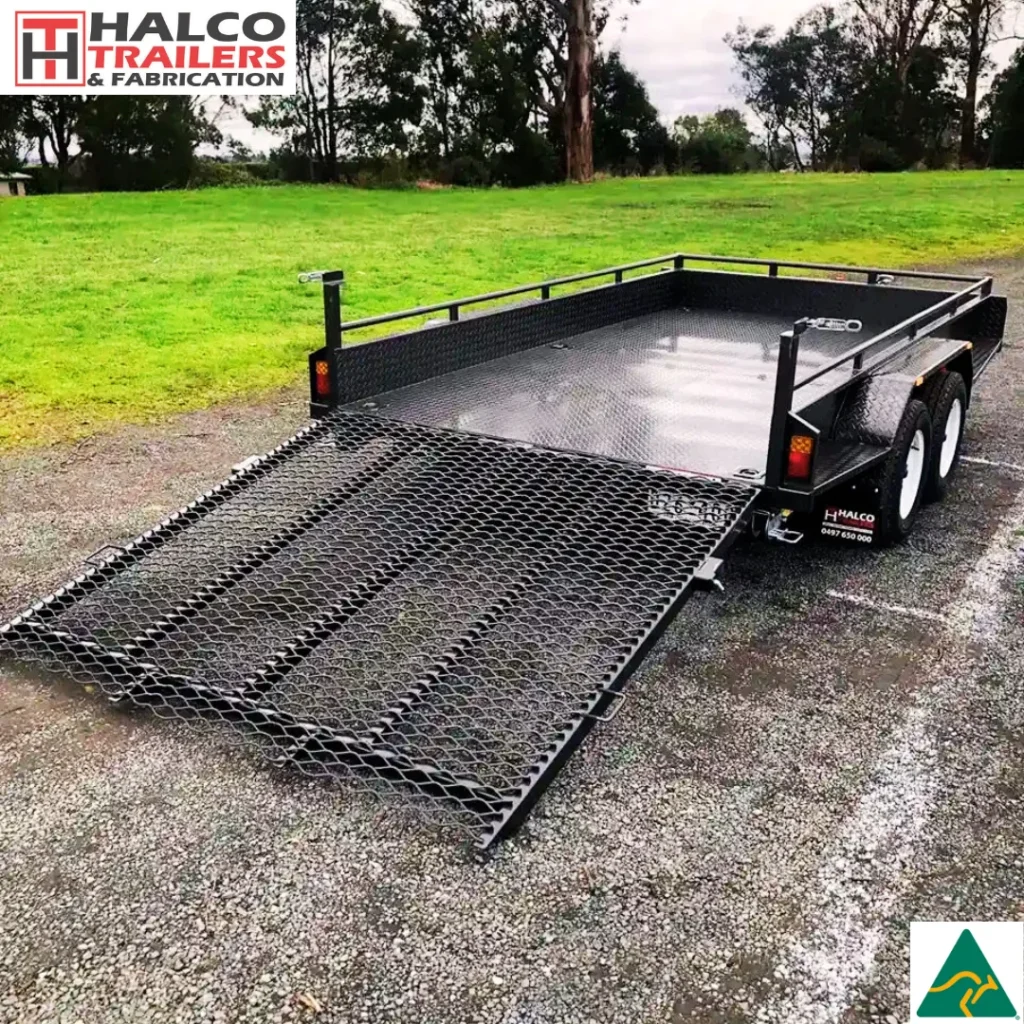
A good tradie trailer setup should reflect the actual trade. Electricians need small-parts and cable storage, plumbers need pipe and fitting zones, builders need flexible tool and material space, while landscapers often need racks, machinery access and wash-down-friendly areas.
Suggested layouts by trade
|
Trade |
Priority storage |
Useful setup |
|
Builder |
Power tools, fixings, levels, materials |
Drawers + shelves + long-item rack |
|
Electrician |
Testers, cables, fittings, power tools |
Small-parts drawers + cable storage |
|
Plumber |
Pipe, fittings, tools, consumables |
Pipe rack + deep drawers + bins |
|
Landscaper |
Mowers, hand tools, green-waste equipment |
Racks + open access + dedicated tool zones |
|
Carpenter |
Saws, drills, levels, fasteners |
Modular tool cases + long-item storage |
|
Mobile mechanic |
Tools, diagnostic equipment, parts |
Drawer system + bench + secure cabinets |
|
Farmer |
Fencing gear, tools, repair supplies |
Heavy-duty storage + long-item racks |
|
General contractor |
Mixed tools and equipment |
Flexible modular zones |
Halco’s current tradesman trailer range specifically supports different layouts for builders, electricians, plumbers, landscapers and mobile contractors, including shelving, drawers, ladder racks, compressor boxes, lighting and lockable storage.
For businesses comparing layouts, Halco’s existing best layout designs for tradesman trailers page provides a separate industry-by-industry comparison. This article should be used alongside that resource for the practical organisation layer rather than repeating the same layout guide.
Open versus enclosed organisation
|
Setup |
Best for |
Organisation advantage |
|
Open trailer |
Machinery, landscaping, bulky materials |
Fast loading and flexible access |
|
Enclosed trailer |
Tools, parts and valuable equipment |
Secure, weather-protected storage |
|
Tradesman top |
Daily trade tools |
Built-in organised access |
|
Hybrid custom trailer |
Mixed tools + machinery |
Combines enclosed and open storage |
How do you maintain trailer organisation after every job?
Trailer organisation only works if the system is easy to reset. Build a short end-of-day routine around returning tools, checking consumables, removing rubbish, charging batteries and inspecting storage hardware so tomorrow’s first job starts with a ready trailer.
The five-minute trailer reset
- Return every tool to its labelled location: the next job should not start with yesterday’s equipment still sitting on the floor.
- Remove rubbish and job waste: empty packaging, offcuts and damaged materials quickly consume useful storage space.
- Check consumables: note anything that is low before it becomes an emergency purchase.
- Check batteries and chargers: return rechargeable equipment to its designated charging area according to manufacturer instructions.
- Inspect storage hardware: check loose fasteners, damaged drawers, broken latches, bent racks and worn straps.
- Check the floor and access path: keep the main working area clear of loose items.
- Remove equipment you no longer need: seasonal or job-specific gear should not permanently occupy prime storage space.
Monthly trailer organisation review
Once a month, ask:
- What did I need but couldn’t find quickly?
- What did I carry without using?
- Which storage location is always overcrowded?
- Which tools keep ending up on the floor?
- Are any drawers too deep or difficult to access?
- Has the type of work changed?
- Has the business added another worker or new equipment?
Those answers tell you what needs changing.
The best trailer layout is not permanent. Your business changes, your equipment changes and the jobs you take change.
How much does trailer organisation cost in Australia?
The cost of trailer organisation can range from a few hundred dollars for basic shelving and bins to well over $1,000 for modular storage, drawers or multiple fitted components. Current Australian retail prices provide useful benchmarks, but fitting adds to the total.
For example, current Bunnings listings show garage shelving units at approximately $44 to $310 across selected models, while Total Tools lists modular organisers from around $69, with larger modular systems and kits reaching several hundred dollars or more. These are retail product examples, not installed trailer fit-out prices.
Example organisation budget
|
Setup level |
Typical approach |
Example budget |
|
Basic |
Bins, labels, hooks and simple shelving |
100–400+ |
|
Practical |
Shelving + modular boxes + drawers + tie-downs |
400–1,000+ |
|
Advanced |
Multiple drawers, racks, charging and custom storage |
1,000–3,000+ |
|
Custom fit-out |
Trailer-specific fabricated storage |
Quote required |
These ranges are planning guides, not fixed market prices. Installation, fabrication, fasteners, electrical work and trailer-specific reinforcement can change the final figure considerably.
For a sole trader, it can make sense to start small. Add the storage feature that solves your biggest daily problem first, then expand the system when you know what actually works.
When should you consider a custom tradesman trailer layout?
If your current trailer lacks secure access, useful storage zones or enough payload capacity, a custom tradesman trailer layout may make more sense than adding loose storage. Design the trailer around your workflow before buying another collection of boxes or racks.
A custom build becomes particularly useful when:
- You carry the same specialist equipment every day.
- Standard toolboxes waste valuable space.
- You need side access without unloading the rear.
- You carry ladders or long equipment.
- You need lockable compartments.
- You need dedicated compressor or generator storage.
- You regularly carry both tools and materials.
- Your business has outgrown a basic box trailer.
- Multiple workers need to follow the same storage system.
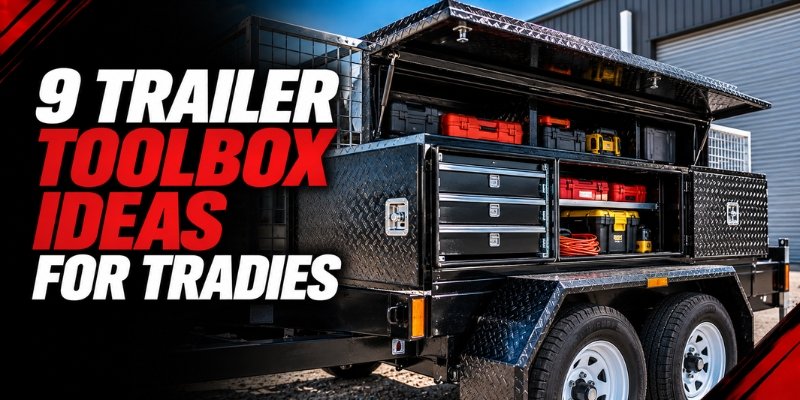
Halco’s current tradesman top trailers can be configured with lift-up doors, lockable compartments, ladder racks, slide-out drawers, compressor boxes, internal shelving, lighting and single- or tandem-axle layouts.
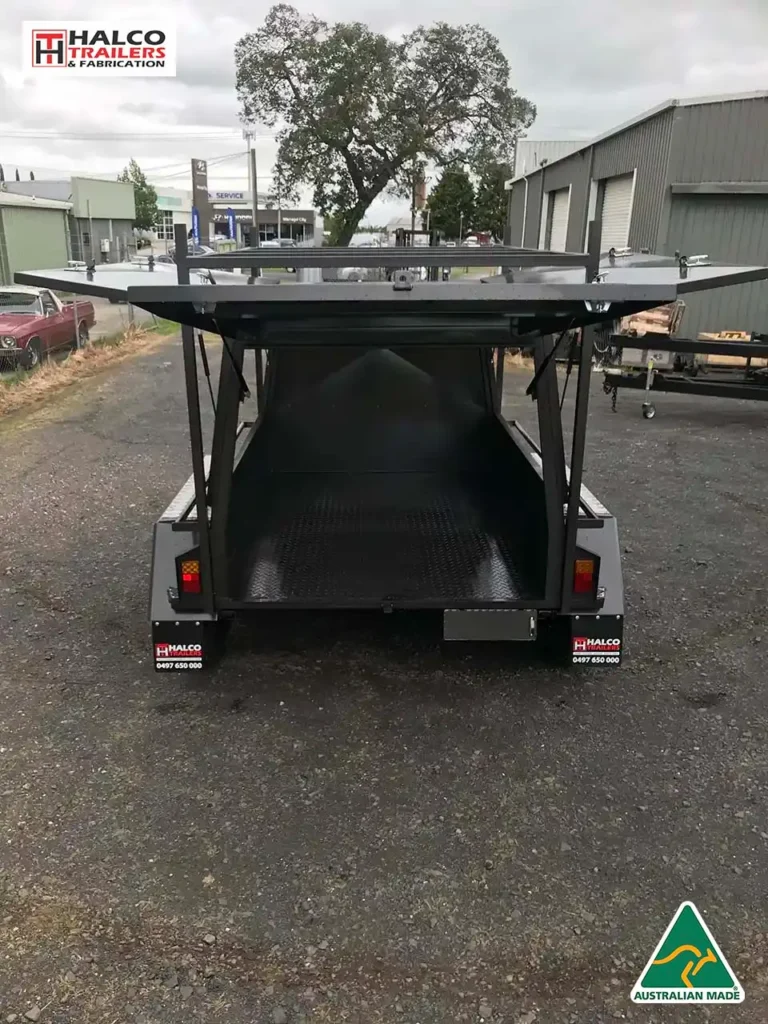
You can explore Halco’s tradesman trailers if you want storage designed into the trailer rather than added later.
For broader options, Halco’s trailer range includes tradesman, tandem, enclosed, plant, flat-top and other trailer configurations.
You can also discuss trailer accessories and servicing where existing trailers need storage-related repairs, replacement components or workshop support.
Conclusion
Use these work trailer organisation ideas to create a trailer that supports the way you actually work. Zone your equipment, keep high-use tools accessible, secure heavy and loose items, label storage locations and reset the trailer after every job.
For Australian tradies, a well-planned trailer is more than storage. It becomes a mobile work system that can reduce unnecessary searching, repeated unloading and daily clutter.
If your current trailer no longer gives you the storage, access or security your business needs, consider a custom setup from Halco Trailers, with options designed around trade use, equipment and workflow.