

By Halco Trailers Team, Trailer Manufacturing / Safety Specialist
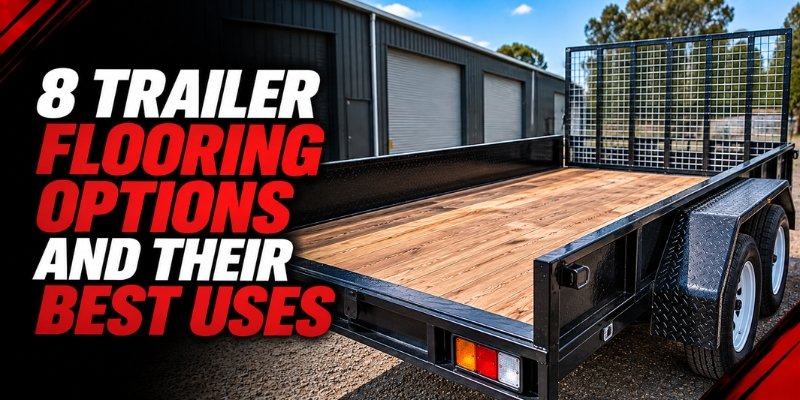
The best trailer flooring options depend on what you carry, how often you load it, the weather and wash-down exposure, point loads, required grip and the trailer’s approved capacity. No single material is ideal for every Australian trailer application.
For a tradie carrying tools and equipment, the floor needs to handle repeated loading without becoming a maintenance headache. A landscaper may prioritise moisture resistance and easy cleaning. A farmer may need durability on rough roads, while a vehicle operator may want a surface that protects tyres and provides reliable loading grip.
The important point is that trailer flooring is part of the trailer’s overall design. The material, thickness, support structure, fixings, load distribution and approved ratings all need to work together.
What should you consider before choosing a trailer floor?
To choose between trailer floor types, compare load, moisture, grip, weight, impact, cleaning, repairability and budget before choosing a sheet or board. The right floor supports the work without consuming unnecessary payload or creating maintenance problems.
1. Start with the load
A trailer carrying hand tools and boxed materials has different flooring requirements from one carrying excavators, cars, pallets, bricks or landscaping equipment.
Ask:
- What is the heaviest item?
- Are loads spread evenly or concentrated in small areas?
- Will machinery drive over ramps onto the deck?
- Will forklifts load pallets?
- Will sharp materials contact the floor?
- Will the floor regularly become wet or muddy?
A floor that works for lightweight garden waste may not be suitable for concentrated machinery loads.
2. Consider the environment
Australian trailers can experience rain, UV exposure, coastal salt, dust, mud, wash-down water and temperature changes.
A farm trailer may spend time on dirt tracks before returning to sealed roads. A landscaping trailer can repeatedly carry wet soil, mulch and green waste. A coastal trailer may face more corrosion exposure than one used inland.
The floor material should match those conditions.
3. Think about grip
Grip matters whenever someone walks on the trailer, pushes equipment, loads a motorcycle or moves machinery across ramps.
A smooth metal sheet can be easy to clean and useful for sliding loose materials, but it may provide less traction when wet. A textured or anti-slip surface can be more useful where people or wheeled equipment regularly move across the deck.
4. Calculate the weight penalty
The floor is part of the trailer’s tare mass.
Adding a heavy steel floor to an otherwise lightweight trailer may reduce the mass available for cargo. That can be particularly important for smaller trailers operating close to their approved capacity.
According to the current Department of Infrastructure Vehicle Standards Bulletin 1 Revision 6, GTM and ATM are manufacturer-specified ratings developed around factors including chassis strength, wheel, axle and tyre ratings and towing stability.
5. Look at maintenance
Ask how the floor will behave after:
- Repeated loading
- Rain
- Pressure washing
- Mud accumulation
- Chemical spills
- Stone impact
- Forklift traffic
- Long-term outdoor storage
The cheapest material to buy isn’t necessarily the cheapest material to own.
What are the 8 trailer flooring options and their best uses?
The eight main trailer flooring options covered here are hardwood timber, marine plywood, phenolic-faced anti-slip plywood, steel checker plate, plain steel sheet, aluminium checker plate, aluminium mesh or grating, and composite or fibreglass-reinforced polymer floors.
1. Hardwood timber
Hardwood timber remains a practical choice where you want a repairable, relatively quiet deck with good grip and straightforward replacement. It suits general-purpose work trailers, equipment transport and applications where cargo benefits from a less abrasive contact surface.
Best uses:
- General-purpose trailers
- Tradie equipment
- Farm trailers
- Equipment transport
- Loads that can damage thin sheet surfaces
- Applications where individual boards can be replaced
Advantages:
- Good natural grip
- Easy to work with
- Sections can potentially be replaced
- Provides some cushioning compared with bare metal
- Can suit traditional trailer builds
Drawbacks:
- Requires moisture management
- Can absorb water if not properly protected
- Can split or deteriorate with age
- Adds regular maintenance compared with some metal options
A timber floor can make sense for a contractor who regularly transports steel products, tools or equipment and doesn’t want metal-on-metal contact.
2. Marine plywood
Marine plywood suits trailer floors where moisture exposure matters and a stable sheet material is preferred. It can work well for lighter equipment, enclosed trailers and custom builds when thickness, support spacing, edge sealing and fixing are specified for the actual load.
Best uses:
- Enclosed trailers
- Light equipment
- Custom trailer builds
- General-purpose cargo
- Applications where a continuous sheet floor is preferred
Advantages:
- Sheet construction gives a continuous surface
- Relatively easy to cut and install
- Suitable grades can provide better moisture resistance than interior plywood
- Can be lighter than some steel flooring systems
Drawbacks:
- Not all plywood is suitable for trailer use
- Exposed edges require attention
- Moisture can still cause deterioration
- Thickness and support spacing must match the load
Do not assume that any sheet of plywood is suitable simply because it is thick. A trailer floor experiences vibration and dynamic loads that a household floor does not.
3. Phenolic-faced anti-slip plywood
Phenolic-faced anti-slip plywood combines a plywood core with a hard textured face designed for vehicle-floor applications. It is useful where you want grip, moisture resistance and easier cleaning without moving to a full metal deck.
Best uses:
- Enclosed trailers
- Tool and equipment trailers
- Motorcycle transport
- Plant and equipment access
- Trailers where workers regularly walk on the floor
Advantages:
- Textured surface can improve grip
- Easier to clean than unfinished timber
- Good balance between weight and durability
- Suitable for repeated loading when correctly specified
Drawbacks:
- More expensive than basic plywood
- Damaged edges can allow moisture into the panel
- Heavy machinery can create concentrated point loads
- Incorrect thickness can lead to premature damage
For a contractor loading toolboxes, compressors and equipment every day, an anti-slip plywood floor can offer a useful middle ground between basic timber and heavy steel.
4. Steel checker plate
Steel checker plate is a strong option for hard-working trailers exposed to machinery, pallets, tools and repeated loading. Its raised pattern can provide useful traction, while the steel construction tolerates impact better than many lightweight sheet options.
Best uses:
- Heavy-duty work trailers
- Plant trailers
- Machinery transport
- Construction trailers
- Car trailers
- Industrial applications
Advantages:
- Strong and impact-resistant
- Raised pattern provides useful grip
- Suitable for demanding loading conditions
- Can be fabricated and repaired as part of a steel trailer structure
- Widely available
Drawbacks:
- Heavier than aluminium
- Can add substantial tare mass
- Steel requires corrosion protection
- Metal surfaces can be noisy
Adelaide Trailer Sales currently lists 2.1 mm and 3.0 mm checker-plate steel trailer floors in several sheet sizes, illustrating how floor cost changes with thickness and dimensions. These are supplier prices rather than an Australian market average.
5. Plain steel sheet
Plain steel sheet suits applications where strength, smooth unloading and a robust metal deck matter more than low weight. It can be particularly useful for tipper-style applications where material needs to slide rather than catch on a textured surface.
Best uses:
- Hydraulic tippers
- Loose material transport
- Construction applications
- Heavy-duty custom trailers
- Applications where easy unloading matters
Advantages:
- Strong
- Smooth surface can assist unloading
- Suitable for fabrication
- Good impact resistance
- Can be incorporated into a steel trailer structure
Drawbacks:
- Heavy
- Can become slippery when wet
- Requires corrosion protection
- May become noisy under loose loads
For a hydraulic tipper carrying suitable loose materials, a smooth metal floor can be more practical than a heavily textured surface because the material needs to move when the body tips.
6. Aluminium checker plate
Aluminium checker plate is a lightweight metal alternative where corrosion resistance and reduced tare mass matter. It suits lighter work trailers, custom decks and applications where a durable, easy-clean surface is wanted without the mass of steel.
Best uses:
- Lightweight trailers
- Custom trailers
- Coastal applications
- Equipment trailers
- Tool and trade trailers
Advantages:
- Lower mass than steel
- Good corrosion resistance
- Easy to clean
- Textured surface can provide useful grip
- Suitable for custom fabrication
Drawbacks:
- Usually costs more than basic steel
- Can dent under concentrated impact
- Correct thickness and support remain important
- Some surfaces can become slippery when wet
Aluminium can be attractive when payload matters. However, reducing floor weight doesn’t automatically increase the trailer’s approved carrying capacity.
7. Aluminium expanded mesh or grating
Aluminium expanded mesh or grating can suit trailers where drainage, airflow and low weight are priorities. It is useful for selected equipment, landscaping or access applications, but the supporting frame and load pattern must be designed for the intended point loads.
Best uses:
- Landscaping equipment
- Mower and garden equipment trailers
- Access platforms
- Applications where water needs to drain through the deck
- Lightweight specialised trailers
Advantages:
- Lightweight
- Allows water and debris to pass through
- Good ventilation
- Can reduce water pooling
- Corrosion-resistant aluminium options are available
Drawbacks:
- Not ideal for every concentrated load
- Small wheels may interact poorly with large openings
- Requires appropriate supporting structure
- May be uncomfortable for some walking applications
A Bunnings Workshop discussion about trailer flooring considered aluminium expanded mesh partly because it allows water through and keeps the floor relatively light. That is useful as an example of the type of trade-off owners make, but community advice should not replace the trailer manufacturer’s load requirements.
8. Composite or fibreglass-reinforced polymer
Composite and fibreglass-reinforced polymer floors suit owners seeking low-maintenance, moisture-resistant surfaces with a lower corrosion burden. They can work well for specialised trailers, livestock applications or exposed environments when the product’s structural rating matches the intended load.
Best uses:
- Livestock-related applications
- Wet environments
- Specialised trailers
- Corrosion-sensitive applications
- Projects where low maintenance is important
Advantages:
- Good moisture resistance
- No conventional steel rust
- Can be relatively lightweight
- Low maintenance
- Available in textured surfaces
Drawbacks:
- Higher purchase cost for some products
- Product availability varies
- Point-load performance must be confirmed
- Repair methods differ from timber and steel
Do not choose composite flooring purely because it is described as durable. Check the manufacturer’s specifications for load, support spacing, impact resistance and fixing.
How does floor material affect payload and load distribution?
Floor material cannot be selected separately from the trailer’s rated capacity and structure. The floor, supporting members, fixings and load all work together, so a heavier replacement can reduce available payload even when the new surface itself is stronger.
This is one of the easiest issues to overlook when replacing an old floor.
Imagine a trailer originally designed with timber decking. The owner replaces it with a substantially heavier steel plate because steel appears more durable. The new floor may be stronger, but the trailer now weighs more before any cargo is loaded.
Think in terms of four masses
Item | What it means |
Tare mass | Trailer weight when ready for service and unladen |
Cargo | The material, machinery or equipment being transported |
GTM | Maximum mass transmitted through the trailer tyres |
ATM | Maximum total trailer mass including the load and coupling load |
According to VSB 1, ATM minus tare mass represents the maximum load the trailer can carry under the specified conditions. The bulletin also explains that these ratings are developed through engineering calculations that consider chassis strength, wheel, axle and tyre ratings and towing stability.
That means replacing a floor is not simply a cosmetic upgrade.
Load distribution matters too
According to the National Transport Commission’s Load Restraint Guide, loads must be safely loaded and restrained, must not exceed applicable mass limits and must not create danger for road users.
For example, a concentrated excavator track load is very different from evenly distributed garden waste.
Before changing a floor, ask:
- What will the new floor weigh?
- Where will the floor support members sit?
- Where will the heaviest loads contact the deck?
- Will forklifts or machinery create concentrated loads?
- Will the replacement change the trailer’s tare?
- Does the existing chassis remain suitable?
If you are unsure, have the trailer assessed before fabrication begins.
Which trailer flooring options suit common Australian trailer types?
The right trailer flooring options change with the trailer’s job, loading method and environment. A flat deck for machinery has different priorities from a tipper, enclosed work trailer, car carrier, landscaping trailer or tiny-home chassis.
Trailer type comparison
Trailer type | Flooring priorities | Options worth considering |
Box trailer | General durability, cost and easy cleaning | Timber, plywood, checker plate |
Tradesman trailer | Tools, frequent access, grip | Phenolic plywood, timber, aluminium |
Landscaping trailer | Wet loads, mud, cleaning | Steel, aluminium, composite |
Plant trailer | Point loads, machinery, ramps | Steel checker plate, heavy timber, engineered plywood |
Car trailer | Tyre grip, loading and durability | Checker plate, engineered plywood, steel |
Hydraulic tipper | Easy unloading, impact resistance | Plain steel, aluminium sheet |
Flat top trailer | Machinery, pallets, building materials | Timber, steel, aluminium |
Tandem trailer | Higher-use loads and broader deck | Steel, timber, engineered plywood, aluminium |
Tiny-home chassis | Structural planning and finished mass | Manufacturer-designed deck system |
Boat trailer | Water and corrosion exposure | Aluminium, galvanised/treated systems, suitable composite |
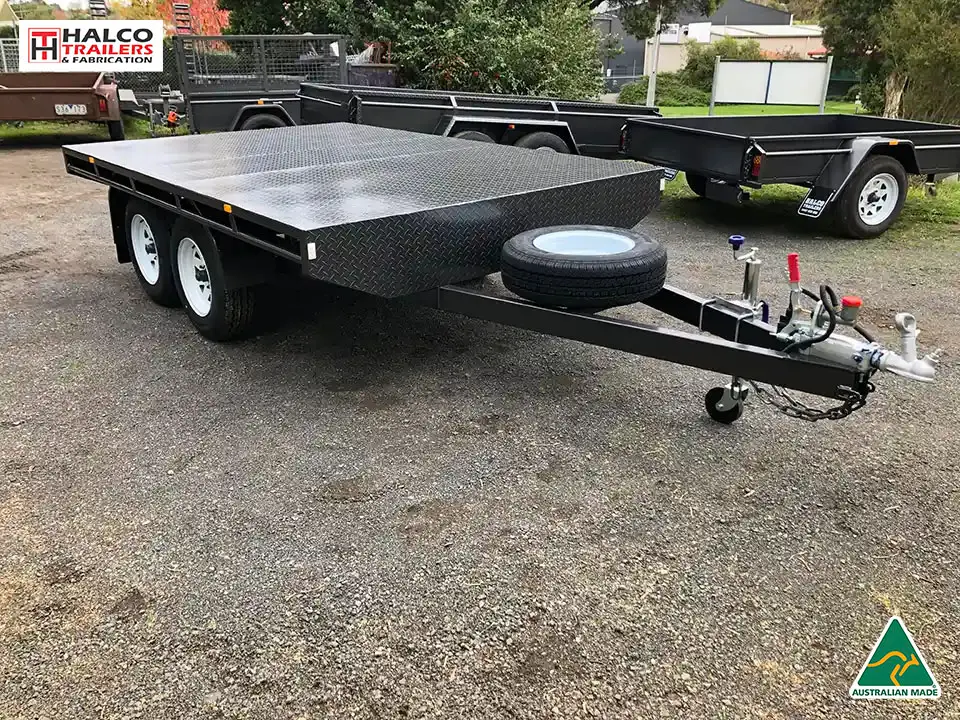
For flat top trailers, Halco describes the open deck as suited to machinery, pallets, building materials and loads requiring side or overhead access. That makes deck strength, loading access and restraint planning particularly important.
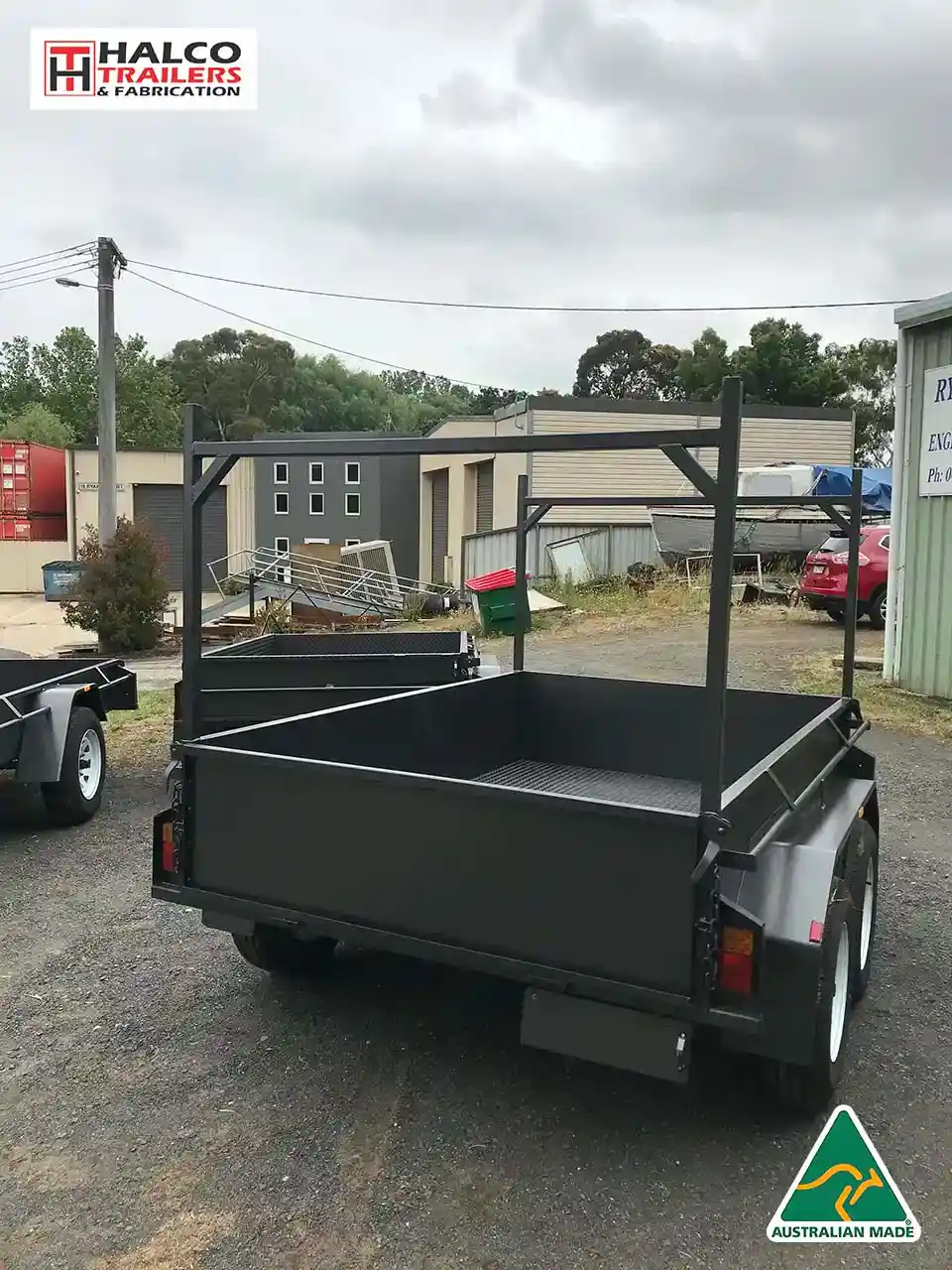
For tandem trailers, the floor also needs to work with the trailer’s two-axle configuration, approved load capacity, suspension, brakes and intended application.
What about a tiny house trailer?
A tiny-home chassis needs more planning than simply choosing a surface board.
Halco’s tiny home trailer chassis information explains that the chassis should be considered alongside the proposed structure, completed mass, dimensions, axle configuration, deck style and transport requirements.
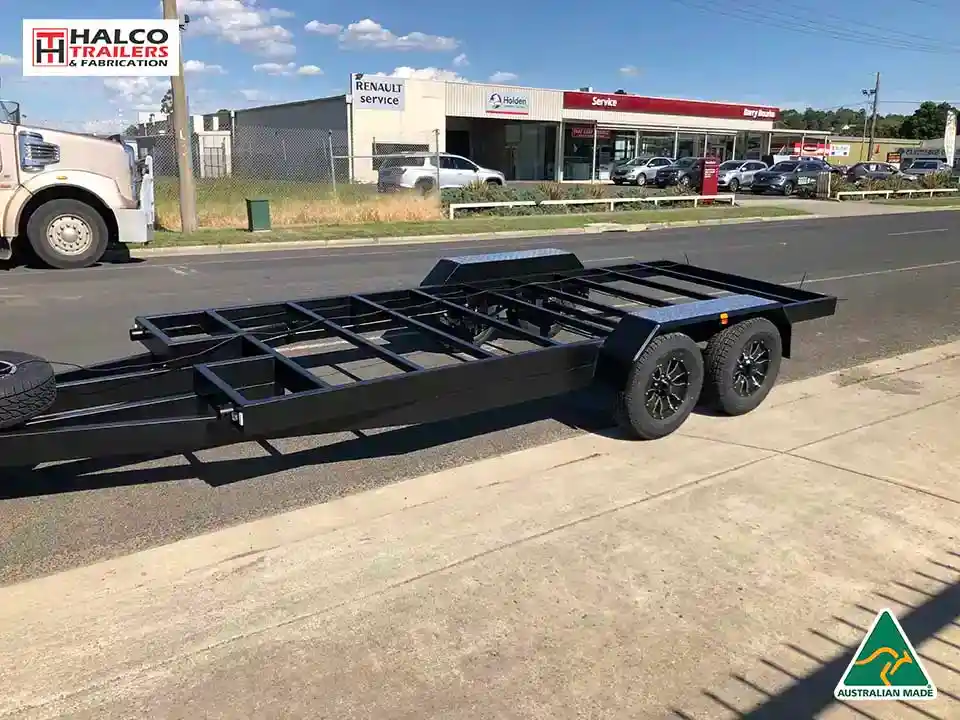
A tiny-home floor therefore needs to be considered as part of the completed build.
Adding flooring, walls, cladding, cabinetry, appliances, tanks and other components all contributes to the finished mass. The floor choice should be locked into the chassis design early rather than treated as a final cosmetic decision.
How should you inspect and maintain trailer flooring?
A durable trailer floor still needs inspection because water, debris, impact and repeated loading attack the surface and its fixings. Check the deck for movement, corrosion, cracks, delamination, loose fasteners and localised damage before problems spread into the supporting frame.
Pre-trip floor check
Before each loaded trip:
- Walk across the deck and look for movement.
- Check for cracks or broken boards.
- Look for exposed fasteners.
- Check steel for rust-through.
- Check plywood edges for swelling or delamination.
- Look for damaged welds around steel floors.
- Remove trapped soil, mulch or debris.
- Check ramps meet the deck correctly.
- Look for sharp edges.
- Confirm tie-down points remain secure.
Practical maintenance frequency
This is a practical maintenance framework, not a universal regulatory interval.
Use | Floor check |
Occasional household trailer | Before every tow |
Regular tradie trailer | Weekly plus before heavy loads |
Landscaping trailer | Before loaded runs and after wet/dirty work |
Farm trailer | Before road use and after rough-ground work |
Plant trailer | Before each machinery move |
Commercial fleet | Recorded routine inspections |
Trailer stored for months | Before returning to service |
After impact or overload | Immediate inspection |
Halco’s existing servicing guidance recommends matching inspection frequency to load, distance, road conditions, storage and business use rather than relying on age alone.
Keep the floor and frame clean
Debris trapped between a floor and its supporting frame can hold moisture against steel components. On timber or plywood floors, blocked drainage can accelerate deterioration.
For steel floors, regular cleaning can also make it easier to spot corrosion early.
For aluminium, inspect fixing points carefully because the floor and supporting structure may use different materials and require appropriate fastening methods.
When should you repair or replace a trailer floor?
Repair or replacement depends on whether the floor has lost structural support, become unsafe under the intended load or simply developed local damage. Small issues can sometimes be repaired, while widespread corrosion, delamination or weakened support usually calls for a floor assessment.
Repair may make sense when:
- A small section is damaged.
- Individual timber boards have deteriorated.
- A localised steel area has minor damage.
- A small number of fixings have failed.
- The supporting structure remains sound.
- The replacement material can be matched correctly.
Replacement is more likely when:
- Steel has rusted through.
- Large areas are cracked.
- Plywood is delaminating across the deck.
- Timber has widespread rot.
- The floor has become soft under normal loads.
- Supporting cross-members are damaged.
- The deck has repeatedly failed under the intended load.
- Previous modifications have compromised the structure.
Don’t repair only what you can see
A damaged floor may be a symptom rather than the original problem.
For example, if a plant trailer floor bends under a machine, the issue may involve:
- Floor thickness
- Support spacing
- Cross-member strength
- Load concentration
- Chassis condition
- Previous modifications
- Incorrect load distribution
Replacing the visible panel without investigating the support underneath can simply move the problem somewhere else.
Halco’s trailer parts and servicing workshop can inspect applicable structural components and discuss replacement parts, repairs and servicing. The required repair scope is confirmed after inspection.
What about DIY floor replacement?
DIY replacement can be reasonable for some straightforward applications, but don’t assume a floor is simply a sheet screwed to a frame.
Before replacing a structural floor, confirm:
- Original material and thickness
- Support spacing
- Fixing method
- Trailer tare
- Approved ATM/GTM
- Intended load
- Load concentration
- Clearance around wheels and components
In Victoria, Transport Victoria states that modifications to light trailers must not affect compliance with registration standards. If you’re unsure whether planned work affects VSB 1 compliance, its guidance recommends consulting a VASS signatory.
How much does trailer floor replacement cost in Australia?
Trailer floor replacement costs vary with material, sheet thickness, deck size, support condition, labour and whether the job exposes additional corrosion or structural damage. A material price alone is not a reliable installed cost, especially on commercial or custom trailers.
Main cost factors
Cost factor | Why it affects price |
Floor size | More material and labour |
Material | Timber, plywood, steel, aluminium and composites have different prices |
Thickness | Thicker material generally costs more and may weigh more |
Support condition | Damaged cross-members add repair work |
Fixings | Bolts, welds or specialised fasteners affect labour |
Corrosion | Rusted components may need replacement |
Access | Removing existing floor can increase labour |
Custom shape | Cutting around wheel arches and equipment takes more time |
Finish | Painting, galvanising or coatings add cost |
Urgency | Workshop availability and parts supply affect turnaround |
As one current Australian retail example, Adelaide Trailer Sales lists 2.1 mm checker-plate steel sheets from $150 to $330, depending on sheet size, and 3.0 mm sheets from $270 to $490. These are individual supplier prices, not a national average or fitted replacement quote.
The more useful question for a business owner is not simply “What is the cheapest floor?”
Ask:
Will this floor last through the work I actually do, and will its weight leave enough payload for the cargo I need to carry?
A cheap floor that needs replacing twice can cost more than a correctly specified floor installed once.
How do you choose the right floor for your trailer?
The right trailer flooring options are the ones that match the load, environment and trailer design rather than the material that looks strongest in a showroom. Start with the job, then compare weight, grip, durability, maintenance and replacement cost.
The six-factor floor selection framework
Factor | Low priority | High priority |
Load | Light, distributed cargo | Heavy or concentrated machinery |
Moisture | Mostly dry use | Wet, coastal or wash-down use |
Grip | Mostly cargo transport | Frequent walking/loading |
Impact | Light equipment | Machinery, pallets and steel |
Weight | Large payload margin | Trailer operates near rating |
Maintenance | Occasional use | Daily commercial use |
Quick decision guide
Choose timber when: you want a practical, repairable surface and good grip for general work.
Choose marine plywood when: you need a sheet floor with better moisture resistance and the design suits plywood.
Choose phenolic anti-slip plywood when: workers frequently walk or load equipment across the deck.
Choose steel checker plate when: heavy machinery and repeated impact are the priority.
Choose plain steel when: smooth unloading is more important than textured grip.
Choose aluminium checker plate when: lower tare mass and corrosion resistance matter.
Choose aluminium mesh or grating when: drainage and low weight are priorities.
Choose composite or fibreglass-reinforced polymer when: low maintenance and moisture resistance are important and the product is rated for the intended load.
Seven-step selection process
- Define the heaviest regular load: this establishes the starting point for floor strength and support requirements.
- Identify point loads: machinery wheels, forklift tines and narrow legs can stress the floor differently from evenly distributed cargo.
- Estimate environmental exposure: rain, salt, mud, chemicals and wash-down conditions influence material choice.
- Compare floor weight: check how the material changes tare mass and remaining payload.
- Choose the required grip level: smooth surfaces suit some unloading applications, while textured surfaces help with walking and loading.
- Check the existing support structure: floor material cannot compensate for inadequate cross-members or a damaged chassis.
- Confirm the finished specification: for structural or compliance-sensitive changes, have the complete trailer assessed before fabrication.
This approach is more reliable than choosing a floor simply because another trailer owner uses the same material.
Conclusion
The best trailer flooring options depend on the job, load, environment and trailer design. Timber, plywood, steel, aluminium, mesh and composite materials can all make sense when correctly specified for the application.
For Halco customers in Melbourne, Warragul, Gippsland and regional Victoria, the floor should be considered alongside the complete trailer configuration. If you are replacing a damaged deck or designing a new trailer, discuss the load, material, support structure and approved capacity before committing to the floor.
Explore Halco’s trailer parts and servicing support or browse the full trailer range to compare configurations suited to different work and transport applications.