

Towing a trailer on highways can feel challenging, especially when dealing with high speeds, strong crosswinds, and long distances. Stability becomes one of the most important factors for safe and efficient transport.
Many towing accidents on highways are caused by poor trailer stability, something that can often be avoided with the right axle setup.
This is where tandem axles make a significant difference. Tandem axle trailers are designed with two axles instead of one, allowing the weight to be distributed across four wheels. This simple yet powerful design improves balance, reduces sway, and enhances overall towing control.
In this guide, we’ll explore how tandem axles improve towing stability on highways, why they are preferred for heavy-duty transport, and how they contribute to safer, smoother journeys. Whether you’re a tradie, contractor, farmer, or transport operator, understanding these benefits can help you make smarter towing decisions.
What Are Tandem Axles?
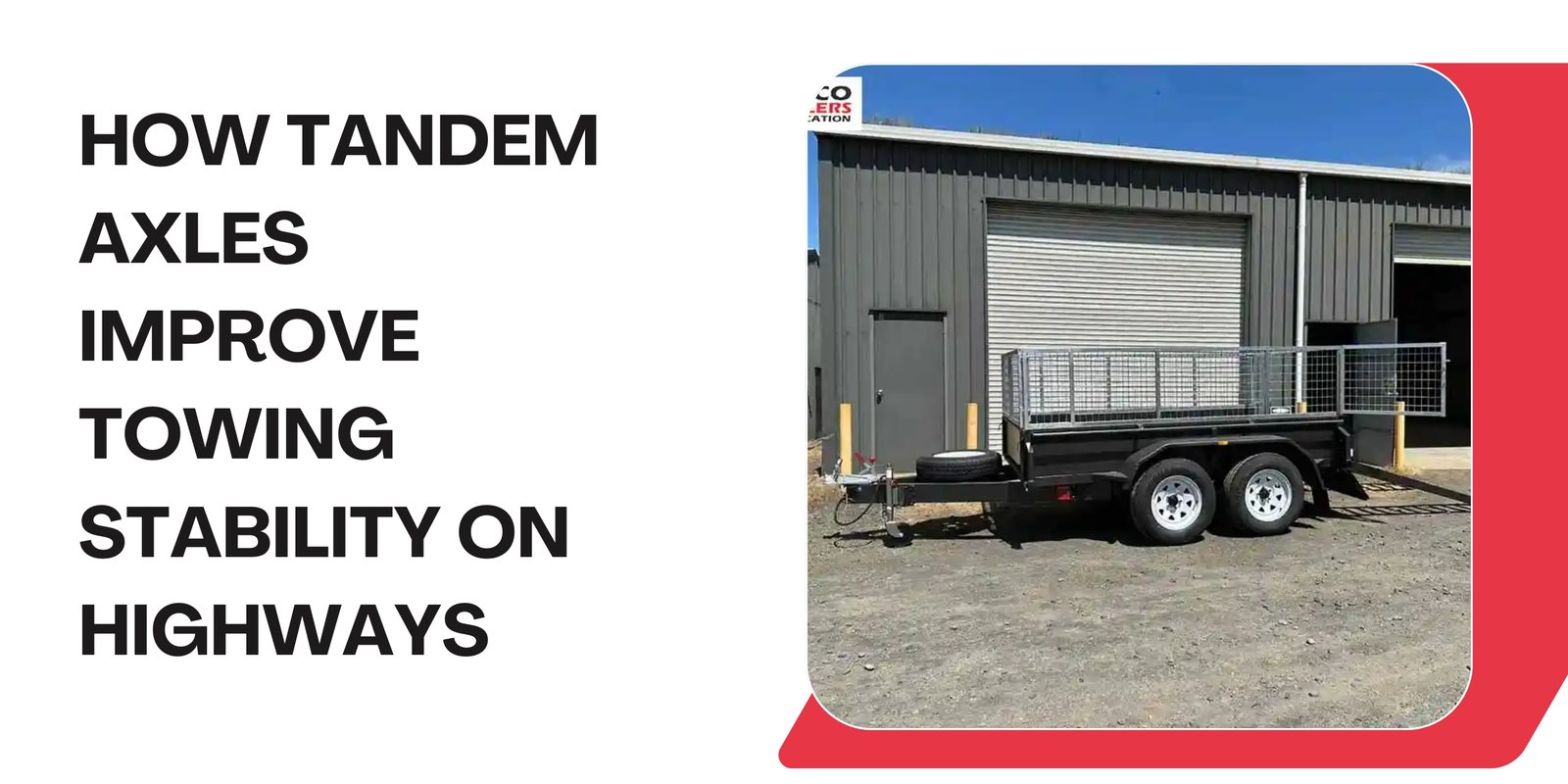
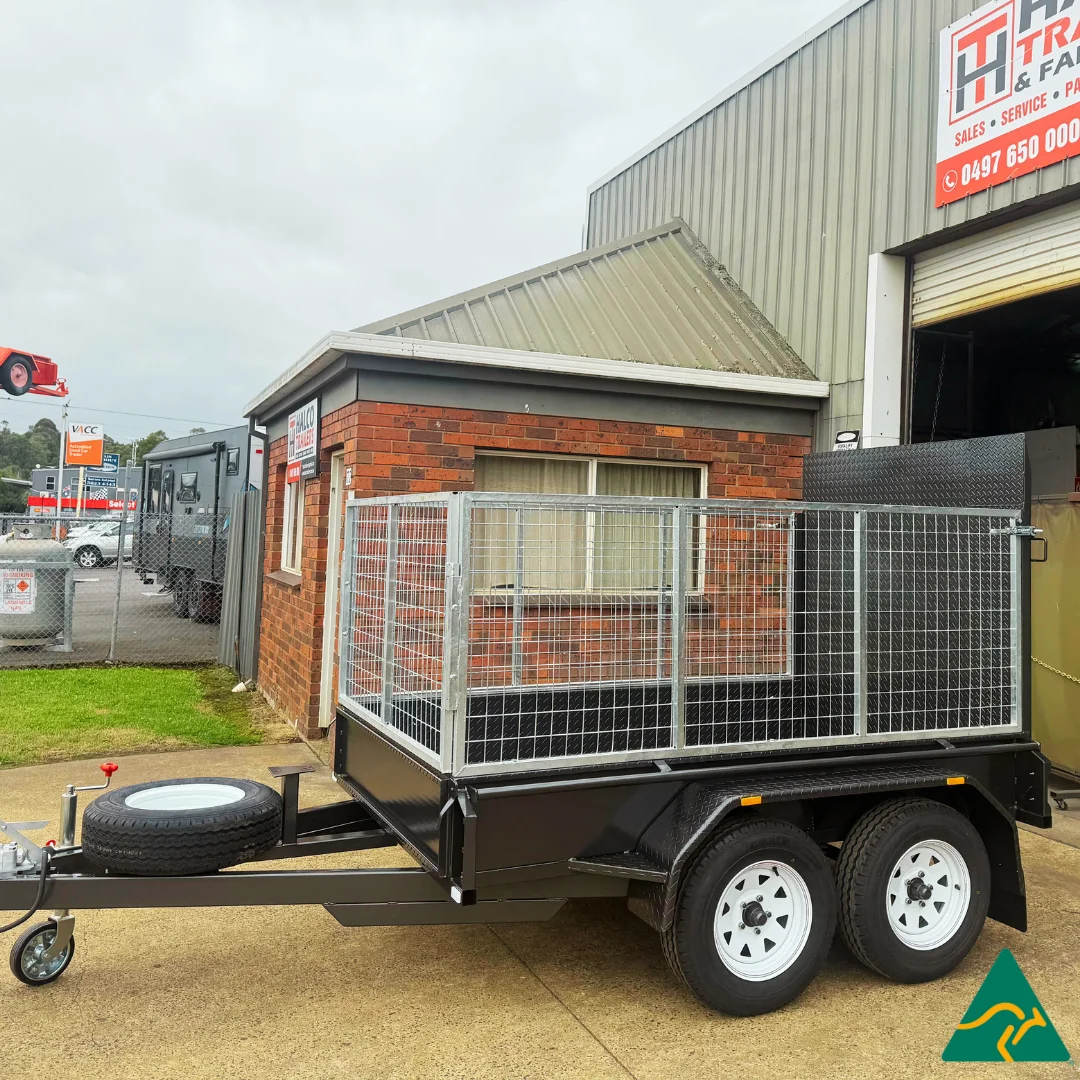
A tandem axle setup consists of two axles placed close together beneath a trailer. Each axle supports a pair of wheels, meaning the trailer has four wheels supporting the load instead of two.
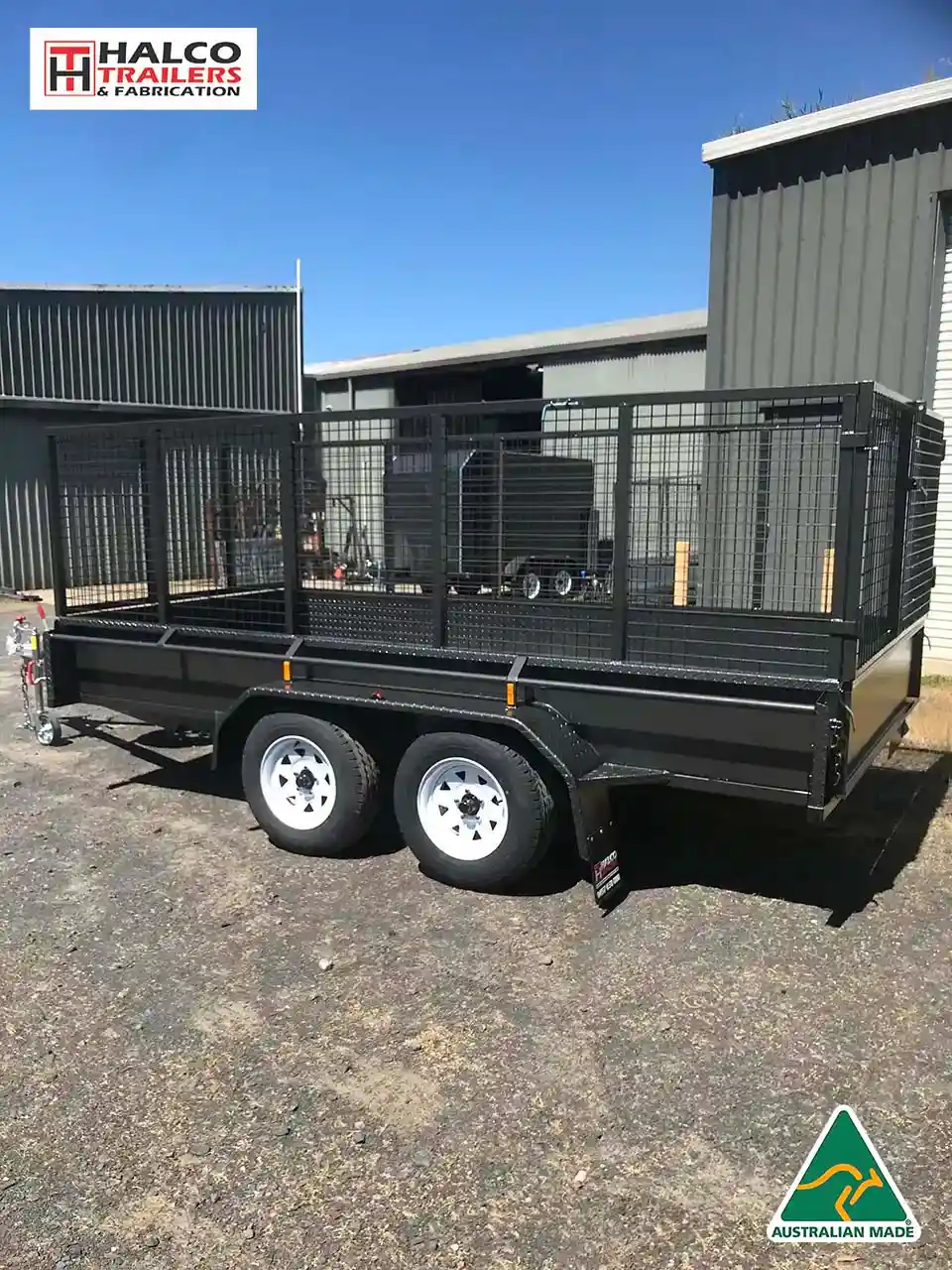
This configuration is commonly used in trailers designed for heavier loads or frequent long-distance towing. The extra axle provides better support, improved load distribution, and increased road contact.
Key Characteristics of Tandem Axles
- Two axles positioned in sequence
- Four wheels supporting the load
- Higher weight capacity
- Improved balance and control
- Better stability during highway towing
This setup is especially useful on highways where stability, braking, and handling are critical.
Why Highway Stability Matters
Highway towing introduces several challenges that can affect trailer stability. At higher speeds, even small issues with load balance, tyre pressure, or trailer design can become serious safety risks.
Common Highway Towing Challenges
- Higher speeds increase the risk of sway
- Crosswinds can push the trailer sideways
- Sudden braking requires better control
- Lane changes demand stable handling
- Long distances increase driver fatigue
- Uneven road surfaces can affect balance
Without proper stability, these factors can lead to trailer sway, loss of control, uneven braking, or unnecessary strain on the towing vehicle.
Studies and road safety guidance commonly highlight improper loading and poor weight distribution as major causes of trailer sway incidents. That means trailer stability is not just about trailer size, it is also about design, balance, and correct use.
Tandem axles help address these challenges by creating a stronger, more balanced towing system.
How Tandem Axles Improve Stability
Let’s break down exactly how tandem axles improve towing performance on highways.
1. Better Weight Distribution
One of the biggest advantages of tandem axles is improved weight distribution. Instead of placing all the load on a single axle, the weight is spread across two axles.
This reduces pressure on one point and helps maintain balance, even when carrying heavy loads. Better weight distribution also reduces stress on tyres, suspension components, and the trailer frame.
Result
- Reduced stress on tyres
- Improved trailer balance
- Safer towing at higher speeds
- Better handling under load
2. Reduced Trailer Sway
Trailer sway is one of the most common and dangerous issues when towing on highways. It can occur due to strong wind, uneven loading, sudden steering movement, or driving too fast for the conditions.
Tandem axles reduce sway by providing additional ground contact and stronger trailer stability. The second axle helps keep the trailer aligned with the towing vehicle, making side-to-side movement less likely.
Result
- More controlled towing
- Less side-to-side movement
- Increased driver confidence
- Safer highway travel
3. Improved Road Grip
With four wheels instead of two, tandem axle trailers have better contact with the road. This improves traction during acceleration, braking, cornering, and lane changes.
More contact points mean the trailer is less likely to bounce or lose grip on uneven highway surfaces.
Result
- Better control in different conditions
- Improved highway handling
- Smoother towing during long trips
- Reduced cargo movement
4. Enhanced Braking Performance
Braking becomes significantly more effective when the load is distributed across multiple wheels. Tandem axles allow braking force to be spread more evenly, which improves control and reduces the risk of unstable braking.
This is especially important when towing heavy loads at highway speeds, where stopping distance and trailer control are critical.
Result
- More stable braking
- Better control during sudden stops
- Reduced risk of trailer push
- Safer heavy-duty towing
- Smoother Ride Over Uneven Roads
Highways are not always smooth. Bumps, dips, potholes, and rough sections can affect how a trailer moves behind the towing vehicle.
Tandem axles help absorb these road imperfections more effectively. When one axle passes over a bump, the second axle helps maintain balance and reduce bouncing.
Result
- Reduced vibration
- Smoother towing experience
- Less stress on cargo
- Better comfort over long distances
- Increased Load Capacity
Tandem axles are designed to carry heavier loads safely. The additional axle allows the trailer to handle more weight while maintaining better control and balance.
This makes tandem axle trailers ideal for transporting equipment, tools, building materials, farm supplies, or commercial loads over long distances.
Result
- Higher load capacity
- Safer heavy-duty transport
- Better performance under load
- Fewer trips for larger jobs
Tandem Axles vs Single Axle Trailers
To better understand their advantage, let’s compare tandem axle trailers with single axle trailers.
Single Axle Trailers
Single axle trailers have one axle and two wheels. They are often suitable for lighter jobs, short trips, and smaller loads.
Common Features of Single Axle Trailers
- Lower load capacity
- Easier to manoeuvre in tight areas
- Usually lighter in weight
- More suitable for light-duty use
- Less stable at higher speeds
Tandem Axle Trailers
Tandem axle trailers have two axles and four wheels. They are better suited for heavier loads, highway towing, and regular trade or commercial use.
Common Features of Tandem Axle Trailers
- Higher load capacity
- Better stability on highways
- Improved braking and control
- Better road grip
- More suitable for long-distance towing
While single axle trailers are useful for smaller jobs, tandem axles offer clear advantages when stability, load capacity, and highway safety are priorities.
Factors That Influence Tandem Axle Performance
Even with a tandem axle setup, performance depends on how the trailer is loaded, maintained, and driven.
1. Proper Load Distribution
Even weight distribution is essential. Incorrect loading can cancel out the benefits of tandem axles.
Too much weight at the rear can cause sway, while too much weight at the front can overload the tow vehicle. The goal is to keep the load balanced and secure.
2. Tyre Condition and Pressure
Tyres play a major role in towing stability. Underinflated, damaged, or worn tyres can reduce grip and increase the risk of unsafe handling.
Always check tyre pressure before highway trips, especially when carrying heavy loads.
3. Suspension System
A good suspension system improves ride quality and stability. Poor suspension can cause bouncing, uneven tyre wear, and reduced control.
Suspension helps absorb road shock and keeps the trailer balanced over changing surfaces.
4. Speed and Driving Style
Tandem axles improve stability, but safe driving still matters. Driving too fast, braking suddenly, or making sharp steering movements can still create risk.
Smooth driving, steady speeds, and controlled braking help maintain safer towing on highways.
5. Load Security
A trailer may be balanced at the start of a trip, but if the load shifts during travel, stability can quickly change. Securing the load properly helps prevent movement and keeps the trailer safer.
Use tie-downs, straps, and suitable restraints for the type of cargo being transported.
Best Situations for Using Tandem Axles
Tandem axle trailers are especially useful when stability and strength are required.
Common Use Cases
- Long-distance highway travel
- Transporting heavy equipment
- Carrying building materials
- Moving landscaping supplies
- Trade and commercial transport
- Towing in windy conditions
- Carrying uneven or bulky loads
Their ability to provide consistent stability makes them a reliable choice for demanding towing tasks.
Common Mistakes to Avoid
Even with the benefits of tandem axles, certain mistakes can reduce their effectiveness.
Mistakes to Watch Out For
- Overloading beyond trailer capacity
- Poor weight distribution
- Ignoring tyre pressure
- Driving too fast for conditions
- Failing to secure loads properly
- Skipping brake checks
- Using the wrong tow vehicle
- Neglecting suspension maintenance
Avoiding these mistakes helps ensure you get the full benefit of tandem axle stability.
Maintenance Tips for Highway Safety
To keep your tandem axle trailer performing at its best, regular maintenance is essential. A well-maintained trailer is safer, smoother, and more reliable over long distances.
Basic Maintenance Checklist
- Check tyres before every trip
- Inspect brakes regularly
- Test lights and wiring
- Lubricate moving parts
- Check wheel bearings
- Inspect suspension components
- Examine safety chains and coupling
- Clean the trailer after heavy use
Regular maintenance improves safety, extends trailer life, and ensures consistent highway performance.
When Should You Choose a Tandem Axle Trailer?
You should consider a tandem axle trailer if you need more control, stronger load capacity, and safer towing performance.
A Tandem Axle Trailer May Be Right for You If:
- You regularly tow on highways
- You carry heavy or uneven loads
- You need better control in windy conditions
- You want safer long-distance towing
- You transport tools, machinery, or materials
- You use your trailer for trade or commercial work
For light, occasional use, a single axle trailer may be enough. However, for regular heavy-duty towing, a tandem axle trailer is usually the stronger and safer option.
Quick Summary
- Tandem axles improve weight distribution
- They reduce trailer sway on highways
- They provide better braking control
- They increase load capacity
- They deliver smoother towing over long distances
- They are ideal for heavy-duty and commercial transport
Conclusion
Tandem axles play a major role in improving towing stability on highways. By distributing weight more evenly, reducing trailer sway, improving road grip, and supporting better braking, they create a safer and more controlled towing experience.
Whether you’re transporting heavy equipment, trade tools, landscaping materials, or commercial cargo, tandem axle trailers offer the strength and stability needed for demanding conditions.
Understanding how tandem axles work and using them correctly can improve both safety and efficiency on every highway trip.
If you regularly tow on highways, choosing the right trailer setup can make a big difference in safety and performance.
Halco Trailers offers durable tandem axle trailers designed for Australian conditions and heavy-duty use. Whether you’re upgrading or buying your first trailer, getting expert guidance can help you make the right decision.
Explore options suited to your workload
Speak with experts to find the right fit
Invest in safer, more stable towing
Choose smarter towing with Halco Trailers.