Skip to content
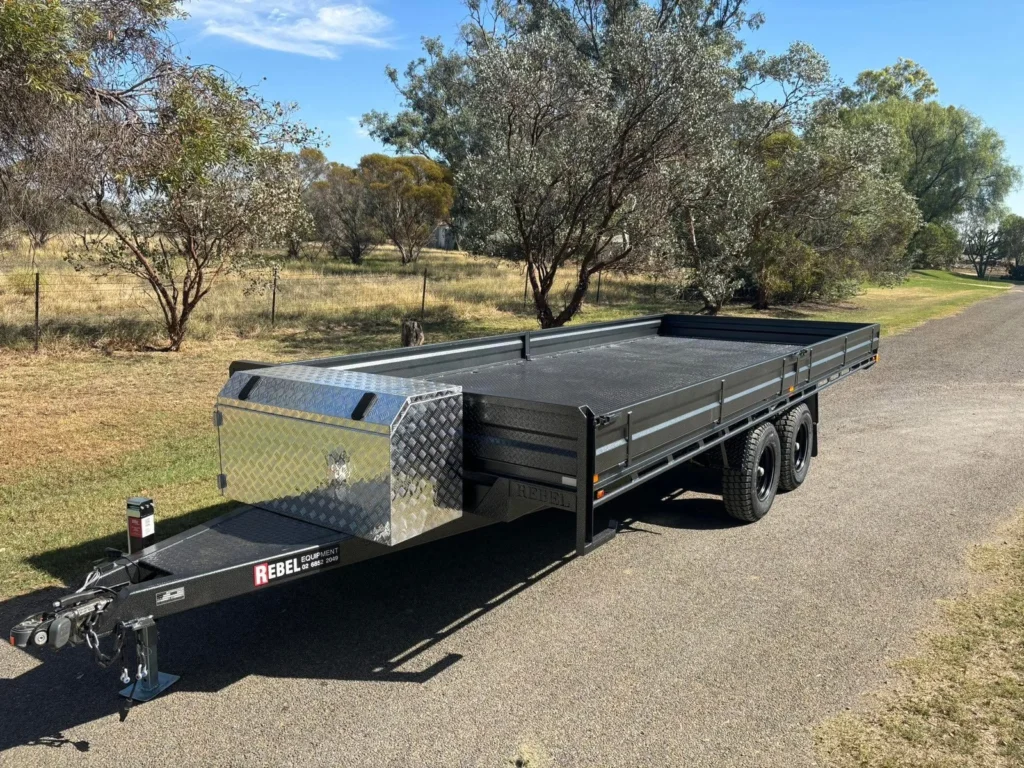
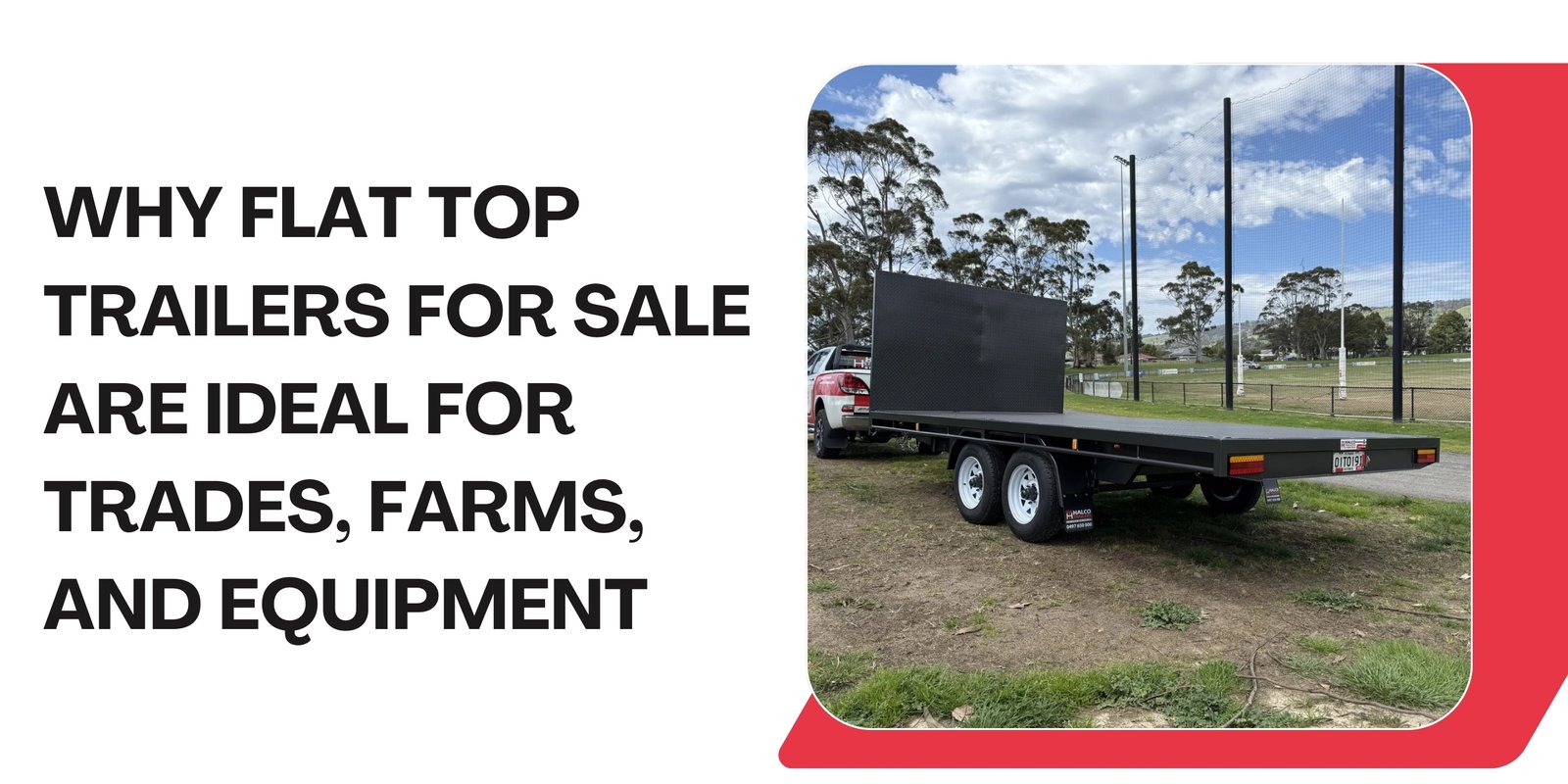
Flat top trailers for sale continue to be one of the most practical and versatile transport solutions across Australia. From busy trade sites to expansive farms and equipment transport needs, flat top trailers offer flexibility, strength, and ease of use that few other trailer styles can match. Their open-deck design makes loading, securing, and unloading goods straightforward, even for oversized or irregular loads.
For businesses and individuals operating in Melbourne and across Victoria, flat top trailers are especially valuable due to the mix of urban worksites, rural properties, and long-distance transport requirements.
Flat top trailers for sale are ideal for buyers who need open deck strength, flexible loading, and fewer size restrictions across trade, farming, and equipment transport applications.
What Makes Flat Top Trailers So Versatile
Flat top trailers are defined by their open platform design, with no fixed sides or roof. This structure allows them to carry a wide range of loads that would otherwise be difficult to transport in enclosed or boxed trailers.
Key Benefits of Flat Top Trailer Design
Flat top trailers are designed to make loading and transport simple and efficient across a wide range of applications. Their open deck allows equipment and materials to be loaded easily from all sides using forklifts, tractors, or machinery. This design makes them suitable for long, wide, or awkwardly shaped loads that do not fit within enclosed trailers. Multiple tie-down points across the deck allow loads to be secured safely, while the absence of fixed walls keeps overall trailer weight lower, improving towing efficiency and fuel economy.
These features make flat top trailers for sale a preferred choice for tradespeople, farmers, and contractors alike.
Understanding Load Ratings and ATM on Flat Top Trailers
When selecting flat top trailers for sale, understanding Aggregate Trailer Mass (ATM) is critical for safety and compliance. ATM refers to the maximum total weight of the trailer when fully loaded, including the trailer itself and its cargo.
Single axle flat top trailers are typically suited to lighter loads and occasional use, while tandem axle trailers offer higher ATM ratings, improved stability, and safer towing for heavier equipment. Buyers transporting machinery or farm supplies should always match the trailer’s ATM to both the load and the towing vehicle’s capacity.
Choosing the correct load rating reduces stress on axles, tyres, and brakes, extending the lifespan of the trailer and improving towing control on Victorian roads.
What Are the Main Advantages of Flat Top Trailers Compared to Other Trailer Types
Unlike box or enclosed trailers, flat deck trailers do not limit how cargo is loaded or positioned.This is why many buyers view flat top trailers as a long-term investment rather than a single-purpose solution. This is particularly important when transporting items that exceed standard dimensions, such as steel beams, pipes, fencing materials, or agricultural equipment. The open deck allows forklifts, tractors, and skid steers to load directly from any angle, reducing manual handling and saving time on site.
Flat top trailers also offer greater flexibility over time. As work requirements change, the same trailer can be used for tools one day, machinery the next, and bulk materials the following week. This adaptability is why many buyers view flat top trailers for sale as a long-term investment rather than a single-purpose solution.
Why Do Tradies Prefer Flat Top Trailers Over Enclosed Trailers?
Tradies prefer flat top trailers because the open deck allows faster loading and unloading from all sides without size restrictions. Long materials such as timber, ladders, scaffolding, and pipes can be transported without worrying about height or width limits. Flat top trailers also reduce handling time on site, helping trades move efficiently between suppliers and job locations across Melbourne and regional Victoria.
Popular Flat Top Trailer Sizes and Their Uses
Choosing the right trailer size is critical for safety, efficiency, and long-term value. Below are some of the most commonly used flat top trailer sizes and how they are typically applied.
10×7 Flat Top Trailer
The 10×7 flat top trailer strikes a balance between capacity and maneuverability. It is widely used by trades such as builders, electricians, and plumbers for transporting materials like timber, ladders, and equipment.
Common uses include:
- Construction materials
- Trade tools and machinery
- Small pallets and bulk supplies
14×7 Flat Top Trailer
A 14×7 flat top trailer is ideal for heavier or longer loads. Its extended deck length makes it suitable for agricultural equipment, fencing materials, and large machinery.
Ideal for:
- Farm equipment transport
- Hay bales and feed supplies
- Commercial and industrial loads
8×5 Flat Top Trailer
Compact and easy to tow, the 8×5 flat top trailer is perfect for light-duty applications. It suits users who need flexibility without requiring a large towing vehicle.
Best suited for:
- Gardening equipment
- Small trade jobs
- General household and farm use
8×6 Flat Top Trailer
The 8×6 flat top trailer provides additional width for improved stability while remaining easy to handle. It is commonly used for equipment that needs extra deck space without increasing trailer length.
Common applications:
- Ride-on mowers
- Small machinery
- Landscaping equipment
Comparison Table
Trailer Size | Best For | Key Advantage |
8×5 | Residential and light trade | Easy maneuverability |
8×6 | Landscaping and equipment | Extra deck width |
10×7 | Builders and plumbers | Fits two standard pallets |
14×7 | Farming and machinery | High ATM and long deck |
How Trailer Size Impacts Towing Safety and Handling
While deck size determines how much can be carried, it also affects how the trailer behaves on the road. Shorter flat top trailers are easier to manoeuvre in urban areas and tight job sites, while longer trailers offer better load distribution for heavier equipment.
Wider decks provide improved lateral stability, which is especially useful when transporting ride-on mowers or machinery with a higher centre of gravity. Selecting the correct balance between size and stability is essential for safe braking, cornering, and long-distance travel.
Why Flat Top Trailers Are Ideal for Trades
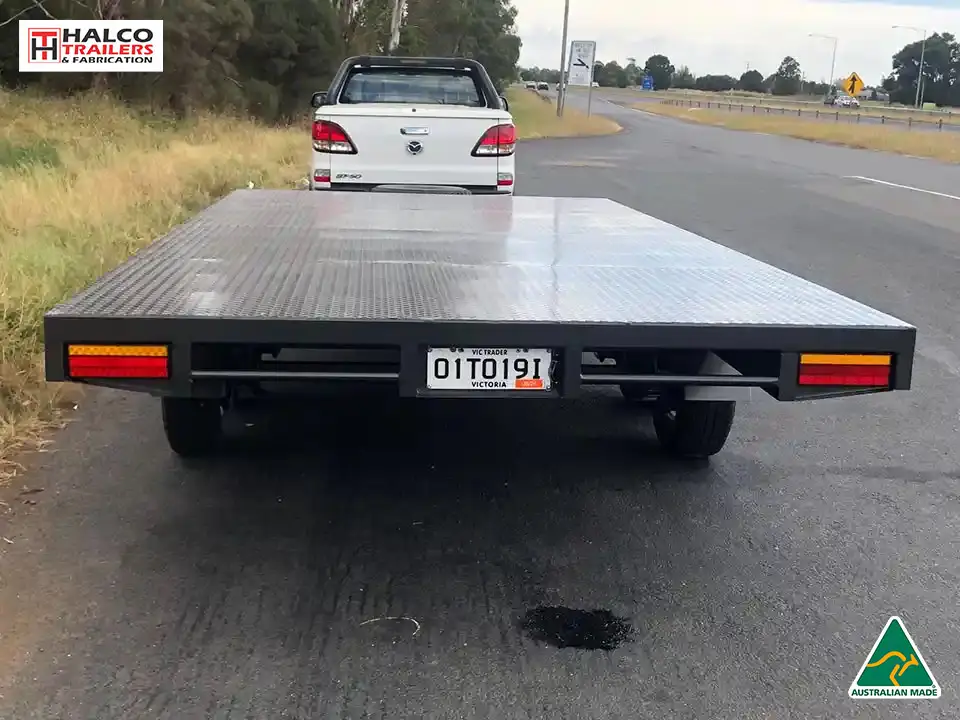
Trades people need trailers that can adapt to different job requirements. Flat top trailers for sale allow materials to be loaded quickly and secured efficiently, reducing downtime on worksites. Across Victoria, open deck trailers are widely used by builders, landscapers, and farmers.
Efficiency on Urban and Regional Jobs
In areas like Melbourne and surrounding regional locations, trades often move between tight city streets and open construction zones. Flat top trailers handle both environments with ease.
Improved Load Flexibility
With no side walls, trades can transport oversized items such as steel beams, scaffolding, and long timber lengths without restriction.
Across Victoria, flat top trailers are widely used by builders, landscapers, and farmers because their low-maintenance design and open deck layout handle changing load requirements better than enclosed trailers.
Common Trade Applications for Flat Top Trailers
Flat top trailers for sale are commonly used across multiple trades due to their ability to handle mixed loads in a single trip. Builders often transport timber, formwork, and scaffolding together, while electricians and plumbers use flat top trailers for ladders, cable reels, and site equipment.
The absence of fixed sides allows tradespeople to load materials quickly at suppliers and unload efficiently at job sites. This reduces handling time and helps maintain productivity across multiple jobs in a single day.
Flat Top Trailers for Farming and Rural Work
On farms, versatility and durability are essential. Flat top trailers for sale are well suited to rural conditions where loads vary daily. These flat top trailers are commonly built with reinforced frames and heavy-duty flooring
Adaptable for Seasonal Needs
Farmers often transport feed, fencing, equipment, and produce. A flat top trailer can be adapted with cages, ramps, or toolboxes as required.
Durable for Harsh Conditions
Flat top trailers are commonly built with reinforced frames and heavy-duty flooring, making them suitable for uneven terrain and frequent use.
Why Flat Top Trailers Perform Well in Rural and Agricultural Environments
Farm work often involves unpredictable loads and changing conditions. Flat top trailers are well suited to this environment because they can be adapted with temporary cages, removable sides, or ramps depending on seasonal needs.
Steel flat top trailers constructed using high-tensile steel manufactured to Australian Standards are particularly valued in rural areas due to their strength and resistance to wear caused by moisture, fertilisers, and constant exposure to the elements. This robust construction delivers reliable long-term performance, making them a dependable option for ongoing agricultural use without excessive maintenance.
Transporting Equipment Safely and Efficiently
Equipment transport demands stability and secure load restraint. Flat top trailers provide multiple tie-down points, allowing operators to secure machinery safely for both short and long-distance travel.
Better Weight Distribution
The open deck makes it easier to position equipment correctly, helping maintain safe towing balance and reducing wear on vehicles.
Compatibility With Machinery
Forklifts, skid steers, and small tractors can load directly onto flat top trailers, saving time and labour.
Safety and Compliance Considerations in Victoria
Operating flat top trailers in Victoria requires adherence to road safety standards, including correct load restraint, lighting, and braking systems. Loads must be secured to prevent movement during transit, especially when travelling on highways or uneven rural roads.
Buyers should ensure their trailer setup aligns with towing vehicle limits and that safety chains, coupling systems, and tyres are regularly inspected. Compliance not only improves safety but also reduces the risk of fines, insurance issues, or equipment damage.
Best Practices for Transporting Machinery on Flat Top Trailers
When transporting equipment, positioning is critical. Heavier machinery should be placed over or slightly forward of the axle group to maintain proper tow ball weight. This improves vehicle control and reduces sway at higher speeds.
Using rated tie-down points and load restraints ensures machinery remains stable during transport. Flat top trailers provide multiple anchoring options, making them suitable for securing equipment of varying shapes and sizes.
Local Considerations When Buying Flat Top Trailers for Sale
For buyers in Victoria, road compliance and build quality are key considerations.
Designed for Australian Roads
Flat top trailers sold locally are typically built to handle Australian road conditions, including highway travel and rural access roads.
Availability Across Melbourne and Victoria
Having access to flat top trailers for sale in Melbourne and regional Victoria means faster servicing, easier parts availability, and better after-sales support.
How Do I Choose the Best Flat Top Trailer for My Business or Farm?
Choosing the right flat top trailer depends on load weight, deck size, towing capacity, and frequency of use. Smaller trailers suit light trade work, while larger flat top trailers with higher ATM ratings are better for farming, machinery, and bulk transport across regional and urban Victorian roads.
Final Thoughts
Flat top trailers for sale continue to be a dependable choice for trades, farms, and equipment transport because they balance strength, flexibility, and ease of use. Buyers who take the time to assess load requirements, towing capacity, and operating conditions are more likely to select a trailer that delivers long-term reliability.
For those operating across Melbourne and regional Victoria, choosing a flat top trailer designed for local road conditions and real-world workloads ensures safer transport and better overall performance over time.